At Spes Infinita, we believe that the natural world described throughout the Bible can open another window into the meaning and beauty of Scripture.
Trees, plants, flowers, herbs, vines, gardens, and aromatic resins appear throughout the biblical narrative. They provide food and shelter, mark important places, accompany rituals, illustrate teachings, and often carry profound symbolic meaning.
Spes Infinita · Biblical Botany was created to explore this fascinating intersection of botany, biblical history, symbolism, and theology.
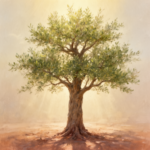
“He is like a tree planted by streams of water, which yields its fruit in season.” Psalm 1:3
More than 100 plants of the Bible
The Bible mentions a remarkable variety of plants and botanical images.
Our goal is to document these references and explore what we can learn from them — from their possible botanical identity and natural environment to their role within the biblical text.
Among the plants and symbols explored on Spes Infinita are:
Trees such as cedar, oak, palm, cypress, and terebinth.
Fruit-bearing plants including the fig, olive, grapevine, and pomegranate.
Herbs and spices such as hyssop, coriander, dill, cinnamon, rue, and saffron.
Aromatic plants and resins including frankincense, myrrh, cassia, and nard.
Thorns and weeds associated with judgment, suffering, and the Fall.
Flowers and grasses mentioned throughout the Old and New Testaments.
Biblical gardens such as Eden and Gethsemane.
Symbolic trees including the Tree of Life and the Tree of Knowledge.
From Genesis to Revelation
Plants are not simply scattered details in Scripture.
Some botanical images are woven through the entire biblical story.
The Tree of Life, for example, appears at the beginning of Genesis and returns at the conclusion of Revelation, creating a remarkable literary and theological connection between Eden and the New Jerusalem.
The grapevine becomes an image of Israel and God's covenant people before receiving a profound new meaning in Christ's words: “I am the true vine.”
The olive tree evokes peace, anointing, abundance, and covenant, while the fig tree appears in some of Scripture's most memorable moments, from the story of Adam and Eve to the teachings of Jesus.
These connections show how the natural imagery of the Bible can contribute to a deeper understanding of its message.
Biblical botany and Scripture
Our approach brings together several dimensions of each plant:
Botanical identity What plant might the biblical text be describing? What characteristics and species are associated with it?
Biblical context Where does the plant appear in Scripture, and what is happening in the passage?
Historical setting How were plants used in the ancient Near East — as food, medicine, building materials, spices, oils, or ritual objects?
Symbolism and theology What meanings have these plants acquired within the biblical narrative and Christian interpretation?
By bringing these perspectives together, we aim to make the botanical world of Scripture easier to explore and appreciate.
A journey through both Testaments
The plants of Scripture accompany the entire biblical story.
From the gardens and trees of Genesis, through the wilderness, the Promised Land, the Psalms, the Prophets, and the Gospels, botanical imagery continues to appear in unexpected ways.
It reaches its culmination in the imagery of Revelation, where trees, gardens, rivers, and the restoration of creation point toward the final hope of God's people.
Spes Infinita explores these connections across both the Old and New Testaments, allowing individual plants to be understood within the larger biblical narrative.
Why biblical plants matter
A plant mentioned in a biblical passage may initially seem like a small detail. Yet understanding its place in the ancient world can sometimes illuminate the passage itself.
A cedar can evoke strength and majesty. An olive branch can speak of peace. A vine can represent a people and their relationship with God. A thorn can become an image of suffering and the consequences of the Fall. A tree can represent life, wisdom, judgment, or restoration.
These images have shaped biblical language for thousands of years.
Our mission is to help readers notice them.
Our mission
Spes Infinita exists to make the botanical world of the Bible accessible to anyone interested in Scripture, biblical history, nature, and Christian symbolism.
We want to provide a place where readers can discover the plants behind familiar biblical passages, understand their historical and natural context, and reflect on the deeper meanings they acquire within Scripture.
Because sometimes, looking closely at a tree, a flower, a vine, or a seed can reveal another dimension of the story the Bible has been telling all along.
Spes Infinita — exploring the trees, plants, and living symbols of Sacred Scripture.