Convallaria majalis is a perennial, low-growing herbaceous plant reaching 15-30 cm in height. It features broad, lance-shaped green leaves that grow in pairs. The plant produces delicate, bell-shaped, white flowers arranged in clusters from early spring to early summer. Each fragrant flower has six tepals and is known for its sweet aroma. It bears small, bright red to orange berries that are toxic if ingested. Preferring temperate, shaded woodland environments, it thrives in moist, well-drained soils rich in organic matter, commonly found in Europe and parts of Asia. Its rhizomes spread gradually, forming dense colonies ideal for ground cover.
Scientific Name
Convallaria majalis
Hebrew/Greek Name
עֲרָבָה יְפָה (Aravah Yefah), transliteration: 'Beautiful Valley' (Note: Biblical references do not specify this plant explicitly)
Common Names
Lily of the Valley, May Lily, Our Lady's Tears
Native Habitat
Native to Europe and Asia, Lily of the Valley thrives in deciduous forests, shaded hillsides, and woodland gardens. It prefers temperate climates with moderate rainfall and thrives in moist, humus-rich soils. In the Middle East, it is sporadically found in similar cool, shaded environments, although not as prevalent naturally.
First Biblical Mention
First poetic mention in Song of Songs 2:1 (around 965–935 BC), describing beauty and purity.
📖 Biblical References
Reference
Context
Significance
Song of Songs 2:1
The beloved describes herself with the metaphor 'I am the rose of Sharon, and the lily of the valleys.'
Though not explicitly the Lily of the Valley, this association emphasizes purity, beauty, and love, possibly inspired by the plant's delicate appearance.
Song of Songs 2:1
Poetic depiction of beauty using floral imagery.
Represents innocence and the ideal of beauty that the biblical authors associate with divine love and purity.
✨ Symbolic Meaning in Scripture
Throughout Scripture and spiritual tradition, the Lily of the Valley symbolizes humility, purity, renewal, and divine love. Its delicate white blossoms evoke innocence and spiritual humility, reminding believers of the importance of modesty and divine grace. The plant's resilience and ability to thrive in shaded, hidden places serve as metaphors for humility and the hidden strength found in faith. Its fragrance is linked to spiritual sweetness and the presence of the Holy Spirit. In Christian symbolism, it also signifies the promise of resurrection and eternal life, embodying the hope of new beginnings and the purity of Christ’s love — a gentle, yet powerful emblem of divine beauty that rises amidst darkness.
Historically, the Lily of the Valley was valued in ancient herbal medicine for its calming and heart-strengthening properties, though its toxicity required careful use. In Near Eastern trade, it was appreciated for its fragrance and ornamental appeal. Its delicate flowers often featured in floral arrangements, perfumes, and religious offerings, symbolizing renewal and innocence. The plant’s resilience also made it a popular ground cover in gardens, representing perseverance and hope. In some cultures, it was used medicinally to treat heart ailments, but only under supervised conditions given its toxicity.
✡️ In Jewish Tradition
The Lily of the Valley is not prominently featured in traditional Jewish customs or rabbinic texts, although its beauty and symbolism sometimes align with themes of purity and renewal celebrated during Passover and Sukkot. Its presence in biblical poetry is appreciated for its poetic qualities rather than ritual use, and it is occasionally referenced in Jewish poetry or meditation as a symbol of spiritual humility and divine beauty.
✝️ In Christian Tradition
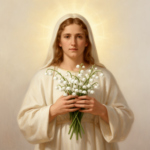
In Christianity, the Lily of the Valley is often associated with the Virgin Mary, symbolizing purity, humility, and divine grace. It is also linked to the resurrection of Christ, representing hope and eternal life. The plant's symbolism appears in hymnody and religious art, emphasizing humility and spiritual renewal. Its depiction in Christian festivals underscores themes of innocence and divine love, making it a popular emblem in religious celebrations of hope and resurrection.
The widely accepted botanical identification is Convallaria majalis, native to Europe and Western Asia. While some have speculated about other white-flowered plants like Solomon’s Seal or certain lilies, scholarly consensus favors Convallaria. Its distinctive bell-shaped flowers and toxic berries confirm its identification, though no direct biblical mention clarifies the species, leading to debates about symbolic association rather than botanical exactness.
🗺️ Where Is It Found Today?
Today, Convallaria majalis is cultivated in gardens across Europe, North America, and parts of Asia, thriving in shaded woodland areas. In Israel and the Middle East, it is found in cultivated gardens and nurseries, though it remains less common in the wild due to climate restrictions. It prefers temperate, shady environments and can be grown in shaded gardens or as ornamental ground cover.
Is Lily of the Valley mentioned explicitly in the Bible?
No, the Lily of the Valley is not explicitly named in biblical texts. Its association with biblical imagery is primarily poetic and symbolic, inspired by its delicate beauty and purity.
What does the Lily of the Valley symbolize spiritually?
Spiritually, it symbolizes humility, purity, renewal, and divine love. Its modest beauty reminds believers of spiritual humility and the promise of resurrection and eternal life.
Is the Lily of the Valley safe to touch or ingest?
No, all parts of Convallaria majalis are toxic if ingested and can cause severe symptoms. It should be handled with care, especially around children and pets, and not used medicinally without expert guidance.
✨ Did You Know?
Convallaria majalis has a long history of medicinal use, but all parts are toxic if ingested—its berries contain cardiac glycosides. Archaeological studies suggest that the plant may have been appreciated for its fragrant flowers in ancient Egypt and Greece, highlighting its cultural importance beyond its biblical symbolism.








Leave a Reply