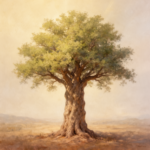
The Burning Bush is characterized by its striking red or orange-red foliage, especially in the fall, with woody, branching stems. Typically a shrub or small tree reaching 2-5 meters tall, it bears oval, serrated leaves. In spring, it produces small, inconspicuous white or greenish flowers, followed by clusters of red berries. Its drought-tolerant nature and preference for rocky, well-drained soils make it common in arid or semi-arid regions. The plant’s vibrant hue and fire-like appearance evoke its biblical symbolism, and it thrives in warm climates with full sun exposure.
Scientific Name
Debated (Possible candidates include Rhus tripartita or Ficus sycomorus)
Native to the Middle East, particularly Israel, Jordan, and surrounding desert regions; prefers rocky terrains, limestone soils, and arid to semi-arid climates. It tolerates drought and poor soils, commonly growing on hillsides, rocky slopes, and dry wash areas.
First Biblical Mention
Exodus 3:2
📖 Biblical References
Reference
Context
Significance
Exodus 3:1-22
Moses encounters the burning bush that is on fire but not consumed, where God calls him to deliver Israel.
Represents divine presence, sanctity, and the revelation of God's name — a symbol of divine encounter and calling.
✨ Symbolic Meaning in Scripture
The Burning Bush symbolizes divine presence, purity, and the transformative power of God's revelation. Its fiery appearance signifies God's holiness and the burning bush’s role as a mediator of divine communication. The fire that consumes yet does not destroy mirrors divine purity that sanctifies without destruction, inspiring faith and obedience. Throughout Scripture, fire often signifies God's glory and transformative power. The burning bush thus becomes an enduring symbol of divine calling, guidance, and the mysterious ways in which God reveals Himself to humans, often in fiery, awe-inspiring contexts that evoke reverence and spiritual awakening.
In ancient Israel and the broader Near East, parts of the plant (such as berries and leaves) were used medicinally for treating fevers and skin ailments. Its wood provided fuel and construction material due to its hardy, dense nature. The striking appearance also made it a notable feature in sacred outdoor spaces and shrines, where it could serve as a symbol of divine presence. Its resilience and fiery foliage may have inspired ritualistic uses or served as a visual reminder of divine illumination and protection in cultural narratives.
✡️ In Jewish Tradition
The Burning Bush is viewed as a symbol of divine revelation and divine endurance. In rabbinic literature, it underscores themes of divine mercy and the sanctity of the land of Israel. Some traditions interpret the bush as a sign of God's eternal presence and continuous revelation, emphasizing its role in guiding and inspiring the Jewish people throughout history, especially in dialogues of prophecy and divine intervention.
✝️ In Christian Tradition
Christians see the Burning Bush as a prefigurement of divine revelation and spiritual awakening. It symbolizes the Holy Spirit’s fiery presence and God's call to serve. The bush’s fire without destruction has been associated with the Holy Spirit, divine sanctification, and the calling of believers to a holy life, reinforcing themes of divine illumination and transformation in Christian spirituality.
Scholars have debated whether the Burning Bush was Rhus tripartita (a shrub with fiery red foliage in summer) or Ficus sycomorus (sycamore fig, known for its stability and biblical significance). While Rhus tripartita's vibrant color aligns with the biblical imagery, neither candidate has unanimous consensus. Some suggest the Bush is a symbolic or poetic representation rather than a specific plant species.
🗺️ Where Is It Found Today?
The Burning Bush can still be observed in Israel and neighboring Middle Eastern regions, especially in rocky, arid landscapes. Rhus tripartita is cultivated as a hardy shrub in Mediterranean gardens, and some wild specimens grow naturally along hillside terrains and rocky slopes across Israel and Jordan.
Is the Burning Bush a real plant or a symbolic image?
While its exact botanical identity remains debated, it is likely based on real plants like Rhus tripartita. Its fiery appearance and biblical significance also give it a strong symbolic resonance beyond specific species.
What does the Burning Bush symbolize in biblical theology?
It symbolizes God's divine presence, holiness, and calling. The fire represents purification and divine revelation, inspiring believers to seek spiritual transformation and obedience.
Can the Burning Bush be cultivated today?
Yes, plants like Rhus tripartita are cultivated in Mediterranean regions; they thrive in rocky, dry soils and can be grown in similar climates today, serving as living symbols of biblical history.
✨ Did You Know?
Rhus tripartita, sometimes called the Desert Elder, exhibits striking red foliage that resembles flames, making it a natural candidate for the biblical Burning Bush. Archaeological evidence suggests that similar shrubs have been used historically to symbolize divine fire in ancient Near Eastern cultures.








Leave a Reply