Creating a home that reflects your Christian faith is about more than aesthetics; it is about shaping a daily environment that invites reflection, gratitude, and hospitality. Christian decor—often described in contemporary terms as Christian home décor, Christian interior design, or faith-inspired styling—can harmonize beauty with meaning. This article offers practical, attainable ideas to transform living spaces into sanctuaries where the sacred and the everyday meet. Whether you are refreshing a single room or rethinking an entire home, the goal is to enrich life with grace, clarity, and intentionality through biblical decor, symbols of faith, and thoughtful materials.
The scope of gospel-inspired aesthetics is broad. It embraces traditional symbols like the cross, ichthys, and scripture verses, as well as more subtle cues such as color palettes inspired by liturgical seasons, natural materials that echo creation, and design layouts that foster connection and conversation. The result is a living environment that supports worship, prayer, study, and meaningful conversation with family, friends, and visitors.
Foundations of Christian Decor
Before you start placing objects or choosing palettes, consider a few guiding principles that keep Christian decor authentic and cohesive.
Hospitality as a principle: The home should feel welcoming, with seating that encourages conversation and spaces that invite guests to linger.
Intentional symbolism: Select symbols and verses that have personal resonance or communal meaning, and display them with reverence rather than clutter.
Quality over quantity: A few well-chosen pieces can have more impact than a crowded room full of generic decor.
Natural materials: Wood, linen, cotton, stone, and metal often carry a timeless authenticity that complements faith-based themes.
Warmth and hospitality: Lighting, texture, and color that feels inviting help guests sense grace and peace in the space.
When you plan, consider also how each room’s purpose—wo rship, rest, meals, study—aligns with the decor choices. A unified approach will ensure that the home feels cohesive rather than like a gallery of disconnected motifs.
Entryways and Foyers: Welcoming Guests with Grace
The entryway sets the tone for the entire home. A thoughtfully designed foyer can communicate the message of hospitality and faith before guests even step inside.
Key Elements to Consider
Scripture in sight: Consider a framed verse that emphasizes welcome, such as Psalm 84:11 or Romans 15:7. A well-placed plaque or canvas can be subtle yet meaningful.
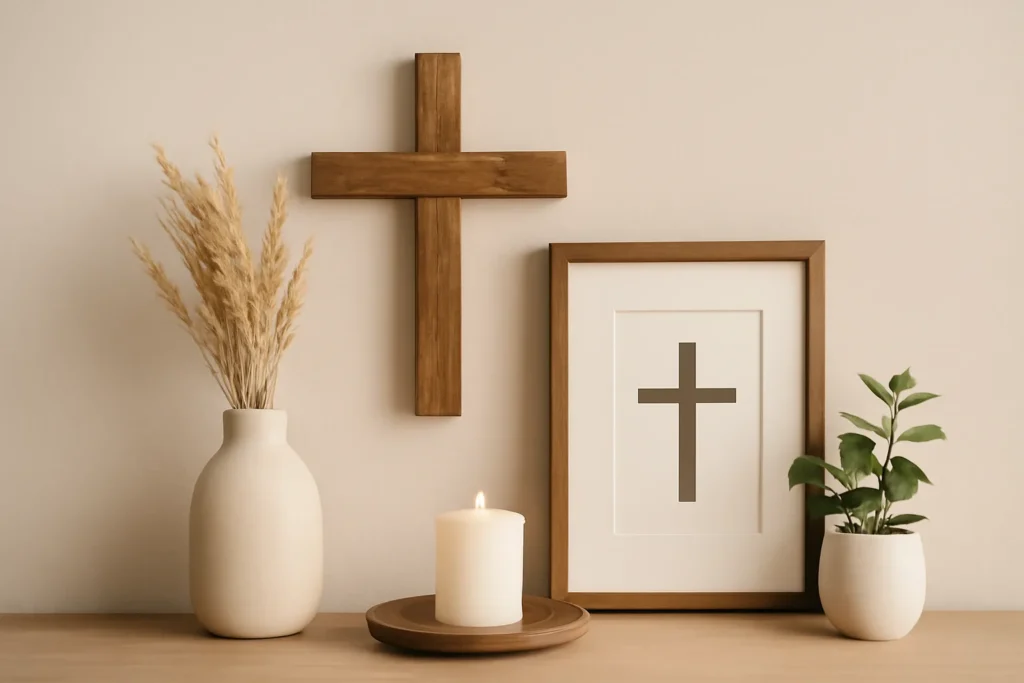
Cross or ichthys accents: Small crosses, wall decals, or carved ichthys symbols can be tasteful without dominating the space.
Seasonal welcome: A seasonal wreath, a vase of fresh flowers, or a lantern can greet visitors in a way that changes with liturgical seasons.
Functional traction: A sturdy console, a front closet or coat rack, and a welcoming bench or seating area encourage guests to pause and connect.
Practical Decor Ideas
Use a neutral or soft palette for the entry so it pairs well with any interior style you choose later.
Place a wooden tray for keys and mail along with a small vase of seasonal greenery to symbolize growth and life.
Hang a verses sign at eye level to ensure it is seen without feeling overpowering.
Living Rooms and Social Spaces: Centering Covenant and Conversation
The living room is where families gather and guests are welcomed. A well-designed space can nurture conversation, rest, study, and shared meals. Consider arrangements that promote eye contact, inclusive seating, and intentional focal points.
Core Concepts for a Faith-Inspired Living Room
Focal wall with scripture: A single, meaningful verse in a prominent place can ground the room.
Gallery walls with narrative: Mix framed Bible verses, icons, and landscape art that evokes biblical stories or Christian symbolism.
Comfort-friendly seating: A conversational layout with a central coffee table encourages dialogue and connection.
Textile layering: Cushions and throws in natural fibers add warmth and softness, aligning with a hospitable ethos.
When choosing decor for living rooms, think in terms of thematic cohesion rather than a string of unrelated pieces. A coherent color scheme—such as warm neutrals with accented blues, forest greens, or gold—can unify artwork, textiles, and furniture. A soft lighting plan helps create a reflective mood without overpowering the space.
Decoration Options
Cross-based art in metal, wood, or canvas, sized to suit the wall and room scale.
Bible verse prints in elegant typography, paired with contextual notes or reflections.
Iconography such as small crucifixes, angel icons, or saint representations, carefully chosen to align with the family’s beliefs.
Nature-inspired motifs—a framed botanical print or an arrangement that evokes creation and stewardship.
Bedrooms and Personal Prayer Corners: Sacred Rest at Home
The bedroom is a sanctuary where daily stress loosens and spiritual renewal begins. A Christian bedroom design emphasizes rest, modesty, and a space for personal reflection and prayer.
Prayer corner: A small table or shelf with a Bible, a lamp, a faith-themed devotional, and a quiet space for prayer or meditation.
Calm color palettes: Soft blues, warm neutrals, or muted greens can create serenity and restful energy.
Textile softness: Linen sheets, cotton throws, and wool rugs contribute to comfort and prolong calm.
Minimal clutter: A decluttered environment supports focus and sleep, aligning with biblical principles of peace and order.
For shared family bedrooms, consider a symmetrical arrangement that communicates balance and harmony. For children’s rooms, incorporate playful yet meaningful motifs—gentle scriptural quotes on wall decals, or gentle animal imagery paired with verses about courage, wisdom, or kindness.
Dining Rooms and Kitchen Tables: Meals as Spiritual Practice
Shared meals are a central practice in Christian life, a place where grace is offered and hospitality is enacted. Your dining space can honor this tradition by highlighting gratitude, community, and generosity through design and décor.
How to Create a Faith-Centered Dining Experience
Table centerpieces that reflect gratitude, such as a small arrangement with seasonal greens or a calligraphy card with a blessing for the meal.
Scripture-inspired textiles: Table runners or napkins with subtle quotes or symbols that are easy to read and not distracting.
Wall accents: A framed verse about hospitality or blessing for the table can reinforce the room’s purpose.
Quality dinnerware: Durable, timeless plates and glassware that withstand daily use while feeling special.
If you regularly host family gatherings or church groups, consider a few multi-purpose pieces—a sturdy sideboard for serving, a chair or bench that accommodates extra guests, and lighting that can be adjusted to create intimate or lively atmospheres as needed.
Bathrooms and Quiet Rooms: Spa-Like Serenity and Scriptural Reflection
Even private spaces like the bathroom can serve as sanctuaries for renewal. Subtle and respectful biblical decor can remind you of grace and mercy during daily routines.
Elements of Calm and Contemplation
Verse-adorned towels or signage: Small items that are easy to read from a distance can carry gentle reminders without being loud.
Natural materials: Stone, ceramic, or wood accents pair well with clean lines and a spa-like atmosphere.
Soft lighting: Dimmable bulbs or candle-style LEDs provide warmth and a contemplative mood.
If you prefer minimalist styling, a single, meaningful symbol—such as a delicate cross wall plaque or a framed verse—can convey spirituality without overwhelming the space.
Children’s and Teen Spaces: Faith, Fun, and Formation
For families, it’s important that younger spaces model faith in a way that is engaging and age-appropriate. You can blend education, play, and worship in ways that invite children into a life of faith.
Kid-Friendly Approaches
Learning corners: A small bookshelf with children’s Bible stories, devotionals, and age-appropriate commentaries.
Durable and safe materials: Sturdy furniture, rounded edges, and family-friendly fabrics that can withstand daily activity.
Inspiring wall art: Cheerful verses like Psalm 23 children’s editions or color-blocked scriptures designed for kids.
Interactive elements: A chalkboard wall or whiteboard with prompts for daily gratitude or reflections on a verse.
For teens, incorporate spaces that honor independence while maintaining shared values. Consider a quiet corner for study with a small lamp, a Bible, and a journal, or a wall gallery that includes contemporary Christian music or theology-inspired prints.
Outdoor and Garden Spaces: Faithful Stewardship of Creation
The home’s exterior and garden spaces offer a powerful extension of Christian decor. Outdoor spaces can reflect stewardship, beauty, and grace, serving as a sanctuary for reflection, conversation, and rest.
Outdoor Design Fundamentals
Scripture stones or marker tablets in garden beds that celebrate creation and blessing.
Cross motifs in metal or wood for gates, trellises, or decorative screens.
Natural landscaping using native plants that require minimal maintenance and support local pollinators.
Seating nooks: Benches or small chairs placed along walkways to invite quiet moments with a verse or reflection card.
A well-planned outdoor space can become a place of contemplation, prayer, and gathering in the warm months. Lighting should be gentle and accessible, offering safety while maintaining a peaceful atmosphere after dusk.
Color Palettes and Textures: Setting the Mood for Faith
Color choices influence mood and perception. In Christian interior design, palettes often lean toward timeless, comforting tones that support contemplation, hospitality, and warmth.
Warm neutrals: Cream, taupe, ivory, and stone provide a versatile base that works with almost any artwork or symbol.
Earthy hues: Sage greens, terracotta, and soft browns evoke creation and stewardship.
Cool accents in moderation: Blues and greens paired with gold or brass accents can suggest hope and serenity.
Catholic or liturgical color cues (optional): If you observe liturgical seasons, you can weave corresponding colors (purple for Advent and Lent, white for Easter, red for Pentecost) into textiles and accents for a subtle, meaningful rhythm.
In any palette, ensure contrast for readability when you place scripture on walls or frames. Balance is key: too many bold colors can feel chaotic, while a restrained palette keeps the focus on the message behind the decor.
Materials, Textiles, and Craftsmanship
The tactile experience of a room often communicates more than words. In Christian decors, natural materials and careful craftsmanship can elevate everyday spaces into contemplative environments.
Material Choices to Consider
Wood (oak, walnut, maple) for furniture and framing: durable, timeless, and warm.
Linen and cotton for curtains and upholstery: breathable, durable, and elegant.
Stone or ceramic for tabletops and tile: grounded, sturdy, and easy to maintain.
Iron or bronze accents for hardware, lanterns, and frames: classic and sturdy.
Textile textures can align with the space’s purpose. For prayer corners, consider soft lighting and plush textiles for comfort. For living areas, choose durable fabrics that resist wear and maintain a refined look.
Artwork, Symbols, and Wall Decor: Language of Faith Beyond Words
Wall decor is a central tool in Christian home styling. It communicates belief through language and imagery and can be a powerful source of daily inspiration.
Common Forms of Wall Decor
Bible verse prints with elegant typography or hand-lettered quotes.
Crosses and crucifixes in wood, metal, or ceramic—choose one style that fits the room’s character.
Icons and sacred art from diverse Christian traditions, used in moderation and with respect.
Narrative canvases that illustrate parables, miracles, or creation stories in a tasteful, accessible way.
When selecting wall art, consider scale and proportion. A large piece can anchor a room, while a gallery of smaller works can invite contemplation as people move around the space. To avoid clutter, curate a handful of meaningful pieces rather than a wall saturated with quotes.
DIY Projects and Crafting Ideas: Personalizing Your Faith Space
Do-it-yourself projects allow you to imprint your home with stories, memories, and faith commitments. Handmade elements can feel especially sincere when they reflect your family’s journey with God.
Simple, Meaningful DIYs
Scripture signs: Paint or carve favorite verses onto wooden boards, then seal with a protective finish for longevity.
Verse blocks: Create stackable blocks with letters that form different scripture phrases that your family can rearrange.
Decorative prayer journal display: Mount a small bookshelf with pockets for prayer journals and devotional cards.
Nature-inspired art: Press leaves or flowers and pair them with a verse where creation is celebrated.
For more experienced crafters, consider layered wall art, decoupage with Biblical scenes, or hand-stamped textiles. Always choose finishes and paints that are appropriate for your family’s environment and safety standards, especially if children live in or visit the space.
Practical Tips for DIY Decor
Test color swatches on a small area before committing to a large wall.
Use archival-quality materials for longevity, especially for quotes or scripture panels.
Label items with care instructions to preserve color and finish over time.
Shopping Guide: Where to Find Christian Decor and What to Look For
Whether you prefer handcrafted pieces, museum-quality art, or budget-friendly finds, there are many routes to acquire meaningful Christian home décor.
Quality construction: Check joinery, materials, and finish, especially for larger furniture and framed art.
Authenticity and resonance: Choose items that reflect your beliefs and family story, not simply trends.
Maintenance considerations: Pick materials that fit your cleaning routine and living conditions.
Where to Look
Local artisans and church fairs for unique, meaningful pieces with a personal story.
Christian bookstores and faith-based galleries for scripture-based art and quotes.
Antique shops and vintage markets for historical crosses, icons, and traditional prints.
Online retailers offering curated collections of biblical decor, cross motifs, and faith-inspired home accents.
Seasonal and Liturgical Decor: Marking Time with Purpose
The church calendar offers a natural rhythm for decorating. Seasonal decor can connect the home to liturgical seasons, reinforcing spiritual themes in a gentle, family-friendly way.
Seasonal Worship-In-Home Ideas
Advent and Christmas: An Advent wreath, nativity scene, and soft, warm lighting to evoke the sense of waiting and joy.
Lent and Easter: Simplified decorations, with purple or white accents, a cross display, and empty tomb symbolism as a reminder of renewal.
Pentecost and Ordinary Time: Red accents for Pentecost or green accents for ordinary time, used in a balanced way with scripture banners or plaques.
Feast days and saints’ days: Small altars or dedicated shelves honoring saints or important Christian figures for your tradition.
Seasonal pieces should be intentional and not overwhelmed by quantity. A few well-chosen items replace clutter with meaning, ensuring every adornment reinforces family values and faith.
Maintenance, Care, and Respect: Keeping Your Decor Dignified
Care and stewardship extend to how you preserve your faith-inspired spaces. Regular cleaning, mindful placement, and respectful handling are essential to maintain the integrity of the decor and its message.
Best Practices for Longevity
Dust regularly to prevent buildup on art and delicate materials.
Avoid direct sunlight for prints and fabrics to prevent fading.
Secure wall decor with appropriate hardware to reduce risk of accidents.
Rotate pieces seasonally to keep the environment fresh and revitalized.
If you entertain frequently or have children in the home, ensure that busy zones remain orderly with storage solutions that keep faith-based items safe and accessible, but not in the way of daily living.
Conclusion: A Home That Reflects a Life of Faith
Transforming a home with Christian decor ideas is less about creating a museum and more about shaping a space that breathes hospitality, reverence, and everyday grace. By selecting meaningful symbols, choosing durable materials, and arranging spaces to support prayer, study, and community, you create a living environment that invites reflection and fosters a sense of belonging.
Whether you emphasize Christian interior design through a few statement pieces or you build a cohesive narrative across rooms, the ultimate goal remains the same: to honor God with your home by making it a place where love, mercy, and faith are visible in daily life. As you pursue faith-inspired styling, let your choices be guided by dignity, simplicity, and a spirit of generosity toward guests and family alike.







Leave a Reply