Christian Marital Vows: Meaning, Examples & Writing Tips
Christian Marital Vows: Meaning, Examples & Writing Tips
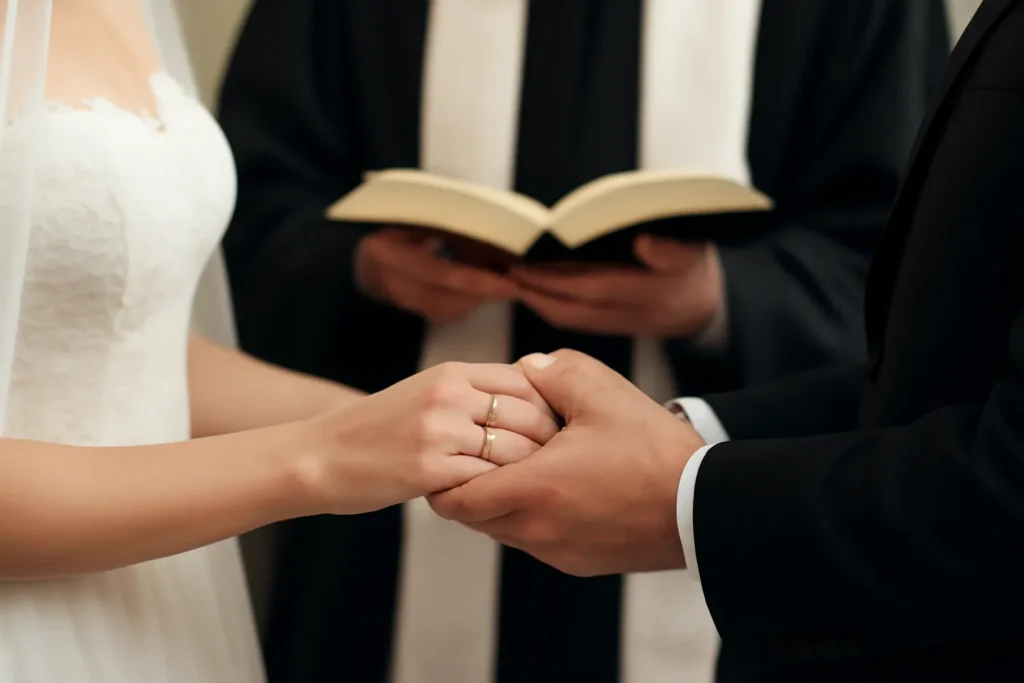
Christian marital vows are more than ceremonial words spoken at a wedding. They are a spiritual commitment that frames the couple’s life together as a sacred covenant before God, witnesses, and the church. In this article, we explore the meaning of Christian vows, offer historical and theological context, present a variety of phrasing options from different Christian traditions, and provide practical tips for writing personal vows that are authentic, biblically grounded, and memorable. Whether you are preparing to marry in a church, a chapel, or a non-traditional setting, these insights can help you articulate a vow that reflects faith, hope, and love in the years to come.
At their core, Christian vows are promises made before God, embracing a lifelong partnership built on trust, faith, and mutual service. They express a conviction that marriage is not merely a contract between two people but a holy covenant that invites God’s presence, grace, and guidance. This understanding has several important dimensions:
Covenant with God: Vows are framed as an act of obedience and trust in God’s plan. The couple seeks divine assistance to live out their promises in daily life.
Public commitment: Vows are spoken before witnesses—family, friends, and the faith community—marking the decision as a shared journey rather than a private agreement.
Formation of character: The promises encourage growth in virtue—patience, forgiveness, humility, and charity—as the relationship encounters joy and hardship.
Foundation for daily choices: The vows provide a touchstone for decision-making in marriage—whether in finances, parenting, health, or vocational calls.
In many Christian traditions, vows also carry a sense of eternal stakes in light of the belief that God unites the couple and that their love mirrors Christ’s love for the church. This can translate into vows that emphasize fidelity, sacrificial service, and steadfastness, even when circumstances change. Yet Christian vows also acknowledge human fragility and the need for grace, repentance, and transformation through faith.
Biblical Foundations and Theological Meaning
Christian vows are often grounded in Scripture and the broader theology of marriage as revealed in the Bible. While the exact words of vows vary, their underlying themes are biblically rooted in creation, redemption, and the communal life of the church.
Scriptural Foundations
Several biblical passages are commonly cited in Christian wedding contexts. They provide language and imagery that couples may draw upon when shaping their own vows:
Genesis 2:24 – the idea that a husband and wife become “one flesh” in covenantal union, a foundational image for marital unity and intimacy.
Ephesians 5:25-33 – the call for husbands to love their wives as Christ loves the church, and for wives to respect their husbands, interpreted in many Christian vows as a pattern of self-giving love and mutual submission under Christ.
1 Corinthians 13:4-7 – the classic description of love’s enduring qualities: patience, kindness, not envying, not proud, not insisting on its own way; these verses often inform vows about perseverance and daily kindness.
Colossians 3:14 – love as the bond of perfection, which is frequently cited in vows as the binding force of the relationship that surpasses appearance or circumstance.
John 15:5 – the metaphor of abiding in Christ as the source of fruitfulness and strength, a common theme for vows that pledge reliance on God for growth and resilience.
Vows as Covenant in Scripture
Beyond individual verses, Christian vows echo the broader biblical pattern of covenant-making. In the Bible, covenants are solemn commitments that require faithfulness, nurture, and accountability within a community. When a couple makes vows, they are participating in a replication of this ancient pattern: God initiates, the couple responds, and the community bears witness. This understanding invites couples to:
Invite God into the home through daily prayer, Scripture, and worship.
Recognize the church as a partner in discernment and support (counsel, accountability, celebration, and healing).
Interpret conflicts as opportunities for growth, repentance, and reconciliation rather than mere obstacles to happiness.
In many Christian traditions, vows are not merely private declarations; they are part of a liturgical process that situates marriage within the narrative of God’s redemptive work. This theological framing helps couples see marriage as a vocation—a calling to serve God and neighbor through a shared life.
Core Components of Christian Vows
Although there is wide variation in wording, most Christian vows share several core elements. Understanding these can help couples craft meaningful, theologically sound promises that resonate in everyday life.
Commitment before God
At the heart of Christian vows is a pledge to live in faithful dependence on God. This involves a conscious decision to invite God into marriage and to seek divine guidance in all major decisions. When vows emphasize this dimension, they often include language about praying together, seeking spiritual growth, and honoring God in interactions with each other and with others.
Mutual love, faithfulness, and respect
Traditional Christian vows frequently highlight steadfast love and lifelong fidelity. The promises recognize that love is more than sentiment; it is a deliberate choice to remain committed through good times and challenging seasons. Strong vows explicitly include forgiveness, grace, and mutual respect as ongoing daily commitments.
Resolution to endure hardship and celebrate joy
Christian marriage vows acknowledge that difficulties—illness, financial strain, loss, change in roles—may arise. A key element is the pledge to stand together and to seek God’s help when times are hard, or to rejoice together when times are bright. This resilience is often expressed as a vow to persevere, to be present, and to support one another in every season.
Many vows include a desire not only to be faithful to each other but to grow in faith and to serve others. This can manifest as commitments to raise children in a faith, to participate in church life, and to extend hospitality, mercy, and justice in the community. In this sense, the marriage is connected to a larger Christian mission.
Clear, public declaration
A public vow provides accountability and solidarity. The couple speaks their promises aloud in the presence of witnesses and God, thereby inviting a community of support that can encourage fidelity and provide encouragement in difficult times.
Variations Across Christian Denominations
Christian denominations differ in how vows are spoken, what they emphasize, and how formal the language should be. While some churches use very formal liturgical text, others favor contemporary wording. The core themes—covenant, fidelity, faith, and service—remain consistent, but the tone and scope can vary.
Catholic and Orthodox Traditions
In Catholic and Orthodox contexts, marriage is often treated as a sacrament, and vows are embedded within the liturgical rite. The language may reflect sacramental theology, with an emphasis on the grace God provides to sustain the couple. Catholic wedding vows, for example, commonly include phrases about fidelity “until death parts us,” and about the obligation to accept children with the grace of God. In many Orthodox churches, the ceremony includes specific liturgical actions (such as the couple walking around the altar) and vows framed within the paschal and sacramental life of the church.
Protestant and Evangelical Traditions
Protestant and evangelical communities often vary more in the form of vows. Some churches use very traditional, scripturally anchored language, while others offer modern language emphasizing mutual respect and shared spiritual leadership. A hallmark of these traditions is the emphasis on a personal relationship with Christ, with vows that exhort couples to grow in holiness, to pray together, and to rely on the Spirit for guidance.
Anglican, Episcopal, and Methodist Contexts
In Anglican and Episcopal settings, vows may be presented with formal language that echoes the historic liturgy while allowing contemporary substitutions. The couple may declare that they will love, honor, and obey, or they may opt for gender-inclusive language such as “love and cherish.” The common thread is fidelity and covenant before God, framed within the church’s liturgical tradition.
Non-denominational and Interdenominational Variations
Non-denominational weddings often use flexible wording designed to be inclusive of diverse beliefs while still anchoring the ceremony in Christian faith. Vows may explicitly emphasize a personal relationship with Jesus, spiritual growth, and service to the community. Interdenominational settings might blend phrases from multiple traditions to honor both partners’ backgrounds while maintaining a Christian frame for the vows.
Examples of Christian Vows
To help you see how the themes described above translate into actual words, here are several sample vows, ranging from traditional to modern. Each example includes a brief note on intent and possible customization. You can borrow phrases, adapt them, or use them as a springboard to craft something uniquely yours.
Example A — Traditional, Scripturally Oriented (Paraphrased)
I, [Name], take you, [Name], to be my wedded partner, to have and to hold from this day forward, for better or for worse, for richer or for poorer, in sickness and in health, to love, to cherish, and to remain faithful to you as long as we both shall live. I promise to seek God’s will for us, to pray with and for you, to encourage you in your walk with Christ, and to forgive as I myself have been forgiven. May God grant us grace to serve each other in love, and in turn, to serve our family and our neighbors with compassion and joy.
Example B — Contemporary and Personalized
Today I promise to be your partner in faith and life, to walk with you in courage and humility, and to invite God into every decision we make. I will listen before I speak, forgive quickly, and speak truth with gentleness. I will love you as a constant friend, a patient teacher, and a faithful servant of Christ, through all seasons, for all the days of my life.
Example C — Short and Memorable
I vow to love you with the love of Christ, to honor you, to stand with you in prayer, and to seek God’s will for our family. In joy and in trial, in health and in weakness, I am yours, and you are mine, now and forever.
Example D — With Biblical Imagery
As long as we both shall live, I promise to walk beside you as Christ walks with the church. I will bear with you in patience, speak truth in love, and grow together in faith—rooted in Christ, bearing fruit for God’s kingdom, and inviting others into His grace.
I take you to be my partner in life and faith, to walk with you in love and in service to God. I will pray with you, support your dreams, challenge you when needed, and celebrate your strengths. By the grace of God, I commit to a lifelong journey of love, growth, and witness as we seek to follow Christ together.
Example F — Family-Focused Addendum
In addition to my love for you, I promise to nurture our children in a godly home, to model mercy and accountability, to foster a household of prayer, and to welcome others with hospitality as we serve the least and welcome the stranger in Jesus’ name.
Note: When selecting or writing vows, consider the audience, the setting, and the tone of the ceremony. If you are in a church program, you may want to coordinate with the officiant to ensure your vows align with canonical requirements or liturgical norms. Personal vows can be joined with a traditional liturgy or presented in a standalone form, depending on the preferences of the couple and the church.
Writing Your Own Christian Vows: Practical Tips
Writing vows that are both biblically informed and personally meaningful takes time and reflection. Use these guidelines to craft vows that communicate your intentions clearly and lovingly.
Start with prayer and spiritual discernment
Begin the process with prayer, inviting God to shape your words. Some couples find it helpful to journal prayers or reflections on key biblical texts that speak to marriage. Consider asking a trusted pastor, priest, mentor, or counselor for spiritual guidance as you draft your vows.
Keep the promises clear and specific
Vague statements can be beautiful but may not translate into concrete actions. Aim for promises that you can reasonably live out, such as “I will pray with you daily,” “I will work to restore trust after conflict,” or “I will support your call to serve others.” The more concrete the commitments, the more meaningful your vows will feel in everyday life.
Balance biblical language with personal voice
Infuse your vows with phrases that reflect your personal faith journey, while maintaining the reverence appropriate for a sacred rite. If one partner uses formal language, the other might say something that conveys warmth and authenticity in a contemporary voice. The blend should feel natural to both of you and the church context.
Incorporate scripture meaningfully
Rather than quoting long passages, consider weaving brief scriptural allusions into your vows. For example, you might say, “I promise to love you as Christ loves the church” (Ephesians 5:25 paraphrase) or “to endure with you in hope, as love bears all things” (paraphrase of 1 Corinthians 13). Short, well-chosen phrases can carry powerful resonance.
Consider the length and rhythm
Most wedding vows are delivered in under two minutes. Aim for 100–200 words per person, depending on your setting. Read your draft aloud multiple times to ensure it flows naturally and can be spoken clearly from the heart without feeling rushed or overly dense.
Share your draft with the officiant so they can advise on theological tone and liturgical fit. Practice reading the vow aloud with a trusted family member or friend to work on pacing, emphasis, and comfort level. Practicing reduces nerves on the big day and helps you speak with assurance.
Respect the local tradition and law
Some jurisdictions, churches, or denominations have rules about what can be included in vows (for example, statements about divorce or remarriage, or the inclusion of explicit religious formulas). Ensure your vow language aligns with those guidelines, and work with the officiant to adjust as needed.
Offer options for variations
Provide a few versions: a traditional option, a contemporary option, and a short option. This approach allows couples who want a formal liturgy to stay within tradition, while those seeking a modern, personal expression can opt for a more intimate form. You can also prepare “family vows” that nod to parenting and household responsibilities.
Ethical and inclusive considerations
Be mindful of inclusive language, especially in interfaith, same-sex, or non-traditional family contexts. If you want to welcome the broader community while maintaining a Christian frame, consider vows that affirm God’s call to love and serve all people, and that emphasize integrity, grace, and mutual respect.
Planning and Performance: Day-of Considerations
The moment when vows are spoken is a unique point in a wedding ceremony. Thoughtful planning can ensure that the delivery is meaningful and memorable for both the couple and the guests.
Audio clarity: Ensure the vows are projected or spoken clearly so all guests can hear the promises being made.
Timing: Allow enough time for pauses after each partner speaks a vow; silence can be a powerful moment of reflection.
Symbolic gestures: Often, vows are accompanied by symbolic acts—lighting a unity candle, placing rings, or sharing a blessing from the officiant. Align any symbols with the vow language for coherence.
Witness and community: The presence of family, friends, and church members provides accountability and support for the marriage.
Rehearsal: Rehearse the vow delivery to reduce anxiety and improve timing and pronunciation on the big day.
In addition to the spoken vows, consider a short invitation for God’s blessing, such as a blessing over the couple performed by the officiant or a communal prayer. This can reinforce the spiritual dimension of the vows and connect the ceremony to the larger faith community.
Common Themes and Imagery in Christian Vows
Across traditions, several motifs recur in Christian vows. These themes can help a couple choose language that feels spiritually resonant and biblically grounded.
Love as sacrifice: Pledges to lay down self-interest for the other, echoing Christ’s self-giving love.
Faithfulness: A steadfast commitment to remain loyal and true through changing circumstances.
Grace and forgiveness: A pledge to extend mercy, forgive offenses, and seek reconciliation.
Prayer and spiritual practice: A commitment to pray together, study Scripture, and participate in a faith community.
Hospitality and service: A vow to welcome others, serve the poor, and show Christ’s love in tangible ways.
Hope in growth: An intention to grow in grace and encourage the other’s growth in faith and character.
Frequently Asked Questions About Christian Vows
Are vows legally binding in addition to being religious commitments?
In many places, church vows are distinct from civil marriage contracts. Legal marriage is governed by civil law, while vows are a spiritual commitment acknowledged within the faith community. Some couples choose to align both by getting married in a legal ceremony and a separate religious ceremony, or by having a ceremony that respects both contexts.
Can non-Christians participate in Christian vows?
Vows can be written and spoken within a Christian ceremony, but the content reflects Christian beliefs about God, faith, and discipleship. If one partner is not a Christian, some couples choose to adapt language to honor both partners’ beliefs while maintaining a clear Christian witness in the ceremony.
How long should vows be?
Most vows range from 60 to 180 seconds per person, with many couples aiming for about 90 seconds each. The right length balances depth with clarity and memory retention for the audience.
Is it appropriate to include children or family promises in vows?
Many couples incorporate commitments related to parenting, family life, and hospitality. If included, they should align with the couple’s overall spiritual vision and be practicable, compassionate, and realistic.
What if we have different faith backgrounds?
Discuss with your officiant about language that respectfully honors both traditions while preserving a clearly Christian witness. You may opt for a shared base of affirmation and a gentle, affirming statement of mutual respect for each other’s beliefs.
Conclusion: Embracing the Sacred Craft of Vows
Christian marital vows are more than words; they are a spiritual practice that invites a couple to live out a daily calling. When thoughtfully crafted, vows become a map for marriage—guiding decisions, shaping character, and pointing toward a life of service in Christ. They invite God’s grace to be at the center of a couple’s story and invite the faith community to walk with them in hope and accountability.
Whether you adopt a traditional liturgical form, write a contemporary personal vow, or blend elements from multiple traditions, the most enduring vows are those that reflect authentic faith, honest acknowledgement of human weakness, and a sincere devotion to love as a gift and duty before God.
As you embark on this journey, remember that the vow is not a final seal but a living covenant. It is renewed in seasons of trial, celebrated in times of joy, and deepened through prayer, forgiveness, and shared ministry. May your vows—your words, your promises, and your shared life—be a beacon of grace, a sign of steadfast love, and a witness to the God who makes and sustains marriages in the world today.





Leave a Reply