Cross Palm Sunday: Meaning, History, and How It's Used Today
Cross Palm Sunday: Meaning, History, and How It's Used Today
Cross Palm Sunday, also known as Cross Palm Sunday observances, is a distinctive blend of biblical symbolism, liturgical practice, and folk craft that sits at the threshold of Holy Week. While most people recognize Palm Sunday as the day when branches are blessed and waved to honor Jesus’ entry into Jerusalem, the Cross Palm Sunday tradition adds an additional layer: turning palm fronds into the shape of a cross, or weaving them into small cross forms. This combination of palm and cross invites believers to reflect not only on triumphal welcomes and hopeful anticipation but also on the looming shadow of the Passion. In this article we explore Cross Palm Sunday in depth—its meaning, its historical roots, and how it is practiced in churches and homes around the world today.
The phrase Cross Palm Sunday brings together two central Christian symbols: the palm branch and the cross. Each symbol carries a rich set of meanings, and when unified in the context of Palm Sunday, they point to a multi-layered spiritual message.
The palm: victory, peace, and fidelity
In the biblical narrative, palm branches were laid in Jesus’ path as he approached Jerusalem, a gesture of honor and recognition of him as a king. In many cultures, palm branches symbolize victory, triumph, and peace. On Palm Sunday, the waving of palms is not merely ceremonial; it is a public acknowledgment that the crowd perceived Jesus as the Messiah, as well as a reminder of the hope of salvation and the peace of God breaking into history.
The cross: suffering, redemption, and love
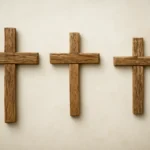
The cross is the most defining symbol of Christianity because it embodies both suffering and redemption through the life, death, and resurrection of Jesus. When the palm is transformed into a cross, the symbolism deepens: it invites worshippers to contemplate how triumph and suffering are inseparably linked in the story of salvation. The palm-cross form can serve as a tangible reminder that the path to glory in Christian faith is often entered through a cruciform shape—representing self-denial, sacrifice, and ultimate hope in resurrection.
Why combine the symbols: a holistic invitation
The practice of creating a cross from palm fronds—whether by weaving, folding, or tying them into a cruciform shape—encourages a contemplative reaction: how does one carry the victorious entry into Jerusalem into the daily life of faith, especially during Holy Week? For many believers, the palm cross becomes a personal signpost: it is carried to church or kept at home as a reminder to live with both gratitude for God’s mercy and readiness for the cross-shaped path of discipleship.
Historical background: how the Cross Palm Sunday tradition emerged
The history of Palm Sunday is anchored in the events leading up to Jesus’ crucifixion, as recounted in the four Gospels. Jesus’ entry into Jerusalem on a colt, with crowds spreading cloaks and palm branches on his path, is a narrative of recognition and proclamation. The liturgical celebration of Palm Sunday has long been part of Christian worship, marking the beginning of Holy Week and framing the Passion narrative with a form of public welcome.
Early roots: from triumph to contemplation
In the earliest Christian communities, the emphasis of Palm Sunday was on the public proclamation of Jesus as king and the disciples’ understanding of his mission. Over centuries, as Christian liturgy became more structured, the blessing of palms, processions, and the distribution of palm fronds came to symbolize the convergence of expectation and the call to repentance that characterizes Holy Week.
The specific practice of turning palm fronds into crosses—creating small palm crosses or larger cruciform arrangements—developed in various Christian communities, especially in the medieval West. Monastic traditions and parish life often encouraged simple, tangible acts of devotion that could be performed by laypeople. The cross-crafted palm forms became a portable sign of faith: something to carry home, to place in a household, or to use as a devotional object during the days of Holy Week.
Regional variations and timelines
Across different regions and denominations, the timing and emphasis of Cross Palm Sunday traditions have varied. In some places, the cross-made palm is prepared during the Palm Sunday service itself, while in others, the faithful bring home palm crosses to mark the week ahead. In parts of Europe, Latin-rite Catholic communities have long practiced the superstition of saving Palm Sunday palms to burn for the next year’s Ash Wednesday ashes. While this ash connection is distinct from the cross-making practice, it too demonstrates how the palm plant and its uses can connect the liturgical year from one season to the next.
Cross Palm Sunday in different Christian traditions
Latin Catholic and Anglican traditions
In many Catholic and Anglican churches, the liturgy on Palm Sunday includes a solemn blessing of palms, a processional entry, and readings from the Passion narrative. The Cross Palm Sunday tradition in these contexts often involves a dedicated moment in which parishioners are invited to receive a palm cross, or to gather palms that will be fashioned into crosses at home or in small-group settings. The cross-shaped palm may be distributed as a reminder of the call to carry one’s own cross in imitation of Christ, a symbolic link to the Passion of Jesus that is central to Holy Week.
Protestant and evangelical expressions
In many Protestant congregations, Palm Sunday services are characterized by vibrant worship, Bible-based preaching, and congregational participation. The Cross Palm Sunday craft is popular in Sunday schools and family ministries, where children and adults practice turning palms into crosses, sometimes as a simple flat cross from a single leaf or a small woven cross from several leaf segments. In some communities, the cross crafts are shared with members who cannot attend services, as a tangible sign of inclusion and care.
Eastern Christian and Oriental traditions
In Eastern Orthodoxy and other Eastern Christian traditions, Palm Sunday is also observed with processions and the blessing of branches. While cross-making from palms is less common in some Eastern liturgies, the Cross Palm Sunday concept still resonates through iconography and the art of palm cutting and weaving in various regional practices. The symbolism of Palm Sunday remains a bridge between welcoming Jesus and recognizing the path of the Cross that will be traveled during Holy Week.
How Cross Palm Sunday is used today
Liturgy and public devotion
In contemporary churches, the Cross Palm Sunday tradition often unfolds in two stages. First, a Palm Sunday service that blesses and distributes palms, followed by a separate or integrated opportunity for the creation of palm crosses. Some churches provide pre-cut palm cross kits that families can take home, while others invite people to participate in a workshop after the service.
Home devotion and family practice
The palm cross is a meaningful family craft and devotional reminder. Families may keep the cross in a visible place—on a kitchen shelf, a prayer corner, or a dining room table—as a daily sign of faith and a prompt to contemplate the themes of humility, service, and sacrifice that Holy Week foregrounds.
Educational and community settings
Outside of churches, many schools, youth organizations, and community centers host Palm Sunday workshops. In these settings, Cross Palm Sunday activities offer a bridge between faith, creativity, and cultural heritage. Students learn the biblical context, practice fine motor skills through weaving or folding, and leave with a palm cross that can be used in their homes or shared with others as a token of peace and reconciliation.
Artistic and cultural expressions
The cross-made palm has also inspired artistry and cultural expression. In some communities, palm crosses are integrated into public art installations or liturgical theater that dramatizes the events of Holy Week. In others, the palm cross is featured in church announcements, music, and sermons as a practical symbol of both victory and humility.
In recent years, people have encouraged responsible sourcing of palm fronds and mindful disposal after they have served their devotional purpose. Some churches coordinate the procurement of palm leaves from sustainable sources, and some communities use dried or recycled palm material to create crosses, reducing waste and honoring stewardship of creation. The environmental dimension of palm crafts is a growing area of attention for churches seeking to align tradition with contemporary ethical concerns.
Practical guidance: creating a palm cross
If you are new to Cross Palm Sunday practice, here is a simple, beginner-friendly guide to making a palm cross. The steps below describe a basic method that works with a single palm frond, though many variations exist depending on the width and length of the leaf.
Gather a fresh or dried palm frond. Fresh fronds are more pliable, but dried palms can still be transformed into a cross with patience.
Lay the palm frond on a flat surface with the leaf facing up. Identify the central vein and ensure the leaf is clean and free of mud or dust.
Split the frond so that you have two long, parallel strips that form the vertical and horizontal arms of the cross. One common method is to fold the leaf in a way that creates an elongated vertical stem.
Create the vertical stem by folding a portion of the palm to form a long, upright line. This becomes the main shaft of the cross.
Form the horizontal arm by weaving or bending another section of the frond to intersect the vertical stem near the top, creating a cross shape. The intersection is often secured by tucking or wrapping the leaf around itself.
Secure the form so that the cross holds its shape. Some traditions use a small strip of palm or a separate band to tie the arms in place.
Trim any excess leaf and present the finished palm cross. If you like, you can press the cross under a book for a short time to help it keep its form.
Variations of this process exist. In some regions, crafters use two or more palm fronds to weave a more intricate cross, sometimes producing a decorative “frame” around a central cross. In others, the cross is made by cutting small strips from the palm and weaving a lattice that yields a delicate cruciform ornament. The key idea remains the same: a palm cross is a tactile reminder of faith, made from the very symbols celebrated on Palm Sunday.
Global perspectives: diverse practices with a common message
From Latin America to Europe: cross forms in everyday life
Across many countries, palmbearing and the cross transformation are part of a shared Christian heritage. In Latin American communities, palm crosses are often exchanged as a gesture of welcome, solidarity, and spiritual blessing. In European churches, you may see palm crosses tucked into hymnals, tucked under seats, or displayed in windows as a sign of season and renewal. The practice travels with the faith, adapting to local customs while keeping the core symbolism intact.
African and Asian Christian communities
In Africa and parts of Asia, Palm Sunday remains a public, community-focused celebration with processions, vibrant music, and signs of hope. Palm crosses may be used in family altars or shared during church events, frequently accompanied by stories about resilience and grace in the face of hardship. In many contexts, the palm cross is also a symbol of peace among neighbors of different backgrounds, a reminder that hospitality and mercy are central to the Christian witness.
Indigenous and diaspora expressions
For indigenous Christian communities and diaspora churches, Cross Palm Sunday can be a convergence of traditional crafts and faith. Palm leaves may be sourced from local trees or cultivated in community gardens, and the craft of turning palms into crosses can become a communal activity that strengthens intergenerational ties. The palm cross thus becomes not just a symbol of religious belief but a living tradition that travels across cultures and languages.
Theology, devotion, and teaching around Cross Palm Sunday
Didactic and catechetical uses
For teachers and pastors, explaining the meaning of the palm cross helps illuminate the themes of Holy Week. The cross formed from the palm serves as a teaching tool about the paradox of victory through vulnerability and the way in which Christians interpret triumph through humility and service. In catechesis for children, the palm cross can be a concrete object that anchors stories, prayers, and songs about Jesus’ mission, the crowd’s acclaim, and the path toward the cross.
Preaching and liturgical emphasis
In sermons surrounding Cross Palm Sunday, preachers often highlight how the crowd’s declaration of “Hosanna” sits alongside Jesus’ awareness of the suffering ahead. This tension invites faithful readers to imitate Jesus’ example: welcoming God’s kingdom while remaining faithful through hardship. The palm cross thus becomes a bridge between exuberant praise and sober reflection—two poles that structure Holy Week.
The Cross Palm Sunday tradition can also function as a community-building practice, especially in times of social strain. Providing palm crosses to those who attend worship, or sharing the crosses with homebound members, reinforces a sense of belonging and mutual care. In this way, the palm cross carries a pastoral message: faith is not only about memory of Christ’s suffering but also about ongoing solidarity with neighbors near and far.
Environmental and ethical considerations
Palm fronds are a renewable resource, but their harvest should be mindful of sustainability and conservation. Churches and denominations increasingly encourage sourcing palms from sustainable plantations or from farms that minimize ecological impact. Reusing dried palms and recycling leftovers into new crafts can minimize waste. In some areas, people are exploring the use of alternative plant materials—such as local foliage or year-round evergreen branches—as an ethical option while preserving the symbolic meaning of the palm.
Inclusive language and accessible practices
Cross Palm Sunday programs are most effective when they invite participation from all ages and abilities. For those who cannot handle real palms, simulations or alternative materials (such as paper palm leaves or fabric crosses) can be offered. The goal is to allow everyone to participate in the meaning-making of Cross Palm Sunday without barriers, so that the underlying message—God’s mercy, the invitation to discipleship, and the hope of resurrection—remains accessible to all.
Safety and care in craft activities
When children are involved in palm-cross crafts, it is prudent to supervise and provide simple tools appropriate to their age. For younger participants, pre-cut shapes or ready-made palm cross kits can reduce risk while preserving engagement. For older youth and adults, more elaborate weaving can extend the learning moment and enrich the shared experience of preparing for Holy Week.
Decorative and symbolic cross forms
Some communities create palm-cross hybrids that incorporate additional symbolic elements, such as crossing two different kinds of leaves or embedding tiny beads or icons within the woven cross. Others fashion larger palm cruciform shapes to be displayed as a centerpiece in a worship space or used in processions.
Cross Palm Sunday and the liturgical year
The cross-made palm can function as a tangible link between Palm Sunday and the upcoming events of Holy Week. In some parishes, palms blessed on Palm Sunday are saved and burned for the next Ash Wednesday, while in others, the palm crosses kept at home become a yearly reminder of the journey from triumph to the cross to resurrection.
Digital and virtual expressions
In an age of online worship, some churches share video tutorials demonstrating how to craft palm crosses, or invite congregants to submit photos of their palm-cross projects. Virtual forums may feature discussions about the symbolism of Palm Sunday and the path through Holy Week, bridging physical distance with shared devotion.
The practice of Cross Palm Sunday demonstrates how Christian communities preserve ancient symbols while making them meaningful for contemporary life. The intertwining of the palm and the cross invites believers to celebrate what is good and to prepare for the costly path of discipleship. It links the public cry of “Hosanna” with the private prayer through the weeks ahead, reminding Christians that victory in God’s kingdom often comes through service, humility, and steadfast faith. Whether as a family activity, a parish rite, or a cultural expression, the palm cross remains a simple, tactile reminder of a profound spiritual truth: that the journey of faith through Holy Week is the union of praise and sacrifice, of victory and love, of palms laid down and a cross upheld.
Cross Palm Sunday: A combined emphasis on the palm branch and the cross, typically involving making crosses from palm fronds.
Palm Sunday: The Sunday before Easter commemorating Jesus’ entry into Jerusalem; marks the start of Holy Week.
Palm cross: A small cruciform object made from palm leaves, carried or displayed as a devotional sign.
Holy Week: The week leading up to Easter, including events from Palm Sunday through Easter Sunday.
Hosanna: A cry of praise from the crowd during Jesus’ entry into Jerusalem, signaling recognition of the Messiah.
Procession: A liturgical walk, often with palms, symbolizing the journey of faith and public witness.
Cruciform symbolism: The idea that the cross represents both suffering and salvation within Christian theology.









Leave a Reply