When you visit a church, you may notice a raised stand near the front, often placed beside the altar, communion table, or choir area. You might wonder, what are pulpits, and why does the speaker sometimes stand there instead of at a simple podium? A pulpit is a designated place from which a preacher or religious speaker addresses a congregation. It may be a tall, enclosed structure, a compact stand, or a modern lectern-style platform.
The word generally refers to the preaching position rather than only to a particular piece of furniture. In many churches, the pulpit represents the public ministry of proclaiming Scripture, explaining religious teaching, and addressing the spiritual life of the congregation. Its design and use vary widely among Christian denominations, buildings, and worship traditions.
Short answer: A pulpit is a church preaching stand or platform, usually positioned where the congregation can clearly see and hear the person delivering the sermon.
The main purpose of a pulpit is to provide a clear, visible place for preaching and teaching. From there, a pastor, priest, minister, or guest speaker may explain a passage of the Bible, connect it to daily life, lead a sermon, or give pastoral instruction. In some congregations, the pulpit is also used for announcements, testimonies, devotional talks, and special presentations.
A raised position helps the speaker be seen and heard by a large group. Before microphones, sound systems, and comfortable auditorium seating, height was especially useful. A preacher standing above the congregation could project a voice across a broad room and maintain a clear line of sight with people sitting at the back.
Many churches treat the pulpit as more than a practical aid. It can symbolize the authority and responsibility of public teaching. That symbolism explains why some pulpits are made from carefully selected wood, decorated with religious carvings, or placed in a visually prominent part of the sanctuary.
Preaching: delivering a sermon or homily to the congregation.
Teaching: explaining Scripture, doctrine, ethics, or religious practice.
Reading: presenting passages from the Bible or other approved texts.
Public leadership: guiding worship through announcements, prayers, or pastoral messages.
Visibility and sound: helping the speaker remain easy to see and hear.
Not every church uses its pulpit in exactly the same way. In one congregation, the minister may remain at the pulpit for most of the service. In another, the preacher may move among the congregation, use a small stand only for notes, or speak from the center of the platform to emphasize a more conversational style.
How pulpits differ from lecterns, podiums, and amboes
People often use pulpit, podium, and lectern as if they mean the same thing, but the terms have different meanings. Everyday usage is not always precise, and churches may use one word for furniture that another congregation would name differently.
A lectern is a stand designed to hold notes, a book, or a manuscript while someone reads or speaks. It may be used in a church, school, courtroom, conference room, or public ceremony. A lectern is usually lighter and less enclosed than a traditional pulpit, and it does not necessarily carry a religious meaning.
A podium, in its strict architectural sense, is a raised platform on which a person or object stands. In common American English, however, people frequently call a speaker’s stand a podium. A pulpit may sit on a podium or raised platform, but the words are not exact synonyms.
In many Roman Catholic, Anglican, Lutheran, and other liturgical churches, the stand used for Scripture readings is called an ambo. An ambo is specifically associated with proclaiming the readings during worship. It may be distinct from the place where a priest or minister gives the homily, although designs vary by church and tradition.
The easiest way to distinguish these terms is to consider both function and setting:
A pulpit is primarily connected with preaching or religious instruction.
A lectern holds reading material and can be used for many types of public speaking.
A podium is a raised platform, although many people use the word for a lectern.
An ambo is a liturgical stand associated especially with proclaiming Scripture.
Some modern church furniture combines these functions. A simple wooden stand may serve as the pulpit, lectern, and reading stand at different points in the service. The name depends on the congregation’s tradition and on what happens there.
Where the word pulpit comes from
The word pulpit comes through older European languages from the Latin word pulpitum, which referred to a platform or stage. The basic idea is a raised place from which someone can speak or perform before an audience. Its religious meaning developed as churches used elevated platforms for public reading and preaching.
This history helps explain why pulpits have often been higher than ordinary stands. The elevation was not only decorative. It allowed a speaker to reach a large gathering acoustically and visually, especially in churches with stone walls, high ceilings, and no electronic amplification.
Over time, the pulpit became closely associated with the minister’s role. In many Protestant traditions, preaching became a central part of worship, and the pulpit gained a particularly strong visual and theological presence. The structure might stand in the center of the front wall, above the congregation, or in another prominent position.
Some historical churches have pulpits with sounding boards, also called abat-voix. These canopies were placed above the speaker to help direct sound outward and downward. In buildings where natural acoustics were difficult, a sounding board served a practical purpose while also emphasizing the importance of the preaching position.
Traditional pulpits may include steps, rails, carved panels, book rests, candle holders, or a canopy. Others were built as part of the architecture rather than as movable furniture. Modern pulpits often use cleaner lines, lighter materials, and adjustable designs because sound systems have reduced the need for great height.
How pulpits are positioned inside churches
The position of a pulpit can communicate how a congregation understands preaching in relation to the rest of worship. Placement is not identical in every denomination, and a building’s age or floor plan may influence the arrangement. Still, several common patterns appear across churches.
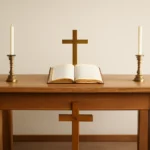
A pulpit may be placed in the center of the sanctuary, directly behind or near the communion table. This arrangement gives preaching a central visual position. It can suggest that teaching is a major part of the gathered church’s life, while the communion table or altar remains another essential focal point.
Some churches place the pulpit to one side and a lectern or ambo on the other. This arrangement separates the roles of preaching and Scripture reading. A speaker may use the lectern for readings and move to the pulpit for the sermon.
In churches with an altar or communion table, the pulpit may stand beside it rather than behind it. The arrangement can preserve a clear view of the table while giving the preacher a visible and acoustically effective position. In older buildings, the location may also reflect the original architecture rather than a recent design decision.
Contemporary churches sometimes use a central platform with no permanent pulpit at all. A portable lectern, music stand, or small table may be brought forward when needed. This allows the room to support preaching, music, drama, discussion, and other forms of community gathering.
Position also affects accessibility. A raised pulpit reached only by stairs may be difficult or impossible for some speakers to use. Many churches now consider step-free access, adjustable height, clear sightlines, and microphone placement when choosing or redesigning preaching furniture.
What different church traditions may call a pulpit
The meaning of a pulpit depends partly on the worship tradition in which it appears. Two churches may use similar furniture but understand its role differently. One may view it as the central place of biblical preaching, while another may give greater emphasis to the altar, communion table, or ambo.
In many Protestant churches, the pulpit has traditionally held a central place. Sermons may be relatively long and carefully structured, and the minister may preach from a substantial raised structure. Reformed, Presbyterian, Baptist, Methodist, and evangelical congregations can all use pulpits, although their designs and worship practices differ.
In Anglican and Episcopal churches, the building may contain several important speaking and reading positions. A pulpit can be used for the sermon, while a lectern or ambo is used for readings. Some historic churches have pulpits with elaborate woodwork or stone construction that reflect the building’s age and style.
In Roman Catholic churches, the term pulpit may be understood in a historical or general sense, but current liturgical practice often emphasizes the ambo for the proclamation of Scripture. The priest or deacon may preach from the ambo, from another suitable place, or from a separate pulpit depending on the church’s design and local practice.
Orthodox churches may use a raised platform, lectern, or other designated place for preaching and reading. The visual center of worship is shaped by the sanctuary, icons, altar area, and liturgical arrangement, so a pulpit may not dominate the room in the same way it does in some Protestant churches.
Some congregations use no traditional pulpit. A speaker may stand behind a transparent lectern, sit for a teaching session, or address the congregation from the floor. These choices do not necessarily indicate less respect for preaching. They may reflect a desire for physical closeness, flexibility, accessibility, or a less formal worship environment.
How pulpit design communicates meaning
A pulpit’s appearance can express the identity of a congregation. A large carved structure may connect the church with its history, while a small movable stand may communicate simplicity and adaptability. Neither style automatically makes the preaching more or less meaningful.
Height is one of the most noticeable design features. A tall pulpit can provide good visibility and recall older preaching arrangements. A low pulpit may create a more direct relationship between speaker and congregation. Churches often balance these goals with the need to keep notes, microphones, and electronic devices within easy reach.
Materials also carry associations. Wood is common because it is durable, warm in appearance, and easy to shape. Stone, metal, glass, and acrylic may be used to match a building’s architecture. Some churches select sustainable materials or reuse existing furniture when renovating their worship space.
Decorative details may include crosses, symbols connected with the denomination, carved flowers, geometric patterns, or panels that match the pews and altar. A pulpit may also display a seasonal cloth called a parament, especially in churches that follow a liturgical calendar. The color and design of the cloth can change during different seasons or festivals.
Practical features matter just as much as appearance. A useful pulpit may include a stable reading surface, concealed cable management, a microphone mount, lighting for printed pages, space for a tablet, and enough room for a Bible or service book. These features support the speaker without distracting the congregation.
Design principle: A pulpit should support clear communication and worship rather than compete with the person speaking or the central elements of the sanctuary.
How to use a pulpit respectfully and effectively
Using a pulpit well involves more than standing behind it. The speaker needs to remain audible, visible, and connected with the congregation. Furniture that looks impressive can still create problems if it blocks the speaker’s face, hides body language, or forces an awkward posture.
Before speaking, check the height of the reading surface and the location of the microphone. Notes should be easy to read without making you look down for long periods. If you are using a tablet, set it to a comfortable brightness and secure it so that notifications or movement do not interrupt the service.
Keep your voice directed toward the people rather than toward the page. A pulpit can tempt speakers to lean forward or read continuously. Briefly looking up helps you monitor the room, vary your delivery, and make the message feel like an act of communication rather than a private reading.
Use the available space carefully. A large pulpit can hold papers, books, water, and electronic devices, but placing too many items on it creates visual clutter. Arrange only what you need, and remove objects that are unrelated to the service.
Speakers should also learn the local customs. In one church, approaching the pulpit may follow a formal procession. In another, the minister may walk up casually after a song. Observe how the congregation uses the space and ask a church leader if a specific practice is expected.
Common pulpit mistakes to avoid
Blocking your face: Stand or adjust the microphone so the congregation can see you clearly.
Ignoring the microphone: Speak at a natural volume and test the sound before the service begins.
Reading every word with your head down: Mark notes so you can look up regularly.
Leaning on the furniture: Use a balanced posture and avoid rocking or gripping the edges.
Overloading the surface: Bring only the notes, books, water, and devices you actually need.
Forgetting accessibility: Make sure the pulpit can be reached and used by people with different mobility needs.
Moving it without permission: A pulpit may be connected to microphones, lighting, or a carefully planned worship space.
Letting the design overpower the message: Treat decoration as support for worship, not as the focus.
These points apply to guest speakers as well as regular clergy. A visitor should arrive early enough to learn how the microphone works, confirm where to stand, and find out whether the church uses a lectern, pulpit, or ambo for that part of the service.
Why some churches choose a portable or low pulpit
A permanent, raised pulpit is not practical for every congregation. Churches that meet in schools, community centers, rented halls, or multipurpose buildings often need furniture that can be moved and stored. A portable pulpit allows the room to serve as a worship space on one day and a meeting, classroom, or dining area on another.
Some churches choose a low stand because they want the preacher to feel physically closer to the congregation. The speaker can move more easily, interact with people, and use visual materials. This design may be especially useful for teaching that includes discussion, demonstrations, or participation from children and youth.
A low or portable pulpit can also support inclusive participation. People of different heights, ages, and mobility levels may find adjustable furniture easier to use. A church can preserve a recognizable preaching position without requiring every speaker to climb stairs or stand behind a tall barrier.
There can be trade-offs. A very small stand may not provide enough space for books or notes, and a low position may be harder to see in a large room. Good lighting, amplification, screen placement, and thoughtful room layout can address many of these limitations.
What pulpits symbolize beyond their furniture
For many congregations, the pulpit represents a trust placed in the person who speaks from it. The preacher is expected to handle Scripture carefully, teach responsibly, and address the congregation with humility. The furniture itself does not create authority; the community’s calling, training, and accountability give the role its meaning.
A pulpit can also symbolize the public nature of faith. Worship is not only private reflection. It includes shared teaching, common questions, moral guidance, and encouragement offered to a gathered community. Standing at the pulpit makes the message audible to everyone rather than limiting it to a small conversation.
At the same time, the pulpit can remind religious leaders that public speech carries responsibility. Words spoken from a prominent place may influence how people understand God, Scripture, other people, and their own obligations. Many traditions therefore connect preaching with careful preparation, prayer, study, and pastoral concern.
Historical pulpits may carry additional meaning because generations of people have heard sermons from the same place. A church may preserve an old pulpit as part of its architectural heritage, even after installing microphones or changing the worship arrangement. The object becomes a link between present members and the community’s earlier life.
The symbolism is not universal. Some congregations deliberately minimize the pulpit’s visual prominence to emphasize shared ministry, communal worship, or the importance of the altar and communion table. The central question is not whether one style is correct, but how the space helps the church worship, listen, learn, and serve.
How to identify a pulpit when visiting a church
If you are trying to identify a pulpit in an unfamiliar church, look for the stand or platform most closely associated with the sermon. It may be taller and more substantial than the lectern used for readings. It may contain a book rest, microphone, notes, or a small light.
Ask a member or church leader what the congregation calls each piece of furniture. Local terminology is often more useful than appearance. A simple stand may be the pulpit in one church, while a nearly identical stand may be called an ambo or lectern in another.
Notice how the furniture is used during the service. If a reader approaches it for a Bible passage, it may function as a lectern or ambo. If the pastor moves there for the main sermon, the congregation may regard it as the pulpit. Some churches use the same stand for both roles.
Also observe its relationship to the room. A pulpit may be raised, centered, decorated, or positioned near the front, but none of those features is required. Its defining characteristic is primarily its role as a place for public religious speaking.
Questions to ask when choosing a pulpit for a church
A congregation purchasing or designing a pulpit should begin with its worship practices rather than choosing a style based only on appearance. The right piece should fit the room, the speakers, and the way the church uses its space.
Will the pulpit be permanent, movable, or stored between services?
Can speakers of different heights use it comfortably?
Is the route to the pulpit step-free and safe?
Will the congregation be able to see the speaker’s face and hands?
Does the surface hold printed material, books, or a tablet securely?
Can microphones, lighting, and power cables be installed safely?
Does the design work with the altar, communion table, lectern, or choir area?
Is the material durable enough for frequent use and easy to maintain?
Does the size suit the room without blocking sightlines?
Does the design reflect the church’s tradition without distracting from worship?
A church may also want to test a pulpit in the actual room before buying it. A stand that looks appropriate in a catalog can appear too large in a small sanctuary or too low in a wide room. Testing helps reveal problems with visibility, sound, lighting, and movement.
Ultimately, a pulpit is both a functional tool and a sign of how a community gathers around teaching. Its best design makes the speaker easier to hear, the message easier to follow, and the worship space more usable for everyone.
Frequently asked questions
Is a pulpit only used by a pastor?
No. A pastor, priest, minister, deacon, visiting preacher, teacher, or other authorized speaker may use a pulpit. The person’s role depends on the church’s denomination and local practices. Some congregations also invite members to share testimonies or reflections from the pulpit, while others reserve it for ordained or formally appointed leaders.
Why are some pulpits elevated?
Elevated pulpits historically helped speakers project their voices and remain visible in large churches before modern sound systems. Height can also symbolize the public importance of preaching. Today, many raised pulpits are retained for tradition, architecture, or sightlines, while others have been replaced by lower stands that provide easier access.
Do all churches have a pulpit?
No. Some churches use a lectern, ambo, portable stand, or open platform instead. A few have no designated preaching furniture at all. The choice may reflect the church’s denomination, worship style, building layout, accessibility needs, or preference for a more informal and flexible arrangement.
What is usually kept on a pulpit?
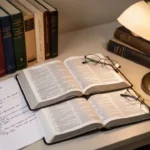
A pulpit commonly holds a Bible, sermon notes, a service book, or a tablet. It may also have a microphone, reading light, and water for the speaker. The exact contents depend on the church. Many speakers keep the surface mostly clear so the furniture remains orderly and does not distract from the sermon.





Leave a Reply