Church Floral Arrangements: Sanctuary Decor Ideas for Worship
Church Floral Arrangements: Sanctuary Decor Ideas for Worship
Church floral arrangements are more than decorative touches; they are a form of sacred symbolism and a practical tool for centering attention, guiding the sense of worship, and enhancing the beauty of the space where communities gather to reflect, pray, and celebrate. This article outlines sanctuary decor ideas and practical strategies for creating thoughtful, sustainable, and spiritually resonant arrangements that fit a variety of church buildings, sizes, and liturgical calendars.
Flowers in a sacred space serve several purposes at once. They are pilgrims of color that guide the eye toward the focal points of worship, such as the altar, the pulpit, and the baptismal font. They also carry symbolic weight within the liturgical year, echoing the church calendar and the theological rhythms of seasons, feasts, and rites. When thoughtfully integrated, floral design becomes an instrument for worshipful contemplation rather than mere decoration.
Symbolism and liturgical seasons
Understanding color symbolism, material choices, and placement helps align church floral arrangements with the season and the sermon’s theological themes. Common palettes and their associations include:
Advent and Christmas: Sky blues or purples for Advent, progressing to white and gold during Christmas for purity and joy.
Lent and Easter: Violet or plum for penitence, moving toward white, gold, or bright greens for resurrection joy.
Pentecost: Red representing the Holy Spirit’s fiery presence, often combined with white or gold for celebration.
Ordinary Time: Green foliage and blooms that symbolize growth and life in faith.
Funerals and memorial services: Subdued palettes such as cream, white, or soft greens, with a focus on dignity and consolation.
Core design principles for sanctuary florals
A successful sanctuary floral program balances beauty, symbolism, and practicality. The following design principles help churches maintain cohesive, respectful, and functional arrangements across the year.
Scale, proportion, and focal points
Floral pieces should respond to the architecture—not overwhelm it. In a grand cathedral, taller arrangements can accentuate vertical lines, while in a smaller chapel, compact centerpieces keep sightlines clear. Always identify a primary focal point (often the altar or a baptismal font) and arrange secondary elements to support rather than compete with it.
Color harmony and texture
Use a restrained color palette that reflects the season and the church’s interior finishes. Textures—smooth hydrangeas, airy orchids, delicate bells of Ireland, or evergreen sprigs—add depth without creating visual noise. Contrast and texture should be used deliberately to draw attention to textual or symbolic details, such as a cross centerpiece or a baptismal font during a service about new life.
Materials, bases, and safety
Choose reliable containers and secure bases to prevent tipping or spills, especially in spaces with open candlelight, moving processions, or children. For safety and durability, consider:
Stable, non-slip bases and weighted containers
Non-flammable materials around open flames or candlelight
Allergy-conscious options or fragrance-free design
Clear signage for fragile or high-value arrangements
Maintenance, rotation, and longevity
Develop a maintenance plan that aligns with worship schedules. For live arrangements, plan for mid-week quick refreshes, and for artificial or preserved stems, ensure that they look fresh year-round. A rotation schedule helps reduce fatigue from repetitive patterns while preserving the sense of occasion for special services.
Seasonal palettes and liturgical calendar
The liturgical calendar provides a framework for planning floral decor in advance. Each season carries a personality that can be amplified by careful floral choices, reducing last-minute pressure and ensuring a cohesive worship atmosphere.
Advent and Christmas
Advent and Christmas invite a sense of expectancy, celebration, and light. Design ideas include:
Velvet or satin ribbons in deep purples with touches of gold and white blooms for a regal yet serene mood
Advent wreaths and seasonal garlands that frame doorways or sanctuary windows
Symmetrical altar arrangements with tall branches or tapering centerpieces to create a sense of ascent toward the sacred
Lent and Easter
Lent emphasizes contemplation and penance, while Easter is about renewal and joy. Color use might include:
Subdued purples and mauves during Lent, transitioning to whites, golds, and bright greens at Easter
Bloom varieties that symbolize new life, such as white lilies or narcissus, balanced with greenery to avoid a crowded look
Minimalist, elegant arrangements near the altar and pulpit to honor the solemnity of the season
Pentecost
Pentecost invites energy and celebration. Design cues include bold red florals, vibrant greens, and dynamic forms that convey movement. Consider:
Vertical arrangements around liturgical stands to evoke the tongues of flame
Contrasting textures—feathery greens with structured blooms—to symbolize diversity in unity
Color accents that echo banners or choir robes during the service
Ordinary Time
During Ordinary Time, the focus is on growth, daily faith, and community life. Green is the anchor color, complemented by seasonal whites or soft backgrounds. Ideas include:
Naturalistic arrangements with local foliage and seasonal blooms
Low, unobtrusive centerpieces that allow visibility across the congregation
Minimalistic accents that highlight altar icons or lectern inscriptions
Funerals and memorial services
Funeral flowers aim to convey comfort, remembrance, and solidarity. Design considerations include:
Calm palettes (creams, whites, soft greens) and modest sizes for dignity
Symmetrical arrangements or a single focal bouquet near the casket or memory area
Clear statements of remembrance, such as a family’s preferred flowers or colors
Types of church floral arrangements
Different worship spaces and traditions call for a range of floral arrangements. The following categories describe common forms found in many churches. Each type can be adapted to suit architectural features and worship styles.
Altar arrangements
The altar is the visual and spiritual heart of the sanctuary. Altar arrangements should be substantial enough to command attention without obscuring sacred symbols like the cross or the chalice. Tips include:
Keep central elements at a height that respects sightlines from all seating areas
Use a grounding base with greenery to anchor blooms and provide a natural frame for the altar
Incorporate meaningful symbolic blooms for specific seasons or services
Floral displays near the pulpit or lectern can reinforce themes of proclamation and teaching. Consider:
Smaller, elegant arrangements that do not interfere with reading or microphone use
Seasonal color choices that echo the sermon series
Incorporation of greenery to soften lines and draw the eye toward the speaker
Pews, aisles, and processional bouquets
Processional florals contribute to the sense of ceremony as ministers enter. Options include:
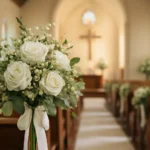
Bouquets or small arrangements attached to pew ends or inserted into aisle markers
Fresh or preserved garlands that frame the path without creating tripping hazards
Coordinated colors that link with altar and chancel displays
Baptismal font and chancel rail arrangements
Specific moments in worship deserve dedicated floral focus. For baptismal fonts and chancel rails:
Designs that accentuate baptism with light, uplifting color palettes
Railside garlands or small, respectful arrangements that frame the space
Materials chosen for ease of care and safety around water and candles
Communion table decor
Communion decor should be reverent and unobtrusive, highlighting the sacred act presented. Consider:
Minimal, elegant arrangements that do not crowd the communion elements
White florals or pale greens to symbolize purity and renewal
Clear containers and discreet placement to avoid distractions during the rite
Sanctuary tree and seasonal displays
For churches with limited space or a desire for a strong focal point, a single sanctuary tree or a seasonal display can become a unifying symbol. Ideas include:
A tall, slender arrangement in a durable pot that complements architectural lines
A seasonal tree with clusters of blooms or lights that can be updated through the year
Background greenery to provide continuity as other floral elements rotate
Materials and safety considerations
Choosing between live flowers and artificial blooms depends on budget, maintenance capacity, and safety concerns. Both have benefits, and many churches use a combination of both to balance aesthetics with practicality.
Live arrangements offer fragrance, seasonal authenticity, and a dynamic look. Artificial or preserved options provide consistency, longevity, and lower maintenance. Consider:
Allergies or sensitivities among congregation members
Local climate and space conditions that affect live plant viability
Volunteer availability for weekly care and watering
Budget and storage capacity for seasonal transitions
Safety and practicality
Safety considerations are essential in a busy worship space. Some practical steps include:
Secure wiring and drip trays to prevent slips or water damage
Low-profile arrangements near contact points to avoid obstruction
Flame-retardant ribbons and non-toxic materials when candles are used
Maintenance routines
Develop a routine that fits your church schedule. A sample plan might include:
Weekly quick-clean and water checks for fresh arrangements
Monthly rotation to prevent overuse of any one set of blooms
Seasonal refreshes that reflect the liturgical calendar
Sourcing, budgeting, and volunteers
Effective church floral programs balance artistry with stewardship. The right approach helps maximize impact while respecting resources.
DIY vs professional floral design
DIY arrangements are common in many congregations, especially for smaller budgets or volunteer-driven programs. However, professional florists bring expertise in:
Seasonal availability and substitution planning
Proportion, balance, and color theory tailored to your space
Technical aspects like safe installation, container selection, and preservation techniques
Budgeting effectively
Floral budgets vary widely, but some universal strategies help maximize impact:
Plan with the liturgical calendar to avoid costly last-minute purchases
Use a mix of fresh, preserved, and artificial elements to extend life and control cost
Build a rotating set of trusted suppliers and a few reliable volunteer teams
Volunteer roles and coordination
Successful programs rely on a team. Consider roles such as:
Floral coordinators who plan seasonal designs
Event leads who manage wedding or funeral florals to align with the church calendar
Setup and teardown crews who handle installation and removal on service days
Maintenance volunteers who refresh and water live arrangements
Vendor relationships
If you hire outside help, cultivate clear communication and expectations. Helpful practices include:
Providing a written brief with season, color palette, and symbolic goals
Agreeing on substitution policies if preferred blooms are unavailable
Scheduling pre- and post-service checks to ensure arrangements remain safe and presentable
Practical installation and ongoing maintenance
Executing a well-planned floral program requires organization. Below is a practical framework that can be adapted to most worship spaces, whether you’re sprucing up a historic sanctuary or decorating a modern worship center.
Preparation and planning timeline
Begin planning several weeks in advance of a major service, and maintain a rolling calendar for weekly needs. A typical timeline might include:
12–8 weeks before: establish theme, color palette, and major focal pieces
6–4 weeks before: confirm materials, suppliers, and volunteer rosters
2–1 weeks before: pre-assembly and rehearsal layout to ensure sightlines
On service day: bring in fresh elements, set up, and perform a final check
Setup and layout considerations
During installation, prioritize visibility, accessibility, and safety. Practical tips include:
Marking safe zones and keeping aisles clear for processions
Using discreet cables or stabilizers for tall arrangements
Coordinating with AV teams to avoid reflections or glare from glass containers
Rotation and refreshing strategies
To keep the sanctuary feeling fresh, consider a schedule that balances consistency with novelty:
Rotating a primary altar piece with smaller seasonal accents
Switching centerpiece styles after major feast days or events
Setting aside preserved or artificial accents that can be reused later
Accessibility, inclusivity, and aesthetics
Floral design in a worship space should be welcoming to all members of the congregation, including those with sensory differences or mobility challenges.
Color and visibility
Ensure that color choices do not hinder readability of banners, liturgical texts, or sermon notes. For example, strong red votives or deep violet arrangements should not obscure podiums or screen projections. Provide contrast by placing brighter blooms where they do not compete with text or icons.
Quiet dignity and congregational comfort
Favor arrangements that convey serenity without overpowering the space. This may mean opting for understated centerpieces, softer textures, and stable containers that minimize movement during services or processions.
Many churches approach floral decor as an opportunity for stewardship—reducing waste, reusing materials, and sharing beauty with the wider community.
Reusable and sustainable practices
Consider the following practices to minimize environmental impact while maximizing beauty:
Use locally grown blooms or seasonally available foliage to reduce transportation emissions
Choose containers that can be reused for multiple services or repurposed for church events
Donate finished arrangements to hospitals, shelters, or nursing homes when appropriate
Conscientious waste management
Plan for composting or proper disposal of plant material and packaging. If artificial elements are used, ensure they can be recycled or stored safely for future use.
Below are illustrative scenarios that demonstrate how a church might implement the principles discussed above. Each example focuses on a different context and demonstrates adaptable strategies for sanctuary floral design.
Small rural church with a simple sanctuary
This church often hosts congregants in a modest space with a long tradition of seasonal worship. Design considerations:
Altar arrangements that emphasize vertical lines and a single focal bloom feature
Pew-end bouquets in seasonally appropriate colors that are easy to maintain by a small volunteer crew
Use of preserved greens between seasons to maintain continuity with minimal upkeep
Mid-size urban church with an active choir and multiple services
In an environment with higher foot traffic, a coordinated program helps maintain consistency across services:
Rotating altar pieces that align with sermon series and choir repertoire
Compact pulpit arrangements designed for clear speech projection
Processional bouquets that reflect the season and are easy to move during ceremonies
Large historic cathedral with a grand sanctuary
A cathedral offers architectural grandeur and a more formal approach to floral design. Approach ideas include:
Statement pieces that echo the building’s arches and stonework
Balancing vivid seasonal colors with gold and white accents for liturgical solemnity
A dedicated team to handle large, long-lasting installations and seasonal transitions
Conclusion
Floral design for worship spaces is a meaningful practice that blends artistry, theology, and stewardship. When planning church floral arrangements, consider how each piece communicates a season’s message, supports the liturgy, and honors the shared space where a community gathers to worship, pray, and serve. A thoughtful sanctuary decor program is not merely about beautifying a room; it is about creating a sensory environment that helps worshipers feel welcomed, connected, and invited into the mystery and grace of the faith community. By attending to symbolism, scale, color, and safety, churches of any size can cultivate a vibrant, sustainable floral presence that complements sermon themes, reinforces community identity, and elevates the sacred atmosphere of every service.








Leave a Reply