Homiletics: How to prepare and preach a faithful sermon
Homiletics: How to prepare and preach a faithful sermon
Homiletics is the study and practice of preaching. It brings together biblical interpretation, sermon organization, theological judgment, communication, and delivery so that a preacher can explain God’s Word clearly and apply it faithfully. Put simply, homiletics helps answer two practical questions: What should this sermon say? and How should it be communicated to these people?
Good homiletics does more than produce an interesting speech. It helps a preacher move from a biblical text to a truthful, understandable, and pastorally useful message. The process includes studying the passage, identifying its central claim, arranging supporting points, choosing illustrations, preparing applications, and speaking to an actual congregation with care.
The word homiletics comes from a Greek term associated with conversation or discourse. In Christian theology, it became connected with the craft of preaching. The field examines both the content of a sermon and the methods used to communicate it.
Homiletics is not simply a collection of public-speaking tricks. A sermon may have a polished introduction, memorable language, and confident delivery, yet still fail if it mishandles Scripture or gives listeners no faithful way to respond. Strong preaching joins sound interpretation with clear communication.
The discipline matters because preaching carries unusual responsibility. A preacher speaks to people who may be grieving, confused, skeptical, spiritually hungry, or making serious decisions. The sermon should therefore be accurate, honest about the biblical text, attentive to the congregation, and directed toward formation rather than performance.
Core idea: Homiletics is not about making a sermon sound impressive. It is about helping people hear, understand, and respond appropriately to the truth of Scripture.
A short history of homiletics in Christian preaching
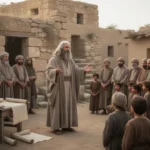
Preaching developed from the public proclamation found in the Bible and the teaching practices of Jewish and early Christian communities. Jesus taught in synagogues, homes, outdoor settings, and religious gatherings. The apostles preached to both Jewish and non-Jewish audiences, adapting their explanations to the people in front of them while maintaining the central message of the gospel.
Early Christian teachers gradually reflected on how sermons should be prepared and delivered. Augustine’s work on Christian teaching, for example, considered the relationship between biblical interpretation, persuasion, and the spiritual character of the speaker. Over time, preaching traditions developed around exposition, doctrine, rhetoric, pastoral care, and evangelism.
Different churches have emphasized different approaches. Some traditions favor expository preaching, which follows the meaning and movement of a particular passage. Others frequently use topical sermons, lectionary preaching, narrative sermons, catechetical teaching, or a combination of methods. Homiletics provides tools for evaluating each approach rather than requiring every preacher to use one fixed format.
How to prepare a sermon through homiletics
A reliable sermon process begins with the biblical text and ends with a message shaped for a particular congregation. The steps may overlap, and experienced preachers often move back and forth between them. Still, a clear sequence protects the sermon from becoming either an unorganized collection of thoughts or a personal speech loosely connected to Scripture.
Choose or receive the preaching text. Identify the passage, its boundaries, and the reason it belongs in the service or teaching setting.
Read the passage repeatedly. Read it in several translations, observe repeated words and contrasts, and record your first questions before consulting outside resources.
Study the context. Examine the surrounding chapters, the book’s purpose, the historical setting, the literary genre, and the original audience as far as the evidence allows.
Identify the passage’s central claim. State in one sentence what the text communicates, not merely what topic it mentions.
Determine the sermon’s purpose. Decide what you want listeners to understand, believe, feel, or do because they have heard this message.
Build a coherent structure. Arrange the sermon so that each movement supports the central claim and leads naturally to the next.
Develop explanation and application together. Show what the text means and how that meaning addresses real lives without forcing modern ideas into the passage.
Write, revise, and practice. Remove repetition, clarify transitions, test the timing, and rehearse the message aloud before preaching.
This process is not mechanical. Prayer, theological reflection, pastoral knowledge, and discernment remain essential. A method can support faithful work, but no method can replace careful reading, mature judgment, or love for the people receiving the message.
How to interpret Scripture before writing a sermon
Preaching begins with interpretation, often called exegesis. Exegesis asks what a passage meant in its original literary and historical setting. It is different from eisegesis, which reads a preferred idea into the text and then treats that idea as though the passage produced it.
Start by observing what is actually present. Pay attention to the speaker, audience, setting, repeated terms, commands, promises, questions, conflicts, and changes in tone. Consider how the passage connects to what comes before and after it. A verse removed from its paragraph can appear to say something quite different from the author’s larger argument.
Genre also affects interpretation. A proverb, parable, lament, prophecy, historical narrative, epistle, and apocalyptic vision should not all be read in exactly the same way. Poetry may use imagery and parallelism; narrative may communicate through character and action; an epistle may develop a sustained argument. Recognizing genre helps the preacher avoid turning every statement into a universal formula.
Original-language tools can assist study, but they should be used responsibly. Looking up a Greek or Hebrew word does not automatically reveal its full meaning, and a dictionary entry cannot replace attention to context. A preacher should also compare trustworthy commentaries, theological resources, cross-references, and the broader witness of the Christian tradition.
A sermon should make the biblical passage clearer, not make the preacher’s private theory sound biblical.
How to find a sermon’s big idea
Every sermon benefits from a controlling idea, sometimes called the big idea, proposition, or sermon thesis. This is the central statement that holds the message together. If listeners cannot tell what the sermon is ultimately saying, even accurate material may feel scattered.
A useful big idea usually includes both the subject and the claim. “Faith” is a subject, not a complete sermon idea. “The passage calls anxious believers to trust God’s care instead of allowing fear to control their choices” makes a claim that can guide explanation and application.
To test a proposed big idea, ask whether it is supported by the whole passage rather than one isolated phrase. Ask whether it is specific enough to shape the sermon and broad enough to include the passage’s major movements. It should also be expressed in language ordinary listeners can understand without learning specialized theological vocabulary.
Text-centered: The main idea should arise from the passage’s meaning.
Clear: A listener should be able to repeat it in simple words.
Focused: One sermon should normally develop one controlling claim.
Pastoral: The idea should address the real spiritual or moral situation of the congregation.
Actionable: It should point toward a faithful response rather than stopping at information.
How sermon structure guides listeners
Structure gives a sermon direction. It tells listeners where they are, why a point matters, and how the pieces fit together. A common sermon structure includes an opening, explanation of the text, development of the main points, application, and a conclusion that gathers the message into a clear response.
The opening should create orientation rather than suspense for its own sake. It may present a human question, a tension in the passage, a recognizable situation, or a concise statement of the issue. The opening should connect with the sermon’s real subject and move toward the biblical text quickly.
The body of the sermon should contain a limited number of major movements. Three points are not automatically better than two, and a sermon does not need a symmetrical outline if the passage has another natural shape. The right number depends on the text, the occasion, the time available, and what listeners can reasonably retain.
Transitions are small sentences that explain movement. They can show that the preacher is moving from background to meaning, from meaning to implication, or from one part of the passage to another. Without transitions, listeners may understand each point separately but miss the logic of the whole sermon.
The ending should not introduce an entirely new argument. It should reinforce the central claim, gather the main implications, and invite an appropriate response. A strong ending may return to the opening question, restate the gospel connection, offer a concrete next step, or leave the congregation with a carefully chosen image from the passage.
Common forms of sermon organization
Homiletics recognizes several legitimate sermon forms. Each has strengths and risks, so the form should serve the biblical text rather than force the text into a preferred template.
Expository sermons
An expository sermon explains and applies a passage in a way that follows its meaning and structure. The sermon may cover a paragraph, a chapter, or a larger unit depending on the setting. Its strength is close attention to Scripture; its danger is becoming a running commentary with little clear purpose or connection to listeners.
Topical sermons
A topical sermon addresses a subject such as forgiveness, suffering, prayer, justice, or Christian vocation by drawing from several biblical passages. This approach can meet a congregation’s particular questions, but it requires careful handling of context. The preacher should avoid collecting isolated verses merely because they contain a desired word.
Narrative sermons
A narrative sermon helps listeners follow the movement of a biblical story or presents truth through a sustained human situation. It may emphasize conflict, turning points, character, setting, and resolution. Narrative preaching should remain faithful to the text and should not invent dialogue, motives, or details that Scripture does not provide.
Textual sermons
A textual sermon develops a message from a short biblical text or a particular phrase. It can be concise and memorable, especially in certain worship settings. The preacher must still consider the surrounding context so that a short text does not become a pretext for a message unrelated to its meaning.
Lectionary preaching follows an assigned cycle of readings, while doctrinal preaching explains central Christian beliefs. Both can provide balance across Scripture and the church’s teaching. They require clear connections between doctrine, biblical evidence, and the lived faith of the congregation.
How to connect biblical meaning with present-day life
Application answers the question, What difference should this truth make? It should not be an afterthought added in the final two minutes. As you interpret the text, consider how its claim addresses beliefs, desires, habits, relationships, decisions, suffering, worship, and hope.
Specific application is usually more helpful than vague instruction. “Trust God more” is difficult to act on without further explanation. A clearer application might identify how trust affects a person’s response to uncertainty, the way they speak to family members, the choices they make under pressure, or the practices that help them seek wise counsel.
Applications should also account for different listeners. The same sermon may reach a committed Christian, a new believer, a person with serious doubts, and someone attending church under pressure from a family member. Avoid assuming that everyone has the same experience, resources, family structure, health, or level of spiritual maturity.
For understanding: What mistaken idea does the passage correct?
For belief: What truth should listeners trust or confess?
For character: What attitude or virtue does the text cultivate?
For conduct: What practice, decision, or relationship should change?
For comfort: What hope does the passage offer to people who are suffering?
For community: How should this truth shape the church’s life together?
Application must be proportionate to the gospel and to the text. Preaching should not reduce Christian faith to self-improvement, nor should it use guilt as a substitute for spiritual formation. It should present the response in a way that reflects grace, truth, repentance, faith, wisdom, and dependence on God.
Pastoral safeguard: Avoid applications that pressure people to disclose trauma, remain in dangerous situations, or accept abuse as a test of faith. Biblical faithfulness includes protecting the vulnerable and directing people toward appropriate pastoral, medical, legal, or professional help.
Why illustrations help and when they distract
Illustrations make abstract ideas easier to picture. They can come from ordinary life, history, literature, personal experience, or a situation familiar to the congregation. A good illustration does not replace explanation; it gives the explanation a concrete shape that listeners can remember.
Use illustrations that genuinely clarify the sermon’s claim. A personal story should serve the congregation rather than showcase the preacher. Avoid exaggerated stories, questionable statistics, confidential details, and examples that embarrass family members or identifiable church attendees.
Illustrations should also be varied. A sermon filled with dramatic stories may feel emotionally intense but intellectually thin. A sermon with no concrete examples may be accurate yet difficult to retain. The best balance allows Scripture to remain central while everyday situations help listeners see how its meaning reaches their lives.
How language and delivery affect a sermon
Delivery includes voice, pace, pauses, eye contact, posture, gestures, movement, and use of notes. These features do not create faithful preaching by themselves, but they affect whether listeners can follow the message. A rushed sermon can make a careful argument sound uncertain, while a flat delivery can hide the significance of a powerful text.
Use spoken language rather than academic prose. Shorter sentences, concrete verbs, and clear transitions usually work better aloud than long paragraphs filled with qualifications. Define necessary theological terms, but do not assume that listeners know what words such as atonement, sanctification, or eschatology mean.
Practice aloud because written words sound different when spoken. Listen for awkward phrases, repeated expressions, unclear references, and places where the argument loses energy. Time the sermon in a realistic setting, allowing for Scripture readings, pauses, congregational response, interpretation, and any planned interaction.
Notes should support communication, not prevent it. Some preachers use a complete manuscript, some use a detailed outline, and others work from brief prompts. The most suitable method is the one that protects accuracy while allowing genuine attention to the congregation.
The preacher’s character and ethical responsibility
Homiletics includes the person who preaches, not only the sermon that is delivered. Authority in the pulpit can be misused through manipulation, personal attacks, political coercion, financial pressure, or claims that the preacher’s opinions carry divine authority. Ethical preaching requires humility about the difference between Scripture and the preacher’s interpretation.
A preacher should represent opposing views accurately, avoid plagiarism, acknowledge uncertainty where appropriate, and handle personal stories with permission and discretion. Sources, quotations, statistics, and illustrations should be used honestly. If a mistake is discovered, correcting it publicly is usually better than protecting an appearance of infallibility.
Preaching also requires awareness of power. Listeners may feel unable to challenge a minister, especially when the sermon addresses marriage, parenting, sexuality, money, mental health, or political questions. Strong preaching does not exploit that vulnerability. It speaks with conviction while leaving room for pastoral care, responsible disagreement, and further conversation.
How to revise a sermon before preaching
Revision is where many sermons become clearer. After drafting, read the sermon as a listener rather than as its author. Look for places where you are repeating a point, assuming information, changing subjects without warning, or using an illustration that attracts more attention than the biblical claim.
A useful revision pass can focus on one issue at a time:
Truth: Does every major claim accurately represent the text and Christian teaching?
Focus: Does every section support the sermon’s central idea?
Clarity: Can a listener understand the argument without seeing the notes?
Proportion: Do explanation, illustration, and application receive appropriate space?
Pastoral care: Could any wording shame, stereotype, confuse, or unnecessarily wound people?
Memory: What one sentence should listeners be able to remember after the service?
Ask a trusted person to listen to a practice version when possible. Invite specific feedback rather than general praise: Where did the message become unclear? What seemed most important? What application did you hear? Which part felt unnecessary?
How homiletics differs from public speaking
Homiletics overlaps with rhetoric and public speaking, but it has a distinct purpose. Public speaking may aim to inform, persuade, entertain, motivate, or advocate. Homiletics is concerned with preaching as an act of Christian proclamation and pastoral formation, grounded in Scripture and directed toward the church’s worship and mission.
That distinction does not make communication skills irrelevant. A sermon still needs a coherent argument, effective language, appropriate emotional tone, and audible delivery. However, technique remains subordinate to truth and service. A captivating sermon that distorts Scripture is not successful homiletics, while a simple sermon that faithfully clarifies and applies the text may serve its purpose very well.
The preacher’s goal is not to make listeners admire the preacher’s cleverness. The goal is to help them encounter the meaning of the text, understand its significance through the gospel, and consider a faithful response in the presence of God and the gathered community.
Questions that help evaluate a finished sermon
Before preaching, take a final look at the message as a whole. Evaluation should be both theological and practical. A sermon can be doctrinally accurate but poorly organized, or pastorally sensitive but weakly grounded in Scripture.
What is the one sentence this sermon is saying?
Where does that sentence come from in the biblical text?
Have I explained the passage before asking listeners to apply it?
Have I shown the connection between the text and the good news of Christ where appropriate?
Will people with different experiences hear a responsible and compassionate application?
Are the illustrations accurate, respectful, and necessary?
Does the ending offer a clear response rather than emotional pressure?
Have I practiced enough to speak naturally and stay within the available time?
These questions do not create a perfect sermon. They help expose avoidable weaknesses and keep the preacher focused on the responsibility of the task. Homiletics is best understood as a lifelong discipline: every sermon offers another opportunity to read more carefully, communicate more clearly, and serve listeners more faithfully.
Frequently asked questions
Is homiletics only for ordained ministers?
No. Homiletics is useful for anyone who teaches or preaches in a Christian setting, including pastors, seminary students, lay speakers, missionaries, youth leaders, and small-group teachers. The level of formal training may differ, but the central responsibilities remain: interpret Scripture carefully, communicate clearly, understand the audience, and avoid claiming more authority than the text or the speaker’s role allows.
What is the difference between homiletics and exegesis?
Exegesis focuses on discovering what a biblical passage means in its literary, historical, and theological context. Homiletics uses that interpretation to prepare and deliver a sermon for a particular congregation. Exegesis asks, “What does this text mean?” Homiletics adds, “How should this meaning be proclaimed, explained, and applied to these listeners?”
How long should a sermon be?
There is no universal ideal length. The appropriate time depends on the church tradition, service structure, audience, subject, and preacher’s ability to sustain a clear message. A shorter sermon is not automatically better, and a longer sermon is not automatically more thorough. Aim to say what the text requires, remove repetition, and respect the congregation’s available attention and the service’s overall purpose.
Can a sermon be biblical without being expository?
Yes. Topical, narrative, doctrinal, textual, and lectionary sermons can all be biblical when they handle their sources accurately and place them in context. The essential issue is not the label or format but whether the sermon’s claims arise responsibly from Scripture, represent the Christian faith truthfully, and lead to applications that fit the text rather than forcing it to support a preconceived message.









Leave a Reply