What is a tabernacle? Biblical and church meanings
What is a tabernacle? Biblical and church meanings
When you see a small, ornate cabinet near the front of a Catholic church, you may wonder what it is used for. Or perhaps you have encountered the word while reading Exodus and assumed it meant an ordinary tent. A tabernacle is a sacred dwelling place, but the meaning depends on the setting: in the Bible, it was the portable sanctuary where God’s presence was associated with Israel; in many Christian churches today, it is the place where consecrated Communion bread is reserved.
The word comes through Latin from a term meaning tent or dwelling. The biblical tabernacle was a carefully designed worship complex that the Israelites carried during their years in the wilderness. The church tabernacle is usually a fixed, secure container used to preserve the Eucharist for Communion outside the main service and for ministry to people who cannot attend.
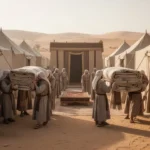
The biblical tabernacle was a portable sanctuary for Israel’s worship after the exodus from Egypt. It gave the Israelites a central place for sacrifices, prayer, priestly service, and the symbolic presence of God while they traveled through the wilderness. Rather than being one simple tent, it was a tent surrounded by a courtyard and furnished with objects used in worship.
In Exodus, God gives Moses detailed instructions for its construction. The materials included wood, woven fabrics, precious metals, and other offerings from the people. The design reflected a clear movement from the public area outside to increasingly restricted sacred spaces inside.
The structure could be taken down and transported when the Israelites moved. Priests and Levites had assigned responsibilities for caring for its furnishings and carrying them. This mobility mattered because Israel had not yet settled in one permanent location.
Helpful distinction: The biblical tabernacle was not the same thing as the later Jerusalem Temple. The tabernacle traveled with Israel; the Temple was a permanent sanctuary built in Jerusalem.
The tabernacle was also called the tent of meeting in biblical passages. That name emphasizes its purpose as a place where God met with Moses and where the community came before God. The phrase does not mean that the entire nation entered the innermost room whenever it wished. Access was arranged according to the boundaries, priests, and rituals described in the law.
How the biblical tabernacle was arranged
The tabernacle had several connected areas, each with a particular role. The outer courtyard was enclosed by curtains and contained the bronze altar and a basin used by the priests. The main tent stood inside this courtyard and was divided into two rooms: the Holy Place and the Most Holy Place, also called the Holy of Holies.
The courtyard and its furnishings
The courtyard was the most accessible part of the sanctuary, although it was still a consecrated space. The bronze altar stood there for the offerings prescribed in Israel’s worship. It was large enough for the sacrificial activity connected with the community’s religious life.
A basin, often described as a laver, was placed between the altar and the entrance to the tent. Priests washed there before carrying out their duties. This washing represented the ceremonial preparation expected of those serving in the sanctuary.
The courtyard’s arrangement made a visual point: worship began in a public area but moved toward a more restricted center. Nearness to the sacred center involved preparation and responsibility, not casual access.
The Holy Place
The first room inside the tent was the Holy Place. It contained several significant furnishings:
The lampstand: A specially made gold lampstand provided light in the tent and became a lasting symbol associated with Israel’s worship.
The table for the bread of the Presence: Bread was set before God as part of the sanctuary’s worship practices, representing Israel’s continuing relationship with God.
The altar of incense: Incense was burned at designated times, creating a fragrant offering connected with prayer and priestly service.
Only authorized priests served in the Holy Place. The room was separated from the inner sanctuary by a veil, a substantial curtain that marked a boundary between the two spaces.
The Most Holy Place
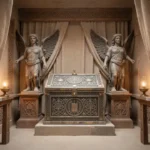
The innermost room was the Most Holy Place, or Holy of Holies. It contained the Ark of the Covenant, a sacred chest associated with the covenant between God and Israel. The ark held the tablets of the covenant and was covered by a sacred lid often called the mercy seat or atonement cover.
The biblical descriptions place cherubim above the ark’s cover. This imagery expressed the holiness and heavenly rule associated with God’s presence. The Most Holy Place was not an ordinary room for general worship. It represented the most concentrated and restricted area of sacred space.
According to Leviticus, the high priest entered the Most Holy Place in connection with the annual Day of Atonement. The ritual involved sacrifice, confession, and purification for the sanctuary and the people. This limited access reinforced the seriousness of approaching God within the covenant system.
The tabernacle’s design moved from an outer courtyard to an inner sanctuary, showing increasing restriction and holiness.
Why the tabernacle mattered to ancient Israel
The tabernacle mattered because it expressed several major ideas at the same time. It showed that God was present with the people, even while they lived as a traveling community. It also showed that God’s holiness was not to be treated casually and that worship required ordered practices, appointed ministers, and appropriate offerings.
In Exodus, the cloud covering the tabernacle and the appearance of glory within it signify divine presence. The cloud’s movement also helped direct the community’s travel: when it remained, the people stayed; when it lifted, they set out. This image connects worship with the daily life and movement of the entire nation.
The tabernacle also gave Israel a shared center. The tribes were organized around it during their wilderness encampments, and the sanctuary served the whole covenant community. It was not merely a private religious object owned by a king or an individual family.
Its construction carried another message. The people contributed materials and labor, while skilled workers made the furnishings according to the instructions given through Moses. The sanctuary therefore represented a communal act of worship, even though only particular priests carried out certain services.
Several biblical passages use tabernacle imagery in ways that extend beyond the physical structure. The “tent” can suggest God dwelling among people, the meeting of heaven and earth, or the temporary character of human life. Those later uses should not erase the historical description, but they show how strongly the sanctuary shaped biblical imagination.
Do not confuse two biblical terms: The Tabernacle was Israel’s movable sanctuary. The Feast of Tabernacles, also called Sukkot, is a separate Jewish festival associated with temporary shelters and remembrance of the wilderness years.
The tabernacle continued to be important after Israel entered the land of Canaan. Biblical books describe it at different locations before worship was eventually centered in Jerusalem. Its role prepared the way for the Temple, but the two institutions should not be collapsed into one another.
How the tabernacle relates to the Jerusalem Temple
The Jerusalem Temple served many of the same broad purposes as the tabernacle, including sacrifice, priestly service, and worship connected with God’s covenant. The major difference was permanence. The tabernacle could be dismantled and transported, whereas the Temple was established in Jerusalem as a fixed national sanctuary.
King Solomon is traditionally associated with the construction of the First Temple, described in 1 Kings and 2 Chronicles. Later, that Temple was destroyed, and a Second Temple was built after the exile. The Second Temple was later expanded under Herod and stood during the time of Jesus before its destruction by Roman forces in the first century.
The Temple inherited ideas from the tabernacle, including sacred divisions, priestly duties, an altar, and an inner sanctuary. In Christian interpretation, the tabernacle and Temple are often read as part of a broader biblical story about God dwelling with humanity. Christian writers also connect the sanctuary’s themes to Jesus, worship, and the church, although different Christian traditions explain those connections in different ways.
Judaism does not use a tabernacle in the same way some Christian churches use a church tabernacle for reserved Communion. Modern Jewish worship centers on the synagogue and the Torah, while the ancient Temple and its sacrificial system are historical and theological reference points. A temporary booth used during Sukkot is called a sukkah, not the ancient wilderness sanctuary itself.
What a tabernacle means in a Christian church today
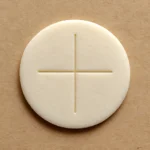
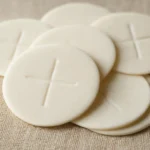
In many Catholic churches, a tabernacle is a locked, dignified container for consecrated hosts. During the Mass, bread and wine are consecrated according to Catholic belief. Some consecrated bread is then kept in the tabernacle so it can be taken to people who are sick or unable to attend Mass, and so Catholics can pray in the presence of the reserved Eucharist.
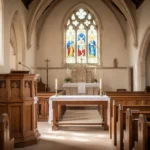
The church tabernacle is usually placed in or near the sanctuary, although its exact location and design can vary according to church architecture and liturgical practice. It may look like a small metal safe, a decorated cabinet, or an ornate box built into an altar or wall. Its purpose is both practical and devotional: it protects the Eucharist and identifies the place where it is reserved.
A small lamp, commonly called a sanctuary lamp, is often kept burning near the tabernacle. In Catholic practice, this lamp indicates that the Blessed Sacrament is present. Catholics typically show reverence when entering or passing before the tabernacle, often by genuflecting when the Eucharist is reserved there and local practice calls for it.
Several details distinguish this use from the biblical tabernacle:
It is a container, not a complete sanctuary: A church tabernacle does not include a courtyard, altar system, or priestly tent.
It holds consecrated bread: Its purpose is connected with the Eucharist, not with the Ark of the Covenant or ancient animal sacrifices.
It is normally fixed in place: Unlike the wilderness tabernacle, it is not designed to travel with a community.
It supports ongoing pastoral care: Reserved Communion may be brought to the sick, dying, or homebound by authorized ministers.
For Catholics, the tabernacle is therefore more than a storage cabinet. It points to the belief that Christ is truly present in the consecrated Eucharist. This belief is called the Real Presence, though Catholic explanations distinguish the sacramental presence of Christ from an ordinary physical presence.
How other Christian traditions use the word tabernacle
The meaning of “tabernacle” is not identical in every Christian tradition. Some churches use a tabernacle to reserve Communion, while others do not reserve the sacrament in the same way. A church may also use the word in a broader biblical or architectural sense without referring to a specific cabinet.
Anglican and Episcopal churches may have a tabernacle or aumbry for reserving consecrated bread and wine, depending on the parish’s tradition and theology. An aumbry is a small cupboard or niche, often built into a wall, used for sacred vessels or reserved sacrament. The terminology and reverence shown can differ from one congregation to another.
Some Lutheran churches reserve the sacrament, while others place greater emphasis on Communion being received during the gathered service. Methodist, Baptist, Reformed, and many non-denominational churches commonly do not use a tabernacle for reserved Communion, because their understanding of Christ’s presence and the purpose of the Lord’s Supper differs.
In some Protestant contexts, “tabernacle” appears in a church name or refers poetically to a worship space. That usage may draw on the biblical idea of God dwelling among people rather than on the Catholic practice of reserving the Eucharist.
When you encounter the word, context usually provides the answer. Ask three questions:
Is the setting Exodus or another biblical passage? The word probably refers to Israel’s portable wilderness sanctuary.
Is the setting a church building? It may mean a cabinet that holds consecrated Communion bread.
Is the setting a Christian church name or sermon theme? It may be a symbolic reference to God dwelling with people.
The same word can therefore identify a historical sanctuary, a liturgical furnishing, or a theological image. In every use, however, the central idea is related to dwelling, presence, and sacred space.
What to look for when you see a church tabernacle
If you are visiting a church and want to identify the tabernacle, look near the altar or sanctuary for a small, often ornate cabinet. It may have a cross, a veil, or another Christian symbol on its door. A sanctuary lamp nearby is a strong indication that the church reserves the Blessed Sacrament there.
The tabernacle is not usually the place where the congregation receives Communion during the service. Instead, it preserves hosts consecrated at a previous Mass or another Eucharistic celebration. During Mass, Communion may be distributed from hosts consecrated during that service, from the tabernacle, or from both, depending on local practice.
If you are unfamiliar with the church’s customs, observe the people around you or ask a priest, pastor, deacon, or usher respectfully. Practices concerning kneeling, genuflecting, prayer, and access to the sanctuary can vary. Visitors are not expected to imitate a gesture they do not understand.
The church tabernacle also connects worship with care for others. Because consecrated hosts can be carried beyond the church, the Eucharist reaches people in hospitals, nursing homes, private residences, and hospice settings. Its presence points beyond the cabinet itself to the church’s ministry of prayer, Communion, and pastoral accompaniment.
So, when someone asks, “What is a tabernacle?” the clearest answer depends on the context. In the Bible, it was Israel’s portable sanctuary in the wilderness. In many churches today, it is a sacred cabinet that reserves consecrated Communion. Both meanings center on the idea of a holy dwelling and the belief that God is present among a worshiping people.
Frequently asked questions
Is the tabernacle the same as an altar?
No. The altar is the table or structure used for the Eucharistic celebration and, in some traditions, for other offerings or sacred actions. The tabernacle is a separate container used in many churches to reserve consecrated Communion bread. A tabernacle may stand near an altar, but the two objects have different purposes.
Why do Catholics genuflect toward a tabernacle?
Catholics may genuflect as an act of reverence when the Blessed Sacrament is reserved in the tabernacle. The gesture recognizes their belief in Christ’s Real Presence in the consecrated Eucharist. Customs can vary according to the tabernacle’s location and local liturgical guidance, so visitors may ask a church leader if they are unsure.
Did the biblical tabernacle contain Jesus?
No. The wilderness tabernacle predates Jesus by many centuries and belonged to ancient Israel’s covenant worship. It contained the Ark of the Covenant in its innermost room, along with furnishings used for Israelite worship. Christians later interpret the tabernacle’s dwelling and presence themes in relation to Jesus, but it did not contain him historically.
What is the Feast of Tabernacles?
The Feast of Tabernacles is the Christian name commonly used for the Jewish festival of Sukkot. It commemorates Israel’s wilderness experience and celebrates themes connected with harvest and God’s care. During the festival, Jewish families traditionally use temporary shelters called sukkot. It is distinct from both the biblical Tabernacle sanctuary and a church’s Eucharistic tabernacle.






Leave a Reply