Temple of Solomon: history, design, and religious meaning
Temple of Solomon: history, design, and religious meaning
The Temple of Solomon was Jerusalem’s first permanent temple, built as Israel’s central place of worship and understood as the dwelling place of God’s presence.
What the Temple of Solomon was and when it was built
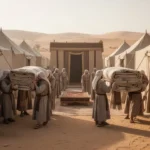
The Temple of Solomon, also called the First Temple, is described in the Hebrew Bible as a sanctuary built in Jerusalem during the reign of King Solomon. It replaced the portable tabernacle, the tent sanctuary associated with Israel’s wilderness period, and gave the kingdom a fixed center for worship, sacrifice, priestly service, and national religious identity.
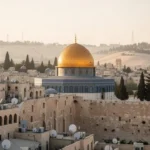
The biblical account places the temple on Mount Moriah, a hill in Jerusalem that later became known as the Temple Mount. According to 2 Chronicles 3:1, this was the site where Solomon began construction. The location is also connected in biblical tradition with David’s purchase of a threshing floor after a plague, described in 2 Samuel 24 and 1 Chronicles 21.
The Bible presents Solomon’s temple as a major building project carried out with assistance from King Hiram of Tyre. Hiram supplied cedar and cypress timber from Lebanon, as well as skilled craftsmen. The account in 1 Kings 5–7 describes agreements for timber, stone, metalwork, and labor, although the exact historical details cannot be independently confirmed.
Traditional biblical chronology places construction in the tenth century BCE, during Solomon’s reign. First Kings 6:1 gives a relative date, saying construction began in the fourth year of Solomon’s rule and referring to the period after the Israelites left Egypt. Scholars disagree about how to convert the biblical chronology into modern calendar dates, so the precise year remains debated.
Construction is said to have taken seven years. First Kings 6 describes the temple as completed in Solomon’s eleventh regnal year. The project followed the establishment of Jerusalem as the kingdom’s political capital under David, allowing the city to become both the royal center and the principal center of Israelite worship.
Keep the names distinct: Solomon’s Temple refers to the First Temple. The later temple rebuilt after the Babylonian exile is usually called the Second Temple, even though it stood on the same general sacred site.
How the Temple of Solomon was arranged
The biblical description presents the temple as a carefully ordered building with a sequence of sacred spaces. Its design resembles, in a more permanent and monumental form, the arrangement of the tabernacle. Worshippers approached from the outside toward increasingly restricted areas, with the innermost room reserved for the most sacred object and the highest concentration of holiness.
The main structure measured 60 cubits long, 20 cubits wide, and 30 cubits high, according to 1 Kings 6. A cubit was an ancient unit based approximately on the length from the elbow to the fingertips, but its exact value varied. Using a commonly proposed range, the main building may have been roughly 90 feet long, 30 feet wide, and 45 feet high, though these modern conversions are only estimates.
The porch, main hall, and inner sanctuary
The entrance opened into a porch known as the ulam. Beyond it was the main hall, often called the hekal or Holy Place. This room contained ritual furnishings associated with worship, including lampstands, tables for sacred bread, and an incense altar. The biblical descriptions in 1 Kings 6–7 and 2 Chronicles 3–4 provide the principal information about these objects.
At the rear stood the inner sanctuary, called the Most Holy Place or Holy of Holies. This square chamber measured 20 cubits on each side. It housed the Ark of the Covenant, a sacred chest associated with the covenant between God and Israel. The ark was placed beneath the wings of two enormous cherubim covered with gold.
The inner sanctuary was separated from the main hall by a partition or curtain, and access was tightly restricted. The biblical account associates the room with the divine presence, often represented by the cloud that filled the temple at its dedication. The point was not that God was confined to a building, since biblical texts also emphasize God’s transcendence, but that the temple marked a unique place of encounter and worship.
The temple complex included an outer court and an inner court used for ritual activity. First Kings 6 describes chambers built around the sides of the main sanctuary, probably serving practical purposes connected with storage, administration, and priestly service. Their exact arrangement is difficult to reconstruct because the biblical measurements and architectural terms do not answer every modern architectural question.
Several prominent bronze furnishings stood outside the main building. The most famous was the large basin called the Sea, supported by twelve bronze oxen. It was used for ritual washing and is described in 1 Kings 7 and 2 Chronicles 4. The temple also contained bronze stands, basins, pillars, and other equipment made by a craftsman named Hiram, who should not be confused with the king of Tyre.
Two large bronze pillars stood at the entrance. First Kings names them Jachin and Boaz. The text gives their dimensions and decorative details, including capitals decorated with network patterns and pomegranates. Their function is not explained with certainty; they may have symbolized stability, royal legitimacy, sacred threshold space, or other ideas that were familiar to ancient worshippers.
Gold played a major role in the sanctuary’s visual presentation. The interior walls, doors, cherubim, palm trees, flowers, and other decorative elements are described as covered or overlaid with gold. The effect would have distinguished the inner rooms from ordinary buildings and expressed the temple’s exceptional sacred status.
Why the temple mattered to ancient Israel
The Temple of Solomon was more than a large religious building. It served as the kingdom’s central sanctuary, a place where priests carried out sacrifices, festivals were observed, and worship was connected with the capital. Its construction expressed the idea that the nation’s political unity and religious life had been brought together in Jerusalem.
The dedication ceremony is described in 1 Kings 8 and 2 Chronicles 5–7. Solomon gathered Israel’s elders and leaders, and the priests brought the Ark of the Covenant into the Most Holy Place. A cloud filled the temple, signaling God’s glory in the narrative and showing that the sanctuary had been accepted as a sacred dwelling.
Solomon’s dedication prayer presents several purposes for the temple. People could pray toward it, seek forgiveness, ask for help in war or during drought, and bring their concerns before God. The prayer also includes foreigners who come because of God’s reputation, suggesting that the temple’s significance extended beyond the boundaries of the Israelite kingdom.
At the same time, the dedication prayer does not present God as physically contained by the building. Solomon acknowledges that even the highest heavens cannot contain God, much less a human-made structure. This tension is central to the temple’s theology: the building is a chosen meeting place, but it does not limit the divine presence.
The temple also became the main setting for sacrificial worship. Offerings could include burnt offerings, grain offerings, peace offerings, and sin offerings, each with different purposes and procedures. Priests supervised the rituals, while Levites assisted with music, maintenance, and other duties. The sacrificial system expressed thanksgiving, devotion, purification, reconciliation, and the community’s relationship with God.
Major festivals strengthened the temple’s national role. Passover commemorated Israel’s deliverance from Egypt, while the Festival of Weeks and the Festival of Booths marked important agricultural and historical themes. Pilgrimage to Jerusalem helped connect local communities with the royal capital and the shared traditions of the kingdom.
The temple was also tied to the Davidic monarchy. In the biblical story, David prepared materials and plans, but Solomon built the sanctuary. This relationship helped present the temple as part of a divine promise concerning David’s dynasty. The temple and the royal house therefore reinforced one another, although the biblical prophets repeatedly warned that neither the building nor the monarchy could guarantee national security without justice and faithfulness.
Prophetic criticism is essential for understanding the temple’s place in Israelite religion. Prophets such as Jeremiah challenged the assumption that worship at the temple automatically protected Jerusalem from judgment. Jeremiah 7 warns people not to treat the sanctuary as a guarantee while practicing injustice. These passages show that biblical writers considered ethical conduct and loyalty to God more important than confidence in sacred architecture.
The biblical books of Kings and Chronicles describe repeated political and religious changes after Solomon’s death. Later kings repaired, neglected, enriched, or altered the temple. Some introduced foreign religious objects or practices, while others attempted reforms and restored worship centered on the God of Israel.
The temple’s history was shaped by the division of Solomon’s kingdom. After his death, the monarchy split into the northern kingdom of Israel and the southern kingdom of Judah. Jerusalem remained the capital of Judah, and the temple became the principal sanctuary of the southern kingdom. This division also affected how biblical writers evaluated kings and religious practices.
According to 2 Kings 18 and 2 Chronicles 29–31, King Hezekiah carried out reforms that included cleansing and reopening the temple. Later, King Josiah undertook another major reform, described in 2 Kings 22–23 and 2 Chronicles 34–35. The account connects his program with the discovery of a scroll of the law and with efforts to remove practices considered incompatible with worship of the God of Israel.
These reforms indicate that the temple was not always used in the same way. Its furnishings, personnel, and rituals could be changed by royal policy. The sanctuary remained important, but its condition and religious role depended on the political and spiritual choices of successive rulers.
In the late seventh and early sixth centuries BCE, Judah became caught between powerful empires. Babylon defeated Jerusalem after a series of conflicts. The Bible states that Nebuchadnezzar II and the Babylonian army captured the city, destroyed the temple, burned important buildings, and carried away temple treasures.
The destruction is conventionally dated to 586 BCE, although some chronological systems place the event slightly differently. The account appears in 2 Kings 25, 2 Chronicles 36, and Jeremiah 52. The loss of the temple and the exile of many Judeans created a profound religious crisis, because the central sanctuary had been destroyed and the monarchy had collapsed.
The temple’s destruction did not end Israelite religious life. Exiled communities developed forms of prayer, teaching, communal identity, and scripture-centered practice that did not depend on access to Jerusalem. Biblical books written or edited around the exile interpret the catastrophe in different ways, including as judgment, tragedy, and a crisis that required renewed faithfulness.
What historians and archaeologists can establish
Most information about the Temple of Solomon comes from the Hebrew Bible, especially 1 Kings 5–8 and 2 Chronicles 2–7. These texts provide dimensions, materials, furnishings, personnel, and religious meaning. They are indispensable for understanding how later Jewish tradition remembered the temple, but they are not equivalent to a surviving architectural plan or a contemporary construction record.
There is no securely identified archaeological remains that can be directly labeled as Solomon’s Temple. The Temple Mount has been continuously significant and heavily modified over many centuries, and archaeological investigation there is limited by the site’s religious and political importance. Much of the ancient structure was also destroyed, rebuilt, or covered by later construction.
Archaeologists do have evidence for the wider setting of Iron Age Jerusalem and for the types of buildings, tools, materials, and administrative systems that existed in the region. Excavations in and around the City of David have revealed remains from periods relevant to the biblical monarchy, but interpreting those remains and connecting them to specific biblical kings remains debated.
The description of Solomon’s temple has parallels with other ancient Near Eastern temples. Features such as a porch, a main hall, an inner sanctuary, sacred furnishings, decorated surfaces, and side chambers fit broader regional patterns. These comparisons help scholars understand the possible architectural context, but they do not prove every detail of the biblical account.
Ancient Near Eastern royal inscriptions show that temples were commonly built or renovated by kings to honor deities and demonstrate royal power. Such projects could involve imported timber, specialized craftsmen, bronze casting, precious metals, and organized labor. Those parallels make the general concept of a royal temple plausible, while leaving open questions about the scale, date, and exact appearance of Solomon’s building.
Descriptions of the temple should therefore be read with care. The biblical measurements may preserve older technical information, symbolic numbers, or later editorial presentations. Terms translated as “cubits,” “chambers,” “pillars,” and “Sea” can carry meanings that are not fully recoverable. A reconstruction can illustrate the text, but it should not be mistaken for a verified blueprint.
Best-supported distinction: the temple is historically important even though its physical remains have not been conclusively identified. Its religious memory, biblical descriptions, and influence on later Jewish thought are much better documented than its precise archaeological footprint.
How the First Temple differs from later temples
The Babylonian destruction did not end the story of Jerusalem’s sanctuary. After the Persian conquest of Babylon, Judean exiles were permitted to return, and a new temple was built in Jerusalem. This later sanctuary is commonly called the Second Temple. It was not simply Solomon’s building repaired; it belonged to a new political and historical period.
The Second Temple was completed in the late sixth century BCE, according to the biblical books of Ezra and Haggai. It stood for centuries and was later greatly expanded and renovated under Herod the Great. The Herodian complex is the setting most often associated with the temple in the time of Jesus, but it was built long after Solomon’s original structure had disappeared.
Several features remained continuous across the two periods. Jerusalem remained the sacred city, sacrifice continued to be central, and the temple remained associated with priesthood, pilgrimage, and the presence of God. Yet the political context, architecture, leadership, and interpretation of the sanctuary changed significantly.
The Temple of Solomon also became a lasting symbol in Jewish, Christian, and later Western religious thought. It represents sacred space, covenant, kingship, worship, destruction, exile, and restoration. Biblical references to the temple shaped ideas about holiness and prayer, while later traditions often used its imagery to discuss wisdom, order, divine presence, and the relationship between earthly buildings and heavenly realities.
For readers studying the temple today, the clearest approach is to hold several layers together: the biblical account, the religious meaning assigned to the building, the historical setting of Iron Age Judah, and the limits of archaeological evidence. Solomon’s Temple cannot be reconstructed with complete certainty, but its role in the history of Jerusalem and in the development of biblical religion is unmistakable.
Frequently asked questions
Where was the Temple of Solomon located?
The Hebrew Bible places Solomon’s Temple on Mount Moriah in Jerusalem, the area later known as the Temple Mount. The precise location within the broader platform cannot be confirmed archaeologically. The site has been rebuilt and modified repeatedly, and modern religious and political circumstances make extensive excavation difficult.
Did Solomon build the temple by himself?
The biblical account presents Solomon as the king who commissioned and completed the project, but it describes a large international effort. Hiram of Tyre supplied timber and workers, while skilled metalworkers and other laborers contributed to the construction. The account also connects the project with preparations made during David’s reign.
What was kept inside the Temple of Solomon?
The most sacred object was the Ark of the Covenant, placed in the Most Holy Place beneath gilded cherubim. The Holy Place contained ritual furnishings such as lampstands, tables, and an incense altar. Courtyards held large bronze objects, including basins and the structure called the Sea.
Can visitors see the ruins of Solomon’s Temple today?
No confirmed ruins of the First Temple are openly identifiable for visitors today. The Temple Mount contains later structures and archaeological remains from multiple periods, but Solomon’s building has not been securely located. Some displays and reconstructions illustrate the biblical description, yet they represent scholarly interpretation rather than a surviving original structure.








Leave a Reply