Zion is first a place in Jerusalem, but the Bible gradually uses the name for much more than one hill. It can refer to the ancient fortress captured by David, the city of Jerusalem, the people who belong to God, and the future dwelling of God’s redeemed people.
Understanding what Zion means in the Bible requires paying attention to the passage where the word appears. In one verse, Zion may mean a physical location. In another, it may describe Jerusalem as a spiritual center or represent God’s covenant people. Later biblical writers also use Zion to point toward a heavenly and future reality.
The first clear biblical setting for Zion appears in the account of David’s capture of Jerusalem. At that time, Jerusalem was controlled by the Jebusites, and the city had a fortified stronghold. David captured it and made it his royal city, and the biblical account identifies the stronghold with Zion (2 Samuel 5:6–9).
After taking the stronghold, David called it the City of David. This name does not always mean the entire later city of Jerusalem. In its earliest use, Zion was associated with the fortified settlement David made his capital and with the ridge or area connected to it.
The exact meaning and origin of the Hebrew name Tsiyyon are uncertain. The Bible does not provide a word-definition explaining the name, so proposed meanings should be treated cautiously. What the biblical text makes clear is how the name develops through repeated use.
Zion’s location is connected with the southeastern hill of ancient Jerusalem, often called the City of David. The boundaries and shape of ancient Jerusalem changed over time, so modern labels such as “Mount Zion” do not always correspond precisely to the Zion of David’s period.
Essential distinction: Zion is not originally a vague name for heaven. It begins as a real Jerusalem stronghold and later gains broader geographical, national, spiritual, and future meanings.
How Zion became another name for Jerusalem
As Israel’s history developed, Zion became a poetic name for Jerusalem. Biblical poets and prophets often use Zion as a personified city, speaking of her sorrow, sin, restoration, joy, or future security. In these passages, Zion may represent not only a hill but the whole covenant city and its inhabitants.
For example, the Psalms praise Zion as the city associated with God’s special presence and kingship (Psalm 48). Psalm 87 speaks of Zion as the place God established and honors. These poems are not merely describing Jerusalem’s buildings. They present the city as the center of God’s purposes for Israel.
The name can also refer to the people living in Jerusalem. When the prophets address “Daughter Zion,” they use a poetic expression for the city’s population, especially in passages about judgment, grief, deliverance, or restoration. The city is treated as a woman because biblical poetry often personifies nations and cities.
This explains why the Bible can move quickly between physical and personal language. Zion can be described as a place, mourn like a person, rejoice like a community, and represent the people of God. The meaning comes from the surrounding passage rather than from a single fixed definition.
Zion and God’s presence among his people
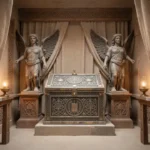
Zion’s importance is closely tied to the Bible’s theme of God dwelling with Israel. After David established Jerusalem as his capital, the ark of the covenant was brought to the city (2 Samuel 6). The ark represented God’s covenant presence, although it did not mean that God was confined to one building or hill.
David’s desire to build a temple was not fulfilled in his lifetime. His son Solomon built the temple, and the biblical account places it on Mount Moriah (2 Chronicles 3:1). This detail matters because readers sometimes assume that Zion, the City of David, the temple mount, and every reference to “Mount Zion” are identical in a narrow geographical sense.
In biblical poetry, however, the names and locations can overlap in broader ways. Jerusalem as a whole is called Zion, and Zion becomes closely associated with the temple, worship, the throne of David, and God’s presence. The theological connection is stronger than a simple modern map label.
Psalm 132 connects Zion with God’s chosen dwelling and with David’s royal line. The point is not that God can be reduced to a location. Rather, Zion represents the place where God has chosen to reveal his name, receive worship, and govern his people through the covenant promises.
What Zion means in the Psalms
The Psalms present several important aspects of Zion. They portray it as a city of beauty, worship, refuge, kingship, and future blessing. These themes help explain why Zion became one of the Bible’s most powerful symbols.
Zion is a place of worship: The city is associated with the temple, praise, sacrifice, and communal prayer.
Zion represents God’s kingship: Biblical poetry connects Zion with God’s rule and with the Davidic king.
Zion is a source of hope: Even when Jerusalem suffers, the Psalms look toward God’s protection and restoration.
Zion can represent Israel: The city’s condition reflects the spiritual and political condition of God’s people.
Zion points beyond itself: The promises attached to Zion often anticipate a wider renewal of the nations and creation.
Psalm 2 describes God’s appointed king in relation to Zion, while Psalm 48 celebrates the city as a place of divine protection. Psalm 50 speaks of Zion in connection with God’s glory, and Psalm 102 looks toward a future time when God will rebuild Zion and reveal his glory.
These passages should not be flattened into one message. Some are songs of celebration, some are prayers during distress, and some are reflections on national disaster. Together, they show Zion as a place whose significance comes from God’s covenant relationship with his people.
Why the prophets speak about Zion’s judgment and restoration
The prophets frequently address Zion because Jerusalem was both the political capital and the center of Israel’s worship. That gave the city great privilege, but it also created great responsibility. The prophets warn that religious buildings cannot protect a people who persist in injustice, idolatry, violence, and disobedience.
Isaiah announces judgment against Jerusalem but also promises that Zion will be restored. Isaiah 1 presents Zion as rebellious and in need of cleansing, while later passages describe a renewed Zion marked by righteousness, peace, and God’s glory. The same city that faces discipline is also the subject of hope.
Micah 3 warns that corrupt leaders and prophets have treated Zion as though its religious status makes it invulnerable. Jeremiah makes a similar point by challenging false confidence in the temple. These warnings show that Zion does not mean automatic safety. The name carries promise, but it does not cancel accountability.
Other prophetic passages use Zion to announce comfort. Isaiah 40 speaks to Jerusalem with a message of hope, and Isaiah 52 calls Zion to awaken and prepare for redemption. Zechariah describes a future in which God returns to dwell in Jerusalem and the city becomes a place of blessing.
The prophetic vision often includes more than the rebuilding of walls. It includes forgiveness, justice, secure worship, restored community, and the recognition of God among the nations. Zion’s restoration is therefore both local and universal: Jerusalem is restored, and the nations are drawn toward the God revealed there.
“Daughter Zion” and “Mount Zion” have different uses
“Daughter Zion” is a poetic expression used especially in prophetic and poetic passages. It can mean Jerusalem as a community, the people of Judah, or the faithful remnant within the city, depending on context. The expression often appears in announcements of judgment or promises of joy.
For example, Zechariah 9 speaks to Daughter Zion about the arrival of her king. The passage presents a humble ruler whose coming brings hope. Matthew connects this prophecy with Jesus’ entry into Jerusalem, using the image of Zion to frame Jesus as the promised king (Matthew 21:5).
“Mount Zion” can refer to the physical hill associated with Jerusalem, but it also becomes a theological expression. Some Old Testament passages connect Mount Zion with the temple, God’s rule, or the gathering of his people. The phrase should be interpreted within each passage rather than assigned one rigid definition.
Physical geography can clarify the background, but it cannot replace literary context. A prophet may use Mount Zion as a real place while also using it as a symbol of God’s kingdom, worship, or future salvation.
The New Testament continues the Old Testament pattern of treating Zion as both a real place and a theological symbol. Jesus’ ministry takes place in and around Jerusalem, and the Gospel writers present his death and resurrection in relation to the city’s Scriptures and promises.
Matthew 21 applies the prophecy about Daughter Zion to Jesus’ entry into Jerusalem. The emphasis is on the arrival of the king promised by the prophets. Jesus comes as a king, but his manner is humble rather than militaristic.
Peter quotes and applies Isaiah’s image of a chosen cornerstone in Zion (1 Peter 2:6). The passage presents Jesus as the foundation chosen by God. Those who trust him are not ultimately put to shame, while the image also warns that rejecting God’s chosen stone has serious consequences.
Paul refers to Zion when explaining God’s promise concerning Israel and the coming deliverer (Romans 9:33 and 11:26). His use shows that Zion remains connected with God’s covenant purposes, the Messiah, and the difficult question of Israel’s place in salvation history.
Hebrews 12:22 contrasts the terrifying scene at Mount Sinai with the joyful approach to Mount Zion, the heavenly Jerusalem. The writer is speaking to believers who have come to God through the new covenant. Here, Zion points beyond earthly Jerusalem to the heavenly community of angels, the redeemed, and God’s presence.
Revelation also uses Mount Zion in a visionary setting. Revelation 14 portrays the Lamb standing on Mount Zion with his people. The image draws on earlier biblical themes of kingship, worship, protection, and final deliverance. It does not erase the historical Jerusalem; it expands Zion’s meaning within the Bible’s vision of redemption.
Read the New Testament references as fulfillment and expansion: Zion remains rooted in Jerusalem, but it also points to Jesus the Messiah, the heavenly Jerusalem, and the final gathering of God’s people.
Is Zion the same as heaven?
Zion and heaven are not simply interchangeable terms. In many Old Testament passages, Zion clearly means Jerusalem or the people of Jerusalem. In Hebrews 12, however, “Mount Zion” describes the heavenly Jerusalem to which believers have access through the new covenant.
The Bible’s language is better understood as a pattern of earthly sign and heavenly fulfillment. Earthly Zion is the historic city where God’s covenant purposes were displayed. Heavenly Zion represents the completed fellowship of God’s people in his presence.
Revelation 21 does not use Zion as its primary name for the final city; it describes the New Jerusalem coming from heaven. Even so, the New Jerusalem fulfills several hopes associated with Zion: God dwells with his people, sorrow and death are removed, and the nations share in God’s restored creation.
This distinction prevents two common errors. One error treats every reference to Zion as a direct description of heaven. The other reduces Zion to ancient geography and ignores how later biblical writers use the name to describe salvation, worship, and final renewal.
How Zion relates to Israel, Jerusalem, and the church
In the Old Testament, Zion is deeply connected to Israel’s covenant identity. It is the city of David, the location associated with worship, and a symbol of God’s relationship with his chosen people. Its promises cannot be separated from Israel’s story.
Christian interpretation sees Jesus as the fulfillment of the Davidic king and the temple-related hopes connected with Zion. The New Testament then applies Zion imagery to the community gathered around Christ. This does not mean that every Christian reference to Zion replaces the historical meaning of Jerusalem or cancels the Old Testament context.
Different Christian traditions explain the relationship between Israel, the church, earthly Jerusalem, and heavenly Zion in different ways. Some emphasize continuity between Israel and the church, while others maintain sharper distinctions in biblical prophecy. A careful reading should distinguish what a passage explicitly says from conclusions drawn from a larger theological system.
Jewish and Christian readers also approach Zion through different interpretive traditions. In Jewish Scripture and prayer, Zion remains closely associated with Jerusalem, the temple, Jewish peoplehood, exile, return, and hope for restoration. Christian readings add their interpretation of Jesus and the church while continuing to rely on the Hebrew Bible’s original themes.
Common mistakes when interpreting Zion in the Bible
The word Zion has accumulated many associations, so it is easy to give a verse a meaning it does not have. These practical checks can help you read the term more accurately.
Do not assume Zion always means heaven. Check whether the passage describes Jerusalem, its residents, the temple, Israel, or a future heavenly reality.
Do not treat Zion as only a modern political slogan. The biblical term has a long history that begins with David’s Jerusalem and includes worship, judgment, restoration, and hope.
Do not confuse every hill in Jerusalem. The City of David, Mount Zion, Mount Moriah, and the temple mount are related in biblical history but should not automatically be treated as identical.
Do not isolate one comforting promise. Prophetic hope often appears alongside warnings about injustice, idolatry, hypocrisy, and unfaithfulness.
Do not ignore poetic language. “Daughter Zion” personifies a city or community; it is not normally describing an individual woman.
Do not overlook the surrounding covenant context. Zion’s meaning is tied to God’s promises to Israel, the house of David, worship, and the presence of God.
Do not make every reference mean the same thing. A Psalm, a prophecy, a Gospel quotation, and Hebrews may use Zion in related but distinct ways.
A simple method for studying a passage about Zion
When you encounter the word Zion in your Bible reading, begin with the immediate context. Ask who is speaking, who is being addressed, and whether the passage describes a present location, a past event, a promise, or a vision of the future.
Identify the genre. Poetry, prophecy, narrative, Gospel writing, and apocalyptic vision use images differently.
Locate the historical setting. Determine whether the passage relates to David’s Jerusalem, the temple period, the exile, the return from exile, or the time of Jesus.
Look for parallel names. Jerusalem, Daughter Zion, Mount Zion, the City of David, and the holy mountain may clarify the intended reference.
Notice the emotional tone. Zion may be grieving, threatened, purified, restored, rejoicing, or standing securely in God’s presence.
Trace the promise or warning. Ask what God is judging, protecting, restoring, or fulfilling.
Compare later biblical use carefully. If the New Testament quotes a Zion passage, read the original Old Testament setting before considering its fulfillment in Christ.
This approach keeps both dimensions in view: Zion is a historical place and a developing biblical symbol. The symbol remains meaningful because it is grounded in the real history of Jerusalem, David’s kingship, Israel’s worship, exile, return, and hope.
Why Zion remains important to the Bible’s central message
Zion gathers several major biblical themes into one name. It is linked with God’s presence, the Davidic king, the temple, worship, judgment, forgiveness, restoration, and the future gathering of the nations. Few biblical place names carry such a wide range of meaning.
The story of Zion also shows how the Bible handles human failure. Jerusalem is honored because of God’s covenant, yet its leaders and people are repeatedly judged for abandoning justice and faithful worship. Zion’s hope rests not on the city’s buildings or political power but on God’s faithfulness to cleanse, restore, and dwell with his people.
For Christians, Zion ultimately points toward the work of Jesus, the heavenly Jerusalem, and the renewed creation promised at the end of Scripture. For readers of the Hebrew Bible, it remains inseparable from Jerusalem, Israel, David, the temple, and the hope of restoration. In both settings, Zion means more than a location: it represents the place and people bound to God’s redemptive purposes.
The most concise answer is this: Zion is the biblical name that begins with David’s fortress in Jerusalem and grows into a symbol of God’s dwelling, his covenant people, the Messiah’s kingdom, and the final hope of life with God.
Frequently asked questions
Where was Mount Zion located?
The original Zion was the fortified stronghold in Jerusalem that David captured from the Jebusites and later called the City of David. The term’s geographical use broadened over time, and biblical writers sometimes used Mount Zion for Jerusalem more generally or for the area associated with worship and God’s presence. Modern “Mount Zion” labels do not always identify the exact original site.
Is Zion the same as Jerusalem?
Zion can mean Jerusalem, especially in poetry and prophecy, but the terms are not identical in every passage. Zion first referred to David’s stronghold and then became a poetic or theological name for the city, its people, and its role in God’s covenant purposes. The surrounding verses determine whether the reference is narrowly geographical or broader.
What does Daughter Zion mean?
“Daughter Zion” is a poetic way of addressing Jerusalem or the community associated with it. Biblical writers personify the city as a woman who may suffer judgment, mourn, receive comfort, or rejoice in restoration. The expression usually describes a city or people, not a separate individual named Zion.
What does Mount Zion mean in Hebrews 12?
In Hebrews 12:22, Mount Zion refers to the heavenly Jerusalem and the joyful community gathered in God’s presence through the new covenant. The writer contrasts this with the frightening scene at Mount Sinai. The passage builds on the Old Testament meaning of Zion but presents its ultimate reality as heavenly rather than merely a physical hill in Jerusalem.






Leave a Reply