Hephzibah: Meaning, Bible references, and significance
Hephzibah: Meaning, Bible references, and significance
Hephzibah is a biblical Hebrew name commonly understood to mean “my delight is in her” or “my delight is in her.” In Scripture, the name appears as the name of King Hezekiah’s wife and as a symbolic name for Jerusalem in Isaiah 62.
The name expresses affection, approval, and restored relationship. In Isaiah, God uses Hephzibah to describe a future change in Jerusalem’s status: she will no longer be regarded as abandoned, but as someone in whom God delights.
The name Hephzibah comes from Hebrew and is often transliterated as Hephtzibah or Hephzibah. Its meaning is connected with the idea of delight, pleasure, or favor, directed toward a feminine subject.
In everyday terms, the name can be understood as “she is my delight” or “my delight is in her.” The wording carries a personal and relational sense. It does not merely describe something pleasant; it communicates that someone is valued and cherished.
The name has two biblical uses:
Hephzibah was a woman, identified as the wife of Hezekiah and the mother of King Manasseh.
Hephzibah was a symbolic name applied to Jerusalem in Isaiah’s prophecy about restoration.
These uses are related by meaning but should not be confused. The Hephzibah named in 2 Kings is a historical individual. The Hephzibah in Isaiah 62 is a poetic designation for Zion or Jerusalem, representing the people and land in a renewed relationship with God.
Core meaning: Hephzibah describes someone who is regarded with delight, affection, and favor. In Isaiah, the name signals that Jerusalem’s rejected condition will not be permanent.
Where Hephzibah appears in Scripture
Hephzibah in 2 Kings 21
The first clear biblical reference is 2 Kings 21:1. The verse identifies Hephzibah as the mother of Manasseh, who became king of Judah after his father Hezekiah. The passage also places her within the royal household by identifying her as Hezekiah’s wife.
Scripture gives very little personal information about Hephzibah. It does not record her ancestry, speeches, decisions, or religious actions. Her brief appearance reflects the way many women in the historical books are mentioned: the text identifies their family connection but does not provide a full biography.
Even so, her position was significant. As the mother of a king, Hephzibah belonged to the central royal family of Judah. Her son Manasseh succeeded Hezekiah and ruled for many years, making Hephzibah part of an important transition in Judah’s history.
The surrounding account focuses mainly on Manasseh’s reign and religious failures, not on his mother. For that reason, readers should avoid attributing actions or beliefs to Hephzibah that the text does not mention. The Bible names her, but it does not tell us enough to construct a detailed portrait of her character.
Hephzibah in Isaiah 62
The second major reference is Isaiah 62:4. In this passage, Jerusalem is told that it will no longer be called “Forsaken,” and its land will no longer be described as desolate. Instead, it will receive the names Hephzibah and Beulah.
The passage presents a powerful contrast. “Forsaken” describes rejection and abandonment, while Hephzibah communicates delight. “Desolate” describes an uninhabited or devastated condition, while Beulah is associated with being married or belonging to a husband.
Isaiah’s point is not that Jerusalem is literally renamed in ordinary civic use. The names are part of a prophetic picture of restoration, belonging, and renewed favor. God’s relationship with Zion is described as a marriage-like bond, and the city’s future is portrayed as secure and honored.
The chapter continues with images of watchmen, celebration, protection, and public recognition. These details reinforce the message that Jerusalem’s shame will be replaced with dignity. Hephzibah therefore functions as a name of hope: the condition of abandonment does not define the city’s final identity.
How to understand Hephzibah step by step
The meaning becomes clearer when the name is read in its biblical setting rather than treated as an isolated vocabulary word. These steps show how the idea develops.
Start with the literal sense. Hephzibah expresses delight directed toward a woman or feminine figure.
Notice the personal relationship. The name describes how someone is regarded, not simply what she looks like or does.
Read the Isaiah contrast. Hephzibah stands opposite the name “Forsaken,” showing a movement from rejection to acceptance.
Connect the name with restoration. Isaiah uses the name to describe Jerusalem’s renewed standing before God.
Keep the two references distinct. The historical queen and the symbolic name for Zion share the same word but serve different purposes in the text.
This approach prevents two common mistakes. First, it avoids treating the prophetic name as though Isaiah were introducing a second biography of Hephzibah, Hezekiah’s wife. Second, it avoids reducing the name to a vague statement about happiness without considering its larger theme of belonging after abandonment.
Why Isaiah uses Hephzibah as a name for Jerusalem
Isaiah 62 addresses Jerusalem’s future after a period associated with judgment, loss, and disgrace. The city’s history includes military defeat, exile, destruction, and spiritual unfaithfulness. Against that background, the name Hephzibah announces that Jerusalem’s relationship with God will be changed and publicly recognized.
The name emphasizes God’s delight in the restored community. It does not suggest that every action of Jerusalem’s people has always been approved. Instead, it belongs to a prophetic promise about what God will do: he will restore, protect, honor, and renew his people.
This distinction matters when applying the name today. Hephzibah is not a guarantee that hardship proves a person has lost divine favor, nor does it mean that moral choices are irrelevant. In Isaiah, the name appears within a larger account of redemption and transformation.
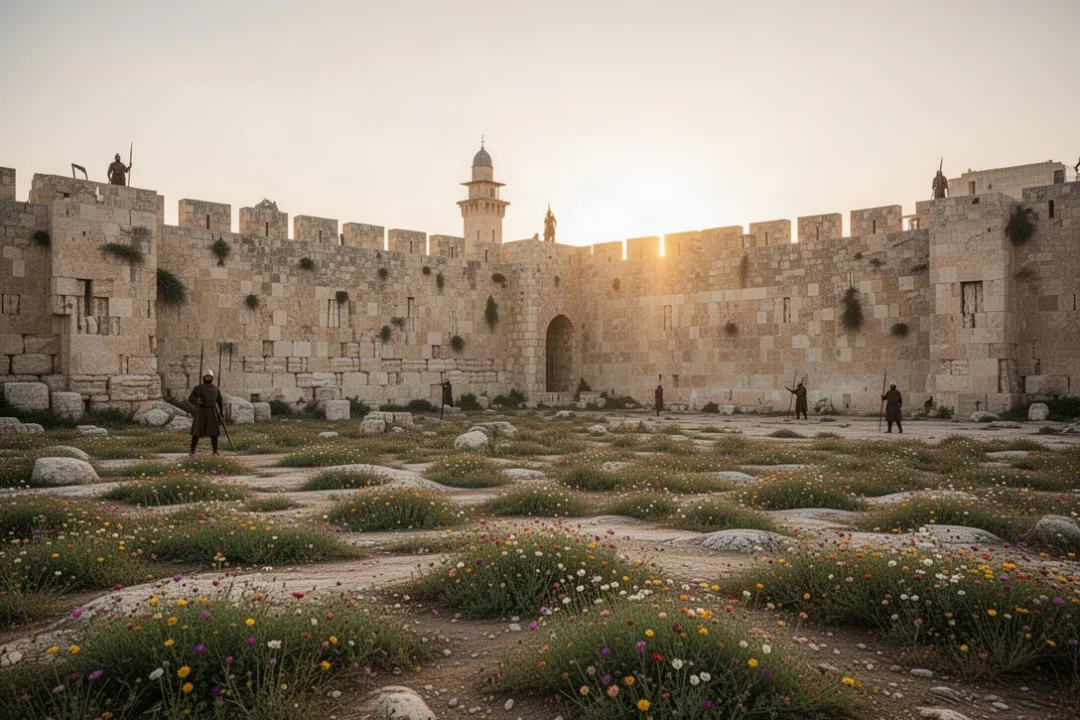
The image also corrects a limited view of restoration. Restoration is not presented only as survival or the return of physical structures. Jerusalem is given a new reputation and a new relational identity. The city is no longer defined by desolation; it is known as one in whom delight is found.
Isaiah’s use of Hephzibah changes Jerusalem’s identity from abandoned to cherished.
Hephzibah and the name Beulah
Isaiah 62 places Hephzibah beside Beulah, another symbolic name. The two names work together but emphasize different aspects of the same promise.
Hephzibah focuses on delight, affection, and favor.
Beulah focuses on belonging, marriage, and a restored covenant relationship.
Hephzibah answers the question, “How is Jerusalem regarded?” The answer is: with delight rather than rejection. Beulah answers the question, “What is Jerusalem’s relational condition?” The answer is: claimed and joined rather than abandoned.
The pairing gives Isaiah’s message emotional depth. Restoration includes both being valued and belonging securely. A city may be rebuilt yet still carry shame in the eyes of others; Isaiah presents a future in which Jerusalem receives honor and recognition as part of its renewal.
Beulah later became familiar as a personal name and as a term in Christian writing and hymnody. Hephzibah is less common, but its meaning is closely associated with the same biblical passage and its themes of spiritual restoration.
How Hephzibah is pronounced and spelled
In American English, Hephzibah is commonly pronounced hef-ZI-bah, though some speakers may use a slightly different emphasis. The first syllable sounds like “hef,” the middle syllable receives the strongest stress, and the final syllable sounds like “bah.”
The spelling comes from transliteration. Biblical Hebrew uses a different writing system, so English forms represent the original sounds with English letters. That process can produce variations across Bible translations, reference works, and personal names.
Hephtzibah, a spelling that more visibly reflects the Hebrew consonants
Hepzibah, a shorter variant found in some naming contexts
Pronunciation and spelling can vary by family, denomination, region, or language. If Hephzibah is someone’s personal name, the individual’s preferred pronunciation is the appropriate one to use.
What Hephzibah can symbolize in Christian interpretation
Many Christian readers interpret Hephzibah through the themes of identity, grace, restoration, and divine affection. The name can remind believers that a person’s deepest identity need not be fixed by rejection, failure, loss, or a painful past.
In Isaiah, the name is spoken over a community whose circumstances have made it appear forsaken. The message is not that the suffering was imaginary. Rather, God’s promised renewal gives the community a different future and a different name.
That symbolism can be expressed in several ways:
From rejection to acceptance: Hephzibah contrasts with the experience of being cast aside.
From shame to honor: Jerusalem is promised public recognition instead of disgrace.
From desolation to fruitfulness: the land is no longer defined by emptiness.
From insecurity to belonging: the paired image of Beulah presents a restored relationship.
From an old label to a renewed identity: the former name no longer determines the future.
These themes explain why some parents, churches, and writers choose Hephzibah as a meaningful name. It can represent the conviction that people are more than the names given to them by trauma, exclusion, or past circumstances.
Use the symbolism carefully: Isaiah’s promise concerns God’s restoration of Jerusalem. It can inspire personal reflection, but it should not be turned into a simplistic promise that every difficult situation will immediately change.
What is known about Hephzibah, Hezekiah’s wife?
The Bible identifies Hephzibah as Hezekiah’s wife and Manasseh’s mother, but it gives no extended account of her life. This makes it difficult to say more about her with confidence. Later traditions or imaginative retellings may provide additional details, but those details should not be presented as though they come directly from Scripture.
Her place in the royal family still gives her historical importance. Hezekiah is remembered in 2 Kings and other biblical books as a king associated with religious reforms and trust in God. Manasseh, his successor, is described very differently in the account of his reign. Hephzibah stands between these two generations as the mother of the next king and the wife of the previous one.
Readers sometimes assume that the favorable meaning of her name tells us that she was especially virtuous or that her marriage was ideal. The text does not make either claim. A name’s meaning is not a complete biography, and the biblical narrative does not explain why Hezekiah’s wife received this name.
The safest description is therefore concise: Hephzibah was a royal woman in Judah, married to Hezekiah and mother of Manasseh, who is mentioned briefly in 2 Kings 21:1.
How Hephzibah differs from similar biblical names
Hephzibah is sometimes confused with other biblical names because many names in Scripture describe relationships with God, family, or national identity. Understanding the differences helps preserve the specific meaning of each name.
Hephzibah: “my delight is in her,” emphasizing affection and favor.
Beulah: associated with being married or belonging to a husband, emphasizing restored relationship.
Immanuel: associated with God’s presence with his people, emphasizing divine nearness.
Jedidiah: associated with being loved by the Lord, emphasizing beloved status.
Jerusalem or Zion: place names that can also represent the covenant community in prophetic writing.
These names may share themes of love or belonging, but they are not interchangeable. Hephzibah’s distinctive emphasis is delight directed toward a feminine person or personified city.
Is Hephzibah a good name to choose?
For parents considering Hephzibah, the name offers a strong biblical meaning and an uncommon sound. It connects a child’s name with delight, worth, and restored identity. It also provides a clear reference point in Isaiah 62 for families who value biblical symbolism.
The name is relatively unusual in modern American usage, which may appeal to parents seeking something distinctive. At the same time, its length and unfamiliar spelling may require occasional explanation. Nicknames can be created informally, but there is no single traditional short form that every family uses.
Before choosing it, consider:
How easily relatives and teachers will recognize and pronounce the name
Whether the family prefers a rare biblical name or a more familiar one
How the first, middle, and last names sound together
Whether the Isaiah 62 symbolism is meaningful to the family
Which pronunciation and spelling the child will use consistently
A name does not determine a person’s character or future. Still, parents often choose names as reminders of their hopes and beliefs. Hephzibah can serve as a reminder that a person is valued and that an identity shaped by rejection is not the only identity available.
Questions to ask when studying Hephzibah in the Bible
A careful study of the name benefits from separating direct biblical information from interpretation. These questions can help keep the reading grounded:
Who is being named? In 2 Kings, the name belongs to a woman in Judah’s royal family. In Isaiah, it is applied symbolically to Jerusalem.
What does the surrounding passage emphasize? The context of 2 Kings is royal succession; the context of Isaiah is restoration and renewed honor.
What does the text actually say? Scripture provides limited biographical information about Hephzibah the queen.
What contrast gives the name force? Isaiah contrasts Hephzibah with “Forsaken” and connects it with Beulah.
What should not be assumed? The name alone does not prove the woman’s personality, beliefs, or life story.
These questions are useful for personal Bible study, teaching, or naming discussions. They keep the meaning of Hephzibah connected to its textual setting instead of allowing later assumptions to replace what Scripture records.
What Hephzibah means for readers today
Hephzibah remains meaningful because it speaks to a universal human concern: the desire to be known as valued rather than discarded. Isaiah’s prophetic picture addresses a community that has experienced loss and disgrace, yet receives a promise of restored identity.
For a reader studying the name, the central idea is not personal perfection. It is the movement from abandonment to belonging and from public shame to renewed honor. The name presents delight as a relationship-based affirmation, not as a reward for a flawless record.
Hephzibah can therefore be remembered in three connected ways:
As the name of a woman in Judah’s royal history
As a symbolic name for restored Jerusalem in Isaiah 62
As a word associated with delight, favor, and renewed belonging
Those three meanings provide the clearest way to understand the name. The historical reference gives it a real place in the biblical record, while the prophetic reference gives it its strongest spiritual symbolism. Together, they make Hephzibah a name associated with being treasured after a season of rejection.
Frequently asked questions
Is Hephzibah a person or a place in the Bible?
Both uses appear in Scripture. Hephzibah was a woman who was married to King Hezekiah and became the mother of Manasseh. In Isaiah 62, Hephzibah is a symbolic name for Jerusalem, describing the city’s future restoration and renewed status before God.
What does Hephzibah mean in Hebrew?
Hephzibah is generally translated as “my delight is in her” or “she is my delight.” The name conveys affection, pleasure, and favor directed toward a feminine person or personified city. Its meaning is especially significant in Isaiah, where it contrasts with the idea of being forsaken.
How do you pronounce Hephzibah?
A common American English pronunciation is “hef-ZI-bah,” with the strongest emphasis on the middle syllable. Pronunciations can differ among families, churches, regions, and languages. If the name belongs to a particular person, that person’s preferred pronunciation should take priority.
Is Hephzibah a common baby name?
Hephzibah is an uncommon biblical name in the United States. Its rarity may appeal to families looking for a distinctive name with a clear scriptural meaning. Parents should consider its length, spelling, and pronunciation, as some people may need to ask how it is said or written.











Leave a Reply