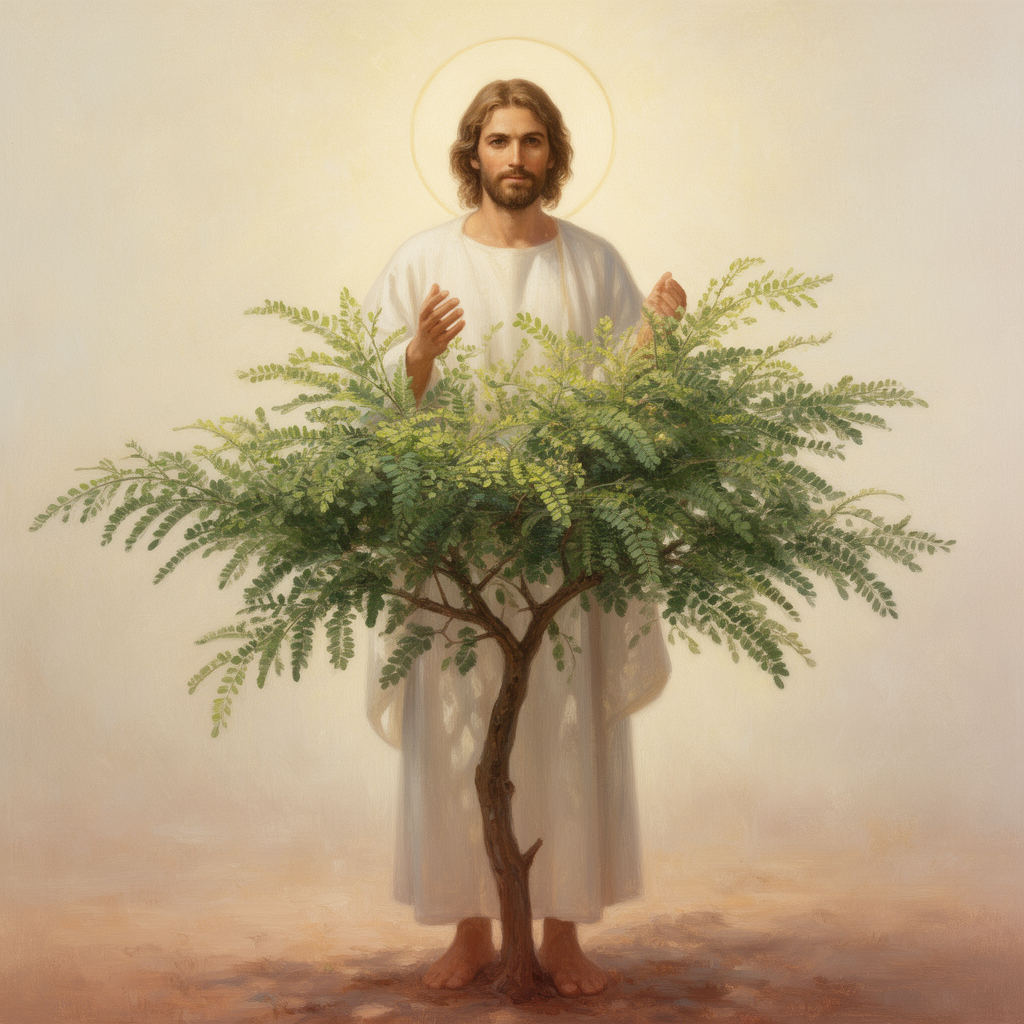
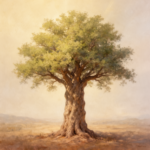
The Shittah Tree is typically a thorny, deciduous shrub or small tree reaching 4-12 meters. It features bipinnate, feathery leaves with small, leathery leaflets. The tree produces clusters of pale-yellow to cream-colored flowers smelling sweet and honeyed, which attract pollinators. Its seed pods are flat, dark, and measures up to 15 cm, containing seeds that are dispersed by animals. Growing in arid, sandy, or rocky soils, it thrives in hot, semi-arid climates, especially in the Middle East and East Africa, often forming thorny thickets that provide shade and shelter.
Scientific Name
Vachellia seyal or Vachellia tortilis (debated candidates)
Hebrew/Greek Name
Hebrew: שִׁיתָה (Shittah); Greek: Σιτύς (Situs)
Common Names
Acacia, Silty Acacia, Terebinth Acacia
Native Habitat
Native to the arid and semi-arid regions of the Middle East, North Africa, and parts of the Horn of Africa, including Israel, Egypt, Sudan, and Ethiopia. It favors dry, rocky soils, often in desert margins and wadis, and tolerates high temperatures and drought conditions.
First Biblical Mention
Exodus 25:10 (the instruction to build the Ark with shittah wood)
📖 Biblical References
Reference
Context
Significance
Exodus 25:10-16
God instructs Moses to use the shittah wood for constructing the Ark of the Covenant and the sacred furnishings of the Tabernacle.
Symbolizes divine obedience, purity, and the sacredness of divine worship objects.
1 Kings 6:29-32
The inner walls of Solomon's Temple were decorated with carved figures of cherubim, palm trees, and open flowers carved from shittah wood.
Represents craftsmanship, beauty, and the sanctity of worship spaces.
Judges 9:37
The tree of the vine and the fig tree reject the bramble, but the shittah tree is mentioned for its strength in supporting structures.
Highlights resilience and structural utility.
✨ Symbolic Meaning in Scripture
The Shittah Tree symbolizes sacredness and divine authority in Scripture. Its use in constructing sacred objects signifies purity, divine blessing, and divine service. Spiritually, it embodies resilience, humility, and God's provision in harsh environments. The wood's durability and sacred use reflect themes of steadfast faith and divine protection. In biblical symbolism, the Acacia's thorny, resilient nature echoes the spiritual perseverance required in facing life's difficulties. Its life cycle and persistence reinforce themes of renewal, divine initiation, and the sanctification of everyday materials for divine purposes. As a plant associated with covenant and worship, it underscores the idea that God's sacredness permeates the material world, transforming simple, resilient trees into symbols of divine sovereignty.
Ancient Israelites utilized the shittah tree primarily for sacred building projects, including the Ark of the Covenant and the Tabernacle furniture, showcasing its importance in religious rituals. Its durable wood also served for making tools, furniture, and household items. The leaves, rich in tannins, might have had medicinal applications for treating wounds or inflammation. The tree’s resins and gums could have been used in perfumery or as incense, contributing to religious offerings. Moreover, its thorny branches supplied protective hedges and fencing in pastoral communities, while the seeds might have been consumed or used in traditional medicine. The tree’s symbolic significance extended into trade and craftsmanship, with acacia wood highly valued in the ancient Near East for its strength and sanctity.
✡️ In Jewish Tradition
In Jewish tradition, the acacia (shittah) is linked to themes of purity and holiness, exemplified by its use in the Tabernacle. The Talmud and rabbinic literature discuss its spiritual significance, emphasizing its resilience and role as a symbol of divine service. The plant appears in symbolism for virtues like humility and steadfastness. During specific festivals or rituals, acacia branches may be used for symbolic decoration, underscoring its sacred status. Its association with the Ark of the Covenant highlights its revered status as a material that embodies divine proximity and sacred craftsmanship.
✝️ In Christian Tradition
Christians interpret the acacia as a symbol of faithfulness, resilience, and divine protection. The biblical use of acacia in sacred objects foreshadows Christ's sacrifice and the divine plan for salvation. The thorny aspect of the acacia is often linked symbolically to the crown of thorns worn by Jesus, emphasizing suffering and redemption. The tree’s durability and enduring nature are also seen as representations of spiritual steadfastness amid trials, reinforcing themes of hope and divine faithfulness. Its frequent biblical appearances make it a reminder of God's covenant and the steadfastness of faith in Christian theology.
Scholars generally identify the biblical Shittah Tree with certain species of Acacia, mainly Vachellia seyal (Seyal Acacia) or Vachellia tortilis (Umbrella Acacia). These species are consistent with biblical descriptions of size, habitat, and use. However, some debate exists regarding the precise identification due to regional variations and linguistic uncertainties. Alternative candidates, like the Acacia nilotica, have been proposed but are less supported. Overall, there is broad scholarly consensus linking the biblical plant to these Acacia species native to Africa and the Middle East.
🗺️ Where Is It Found Today?
Today, Vachellia seyal and Vachellia tortilis grow naturally across Israel, Sudan, Ethiopia, and other parts of the Middle East and northeastern Africa. They are found in desert margins, savannahs, and rocky terrains, often forming thorny thickets that are ecologically vital in arid ecosystems.
What does the Shittah Tree symbolize in the Bible?
It symbolizes holiness, divine craftsmanship, resilience, and the sacredness of divine objects used in worship, emphasizing the connection between nature and divine service.
Are there modern trees similar to the biblical Shittah?
Yes, species like Vachellia seyal and Vachellia tortilis are commonly identified with the biblical Shittah, matching historical, botanical, and geographical descriptions.
Why was acacia wood so important in biblical times?
Because of its durability, sanctity, and usefulness in constructing sacred objects, it represented purity and divine favor while serving practical purposes in worship and daily life.
✨ Did You Know?
Acacia trees, including species linked to the biblical Shittah, have been used since ancient times to produce tannins for leather tanning. Archaeological evidence suggests that acacia wood was highly valued in biblical construction, and remains a key species in traditional African agriculture and cultural practices.






Leave a Reply