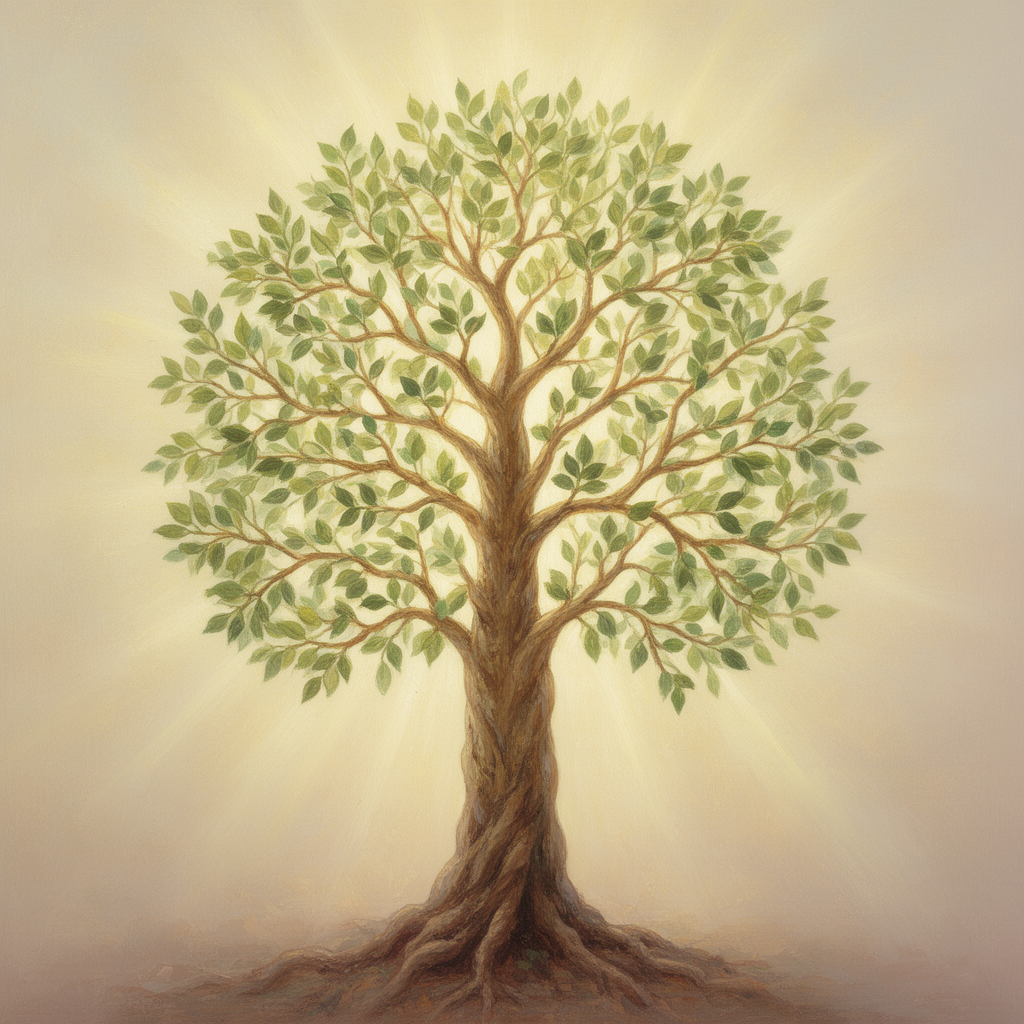
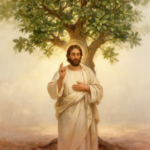
The Tree of Life is often depicted as a lush, resilient tree with a broad canopy, bearing both fragrant flowers and abundant fruit. Botanical theories suggest it might resemble species like Ziziphus spina-christi or Tamarix, characterized by thorny branches, leathery leaves, and small clustered blossoms. Its size varies, but traditionally it is imagined as a majestic, life-giving tree possibly reaching heights of 10-20 meters. The foliage offers dense shade, while the fruit (if apocryphal evidence supports it) might resemble date-like or berry-like structures. It thrives in Mediterranean-like dry, well-drained soils, enduring droughts and high temperatures, aligning with the Middle Eastern landscape of its biblical references.
Scientific Name
Debated (possible candidates: Ziziphus spina-christi, Tamarix spp., or uncertain)
Hebrew/Greek Name
צֶדֶק (Tzedek) / Tree of Life / 'Etz Chaim'
Common Names
Tree of Life, Etz Chaim
Native Habitat
Originally believed to grow in the ancient Near Eastern regions, including modern-day Israel, Jordan, and surrounding Mediterranean zones. It favors arid, rocky soils, Mediterranean climates with hot, dry summers, and mild, rainy winters, thriving along riverbanks, hillsides, and plains.
First Biblical Mention
Genesis 2:9, in the description of the Garden of Eden
📖 Biblical References
Reference
Context
Significance
Genesis 2:9
Depicted as part of the Garden of Eden, alongside the Garden of Eden's other trees.
Symbolizes eternal life, divine blessing, and access to God's presence.
Revelation 2:7
Mentioned as the tree bearing the fruit of life, accessible to the faithful in the New Jerusalem.
Represents eternal life, healing, and divine sustenance in the eschatological vision.
✨ Symbolic Meaning in Scripture
The Tree of Life embodies eternal life, divine sustenance, and God's blessing. It signifies the divine connection between heaven and earth, offering spiritual nourishment and eternal growth. Its presence in Eden symbolizes paradise restored, hope, and divine provision. In biblical narrative, it contrasts with the Tree of Knowledge of Good and Evil, emphasizing the themes of obedience, communion with God, and everlasting life. The tree's fruit and foliage often symbolize spiritual sustenance and the perpetuity of God's covenant with humanity. Its recurring appearance in Revelation depicts ultimate restoration, eternal peace, and the fulfilment of divine promise, making it a profound symbol of hope and divine abundance.
Ancient peoples of the Near East revered trees like Ziziphus and Tamarix for their practical uses. They provided leaves and wood for construction, medicinal extracts for healing, and fruit or seeds as food sources. The trees' branches and leaves were sometimes used in religious rituals or as symbols of life and fertility. The Ziziphus tree, for example, was valued for its thorny branches, which could be used for fencing or protection. Additionally, their aromatic bark and foliage were sometimes used in embalming or incantations, preserving their spiritual and practical significance in daily life and worship.
✡️ In Jewish Tradition
In Jewish tradition, the Tree of Life is a central motif in rabbinic literature, symbolizing divine wisdom, righteousness, and the Torah. It features prominently during Yom Kippur and Sukkot, where Etrog (citrus) and Lulav symbolize the flora of the sacred landscape, embodying spiritual renewal. Kabbalistic teachings often interpret the Tree of Life as a map of divine emanations, connecting physical and spiritual realms. The concept of the Tree of Life underscores the importance of Torah study and moral living as pathways to divine blessing and eternal life.
✝️ In Christian Tradition
Christian interpretations view the Tree of Life as a symbol of Christ’s eternal life and salvation. It represents the promise of everlasting life through Jesus, often associated with spiritual nourishment and divine grace. In Revelation, it signifies hope, resurrection, and the restoration of creation. Christian art and hymnody frequently use the tree as a metaphor for divine love and eternal union with God, emphasizing hope beyond earthly existence and the promise of the new creation in Christ.
Scholars have debated the exact botanical identity of the biblical Tree of Life, with candidates including Ziziphus spina-christi, Tamarix spp., and other hardy Mediterranean trees. There is no scholarly consensus, and some suggest it may be a symbolic or hybrid entity rather than a specific species. The identification remains speculative, but Ziziphus is a leading candidate due to its biblical prominence and resilient characteristics that match biblical descriptions.
🗺️ Where Is It Found Today?
Today, Ziziphus spina-christi, also known as the Christ's thorn jujube, still grows in Israel, Jordan, and neighboring Middle Eastern regions. Tamarix species are also found along riverbanks and arid landscapes across the same regions. These trees are valued for their drought resistance and historical significance, and some are cultivated for ornamental or medicinal purposes in modern times.
While the biblical Tree of Life is depicted as a real tree, its exact botanical identification remains uncertain. Scholars suggest candidates like Ziziphus or Tamarix, but it may also symbolize a divine or idealized concept rather than a specific species.
What does the Tree of Life symbolize in the Bible?
It symbolizes eternal life, divine blessing, connection with God, and restoration. It represents hope, spiritual nourishment, and the promise of everlasting life in both Eden and the heavenly city.
Can the Tree of Life be cultivated today?
Yes, related species like Ziziphus spina-christi are still cultivated in the Middle East for ornamental, medicinal, and cultural purposes. However, the biblical Tree of Life itself is more symbolic, embodying spiritual truth rather than a specific cultivated plant.
✨ Did You Know?
The Ziziphus spina-christi has archaeological evidence linking it to ancient trade routes and ancient Egyptian mummification practices. Its thorny branches may have inspired biblical depictions of thorns, and some scholars believe it was the source of the 'crown of thorns' worn by Christ.







Leave a Reply