Selah is a Hebrew term in the Bible that most likely signals a musical pause or an invitation to reflect on what has just been said. Its exact meaning is uncertain, but its placement shows that it helped worshipers respond to important words in the Psalms and Habakkuk.
For many readers, Selah appears to be a simple word that should have an obvious definition. It is often translated as “pause,” “think about this,” or “lift up.” Those explanations capture possible aspects of the term, but no single English word fully settles the question.
The word is usually left untranslated in modern Bibles because ancient Hebrew manuscripts do not provide a clear definition. Instead, translators preserve Selah as a signal whose meaning must be understood from its setting, position, and connection with worship.
Selah appears primarily in the Book of Psalms and three times in Habakkuk 3. A standard count identifies 74 occurrences: 71 in the Psalms and three in Habakkuk. The precise count can vary slightly depending on how a translation or manuscript tradition divides passages, but its concentration in these poetic books is clear.
In the Psalms, Selah appears in songs associated with prayer, praise, grief, confidence, kingship, danger, and God’s protection. It is not limited to one emotional mood. A psalm may use it after a fearful complaint, a declaration about God, or a statement concerning the nations.
Several early psalms contain the term repeatedly. Psalm 3 uses Selah after statements about enemies, God’s protection, and the psalmist’s confidence. Psalm 4 places it within a prayer that contrasts empty pursuits with trust in God. Psalm 46 uses it as the song moves through images of turmoil, God’s presence, and divine rule.
Habakkuk 3 is a prayer or hymn that recalls God’s powerful acts and anticipates his intervention. Selah appears there as part of the poem’s structure, reinforcing the sense that the passage was intended for worshipful performance rather than silent reading alone.
Most reliable explanation: Selah probably marked a meaningful break in a worship song, giving singers, musicians, and hearers time to pause, respond, or absorb the preceding words.
Why the exact meaning of Selah remains uncertain
The main difficulty is that the Bible does not define Selah directly. Unlike a common Hebrew noun or verb explained by surrounding sentences, it appears as a specialized marker inside poetic and musical texts. Ancient readers may have understood its performance function without needing to describe it in a dictionary definition.
The Hebrew spelling is usually represented in English as Selah, though its original pronunciation cannot be established with complete certainty. Some scholars connect it with a Hebrew root that may relate to lifting up, while others connect it with a root associated with pausing, weighing, or considering something carefully.
Another challenge is that ancient worship did not separate words and music as sharply as many modern readers do. A marker in a psalm could tell the musicians to change the accompaniment, tell the singers to stop briefly, or tell the congregation to attend to the meaning. It may have carried more than one practical function.
For that reason, claims that Selah has one definite meaning should be treated cautiously. “Pause” is a useful interpretation, but it may describe what worshipers did with the word rather than translate every aspect of the original term.
What Selah may have instructed worshipers to do
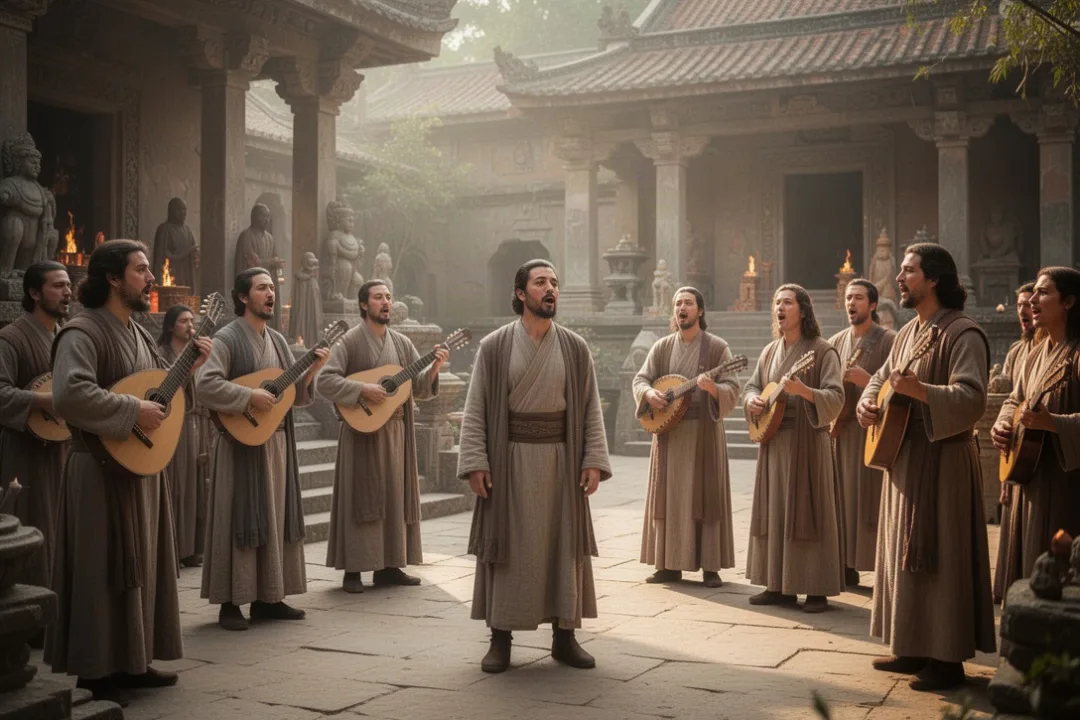
The most common interpretation understands Selah as a musical or liturgical direction. The term often appears at a natural turning point, where a pause would allow the preceding line to settle before the song continued.
A pause could have been silent, but it did not necessarily mean complete stillness. In an ancient worship setting, the singers might stop while instruments continued. The music could grow louder, change key or rhythm, or provide a short interlude. Since the original performance instructions are not preserved in full, the exact arrangement cannot be reconstructed.
Selah may also have signaled a response from the congregation. Worshipers could have reflected on the words, repeated a phrase, bowed, prayed, or listened while the musicians played. The term itself does not tell us precisely which action took place, but its placement supports the idea of intentional attention.
Possible functions include:
A musical pause: singers may have stopped while instruments continued or rested.
A moment of reflection: worshipers could consider the truth or emotion expressed in the previous lines.
An instrumental interlude: musicians may have played between sections of the song.
An emphasis marker: the term may have highlighted an important statement.
A change in delivery: the following section may have used a different musical or emotional approach.
These possibilities are not mutually exclusive. A brief musical pause could naturally create reflection, and a reflective moment could be supported by an instrumental interlude. Selah may therefore be better understood as a performance signal with spiritual significance than as a word with only one narrow definition.
How Selah changes the way you read a Psalm
When Selah appears, it invites you to slow down. The preceding words may describe fear, injustice, God’s majesty, or a promise of rescue. Rather than moving immediately to the next line, you can allow the central idea to receive deliberate attention.
Consider Psalm 3. The psalm begins in the setting of conflict and danger, then describes God as a shield and a source of help. A Selah after such lines can create a meaningful contrast: the crisis is real, but the worshiper stops to recognize God’s protection before continuing.
Psalm 46 offers another helpful example. The psalm describes upheaval in nature and among nations, then presents God as present with his people. Selah can function as a pause after a powerful declaration, giving the congregation time to absorb the difference between apparent chaos and God’s stability.
In Psalm 32, Selah appears as the poem moves through sin, confession, forgiveness, and instruction. The marker can help readers notice the movement from guilt to restored fellowship. It does not erase the seriousness of wrongdoing, but it gives the worshiper space to recognize the weight of forgiveness.
You do not need to force a dramatic spiritual lesson onto every occurrence. Sometimes Selah may simply mark a musical break. Still, pausing at the word can help you read biblical poetry as something designed to be heard, remembered, and answered rather than scanned quickly for information.
What Selah means in different biblical settings
Selah in prayers about danger
Some psalms use Selah while describing enemies, violence, false accusations, or personal distress. In these settings, the marker may emphasize the seriousness of the situation. It can also create a space between the speaker’s fear and the next expression of trust.
That pattern matters because biblical prayer does not require a person to hide anxiety before approaching God. The psalmist may name danger honestly and then pause before declaring confidence. Selah can therefore support the movement from lament to faith without pretending that the problem has already disappeared.
Selah in declarations about God
Other occurrences follow statements about God’s character, power, presence, or rule. Here, the word may emphasize praise or wonder. A congregation hearing the psalm could stop after a declaration about God and allow the claim to shape its attention.
For example, when a psalm presents God as a refuge or defender, Selah can separate that theological statement from the surrounding descriptions of trouble. The pause does not add new information, but it gives the statement greater weight in the act of worship.
Selah in psalms about wisdom and repentance
Some psalms use the term in passages that teach the consequences of sin or the blessing of forgiveness. A pause in such a setting may encourage self-examination. The worshiper hears the instruction, considers its truth, and then continues with a changed attitude.
This helps explain why “think about this” is a popular devotional paraphrase. It is not a proven word-for-word translation, but it expresses a reasonable response to the marker in a reflective psalm.
Selah in Habakkuk 3
Habakkuk 3 recalls God’s glory and mighty acts using vivid poetic imagery. The chapter begins as a prayer and ends with a statement of trust even when crops fail and ordinary sources of security disappear. Selah appears within this hymn-like passage, helping divide the poem’s major movements.
In this setting, Selah can be heard as a worshipful pause after remembering God’s power. The chapter does not present faith as denial of hardship. Instead, it moves through fear, recollection, and confidence. The pauses reinforce the gravity of what the prophet is saying.
How Selah differs from Amen
Selah and Amen are not interchangeable. Amen is a Hebrew expression of agreement, affirmation, or reliable truth. In worship, saying Amen can mean “truly,” “so be it,” or “I agree.” Selah, by contrast, appears primarily as a musical or poetic marker within certain biblical songs.
Amen is commonly used as a spoken response at the end of a prayer, blessing, or declaration. Selah usually occurs in the middle of a psalm or hymn and appears to shape its delivery. One expresses agreement; the other likely creates a pause, transition, or emphasis.
The two ideas can still work together in worship. A congregation might hear a declaration, pause to reflect, and then respond with agreement. But the biblical words themselves serve different functions and should not be treated as alternate translations of one another.
How Selah differs from “pause and think about it”
“Pause and think about it” is a useful devotional explanation, but it should not be presented as a certain literal translation. The word may involve reflection, yet the musical evidence suggests that it also had a role in how a psalm was performed.
Likewise, the popular idea that Selah always means “stop and listen” may go beyond what the text proves. Some passages may have involved silence, while others may have featured continued instrumental music or a shift in vocal delivery.
A balanced understanding keeps three points together:
The exact definition is uncertain. The ancient term is not explained directly in Scripture.
The performance function is probable. Its placement in songs strongly suggests a musical or liturgical use.
Reflection is an appropriate application. Modern readers can reasonably pause over the words before and after it.
This approach respects both the limits of historical knowledge and the spiritual value of the term. You can use Selah devotionally without claiming certainty about details that the biblical text does not provide.
Common mistakes when interpreting Selah
Selah is easy to overinterpret because its mystery invites confident explanations. A careful reader can avoid several common mistakes while still appreciating the word’s importance.
Do not claim one unquestionable definition. “Pause” is likely, but scholars continue to discuss the term’s precise origin and function.
Do not assume every pause was silent. Instruments may have continued, and the musical setting could have changed.
Do not treat Selah as a command to end prayer. It appears inside songs and does not mean that worship or reflection must stop permanently.
Do not read it as an emotional instruction in every passage. The surrounding psalm determines whether the emphasis is grief, praise, trust, repentance, or something else.
Do not confuse it with Amen. Selah is primarily a poetic or musical marker, while Amen expresses agreement or affirmation.
Do not remove the surrounding context. The lines before and after Selah reveal what deserves attention.
Do not assume modern Bible formatting preserves the original performance perfectly. Translations show the term, but ancient melodies and arrangements are not fully recoverable.
Practical reading tip: When you reach Selah, read the previous two or three lines again, identify the main claim or emotion, and sit with that idea before continuing.
How to use Selah in personal Bible reading
You can turn Selah into a simple reading practice without adding meanings that the text does not claim. Read the psalm slowly, notice where the marker occurs, and ask why the surrounding lines might have been given a moment of emphasis.
A helpful approach is to use these steps:
Read the whole psalm first. Notice its main movement, such as danger to confidence or confession to forgiveness.
Locate each Selah. Mark the lines immediately before and after the word.
Name the dominant idea. Is the passage expressing fear, praise, repentance, instruction, or trust?
Pause without forcing an answer. Let the words remain in your attention for a short time.
Pray in response. You might affirm the truth, confess a failure, express grief, or ask for help.
Continue and observe the transition. See whether the next section develops, contrasts with, or deepens the preceding thought.
For group worship, a leader could read the lines before Selah and allow a brief silence or instrumental interlude. Another option is to invite the congregation to repeat the central idea in prayer. These practices are applications, not claims about the exact original arrangement.
For personal prayer, Selah can help prevent hurried reading. A person who is anxious may pause after a statement about God’s protection. A person confessing sin may pause after words about forgiveness. A person studying wisdom may pause long enough to consider how the teaching applies to ordinary choices.
Why the word matters even when its translation is uncertain
Uncertainty about the exact meaning does not make Selah useless. Many biblical words carry significance through their placement and function, even when modern readers cannot reproduce every detail of the ancient setting.
Selah reminds you that the Psalms were created for prayerful participation. They are not only collections of ideas about God. They are songs in which people speak honestly, remember God’s actions, confess wrongdoing, celebrate deliverance, and learn to trust.
The marker also protects readers from treating every line as something to rush past. A psalm often moves quickly between complaint and confidence, or between danger and praise. Selah creates room for the worshiper to feel the weight of that movement.
Its meaning may include pausing, lifting attention, weighing the words, or allowing music to carry the message. Those possibilities point in the same general direction: stop long enough for the truth of the song to register.
What Selah means for Christian worship today
Christian churches do not need to recreate an ancient Hebrew performance in order to learn from Selah. Its enduring value lies in the connection between Scripture, music, silence, and response. Worship can include moments when a biblical declaration is not immediately followed by another song or announcement.
A pause can help a congregation hear a difficult confession, receive words of comfort, or recognize the significance of praise. It can also make room for prayer after Scripture is read. The goal is not to manufacture a particular feeling but to give people time to attend to what has been spoken.
Musicians may use a short instrumental passage, while a reader may allow silence after a psalm. A congregation may respond with prayer or a repeated refrain. These choices reflect the principle suggested by Selah without pretending to know the precise musical practice of ancient Israel.
In personal faith, the word offers a quiet correction to hurried habits. Read the difficult line again. Let a promise be more than a passing phrase. Consider the connection between your present circumstances and the psalmist’s movement from distress to trust.
Selah does not tell you to ignore pain or manufacture certainty. It gives you permission to remain with the words long enough to recognize what they are saying. In that sense, the term’s likely musical function also becomes a valuable spiritual practice: pause, attend, and respond faithfully.
Frequently asked questions
Is Selah a Hebrew word or a translation?
Selah is a Hebrew term that most English Bibles leave untranslated. Because its exact definition is uncertain, translators commonly preserve the Hebrew form rather than choosing one English equivalent. Its use inside poetic songs suggests that it functioned as a musical, liturgical, or reflective marker.
Does Selah mean “pause”?
“Pause” is probably the best short explanation, but it may not capture the term’s entire meaning. Selah could have indicated a break in singing, an instrumental interlude, a change in musical delivery, or a moment for worshipers to reflect. The surrounding passage helps determine how the pause functions.
How should I respond when I see Selah in a Psalm?
Read the lines immediately before it again and identify their main emotion or claim. Then pause briefly before continuing. You might reflect silently, pray in response, or simply let the words settle. This is a sound devotional practice even though the ancient performance instructions are not known with certainty.
Is Selah used only in the Book of Psalms?
Selah appears mainly in Psalms, where it occurs throughout several songs with different themes. It also appears three times in Habakkuk 3, a poetic prayer recalling God’s power. Its concentration in these worship texts supports the view that it served a musical or liturgical purpose.








Leave a Reply