The English word archangel comes from the Greek term archangelos, generally understood as “chief angel” or “principal messenger.” The first part suggests authority or leadership, while the second refers to an angel. In ordinary Christian use, an archangel is therefore understood as an angel with a distinctive position or assignment among the heavenly beings who serve God.
That definition should be handled carefully. Scripture does not provide a complete hierarchy of angels, a job description for every rank, or a full list of archangels. The Bible describes angels as God’s servants, messengers, worshipers, protectors, and agents of judgment, but it does not answer every question people may have about their organization.
The term also differs across religious traditions. Some Christians use archangel mainly for Michael. Others include Gabriel, Raphael, and additional figures from Jewish or Christian writings outside the Protestant biblical canon. These differences are usually matters of interpretation and tradition, not simple disagreements over the meaning of the English word.
The clearest biblical point: Jude 9 directly calls Michael “the archangel,” while Gabriel is a prominent angelic messenger but is not given that title in the biblical passages that name him.
Where the Bible mentions an archangel
The New Testament uses the term in two especially important passages. In Jude 9, Michael is identified as the archangel in a dispute connected with Moses’ body. The passage presents Michael as powerful but restrained: he does not pronounce a self-directed judgment and instead leaves judgment to God.
First Thessalonians 4:16 refers to an archangel’s call in connection with the return of Christ and the resurrection of the dead. The verse does not name that archangel. Some readers connect the unnamed figure with Michael because Michael is the only angel explicitly given the title in the New Testament, but the passage itself does not make that identification.
Michael also appears in Daniel and Revelation, although those passages do not always use the word archangel directly. Daniel presents Michael as a powerful heavenly prince associated with the protection of God’s people. Revelation 12 portrays Michael and his angels fighting the dragon, commonly understood in Christian interpretation as Satan.
The biblical references can be organized like this:
Jude 9: Michael is explicitly called the archangel.
1 Thessalonians 4:16: an archangel is associated with the Lord’s return, without being named.
Daniel 10 and 12: Michael is described as a heavenly prince who stands for God’s people.
Revelation 12: Michael leads angels in conflict with the dragon.
Luke 1 and Daniel 8–9: Gabriel delivers important messages, but these passages do not call him an archangel.
This limited evidence matters because popular descriptions sometimes present a detailed angelic system as though every element came directly from the Bible. A careful reading separates explicit Scripture, reasonable interpretation, and later devotional or cultural tradition.
How Michael functions as an archangel
Michael’s name is commonly understood to express the question, “Who is like God?” His biblical role consistently points away from personal glory and toward God’s authority. He is shown as a defender, a warrior, and a leader in spiritual conflict, but never as an independent deity or a rival to God.
In Daniel 10, Michael is described as a chief prince who helps another heavenly messenger. The chapter uses language of conflict among spiritual powers and presents Michael as acting on behalf of God’s people. Daniel 12 again associates him with protection during a time of exceptional distress.
Revelation 12 gives Michael a more openly military role. He and his angels battle the dragon, and the dragon is cast down. Christian readers commonly understand this scene as a symbolic portrayal of the defeat of Satan and the triumph of God’s rule. The passage emphasizes the larger conflict between faithfulness and rebellion rather than offering a detailed biography of Michael.
Jude 9 adds a different quality to Michael’s character. Although Michael is portrayed as a powerful heavenly figure, he does not use arrogant or self-authorized speech. His restraint teaches an important principle: spiritual authority remains subject to God.
For many Christians, Michael therefore represents several connected ideas:
Protection: standing for God’s people in spiritual danger.
Courage: confronting evil rather than surrendering to it.
Humility: refusing to claim authority that belongs to God alone.
Faithfulness: serving God’s purposes instead of seeking independent power.
These themes explain why Michael is honored in Christian prayer, art, feast days, and church names. Such practices vary by denomination, and honoring Michael is not the same as treating him as divine. In Christian theology, angels are created beings, not gods.
Gabriel is one of the Bible’s best-known angels because he announces events central to the Christian story. His name is commonly interpreted as meaning “God is my strength” or “strong man of God,” though translations and explanations may phrase the meaning differently.
In Daniel 8 and 9, Gabriel helps Daniel understand visions. He is presented as a messenger who brings insight into matters Daniel cannot understand on his own. The emphasis is not on Gabriel’s personal power but on the revelation he is entrusted to deliver.
In Luke 1, Gabriel announces the births of John the Baptist and Jesus. He first speaks to Zechariah about John’s birth and later to Mary about Jesus’ conception and mission. These scenes make Gabriel a symbol of divine announcement, especially when God’s purposes are entering a new stage of salvation history.
Gabriel describes himself in Luke 1 as one who stands in God’s presence. That statement gives him a position of honor, but the passage does not use the specific title archangel. Many Christian traditions nevertheless call Gabriel an archangel because of his high status and major assignments.
A useful distinction is:
Michael is explicitly called an archangel.
Gabriel is explicitly named as a heavenly messenger.
Later Christian tradition often includes Gabriel among the archangels.
Calling Gabriel an archangel is traditional, but the title is not directly stated in the Gospel passages that name him.
That distinction does not diminish Gabriel’s importance. It simply keeps the biblical text and later interpretation in their proper places. Gabriel’s role is especially associated with revelation, explanation, and the announcement of God’s promises.
Why Raphael and other names depend on tradition
Raphael appears in the Book of Tobit, which is part of the Deuterocanon accepted by Roman Catholic and Eastern Orthodox churches but not included in the Protestant Old Testament. Raphael accompanies Tobias, provides guidance, brings healing, and explains that he is one of the seven angels who stand before God.
The Book of Tobit does not use the title archangel in the same direct way Jude uses it for Michael. Still, Raphael is widely called an archangel in Catholic, Orthodox, and other Christian traditions because of his elevated role and connection with the seven heavenly attendants.
Other religious writings name additional angels, including Uriel in certain Jewish and Christian texts. The status of these writings varies considerably. Some are read as Scripture by particular communities, some are treated as valuable religious literature, and some are considered part of later tradition rather than authoritative revelation.
Names such as Chamuel, Jophiel, and Zadkiel also appear in later devotional, mystical, or esoteric systems. They should not be presented as biblical archangels without qualification. A responsible explanation identifies which source uses the name and whether that source belongs to the reader’s religious tradition.
Check the source before accepting a list: if a claim names seven or more archangels, ask whether the list comes from the Bible, the Deuterocanon, an early religious writing, medieval tradition, or a modern spiritual system.
How archangels differ from other angels
The Bible describes many kinds of heavenly beings, but it does not give a single, systematic chart showing exactly how they rank. Archangels are commonly understood as having a leadership role, yet Scripture does not explain whether every angel belongs to a fixed class or how one class relates to another.
Several terms are often discussed alongside archangels:
Angels: heavenly servants and messengers who carry out God’s purposes.
Archangels: figures associated with leadership, major announcements, protection, or spiritual conflict.
Cherubim: powerful heavenly beings connected with God’s presence and sacred space, especially in Ezekiel and the imagery surrounding the ark.
Seraphim: heavenly beings in Isaiah 6 who praise God and are associated with holiness and worship.
Heavenly princes: language used in Daniel for powerful spiritual figures, including Michael.
These categories should not be blended casually. A cherub is not simply another word for an archangel, and a seraph is not automatically a higher-ranking archangel. Later Christian writers developed elaborate angelic hierarchies, but those systems reflect theological reflection and tradition rather than a complete biblical organizational chart.
The New Testament also uses language about thrones, dominions, rulers, and authorities in passages such as Colossians 1:16 and Ephesians 6:12. These terms may refer to spiritual beings or powers, but their exact relationship to archangels is not fully explained. Interpretations differ among scholars and denominations.
What archangels do according to Scripture
The biblical material suggests several functions, although no single archangel is assigned every possible task. Their work is always presented as service under God’s authority rather than autonomous activity.
Archangels announce significant events
Angelic announcements often appear at turning points in the biblical story. Gabriel’s messages to Daniel, Zechariah, and Mary show how an angel can communicate information that reveals God’s plan. The messenger may explain a vision, identify a future event, or announce the birth and mission of a significant person.
Michael’s role in Daniel is strongly connected with protection. The text presents him as a heavenly prince who stands for God’s people during conflict. This does not mean every difficult event is caused by a demon or that people can command angels at will. It means the biblical story portrays God as able to protect his people through heavenly servants.
Archangels participate in spiritual conflict
Revelation’s portrayal of Michael and his angels places him in opposition to the dragon. The scene is theological and symbolic as well as dramatic. It communicates that evil does not have unlimited authority and that God’s victory stands behind the struggle against spiritual rebellion.
Archangels are connected with resurrection and judgment
First Thessalonians 4:16 links an archangel’s call with the return of Christ and the raising of the dead. This passage does not say that an archangel performs the resurrection independently. Instead, the archangel’s call forms part of a larger event directed by the Lord.
The pattern is consistent: archangels may announce, defend, fight, or participate in major events, but they remain servants of God’s will. They are not objects of worship, sources of salvation, or substitutes for God.
Why Christians should not worship an archangel
Christian Scripture distinguishes between honoring God and respecting his servants. Angels may deliver messages or carry out mighty works, but worship belongs to God. Revelation 19 and 22 include scenes in which a human falls before an angel and is corrected; the angel directs worship to God instead.
Colossians 2 also warns against the worship of angels. The warning addresses a religious practice that could appear spiritual while turning attention away from Christ. For this reason, Christian devotion that refers to Michael, Gabriel, or another angel generally treats the figure as a servant of God, not as a divine being.
Different denominations express this distinction in different ways. Some Christians ask God for protection through the intercession of Michael or other angels. Others avoid prayer addressed to angels and speak only to God. Both approaches should be understood within their theological traditions rather than reduced to a single universal practice.
Claims that an archangel can guarantee wealth, control another person, reveal secret information, or be summoned through a formula do not come from the central biblical teaching about angels. Scripture portrays angels as acting under God’s command, not as spiritual forces available for personal control.
How to evaluate claims about archangels
Questions about angels often come from sermons, paintings, books, online videos, or personal spiritual experiences. A simple method can help you distinguish established teaching from speculation.
Identify the source. Ask whether the claim comes from the Bible, the Deuterocanon, another ancient text, a church tradition, or a modern spiritual practice.
Read the surrounding passage. A single title or image may be interpreted differently when read with the entire chapter.
Separate direct statements from conclusions. “Michael is called the archangel” is direct. “Gabriel must be an archangel because he is important” is an inference.
Check the tradition involved. Catholic, Orthodox, Protestant, Jewish, and esoteric sources may use different lists and categories.
Ask whether the claim preserves God’s central role. Biblical angels point to God’s authority rather than replacing it.
This approach is especially helpful when a source presents an exact number of archangels or assigns highly specific functions to each one. Some systems may be meaningful within a particular tradition, but they should not be labeled universal biblical facts without evidence.
How archangels appear in Christian worship and art
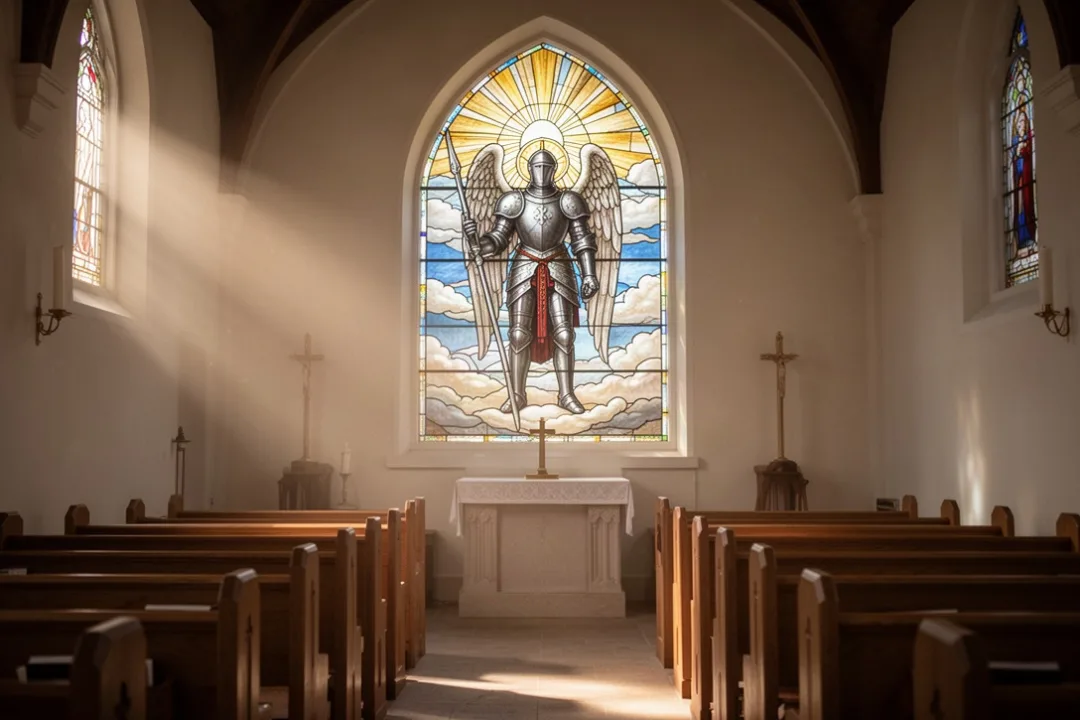
Michael is frequently shown with armor, a sword, or a defeated dragon. These images draw on biblical themes of spiritual conflict, especially Revelation 12 and the wider portrait of Michael as a defender. The visual details are symbolic; Scripture does not provide a complete physical description of Michael.
Gabriel is often depicted with a lily, a scroll, or a trumpet. The lily can represent purity in scenes connected with Mary, while the scroll suggests a message. These artistic symbols help viewers recognize a biblical role, but they are not descriptions directly supplied by the text.
Raphael is commonly represented with Tobias and a fish, reflecting the story in Tobit. Such images are especially common in Catholic and Orthodox contexts. Their meaning depends on the religious community using them and the writings it accepts as authoritative.
Church calendars also differ. Some communities celebrate Michael and the angels together, while others commemorate Michael, Gabriel, and Raphael on a shared feast. These observances honor God’s work through heavenly servants and often encourage themes of protection, faithful service, and hope.
What the archangel theme means for Christian faith
The archangel passages are not primarily intended to satisfy curiosity about an invisible hierarchy. They direct attention to several theological convictions: God rules over spiritual powers, evil is not ultimate, divine messages can arrive through unexpected servants, and God’s people are not abandoned in spiritual conflict.
Michael’s example emphasizes courage joined with humility. Gabriel’s example emphasizes faithful communication and obedience. Raphael’s traditional role emphasizes guidance and healing for communities that receive Tobit as Scripture. Together, these portraits encourage believers to think about service rather than status.
The stories also place limits on speculation. Angels are real within the biblical worldview, but they are not described as the focus of Christian worship. Scripture gives enough information to identify their broad role while leaving many details unknown.
When the term archangel appears in a discussion, the most accurate answer often includes both the clear fact and the qualification: Michael is explicitly called an archangel; Gabriel is a major messenger traditionally called an archangel; Raphael and other names depend on the canon and tradition being used. That formulation respects Scripture while acknowledging the breadth of Christian belief.
Common mistakes when discussing archangels
One frequent mistake is treating every popular angel list as biblical. Lists that assign colors, governing planets, personality types, or specialized powers to archangels may come from later mystical systems rather than Scripture.
Another mistake is assuming that the word “archangel” means an angel is divine. In Christian theology, an archangel remains a created spiritual being. High rank does not change the distinction between Creator and creature.
A third mistake is claiming that Gabriel is explicitly called an archangel in Luke. Gabriel is clearly a significant messenger who stands in God’s presence, but the title itself is not used in those passages. Precision strengthens rather than weakens the explanation.
Finally, it is unwise to build fear around every reference to spiritual warfare. The biblical passages involving Michael are serious, but they emphasize God’s authority and ultimate victory. They do not encourage panic, superstition, or attempts to manipulate the spiritual world.
What the Bible leaves unanswered about archangels
Scripture does not tell readers how many archangels exist, whether every archangel has a permanent office, or whether Michael’s title means he is the only archangel. It also does not explain the full relationship between archangels, cherubim, seraphim, and other heavenly powers.
Nor does the Bible provide a detailed account of what angels look like in every setting. Biblical visions use varied imagery, and familiar paintings often combine scriptural references with artistic tradition. Wings, armor, halos, and humanlike forms may communicate spiritual ideas without functioning as literal descriptions.
These unanswered questions leave room for theological reflection, but they also call for humility. The strongest claims are the ones grounded in named passages and clearly identified traditions. A thoughtful account of archangels can acknowledge mystery without filling every gap with certainty.
How to understand the word archangel clearly
In its most reliable Christian use, archangel describes a chief or leading angel associated with major divine purposes. Michael is the clearest biblical example and the only figure directly given the title in the New Testament. Gabriel is a principal messenger in Scripture and is called an archangel in many later traditions, while Raphael and other names depend on the biblical canon and religious source being consulted.
The central message is not that archangels possess independent power. They serve God, communicate his purposes, defend his people, and participate in events that point beyond themselves. Their presence in Scripture directs attention to God’s authority, justice, protection, and promise of ultimate victory over evil.
Frequently asked questions
Is Michael the only archangel named in the Bible?
Michael is the only figure explicitly given the title “archangel” in the Bible, specifically in Jude 9. Gabriel is named as a major messenger in Daniel and Luke, but those passages do not call him an archangel. Raphael appears in Tobit, which belongs to the Deuterocanon for some Christian traditions, and is commonly called an archangel in those communities.
Does the Bible say that Gabriel is an archangel?
No biblical passage that names Gabriel directly gives him the title archangel. Gabriel delivers major messages to Daniel, Zechariah, and Mary and describes himself as standing in God’s presence. Because of this elevated role, many Catholic, Orthodox, and other Christian traditions identify him as an archangel, but that classification comes from tradition and interpretation.
How many archangels are there?
The Bible does not provide a definitive number. Some religious traditions speak of seven heavenly beings who stand before God, drawing on texts such as Tobit and other ancient writings. Lists of seven archangels vary by tradition, and names found in later mystical or devotional sources should not automatically be treated as biblical.
Should Christians pray to archangels?
Christian practice differs. Some traditions ask God for help through the intercession of Michael or other angels, while others direct all prayer only to God. Both approaches distinguish angels from God and reject worship of angels. The New Testament warns against angel worship and presents angels as servants who point people toward God rather than replacing him.








Leave a Reply