You may have grown up around churches, heard people describe themselves as Christian, or wondered what the word actually means beyond attending services or trying to be a good person. At its center, being a Christian means trusting and following Jesus Christ. Christians believe that Jesus reveals who God is, brings forgiveness and reconciliation, and calls people into a transformed way of life.
The word includes both belief and belonging. A Christian accepts the central message of the gospel, places faith in Jesus, and becomes part of a community that worships God and serves others. Christian traditions differ in worship style and some teachings, but they generally share these foundations.
Christian faith begins with the identity of Jesus. Christians believe that Jesus was a real person who lived in the first century, taught about God’s kingdom, welcomed people who were overlooked, healed the sick, and announced forgiveness. They also believe he was more than a moral teacher or religious reformer: Jesus is the Son of God and fully reveals God’s character.
The New Testament presents Jesus as the promised Messiah, meaning the anointed king and deliverer expected by Israel. Christians believe his life, death, and resurrection are central to God’s plan to restore people and creation. References such as Matthew 16:15-17 and John 1:1-18 connect Jesus’ identity with God’s own work and presence.
Christians do not all explain every theological detail in exactly the same way, but historic Christianity confesses one God in three persons: Father, Son, and Holy Spirit. This teaching is called the Trinity. It does not mean Christians worship three gods. It means the one God is known as Father, Son, and Spirit, each fully divine and personally distinct.
Why Christians believe people need salvation
Christianity describes the basic human problem as sin. Sin is more than breaking a religious rule or making an occasional mistake. It includes the attitudes, choices, systems, and actions that turn people away from God and harm other people. Pride, dishonesty, cruelty, exploitation, hatred, and indifference are examples of ways human life becomes distorted.
According to the Bible, people are made in God’s image and therefore have deep dignity, yet everyone falls short of the goodness and love God intends. Romans 3:23 expresses this universal human failure, while Genesis 3 presents alienation from God as part of humanity’s earliest story. Christians believe sin damages relationships with God, with other people, with creation, and even within a person’s own heart.
Salvation means that God rescues and restores people from sin and its consequences. It includes forgiveness, reconciliation with God, freedom from sin’s controlling power, and the hope of renewed life. Christians understand salvation as God’s gift rather than a prize earned by accumulating good deeds.
Central idea: Christianity does not teach that people become acceptable to God by performing perfectly. It teaches that God offers grace, and that a changed life grows from receiving and responding to that grace.
How Jesus’ death and resurrection shape Christian faith
Jesus’ crucifixion stands at the heart of Christian belief. Christians believe he willingly suffered and died, taking upon himself the judgment and consequences associated with sin. Different Christian traditions emphasize different aspects of this mystery, including sacrifice, victory over evil, reconciliation, and the demonstration of God’s love.
The cross is therefore not viewed merely as an example of political injustice or personal courage. It is understood as God’s saving action. Passages such as Mark 10:45, Romans 5:6-11, and 1 Peter 2:21-25 describe Jesus’ death as having a purpose for others, though translations and Christian interpretations use varied language to describe that purpose.
Christians also believe that Jesus rose bodily from the dead. The resurrection means death did not have the final word over him and confirms the Christian hope that God can bring new life out of apparent defeat. The accounts in Matthew 28, Luke 24, John 20, and 1 Corinthians 15 present the resurrection as the foundation of the early Christian message.
For a Christian, the resurrection is both a historical claim and a present source of hope. It points toward the future resurrection and renewal of creation, while also shaping daily life now. Christians believe God’s Spirit gives strength to resist evil, endure suffering, forgive, and live with confidence that faithfulness is not wasted.
What grace, faith, and repentance mean
Grace is God’s undeserved kindness and active help. A Christian does not approach God as someone who has successfully paid a spiritual debt through good behavior. Instead, Christians trust that God takes the initiative to forgive and restore, as described in passages such as Ephesians 2:8-10 and Titus 3:4-7.
Faith means more than agreeing that certain religious facts are true. It involves trust, reliance, and commitment to Jesus. Someone may know a great deal about Christian teaching without personally entrusting their life to Christ. Biblical faith includes believing who Jesus is, depending on his grace, and seeking to follow him.
Repentance means turning away from sin and turning toward God. It includes honest recognition of wrong, a willingness to change, and a new direction. Repentance does not require pretending that the past never happened. It means bringing the past into God’s mercy and taking practical steps toward a different way of living.
Faith and repentance belong together. A person who claims trust in Jesus while deliberately treating others with contempt has misunderstood discipleship. At the same time, Christian repentance is not a demand for instant perfection. Growth often includes repeated confession, repair, learning, and dependence on God.
How becoming a Christian usually happens
People come to Christian faith through many paths. Some grow up in a Christian family and gradually make the faith their own. Others begin after reading one of the Gospels, speaking with a Christian friend, experiencing a crisis, or becoming aware of a longing for forgiveness and meaning. There is no single emotional pattern that proves whether a person’s faith is genuine.
At the center is a personal response to Jesus. A person may express that response through prayer, confession of faith, baptism, and participation in a church. Churches use different wording, but a sincere response generally includes trusting Jesus, acknowledging the need for grace, and committing to learn his way.
Prayer does not need to use impressive language. Someone beginning to follow Christ might speak honestly to God about belief, doubt, guilt, gratitude, and the desire to change. A prayer itself is not a magical formula; its significance comes from the trust and surrender it expresses.
Baptism is a public sign associated with becoming a Christian. It represents identification with Jesus’ death and resurrection and entry into the Christian community. Churches differ about whether baptism should be given to infants, children, or professing believers, and they practice it through immersion, pouring, or sprinkling.
After baptism, Christian formation continues through worship, Scripture, prayer, relationships, service, and moral growth. A person does not finish becoming a Christian after one ceremony or emotional experience. Discipleship is an ongoing life of following Jesus.
What Christians do as part of everyday life
Christian practices are not a checklist used to earn God’s approval. They are habits that help Christians receive grace, remember their identity, and love God and neighbor. The specific rhythm varies, but many Christians regularly make room for the following:
Prayer: speaking with God through praise, confession, thanksgiving, requests, silence, and listening.
Bible reading: learning the story of God’s work and reflecting on how Jesus’ teaching applies to life.
Worship: gathering with other believers to honor God through music, teaching, prayer, Communion, and shared confession.
Community: building relationships in which Christians encourage one another, receive correction, and offer practical care.
Service: using time, skills, money, and attention to help neighbors and pursue the good of others.
Generosity: treating possessions as resources to steward rather than proof of status or personal worth.
Confession and repentance: acknowledging wrong honestly and taking responsibility for needed change.
Jesus summarized the direction of Christian ethics as love for God and love for neighbor, as recorded in Matthew 22:37-40. Christian love is not merely warm feeling. It can require patience, truthfulness, forgiveness, protection of the vulnerable, and costly action on behalf of another person.
Christians are also called to love enemies and pray for those who harm them, a demanding teaching associated with Matthew 5:43-48 and Luke 6:27-36. This does not mean ignoring abuse, refusing wise boundaries, or avoiding justice. It means rejecting revenge and seeking the other person’s good without calling evil acceptable.
How Christian character changes over time
Christian growth is often called sanctification, a word describing the process of becoming more devoted to God and more like Christ. The New Testament connects this growth with the work of the Holy Spirit, who helps believers develop qualities such as love, joy, peace, patience, kindness, goodness, faithfulness, gentleness, and self-control. These qualities are described in Galatians 5:22-23.
Growth can be gradual and uneven. A Christian may become more honest yet still struggle with anger, or become more generous while continuing to wrestle with anxiety. The presence of difficulty does not automatically mean a person has no faith. It does mean the person needs ongoing humility, support, and willingness to respond to God’s correction.
Christian maturity can be seen in how someone treats people who cannot increase their status, wealth, or comfort. It appears in keeping promises, admitting wrong, caring for the poor, resisting prejudice, practicing sexual integrity, handling power responsibly, and speaking truth without contempt. Character matters because faith is meant to shape conduct.
Christianity also teaches that transformation is not achieved by willpower alone. Christians depend on God’s Spirit while making real choices and practicing disciplined habits. Prayer, wise friendships, accountability, service, and regular engagement with Scripture can support that process.
How the Bible functions for Christians
The Bible is a collection of writings produced across many centuries and literary forms, including history, poetry, wisdom, prophecy, letters, and Gospel narratives. Christians regard it as authoritative Scripture and use it to learn about God, humanity, Jesus, salvation, and faithful living.
Reading the Bible responsibly means paying attention to context, genre, audience, and the larger biblical story. A proverb is not read in exactly the same way as a historical narrative, and a letter’s guidance must be understood in light of its situation. Christians often read passages with other believers because personal interpretation can be limited or distorted.
The Bible is not mainly a collection of isolated inspirational sayings. Christians read it as a story that moves from creation and human rebellion toward redemption and renewal, with Jesus at the center of that story. The Old Testament provides the background for God’s covenant, promises, justice, worship, and hope; the New Testament announces Jesus and describes the life of the early church.
When reading, ask what the passage says about God, people, sin, grace, and faithful action. Avoid using a verse as a weapon or as a promise detached from its context. Since translations differ, consult a reliable translation and compare difficult passages with sound teaching and the wider message of Scripture.
Why Christians gather in churches
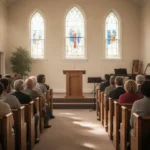
A Christian is not meant to live faith entirely alone. The church is the community of people who follow Jesus, worship God, receive teaching, share Communion or the Lord’s Supper, practice mutual care, and serve their neighbors. The New Testament uses images such as a body and a household to describe the church’s interdependence.
Churches can be local congregations or wider denominations with shared beliefs and practices. Catholic, Orthodox, Protestant, Anglican, evangelical, mainline, Pentecostal, and other Christian communities may differ over authority, sacraments, leadership, worship, baptism, spiritual gifts, and the details of salvation. These differences should be taken seriously, but they do not erase the central place of Jesus.
A healthy church should make room for worship, truth, accountability, hospitality, and care for people in need. It should not demand unquestioning loyalty to a leader, excuse abuse, manipulate members through fear, or treat money and status as signs of spiritual success. Christian community should reflect the humility and service of Jesus.
If you are seeking a church, look for clear teaching about Jesus, responsible leadership, transparent finances, respect for conscience, and practical care for the vulnerable. Visit more than one congregation if necessary. Ask how the church handles questions, disagreement, safeguarding, counseling, and involvement in the wider community.
Common mistakes about what it means to be a Christian
Many misunderstandings come from confusing Christian identity with cultural labels, personality, politics, or outward respectability. These mistakes can make faith seem either easier or harsher than Christianity actually is.
Reducing Christianity to being nice: kindness matters, but Christianity also involves worship, truth, repentance, justice, and trust in Jesus.
Assuming church attendance earns salvation: gathering with Christians is valuable, but attendance cannot replace sincere faith or a changed direction.
Expecting instant perfection: Christians are called to holiness, yet they remain people who need forgiveness and ongoing growth.
Confusing Christianity with a political identity: Christians may hold different political views while sharing faith in Christ.
Thinking doubt automatically cancels faith: honest questions can lead to deeper understanding when brought into prayer, Scripture, and trustworthy community.
Using morality to hide the need for grace: outwardly respectable people need forgiveness just as much as openly struggling people.
Using grace as an excuse for harm: forgiveness does not eliminate accountability, restitution, safety, or the need to stop destructive behavior.
Judging all Christianity by its worst representatives: Christian claims should be examined carefully, while the failures of churches and leaders should be acknowledged honestly.
Safety matters: No Christian teaching requires you to remain in an abusive situation, obey a manipulative leader, or keep a dangerous secret. Seek help from trusted people and appropriate professional or legal services when necessary.
Practical steps for exploring Christian faith
If you are asking what it means to be a Christian, you do not need to solve every theological debate before taking a first step. Begin with the central question: Who is Jesus, and how will I respond to him? Exploration can be thoughtful, honest, and unhurried.
Read one Gospel: Mark offers a relatively direct account of Jesus’ actions, while Luke and John provide distinctive perspectives on his identity and mission.
Pray honestly: Tell God what you believe, what you doubt, and what you want to understand.
Ask specific questions: Speak with a mature Christian or pastor who welcomes careful questions rather than pressuring you.
Visit a healthy church: Notice how Jesus is taught, how people treat one another, and whether leaders welcome accountability.
Consider your response: Faith involves more than information; it includes trust, repentance, and a willingness to follow Christ.
Take practical action: Make amends where possible, serve someone in need, and practice truthfulness as part of responding to what you are learning.
Allow room for growth: Keep learning through prayer, Scripture, community, and honest reflection rather than expecting every answer immediately.
Questions about Christianity can be intellectual, moral, emotional, or personal, and often they are several at once. You may be considering faith because you want forgiveness, are searching for meaning, feel drawn to Jesus’ teaching, or have been hurt by religious people. Those experiences deserve honest attention.
To be a Christian is not to claim superiority or to present a flawless record. It is to receive God’s grace through Jesus Christ, turn toward God, join a community of faith, and learn a new pattern of life marked by love, truth, humility, service, and hope. The Christian life remains dependent on grace from its first step to its last.
Frequently asked questions
Do you have to attend church to be a Christian?
Regular church attendance does not earn salvation, and a person may be unable to attend because of illness, location, work, or other circumstances. Still, Christianity is not designed as a completely solitary faith. Christians are encouraged to gather with other believers for worship, teaching, encouragement, Communion, and service. A healthy church can help faith mature and provide practical support.
Can someone be a Christian and still have doubts?
Yes. Doubt can involve uncertainty, unanswered questions, disappointment, or fear, and it does not automatically prove that faith is false. Christians are encouraged to bring doubts honestly to God, study carefully, and discuss them with wise, trustworthy people. Faith is not pretending to have no questions; it is continuing to seek truth and trust amid incomplete understanding.
What is the difference between being religious and being a Christian?
“Religious” is a broad description that can refer to many beliefs and practices. Christianity specifically centers on Jesus Christ, his death and resurrection, God’s grace, and a life of discipleship. A person can participate in religious customs without personally trusting Christ. Christian faith includes outward practices, but it also involves an inward response of faith, repentance, and commitment.
Can a Christian lose salvation after making serious mistakes?
Christian traditions answer this question differently, especially concerning deliberate rejection of faith and persistent rebellion. They generally agree that serious failure does not place someone beyond God’s mercy when that person turns back in repentance. Christians are not saved by maintaining a perfect record. They are called to take sin seriously, seek forgiveness, repair harm where possible, and continue relying on God’s grace.









Leave a Reply