In Christianity and many other faith traditions, worship is more than singing, attending a service, or following a ceremony. It is the way people recognize what they consider sacred and respond with reverence, trust, gratitude, obedience, or devotion. Worship can involve words and music, but it also reaches into a person’s priorities, behavior, relationships, and use of time.
The English word “worship” is historically connected with the idea of assigning worth or value. That meaning helps explain why worship is directed toward God: the worshiper acknowledges God’s greatness and responds accordingly. In Christian teaching, worship is not an attempt to make God valuable. It is a response to who God is and what God has done.
Different religious communities express worship in different ways. Some emphasize formal liturgy, sacraments, silence, or recited prayers. Others focus on preaching, spontaneous prayer, music, testimony, or service. These differences matter, but they do not change the central idea: worship turns attention toward God and reshapes the worshiper’s life.
Core idea: Worship is not limited to a location or a musical style. It includes the posture of the heart and the choices that show what, or whom, you treat as worthy of ultimate loyalty.
How worship works in practice
Worship is easier to understand when you look at the movement from recognition to response. A person first considers God’s character and actions, then responds inwardly and outwardly. The process is not always linear, and people may experience it differently, but these points describe the basic pattern.
Recognize what is sacred. Worship begins with an awareness that God is not merely an idea or a useful resource. God is understood as worthy of honor because of divine character, holiness, authority, love, or creative power.
Pay attention. Worship directs the mind away from distraction and toward God. Prayer, Scripture, silence, music, and communal rituals can help a person become attentive and present.
Respond with reverence and affection. That response may include praise, wonder, gratitude, repentance, trust, or love. Worship does not require one particular emotional state.
Offer yourself. In Christian worship, people may present their time, abilities, resources, decisions, and bodies in service to God. The response becomes practical rather than remaining a private feeling.
Live out the response. Worship continues through integrity, compassion, forgiveness, justice, humility, and faithfulness. A gathered service and an ordinary Tuesday are connected by the same commitment.
This pattern also clarifies why worship can be genuine during difficult circumstances. Worship is not the same as pretending everything is fine. A person may bring grief, confusion, anger, or fear to God while still expressing trust or seeking help. Many biblical prayers include lament alongside praise, showing that honest worship can make room for pain.
Why people worship God
People worship for several connected reasons. The first is who God is. Christians worship God as Creator, holy, just, merciful, wise, and loving. These attributes are not merely abstract descriptions; they shape the way worshipers understand their own lives and responsibilities.
The second reason is what God has done. Christian worship responds to creation, divine faithfulness, forgiveness, guidance, and salvation. The New Testament places particular emphasis on Jesus Christ’s life, death, and resurrection. Worship therefore includes remembrance: the community recalls God’s acts and allows those memories to form its faith.
The third reason is relationship. Worship is not intended to be only an exchange of requests for blessings. It is a way of knowing and honoring God, listening for direction, confessing wrongdoing, receiving grace, and growing in trust. The relationship is understood as personal, but not casual; intimacy and reverence belong together.
Worship also helps people place the rest of life in a wider frame. Work, money, status, entertainment, political causes, and personal achievement can become controlling when they receive ultimate attention. Worship challenges those competing loyalties by reminding people that no created thing deserves the place reserved for God.
What worship looks like in a church service
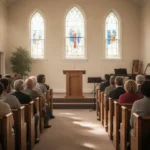
A church service may include many activities, and not every congregation organizes them in the same order. The specific elements often reflect a church’s tradition, theology, culture, and local customs. Still, several practices commonly function as acts of worship.
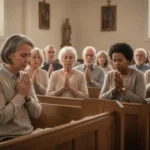
Prayer: People address God with praise, confession, thanksgiving, requests, intercession, and dedication.
Scripture reading: The congregation listens to biblical passages as a source of teaching, correction, encouragement, and spiritual formation.
Music and singing: Hymns, psalms, spiritual songs, and contemporary worship music express shared beliefs and emotions.
Preaching or teaching: A sermon applies biblical themes to faith and daily life.
Communion or the Lord’s Supper: In traditions that practice it, the meal remembers Jesus and expresses participation in the Christian community.
Baptism: Baptism publicly identifies a person with Christian faith, although churches differ in their understanding of its timing and meaning.
Offerings: Giving can express gratitude, trust, generosity, and responsibility toward the church and people in need.
Silence and reflection: Quiet can create space for confession, listening, attentiveness, and reverence.
These activities are not automatically worship simply because they appear in a church building. A person can sing without considering the meaning of the words, listen without responding, or give for recognition rather than generosity. The external action matters, but its purpose and orientation also matter.
At the same time, worship should not be judged only by visible emotion. A quiet service may be deeply meaningful to one congregation, while another may express devotion with energetic singing and movement. Volume, musical style, and outward enthusiasm do not provide a universal measure of spiritual sincerity.
How personal worship differs from corporate worship
Corporate worship is worship shared by a gathered community. Christians meet to pray, hear Scripture, sing, celebrate sacred practices, encourage one another, and receive instruction. The word “corporate” here means communal or collective, not related to business. Gathering keeps faith from becoming entirely private and gives people opportunities to serve and support one another.
Personal worship takes place in an individual’s ordinary relationship with God. It may include prayer in the morning, reading and reflecting on Scripture, silent meditation, keeping a gratitude practice, singing alone, confessing sin, or making a difficult decision in light of faith. Personal worship does not replace community, and community does not eliminate the need for private devotion.
The two forms strengthen each other. A person who worships privately may arrive at a gathering with greater attentiveness, while a congregation can provide teaching, correction, friendship, and encouragement that an individual cannot easily create alone. Both forms help worship become a pattern of life rather than an isolated event.
Practical test: Ask what your worship is forming in you. If it is directing you toward humility, love, truth, generosity, and faithfulness, it is reaching beyond an event into your character and conduct.
How worship extends beyond music
Music is one of the most recognizable forms of Christian worship, but it is only one form. A person may worship through prayer, service, generosity, study, obedience, hospitality, and acts of mercy. A nurse caring for a vulnerable patient, a parent practicing patient love, or a neighbor helping someone in crisis may be expressing faith through action when those choices are offered to God.
The New Testament connects worship with presenting one’s whole life to God; Romans 12:1 uses sacrificial language to describe this dedication. The point is not that every task becomes a religious performance. Rather, ordinary responsibilities can be carried out with integrity and offered as part of a larger commitment to God.
Work can become worship when it is done honestly and serves others, but not every kind of work is automatically sacred. Exploitation, dishonesty, and harmful ambition cannot be justified merely by attaching religious language to them. Worship must be consistent with the character it claims to honor.
Service is also not a way to earn God’s acceptance. In Christian theology, good works are generally understood as a response to grace rather than a purchase of salvation. This distinction protects worship from becoming a transaction: people do not serve so that God will owe them something.
What the Bible teaches about worship
The Bible presents worship as both a response to God and a matter of exclusive loyalty. In the Hebrew Scriptures, worship includes sacrifices, offerings, festivals, songs, prayer, obedience, and reverence. The tabernacle and later the temple provided important places for Israel’s worship, but the biblical story also repeatedly warns that ceremonies are empty when people ignore justice and faithfulness.
Several prophetic passages, including Isaiah 1 and Amos 5, criticize religious gatherings that exist alongside oppression and wrongdoing. These passages do not reject worship itself. They insist that ritual and ethics cannot be separated. God is not honored by public devotion that is contradicted by cruelty, corruption, or disregard for the poor.
The biblical account also warns against idolatry. Idolatry means giving created things the devotion, trust, or allegiance that belongs to God. It can involve physical images, but it can also involve wealth, power, reputation, pleasure, ideology, or even religious success. Anything treated as an ultimate source of identity or security can become an idol.
Jesus emphasizes wholehearted love for God and love for one’s neighbor; these themes appear in passages such as Matthew 22:37-40. He also criticizes religious behavior performed mainly for public approval, as described in Matthew 6. These teachings show that worship involves both the object of devotion and the motive of the worshiper.
The Gospel of John records Jesus speaking with a Samaritan woman about worship connected with spirit and truth in John 4:23-24. Christians interpret this passage in different ways, but its broad emphasis is clear: worship is not confined to one sacred mountain or one ethnic location. It must be sincere and aligned with truth, not merely attached to a place or outward form.
How worship differs across Christian traditions
Christian churches share central beliefs while expressing worship through different structures. Roman Catholic, Eastern Orthodox, Anglican, Lutheran, Reformed, Baptist, Pentecostal, nondenominational, and other traditions may use different prayers, calendars, instruments, vestments, preaching styles, and understandings of Communion.
Some communities follow a carefully ordered liturgy with responses, readings, and established prayers. Others have a less scripted service centered on extended preaching, spontaneous prayer, or contemporary songs. Some worshipers stand, kneel, raise their hands, bow, or remain still. Posture and style communicate meaning, but no single physical expression is required in every Christian tradition.
These differences can reflect serious theological convictions. A church’s worship may communicate how it understands the Bible, the sacraments, the role of clergy, the work of the Holy Spirit, the gathered community, and the relationship between ancient practice and present culture. Learning those reasons is more useful than ranking styles according to personal taste.
Healthy worship should make room for both reverence and understanding. A service can be beautiful yet difficult to follow if participants do not know what its actions mean. Conversely, a service can be simple and deeply meaningful when the congregation understands why it prays, sings, listens, gives, and gathers.
How to begin a personal worship practice
A personal practice does not need to be elaborate. The goal is not to create a perfect routine but to establish regular attention toward God. Choose a time and place that fit your actual life, then begin with a manageable pattern.
Set aside a specific period. Ten or fifteen focused minutes can be more sustainable than an ambitious plan that quickly disappears.
Begin with stillness. Put away distractions and become aware that you are entering a time of prayer and attention.
Read a short biblical passage. Consider what it reveals about God, people, faith, or faithful action. Avoid treating the reading as a test of how much material you can finish.
Respond honestly. Thank God, confess what needs to be confessed, ask for help, and express questions without pretending certainty.
Choose one practical response. That might mean apologizing, encouraging someone, resisting an unhealthy habit, serving a neighbor, or approaching work with greater integrity.
Review the practice periodically. Notice whether it is helping you become more attentive, truthful, compassionate, and faithful.
You can use a prayer book, a trusted devotional resource, a hymn, a journal, or a period of silence. None of these tools is required. Consistency and honesty matter more than religious performance, and a missed day does not make the entire practice worthless.
How worship can become empty or distorted
Religious activity can look impressive while missing the purpose of worship. One common distortion is performance: people may focus on appearing spiritual, receiving praise, or creating a powerful atmosphere. Jesus’ warnings about public religious displays address this danger. Worship loses its center when the audience shifts from God to other people.
Another distortion is treating worship as a technique for obtaining desired results. Prayer, giving, or attendance can become attempts to control God or guarantee health, success, protection, or prosperity. Christian worship includes asking God for help, but it does not reduce God to a mechanism for producing personal outcomes.
A third problem is separating devotion from conduct. If a person sings about love while practicing contempt, or speaks of holiness while exploiting others, the contradiction matters. Biblical worship repeatedly joins reverence for God with justice, mercy, repentance, and care for vulnerable people.
Worship can also become centered on personal preference. Music, lighting, preaching style, service length, and architecture all influence experience, but they are not the final standard of faithfulness. Mature worship asks not only, “Did I like the service?” but also, “Did I respond to God with truth, humility, and love?”
Worship can change the way a person understands identity. Instead of treating achievement, appearance, income, or social approval as the source of worth, the worshiper receives identity from relationship with God. That does not remove ambition or responsibility, but it places them under a higher allegiance.
Worship can also change how people handle suffering. It does not provide a simple explanation for every loss, and it should never be used to silence grief. It can give people language for lament, a community for support, and a basis for hope when circumstances remain unresolved.
In relationships, worship encourages practices that reflect the character of God: patience, forgiveness, truthfulness, hospitality, and concern for people who have little power. These qualities are not decorative additions to religious life. They are evidence that devotion is affecting behavior.
Worship also shapes decisions. Before accepting an opportunity, spending money, using influence, or responding to conflict, a person may ask whether the choice reflects what they claim to value before God. That kind of discernment makes worship practical without turning every decision into a dramatic religious moment.
Questions to ask when evaluating worship
There is no single checklist that can measure the depth of another person’s worship. Still, useful questions can help an individual or congregation examine its direction:
Does this practice direct attention toward God rather than toward a leader, performer, or audience?
Does it reflect truth, or does it depend on exaggeration and manipulation?
Does it create space for both joy and honest sorrow?
Does it encourage humility, repentance, courage, compassion, and service?
Does it include the wider community rather than favoring only the confident or influential?
Does it connect gathered devotion with ethical decisions during the rest of the week?
Does it honor people who worship differently while remaining faithful to its own convictions?
These questions are not designed to turn worship into a performance review. They help bring the central issue back into view: what is being honored, how sincere the response is, and what kind of life the worship produces.
Worship, then, is a whole-person response to God. It may happen in a sanctuary, a home, a workplace, or a quiet moment of prayer. Its outward forms vary, but its center remains the recognition that God is worthy of reverence, love, trust, gratitude, and faithful action.
Frequently asked questions
Is worship the same as singing in church?
No. Singing is one common expression of worship, but worship also includes prayer, listening to Scripture, Communion, generosity, service, repentance, and daily obedience. Music can help people express devotion, yet a person may worship in silence or through an act of compassion. The central issue is the person’s response to God, not the presence of a particular song or musical style.
Can you worship God alone at home?
Yes. Private worship can include prayer, Scripture reading, silence, reflection, singing, confession, and gratitude. Personal worship is not meant to compete with gathering with other believers, however. Community provides encouragement, teaching, accountability, and shared practices that are difficult to replace with an entirely private routine.
Why do Christians worship on Sunday?
Many Christians gather on Sunday because it is associated with Jesus’ resurrection, which the New Testament presents as central to Christian faith. The exact schedule and form of worship vary among churches. Some Christian communities also gather on other days and maintain additional times for prayer, study, or communal worship.
Does worship have to feel emotional to be genuine?
No. Emotion can be part of worship, but it is not a reliable measure of sincerity. People may feel joy, peace, grief, doubt, or very little emotion during a service or prayer. Faithful worship can involve choosing trust and obedience even when the experience feels quiet, difficult, or ordinary.










Leave a Reply