If you have encountered the name Baal in the Bible, you may wonder whether it refers to one god, several gods, or simply an idol. The answer is more layered than a single definition. Baal was a title meaning “lord” or “master,” but it also became the personal name commonly used for a prominent Canaanite deity associated with storms, rain, fertility, and agricultural prosperity.
The biblical writers present worship of Baal as a direct rival to worship of the Lord. Their concern was not only that Israelites had adopted a different religious practice. Baal worship also involved foreign rituals, unauthorized shrines, sexualized fertility symbolism, and at times the sacrifice of children. The repeated warnings against Baal show how seriously Israel’s prophets viewed divided loyalty.
The word baal comes from a Semitic term that can mean “lord,” “master,” or “owner.” In ordinary language, it could describe a human relationship or possession. In the religious setting of the ancient Near East, however, the title was applied to divine beings, especially a storm and fertility god worshiped in Canaan and nearby regions.
Because “baal” functioned as a title, the Bible sometimes uses the word in forms that can be confusing to modern readers. Baals can refer to local versions or manifestations of the deity, while names such as Baal-peor identify a particular place or cultic association. The plural does not necessarily mean that every reference describes a completely separate god.
The biblical authors often use Baal’s name polemically. They describe him as a false god whose worship draws people away from the covenant with the Lord. This theological judgment is the central biblical point, even though the wider historical background helps explain why Baal worship appealed to ancient communities.
Key distinction: Baal was both a title meaning “lord” and the name commonly associated with a major Canaanite deity. The surrounding passage determines how the word is being used.
What Baal was believed to control
In the religious culture of Canaan, Baal was closely associated with rain, thunderstorms, and fertile land. Farmers depended on seasonal rainfall for grain, vines, olives, and pasture. A deity believed to control storms and agricultural abundance therefore had enormous practical importance.
Baal was also connected with fertility in a broader sense. Ancient fertility religions linked the productivity of the land with the prosperity of animals, crops, and human families. Rituals intended to secure abundance could involve symbolic acts, offerings, feasts, and practices that the biblical writers regarded as morally and spiritually corrupt.
Texts discovered at the ancient city of Ugarit, on the Syrian coast, provide important background for understanding the religious world surrounding biblical Israel. These texts describe a storm deity named Baal in conflict with other divine powers and portray him as a ruler connected with rain and agricultural life. They do not function as additional books of the Bible, but they help scholars interpret the cultural setting in which biblical references to Baal arose.
The Bible does not present Baal as a legitimate power alongside the Lord. In the biblical worldview, the Lord is the creator and true giver of rain, crops, life, and covenant blessing. Baal worship is therefore not simply a different explanation of weather. It represents a competing claim about who deserves trust and worship.
How Baal worship entered Israel’s story
Israel lived among peoples who worshiped local deities, including Baal and related gods. The biblical account of the settlement in Canaan repeatedly warns that Israel must not adopt the religious practices of the surrounding nations. The danger was especially strong because local worship was tied to everyday needs: rainfall, harvests, protection, family prosperity, and political alliances.
The book of Judges describes a recurring pattern. Israel turns away from the Lord, experiences oppression, cries out for help, and receives deliverance through a judge. In several episodes, the people are said to have served the Baals and the Ashtoreths, a phrase that reflects the wider Canaanite religious system rather than a single isolated shrine.
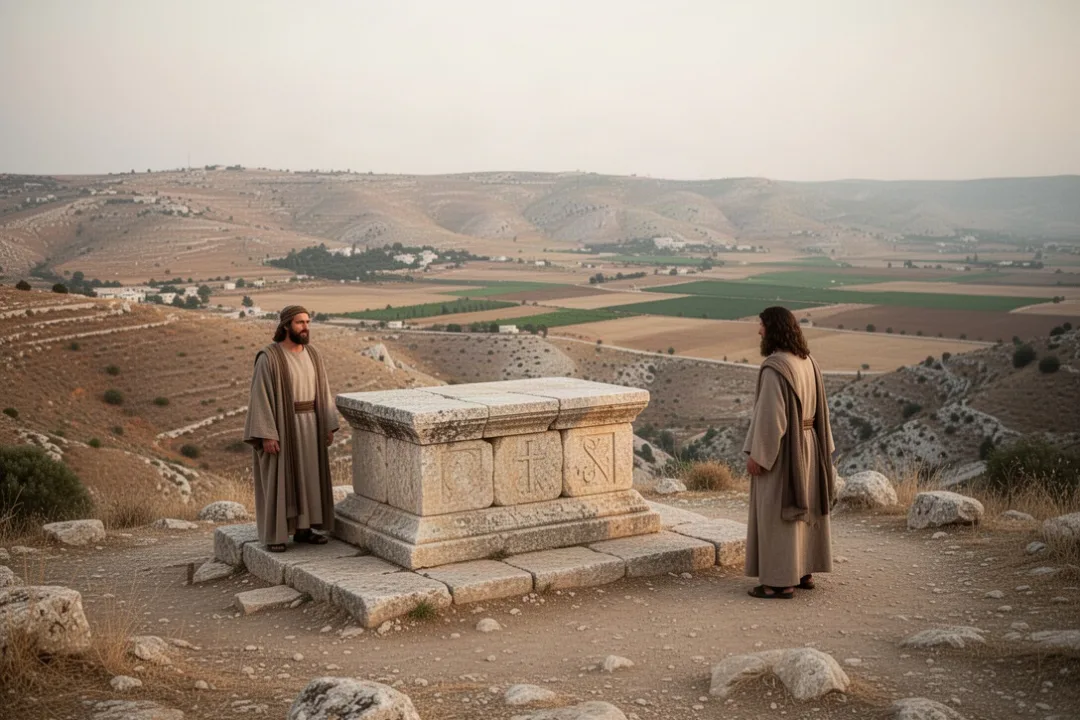
Judges 2 presents the problem as a failure of loyalty after the death of an earlier generation. The people abandon the Lord and follow the gods of the surrounding nations. Judges 6 then tells how Gideon was instructed to tear down his father’s altar to Baal and cut down the associated Asherah pole. Gideon’s action shows that Baal worship could exist inside an Israelite household, not only in foreign territory.
Gideon’s father defended him by arguing that Baal should be able to defend himself if he were truly a god. The episode exposes the weakness of an idol while also showing the social risk of rejecting a familiar local cult. Gideon’s new name, Jerubbaal, is connected with the challenge that Baal should contend with him.
One of the earliest major references appears in the account of Baal-peor in Numbers 25. Israel is described as becoming involved with the worship of the Baal associated with Peor after encounters with the women of Moab. The story links participation in pagan sacrifices with sexual immorality and a severe judgment on the community.
The passage is not merely criticizing a private religious preference. It presents the event as a breach of Israel’s covenant identity. The people who had been delivered from Egypt and brought into relationship with the Lord were joining in practices devoted to another deity. Their actions threatened the whole community’s faithfulness.
Later biblical writers continue to refer to the incident. Psalm 106 connects the worship at Peor with sacrifices offered to the dead, while Hosea recalls the event as an example of Israel becoming defiled through idolatry. These references show how Baal-peor remained a powerful symbol of spiritual compromise long after the original episode.
What happened on Mount Carmel with Elijah and Baal
The best-known confrontation with Baal appears in 1 Kings 18, during the reign of King Ahab. Ahab and his wife Jezebel had supported the worship of Baal in the northern kingdom of Israel. The prophet Elijah challenged the prophets of Baal on Mount Carmel to demonstrate which deity could answer with fire.
Elijah’s challenge was designed as a public test. The prophets of Baal prepared an offering and called on their god, but no answer came. The narrative describes them shouting, dancing, and injuring themselves as part of their ritual. These details emphasize the desperation and futility of their efforts rather than providing a general description of every Baal ceremony.
Elijah then repaired an altar of the Lord, arranged the sacrifice, and had water poured over it. When he prayed, fire consumed the offering and even the water around it. The point of the scene is stated in the prayer itself: the people are to recognize that the Lord is God and that Elijah acts as his servant.
The confrontation answers a question that runs throughout the biblical accounts: who controls the forces on which life depends? Baal was associated with storm and rain, yet the Lord had already demonstrated control over Israel’s drought and its end. The miracle therefore functions as a direct challenge to Baal’s supposed authority.
The chapter also describes the execution of the prophets of Baal after the contest. That action belongs to the violent setting of ancient Israelite kingship and prophetic judgment. It should not be treated as a model for modern religious conduct. Its role in the narrative is to show the seriousness with which the biblical story views organized idolatry under royal sponsorship.
How Ahab and Jezebel promoted Baal worship
King Ahab’s reign is associated with an official or highly influential form of Baal worship. First Kings 16 says that Ahab built a temple and altar for Baal in Samaria. The account also presents his marriage to Jezebel, daughter of the king of Sidon, as a major factor in the promotion of foreign religious practices.
Jezebel’s role is especially visible in 1 Kings 18 and 19. The text says she supported prophets of Baal and attempted to eliminate the Lord’s prophets. This made the conflict political as well as religious. The royal court was not merely tolerating private devotion; it was shaping the public religious environment of the kingdom.
At the same time, the Bible says that not every Israelite abandoned the Lord. Obadiah, an official in Ahab’s household, had hidden and fed prophets during Jezebel’s persecution. The story of the “seven thousand” in 1 Kings 19 also reassures Elijah that a faithful remnant remained. These details prevent the narrative from reducing the entire population to a single attitude.
The conflict between Ahab and Elijah also forms part of the larger biblical criticism of royal power. The same king who supported Baal worship later abuses his authority in the case of Naboth’s vineyard. The biblical narrative connects false worship with distorted justice, showing how religious compromise can affect public leadership and treatment of vulnerable people.
How the prophets criticized Baal worship
The prophets often describe idolatry as adultery or prostitution. This language comes from the covenant relationship between the Lord and Israel. If Israel belongs to the Lord, turning to Baal resembles marital betrayal. Hosea uses this imagery extensively, presenting Israel’s pursuit of fertility blessings from Baal as a misunderstanding of where grain, wine, wool, and flax truly come from.
Hosea 2 is especially significant because it describes Israel crediting Baal for gifts that the Lord had provided. The people interpret prosperity through the wrong religious framework. The prophet responds by promising a future in which Israel will no longer call the Lord “my Baal,” removing the confusing title and restoring a direct relationship with God.
Jeremiah also condemns Baal worship in Judah. He refers to the people building high places to Baal and burning their sons and daughters in the fire, particularly in the valley associated with Ben Hinnom. Jeremiah 7 and 19 present these practices as an offense that brings judgment on Jerusalem.
In Jeremiah 23, the prophets who speak in Baal’s name are criticized for leading the people astray. The issue is not only pagan ritual but also false religious authority. A prophet who claims divine backing while directing people toward Baal corrupts both worship and public trust.
Zephaniah 1 speaks of people who worship the Lord while also swearing by Milcom, reflecting divided allegiance. The broader prophetic message is consistent: Israel cannot preserve covenant faithfulness by combining worship of the Lord with devotion to other gods.
What the Bible says about child sacrifice and Baal
Several passages connect Baal or related high places with the sacrifice of children. Jeremiah 19 says that the people built places for Baal where they burned their sons, something the Lord had not commanded and did not approve. The practice is described as a profound violation of God’s will and an indication of how far idolatry had corrupted the community.
Second Kings 16 records King Ahaz making his son pass through fire according to practices associated with the surrounding nations. Second Kings 21 similarly condemns Manasseh for making his son pass through fire. These passages do not always use Baal’s name in every sentence, so each reference should be read in its immediate context rather than automatically assigned to one particular ritual.
The biblical condemnation is unequivocal: children are not acceptable offerings to God. The prophets use these acts as evidence of religious rebellion and social cruelty. Readers should also distinguish between descriptions of ancient practices and instructions for believers today; these passages condemn violence rather than authorize it.
Read the context carefully: Biblical passages about Baal may mention local shrines, fertility rites, royal policy, false prophecy, or child sacrifice. Do not assume every reference describes identical practices or the same local form of worship.
How the Bible uses the names Baal and Baal-peor
The Old Testament contains several compounds formed with Baal. Baal-peor refers to the deity or cult associated with Peor. Baal-berith, mentioned in Judges 8 and 9, means “Baal of the covenant” and was worshiped at Shechem. These names suggest that Baal worship could take locally specific forms.
Other personal names in the biblical text appear to contain the element “Baal.” Some people connected with David’s military history or Saul’s family have names that include it. This does not mean that every person carrying such a name was an active Baal worshiper. Names can preserve older linguistic or cultural features even when religious loyalties change.
First Chronicles sometimes presents forms of names differently from the books of Samuel and Kings. In at least one case, a name containing “Baal” appears in a form using “bosheth,” a Hebrew term associated with shame. Scholars discuss whether this reflects a deliberate editorial change, a variant tradition, or a change in naming practice. The difference illustrates why a single word search cannot explain every biblical occurrence.
Is Baal the same as Satan or the devil?
Baal is not simply another name for Satan in the Bible. The Old Testament presents Baal as a pagan deity or idol worshiped by surrounding peoples and, at times, by Israelites. Satan appears in a different role in biblical passages, and the two names should not be treated as interchangeable.
The New Testament mentions Beelzebul, or Beelzebub, in discussions of Jesus casting out demons. The name may be related historically or linguistically to “Baal-zebub,” the god of Ekron mentioned in 2 Kings 1, though the exact development of the title is debated. The New Testament’s use of Beelzebul occurs in a demonological argument, but that does not erase the distinction between the original Baal cult and the later title.
Some Christian traditions have connected various pagan gods with demonic powers. That theological interpretation differs from saying that every biblical reference to Baal means Satan personally. For careful Bible reading, identify whether the passage is discussing a Canaanite deity, an idol, a local cult, or a later name associated with demonic activity.
What happened to Baal worship after Israel’s exile
The biblical record does not suggest that all idolatry disappeared immediately after the exile. Israel and Judah had long interacted with many religious traditions, and the prophets repeatedly addressed the persistence of unauthorized worship. Yet the postexilic community’s religious identity increasingly centered on exclusive worship of the God of Israel.
In the New Testament period, Baal is not a central public rival in the same way he is in the stories of Judges, Kings, and the prophets. The religious landscape had changed, and the New Testament more often addresses pagan temples, idols, imperial culture, and local Greco-Roman deities. Still, the principle behind the earlier warnings remains relevant: worship cannot be divided between God and competing powers.
The name also survives in later place names and personal names, which do not always indicate continuing devotion to the ancient deity. Historical language can outlast the religious system that first produced it. That is why the surrounding period and context matter when interpreting a name containing “Baal.”
Practical tips for reading Baal passages accurately
Baal references can seem repetitive, but each passage may emphasize a different problem. Use the following habits when studying them:
Check the setting. Ask whether the passage occurs in the wilderness, during the judges, under a particular king, or in a prophetic warning.
Identify the form of the name. “Baal,” “the Baals,” and names such as Baal-peor may point to related but locally distinct uses.
Read the surrounding verses. The text may focus on rain, fertility, political policy, sexual immorality, false prophecy, or child sacrifice.
Separate description from approval. When the Bible reports a ritual, it may be exposing or condemning it rather than recommending it.
Compare parallel accounts cautiously. Differences between Samuel, Kings, Chronicles, and prophetic books can reflect distinct purposes and traditions.
Use historical background as context, not as a replacement for the text. Archaeological and ancient literary evidence can clarify terms, but it does not determine every theological conclusion.
Common mistakes people make about Baal in the Bible
Several misunderstandings arise when modern readers treat every occurrence of the word as though it had exactly the same meaning. Avoiding these mistakes produces a more accurate interpretation.
Assuming Baal was always one uniform god. The title could be connected with local forms and place-specific worship.
Calling Baal merely a symbol of bad behavior. The biblical writers address a real religious system, including temples, priests, sacrifices, and political support.
Equating Baal with Satan in every passage. The Bible distinguishes the Canaanite deity from Satan and from later uses of Beelzebul.
Reading Elijah’s contest as only a weather miracle. The event also concerns covenant loyalty, prophetic authority, royal influence, and the identity of Israel’s God.
Assuming every name containing “Baal” proves personal idolatry. Names preserve language and history, and their meanings require context.
Ignoring the social consequences of worship. Biblical criticism of Baal includes concern for false leadership, violence, exploitation, and injustice.
What Baal teaches about divided loyalty
The Bible’s treatment of Baal is ultimately about more than identifying an ancient deity. Baal represents the temptation to trust a visible, local, and seemingly practical power instead of the Lord. A farmer facing drought could be drawn toward the god associated with rain; a king seeking political influence could support foreign worship; a household could follow the customs of its neighbors.
That setting explains why the prophets use such strong language. The conflict was woven into ordinary decisions about security, prosperity, family life, and public power. Israel was being asked to trust the Lord not only in worship services but also in the conditions that seemed to determine survival.
The biblical message does not deny that crops, weather, and political conditions matter. Instead, it insists that these realities do not become gods. Baal worship reveals the danger of assigning ultimate trust to created powers, while the Lord’s covenant calls for exclusive loyalty, ethical conduct, and compassion toward others.
For readers today, the most useful question is not which modern object is a direct equivalent of Baal. It is how people can mistake success, security, approval, pleasure, or control for the source of life. The biblical passages place worship and ethics together: faithfulness to God should produce truthfulness, justice, protection of the vulnerable, and rejection of violence.
Frequently asked questions
Was Baal a real person in the Bible?
No. Baal was not a human character but the name and title associated with a Canaanite deity. Some biblical stories mention people who worshiped Baal, built altars to him, or opposed his prophets. The term also appears in personal names and place names, so each occurrence should be interpreted from its immediate context.
Why did Israelites worship Baal if they believed in the Lord?
Baal was associated with rain, storms, crops, and fertility, all central concerns in an agricultural society. Some Israelites adopted local religious customs because of cultural influence, political alliances, or fear about prosperity and security. The biblical writers describe this as divided loyalty rather than harmless religious borrowing.
What is the main Bible story about Baal?
The confrontation between Elijah and the prophets of Baal on Mount Carmel in 1 Kings 18 is the most famous account. Elijah challenges Baal’s prophets to call on their god, then prays to the Lord. The answering fire is presented as a public sign that the Lord, not Baal, is God over Israel.
Does Baal worship still exist today?
Ancient Baal worship is not a major organized religion in the form described by the Bible. However, the name appears in historical studies, literature, and discussions of ancient religion. Christian readers often apply the passages more broadly as warnings against idolatry, meaning the elevation of created things above God, rather than claiming that ancient Baal temples remain widespread.









Leave a Reply