Massacre of the Innocents: Meaning and historical context
Massacre of the Innocents: Meaning and historical context
The Massacre of the Innocents is the Gospel of Matthew’s account of King Herod ordering the deaths of young boys in and around Bethlehem after learning of Jesus’ birth.
The episode appears only in Matthew 2:13–18. It does not appear in Mark, Luke, or John, and no surviving non-Christian source independently records the event. Matthew presents it as an act of political violence aimed at eliminating a perceived rival, while also connecting it to Israel’s Scriptures and the suffering of God’s people.
What Matthew says about the massacre of the Innocents
Matthew’s narrative begins with magi from the east arriving in Jerusalem. They ask where the child born “king of the Jews” can be found. Herod, the Roman-backed ruler of Judea, hears about the child and becomes alarmed. He consults religious leaders, who identify Bethlehem as the place associated with the promised ruler.
Herod privately questions the magi about the time the star appeared. He then sends them toward Bethlehem, telling them to return with the child’s location. Matthew portrays this request as deceptive: Herod does not intend to honor Jesus but to destroy a potential rival.
The magi find Jesus with Mary and worship him, but a dream warns them not to go back to Herod. They return home by another route. Joseph also receives a dream instructing him to take Mary and Jesus to Egypt, where they can remain safe until Herod’s death.
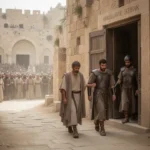
When Herod realizes that the magi have not returned, Matthew says he orders the killing of all boys in Bethlehem and the surrounding area who are two years old or younger. The age limit is connected to the information Herod received from the magi, although the narrative does not say exactly how long had passed since Jesus’ birth.
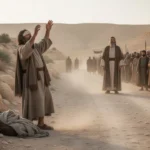
Matthew then cites Jeremiah 31:15, describing Rachel weeping for her children. The quotation originally refers to grief connected with Israel’s exile, but Matthew applies its language to the mothers mourning after Herod’s violence. Joseph later learns that Herod has died and returns with Mary and Jesus, settling in Galilee rather than Judea.
Essential distinction: Matthew is the only biblical writer to describe the massacre. The account is central to Matthew’s presentation of Jesus, but its historical details cannot be confirmed independently from surviving records.
Why Matthew calls the victims “innocents”
The word Innocents does not occur as a title for the children in Matthew’s Greek text. It became the traditional Christian name for the victims because they are presented as children who suffer and die despite having done nothing wrong. Their deaths are not punishment for personal wrongdoing; they are the result of Herod’s fear and brutality.
The phrase also emphasizes the moral contrast between the children and the ruler who orders their deaths. Herod acts with calculation, suspicion, and violence. The children are powerless, and their families are caught in the consequences of a ruler’s attempt to preserve his position.
Christian interpretation has often treated the children as martyrs, even though Matthew does not describe them as confessing faith in Jesus or consciously choosing to die for him. They are sometimes called “martyrs by blood” because they die in connection with Christ without personally understanding the reason for their deaths.
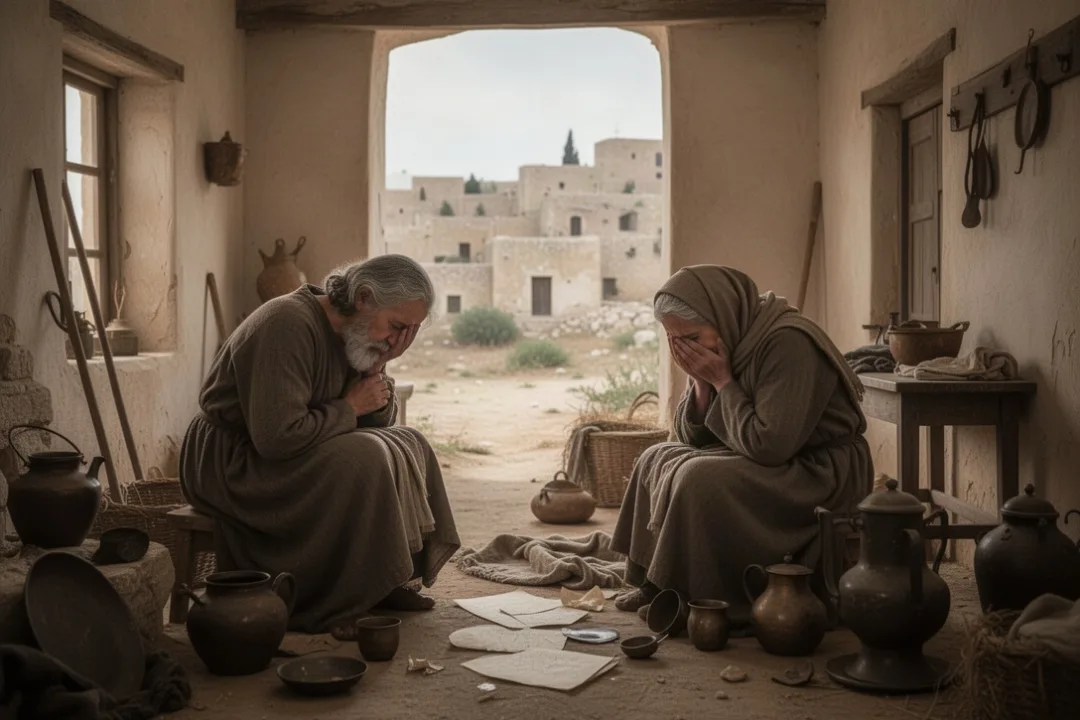
That tradition can be meaningful, but it should not erase the children’s humanity or reduce them to symbols. Matthew’s story is also about real grief: parents lose children, a community experiences terror, and a political decision reaches into ordinary homes.
Who was Herod in the biblical and historical setting?
The Herod in Matthew 2 is generally identified as Herod the Great, who ruled Judea and neighboring territories under Roman authority. He was a major builder and administrator, associated with projects such as the expansion of the Jerusalem Temple and the construction of fortified sites.
Herod’s public achievements existed alongside a reputation for harsh rule. Ancient sources describe him as suspicious of rivals and willing to use severe measures to protect his throne. His family history was also marked by internal conflict. He executed or ordered the deaths of people close to him whom he considered threats, including members of his own household according to the historian Josephus.
That background makes Matthew’s portrayal of Herod historically plausible in character, even though it does not prove the Bethlehem episode occurred exactly as described. A ruler known for eliminating possible rivals would provide a credible setting for a story about violence against children connected to a royal claim.
Herod’s political position also helps explain why the magi’s question is dangerous. “King of the Jews” was not merely a religious phrase in a region controlled by Rome. A claim to kingship could be interpreted as a challenge to Herod’s authority and, indirectly, to Roman power.
How many children may have been killed?
Matthew does not give a number. Later Christian traditions sometimes speak of thousands or even tens of thousands of victims, but those figures are not found in the Gospel account and should not be presented as established fact.
Bethlehem was a relatively small settlement in antiquity, and the number of boys under two living there and in its immediate surroundings may have been limited. Modern estimates vary because the ancient population is uncertain, the boundaries of the area are unclear, and the phrase translated as “coasts” or “vicinity” can be understood in different ways.
The lack of a number does not make the story insignificant. Matthew’s focus is not on a casualty count but on the use of state violence against vulnerable families. Adding an unsupported figure can distract from the text’s actual claims and create a false impression of precision.
Matthew names no exact number of children killed.
The age range is given as two years and younger, based on Herod’s conversation with the magi.
The geographical area is Bethlehem and its surrounding district, not every child in Judea.
Later numerical traditions are not equivalent to biblical evidence.
What the Jeremiah reference means in Matthew
Matthew connects the massacre to Jeremiah 31:15, where Rachel symbolizes the mothers of Israel grieving over their children. In Jeremiah’s setting, the lament is associated with national catastrophe and exile. Rachel, remembered as an ancestor of Israel, is pictured mourning the people who have been taken away.
Matthew uses that language to interpret the grief around Bethlehem. The quotation does not function as a simple prediction containing every detail of the later event. Instead, Matthew sees a recurring pattern: God’s people experience sorrow under oppressive powers, and Scripture gives voice to their mourning.
The surrounding context of Jeremiah also matters. Jeremiah 31 does not end with grief. It moves toward restoration, renewed relationship with God, and hope for Israel. Matthew’s use of the passage therefore holds judgment and hope together. The massacre is genuine tragedy, but it does not have the final word in Matthew’s larger story.
This method of reading Scripture reflects Matthew’s frequent practice. He presents events in Jesus’ life as belonging to the continuing story of Israel. Jesus is portrayed as connected to Moses, David, the exodus, exile, and the prophetic hopes of restoration.
How the massacre parallels the story of Moses
Many readers see a deliberate resemblance between Matthew 2 and the early chapters of Exodus. In Exodus, Pharaoh fears that the Israelites may become too numerous and orders the killing of Hebrew boys. Moses is preserved when his family hides him and ultimately places him beyond Pharaoh’s reach.
In Matthew, Herod fears a child associated with kingship. Jesus is protected when Joseph takes him to Egypt, while other children suffer under the ruler’s order. The details differ, but the shared pattern presents a threatened ruler, endangered children, a rescued child, and a tyrant who cannot prevent God’s purpose.
The Egypt connection is especially significant because Egypt is both a place of danger in Israel’s memory and a place of refuge in Matthew’s story. Jesus leaves the land and later returns, allowing Matthew to portray him as reliving important parts of Israel’s history.
This parallel does not mean Matthew is claiming that Jesus and Moses are identical in every respect. It means Matthew wants readers to recognize a familiar biblical pattern. A ruler attempts to crush God’s saving work, yet the threatened child survives and the ruler eventually dies.
Why the massacre is difficult for readers
The story raises serious moral and historical questions. Readers may struggle with the suffering of children, the apparent silence of other sources, and the fact that Joseph’s warning protects Jesus but not the other families. These questions should not be dismissed with shallow answers.
Matthew does not portray God as approving Herod’s order. The violence belongs to Herod. The dreams in the narrative expose the threat and guide Jesus’ family to safety, but the text does not explain why every child is not rescued. The passage leaves grief unresolved at the level of individual families.
That unresolved grief is part of the passage’s force. A reading that focuses only on Jesus’ escape can overlook the mothers and children who bear the cost of Herod’s fear. Matthew includes Rachel’s lament precisely to keep attention on the suffering community.
Christian responses have differed. Some emphasize the passage’s theological structure and its connection to Scripture. Others concentrate on the historical question of whether the event occurred. Both approaches can be responsible when they acknowledge the limits of the evidence and take the victims’ suffering seriously.
What historians can and cannot establish
The historical question is narrower than asking whether the story is meaningful. Historians examine the Gospel’s date and authorship, its relationship to other traditions, the political setting under Herod, and the surviving evidence from ancient writers.
Josephus, the principal ancient historian for much of Herod’s reign, describes several violent acts associated with Herod but does not mention a massacre in Bethlehem. That silence matters, but it does not settle the question. Bethlehem was a small town, the alleged event may have involved relatively few victims, and ancient histories did not record every act of violence.
At the same time, the absence of independent confirmation means the massacre should not be presented as an event established by multiple contemporary sources. Matthew is the sole surviving ancient source for the specific account. Scholars therefore reach different judgments about its historical probability and literary purpose.
The story’s close connection with Moses, Jeremiah, and Matthew’s larger presentation of Jesus leads some scholars to emphasize its theological design. Others argue that a historical incident could still have been shaped and interpreted through those biblical patterns. Literary structure and historical memory are not always mutually exclusive.
Good historical practice: Separate what Matthew explicitly says, what later tradition adds, what the political context makes plausible, and what remains uncertain.
Common mistakes when explaining the Massacre of the Innocents
The episode is often simplified in sermons, Christmas displays, artwork, and popular retellings. Several common claims go beyond the evidence or blur important distinctions.
Do not say the Bible gives a casualty number. Matthew does not. Estimates and later traditions should be identified as estimates or traditions.
Do not call the magi “three kings” as if Matthew says so. Matthew mentions magi and lists three gifts, but he does not state that there were three visitors or that they were kings.
Do not assume the massacre happened on the night Jesus was born. Herod’s age order and the magi’s visit indicate a broader time frame.
Do not describe the victims as infants only. Matthew’s age range includes boys up to two years old.
Do not claim all four Gospels tell the story. The account appears only in Matthew.
Do not treat the absence of Josephus’s report as absolute disproof. It is relevant evidence, but ancient silence has limits.
Do not say Matthew quotes a prediction that names Bethlehem’s massacre directly. He applies Jeremiah’s lament to the event rather than reproducing a verse that explicitly describes it.
Do not make Jesus’ escape the only focus. The narrative deliberately gives space to communal mourning and the deaths of vulnerable children.
How Christian traditions remember the Innocents
Many Christian churches commemorate the Holy Innocents as a feast or day of remembrance. In Western Christianity, the observance is commonly kept on December 28, though church calendars and local customs can differ. The date places the commemoration within the Christmas season, not because the killings are a joyful event, but because the church reflects on the cost of Christ’s arrival in a violent world.
In liturgical settings, the Innocents may be remembered as witnesses whose deaths point toward the hostility Jesus will face. Their commemoration can also function as a prayerful recognition of children harmed by war, persecution, abuse, displacement, and political violence.
The tradition has developed in different ways across denominations. Some churches use red vestments or red decorations to represent martyrdom. Others emphasize lament, silence, prayers for children, or advocacy for families affected by violence. The central themes are usually innocence, grief, danger, and hope.
The feast should not be used to romanticize suffering. Calling the children martyrs does not make Herod’s action acceptable, and it does not remove the obligation to protect children in the present. Responsible remembrance joins theological reflection with compassion for real victims.
How artists have depicted the massacre
The Massacre of the Innocents became a powerful subject in Christian art, especially in medieval and Renaissance Europe. Artists have shown soldiers attacking children, mothers resisting, and families mourning. These scenes are often among the most emotionally intense images associated with the early life of Jesus.
Artists have also used the subject to comment on violence in their own societies. Clothing, architecture, weapons, and military formations may reflect the artist’s period rather than first-century Judea. As a result, a painting can tell viewers about the biblical story and about the fears, conflicts, and political realities of the time in which it was made.
When viewing such art, ask several questions:
Which details come from Matthew, and which are artistic invention?
How are the mothers, soldiers, and rulers positioned emotionally and physically?
Does the image emphasize political power, private grief, divine protection, or communal resistance?
What contemporary conflict or social concern might the artist be reflecting?
Artistic representations sometimes exaggerate the number of victims or show events as one crowded scene. That can communicate the scale of grief without claiming to reproduce Matthew’s exact details. Visual drama should therefore be read as interpretation, not as additional historical evidence.
What the story means for readers today
The passage remains relevant because it speaks about the danger of rulers who treat human beings as obstacles. Herod’s violence begins with fear of losing power, and that fear leads him to target children who pose no real personal threat. The story exposes how political anxiety can become deadly when authority is unchecked.
It also draws attention to people who are easy to overlook. The children have no speaking lines, and most are not individually named, yet the narrative refuses to treat their deaths as insignificant. Rachel’s lament gives their community a voice and insists that political events must be measured by the suffering they cause families.
For Christian readers, the passage can support prayer and action on behalf of endangered children. That may include mourning victims, welcoming displaced families, opposing abuse, supporting child-protection efforts, or challenging systems that make children targets of violence. The application should grow from the text’s concern for vulnerable people rather than from forced comparisons.
For readers approaching the passage from outside Christian faith, Matthew still offers a compact study of power, fear, propaganda, memory, and grief. Its questions are human as well as theological: What does a ruler fear? Who pays for that fear? How should communities remember victims whose names are unknown?
Questions to ask when studying Matthew 2
A careful reading benefits from distinguishing observation from interpretation. Begin with the details Matthew actually provides, then consider how those details function in the narrative and how later traditions have developed them.
What does the passage state directly? Identify the characters, dreams, places, age range, order, and Scripture reference.
What does Matthew leave unstated? Notice the missing casualty number, the unnamed victims, and the lack of an independent account.
How does the passage connect with Israel’s Scriptures? Compare the themes of Moses, Jeremiah, exile, and restoration.
What emotional response does the text invite? Consider fear, grief, deception, worship, and hope.
How have later traditions shaped popular memory? Separate the Gospel narrative from feast days, artwork, legends, and dramatized retellings.
The Massacre of the Innocents is therefore best understood on several levels at once. It is a brief Gospel narrative about Herod’s attempt to destroy Jesus, a theological reading of Israel’s Scriptures, a difficult historical claim with limited external evidence, and a lasting symbol of children harmed by the pursuit of power.
Frequently asked questions
Is the Massacre of the Innocents in all four Gospels?
No. The account appears only in the Gospel of Matthew, specifically Matthew 2:13–18. Mark, Luke, and John do not describe Herod ordering the deaths of Bethlehem’s children. Luke instead tells of Jesus’ birth, the shepherds, and the family’s later presentation at the Jerusalem Temple, without including Matthew’s flight to Egypt or the massacre.
Did Herod kill every child in Bethlehem?
Matthew describes an order to kill boys two years old and younger in Bethlehem and its surrounding area. He does not say that every child in Judea was targeted, nor does he provide a number of victims. Later retellings may expand the event, but those additions should not be confused with the Gospel’s wording.
Why did the magi not return to Herod?
Matthew says the magi were warned in a dream not to return to Herod after visiting Jesus. They therefore traveled home by another route. The narrative presents Herod’s request as deceptive: he claimed that he wanted to honor the child, but he actually intended to locate and eliminate a possible rival.
Is there historical proof that the massacre happened?
No independent surviving source confirms the specific event. Josephus records other violent actions associated with Herod but does not mention this episode. Historians therefore assess the story using Matthew’s text, its literary connections, and the political setting, while recognizing that the available evidence cannot establish every detail.





Leave a Reply