The Great Commission: meaning and practical guidance
The Great Commission: meaning and practical guidance
The Great Commission is Jesus’ command for his followers to make disciples among all nations. In Matthew 28:18–20, he tells them to go, baptize those who respond in faith, teach them to obey his commands, and trust that he remains with them.
This calling is not limited to pastors, missionaries, or church leaders. It gives every Christian a pattern for sharing the gospel, helping people follow Jesus, and participating in a community shaped by his teaching.
What the Great Commission means in its biblical context
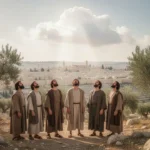
The Great Commission appears most fully at the end of Matthew’s Gospel, after Jesus’ resurrection. His disciples meet him in Galilee, where he declares that all authority in heaven and on earth belongs to him. On that basis, he sends them to all peoples.
Matthew 28:18–20 contains four closely connected ideas: Jesus’ authority, the command to make disciples, baptism and teaching, and the promise of his continuing presence. The central command is not simply to collect decisions or persuade people to attend services. It is to make disciples—people who trust Jesus, identify with him, learn his ways, and practice them.
Other New Testament passages give the same mission from different angles. Mark 16:15 describes proclaiming the good news broadly, while Luke 24:46–49 connects the message with repentance and forgiveness. In Acts 1:8, Jesus tells his followers that they will be his witnesses from Jerusalem outward to the ends of the earth.
Central idea: The Great Commission is both a message and a way of life. Christians announce who Jesus is and what he has done, then help new believers grow into faithful obedience within a local Christian community.
How to follow the Great Commission step by step
A faithful response can be understood as a series of related practices. These steps are not a formula for controlling another person’s decision. They describe how Christians can represent Jesus clearly, respectfully, and consistently.
Begin with Jesus’ authority. The mission does not depend on personal charisma, intelligence, or social influence. Jesus sends his followers because he has authority, and that authority gives the work its purpose and direction.
Build genuine relationships. Listen to people, learn their questions, and show practical love. A person is not a project; each individual has dignity and deserves patience, honesty, and respect.
Explain the gospel faithfully. Share the biblical message about God, human sin, Jesus’ life, death, resurrection, and the call to repent and believe. Use language people can understand rather than relying on unexplained religious terms.
Invite a response to Jesus. The goal is not merely to provide information. Ask whether the person wants to follow Jesus, explore the claims of Christianity, pray, read one of the Gospels, or take another sincere step.
Connect new believers with Christian community. Baptism, worship, prayer, fellowship, and life in a local church help disciples grow beyond an isolated first decision.
Teach obedience over time. Discipleship includes learning Jesus’ commands and putting them into practice in relationships, work, money, service, suffering, and daily habits.
Help disciples make disciples. Mature Christians equip others to share the gospel and care for new believers. The mission multiplies through ordinary people who faithfully invest in others.
Why Jesus’ authority comes before the command
Matthew places Jesus’ declaration of authority before the sending command for a reason. The disciples are not acting as independent religious representatives. They are carrying out the mission of the risen Lord, whose authority extends over every nation and every area of life.
This changes the attitude Christians bring to evangelism. They do not need to manipulate people, exaggerate results, or act as though the future of Christianity rests on their performance. Their responsibility is to be faithful witnesses; God remains responsible for the final work of changing hearts.
Jesus’ authority also means that the Great Commission is not an optional specialty for unusually outgoing Christians. All who belong to him are called to bear witness in some form. Their methods may differ, but the underlying responsibility remains: represent Jesus truthfully and help others become his disciples.
What “make disciples” means in practice
The phrase make disciples involves more than getting someone to repeat a prayer or agree with Christian beliefs. A disciple is a learner and follower whose life is increasingly ordered around Jesus. Faith begins with receiving the gospel, but it develops through worship, obedience, repentance, service, and perseverance.
Discipleship therefore has both a beginning and a continuing dimension. A person may first encounter Christianity through a conversation, a church service, a book, or an act of kindness. After that initial encounter, the person needs patient guidance as questions arise and biblical convictions take root.
Healthy disciple-making often includes the following:
Reading Scripture carefully, especially the life and teaching of Jesus in the Gospels.
Learning to pray honestly and regularly, with attention to worship, confession, thanksgiving, and requests.
Joining Christian community for worship, encouragement, correction, and shared service.
Practicing obedience in concrete choices rather than treating faith as a purely private belief.
Serving others with humility, especially people who are vulnerable or overlooked.
Sharing faith in ways that are truthful, compassionate, and appropriate to each relationship.
Jesus’ command to teach “all” that he commanded also prevents a narrow version of Christianity. Disciples need more than a few inspirational ideas. They need a growing understanding of Jesus’ character, priorities, ethical teaching, and saving work.
In Matthew 28, baptism is part of the process of making disciples. It publicly identifies a believer with the Father, Son, and Holy Spirit and marks entry into the visible community of Christian faith. Baptism is therefore both a personal confession and a communal sign.
Christian traditions differ over the timing, mode, and subjects of baptism. Some baptize professing believers, while others baptize infants as part of the church community and later emphasize personal profession of faith. Despite these differences, baptism consistently points to belonging to Christ and being incorporated into his people.
Because baptism is not presented as an isolated ceremony, churches should surround it with instruction and care. People preparing for baptism benefit from learning the gospel, understanding the commitment they are making, and knowing how the church will support their ongoing growth.
Practical reminder: Baptism should not be treated as the finish line of evangelism. It is a visible beginning of life within the Christian community, where believers continue learning and practicing the way of Jesus.
Why teaching obedience is essential
The Great Commission does not say merely to teach information about Jesus. It calls Christians to teach people to observe or obey everything Jesus commanded. That distinction matters because biblical discipleship aims at transformed living, not only increased knowledge.
Jesus’ commands include loving God and neighbor, forgiving others, caring for the vulnerable, telling the truth, rejecting hypocrisy, practicing generosity, praying for enemies, pursuing sexual integrity, and seeking reconciliation. These teachings reach into ordinary decisions, so discipleship must address real life rather than remain confined to church gatherings.
Teaching obedience should not become harsh control. Christian leaders and mature believers teach by explaining Scripture, modeling faithful behavior, asking good questions, offering correction, and extending grace when people fail. The goal is growth in holiness and love, not dependence on a personality or institution.
A useful approach is to connect every lesson with practice. After studying Jesus’ teaching on forgiveness, for example, a small group might discuss a difficult relationship and pray for wisdom about a truthful, safe next step. After studying generosity, members might create a plan to share resources with someone facing hardship.
How Jesus’ promise of presence strengthens the mission
The Great Commission ends with a promise that Jesus will be with his followers always, to the end of the age. This promise addresses the fear and difficulty that accompany the mission. Christians may face rejection, cultural opposition, uncertainty, loneliness, or the slow pace of spiritual growth.
Jesus’ presence does not mean every conversation will succeed or every ministry plan will produce visible results. It means his followers are not abandoned while they obey. The same Lord who sends them also sustains them through the Holy Spirit, Scripture, prayer, and the fellowship of the church.
This promise guards against two opposite errors. Christians should not become passive, assuming that God’s presence makes action unnecessary. Neither should they become frantic, believing that everything depends on their ability to persuade. Faithful effort and humble dependence belong together.
How the Great Commission applies to everyday life
For many Christians, mission begins in existing relationships rather than in a dramatic move to another country. Family members, coworkers, classmates, neighbors, and friends may already know your habits and values. Your consistency gives credibility to what you say, while your failures provide opportunities for honesty and repentance.
Everyday witness can include a direct conversation about faith, but it can also include hospitality, compassionate service, prayer with permission, inviting someone to church, or answering a question about your beliefs. These actions do not replace explaining the gospel, but they can create trust and demonstrate the character of the message.
Consider practical ways to make the Great Commission part of your normal rhythm:
Pray regularly for specific people who do not share your faith.
Ask open questions about a person’s beliefs, hopes, fears, and experiences with Christianity.
Share how Jesus has shaped your decisions without presenting yourself as morally perfect.
Offer to read one of the Gospels with someone who wants to investigate Christianity.
Invite interested people into a welcoming church gathering or small group.
Follow up after spiritual conversations instead of treating one discussion as decisive.
Learn to recognize when patience and listening are more appropriate than giving another explanation.
Respect matters because genuine faith cannot be produced through pressure. A Christian can be clear about the gospel while honoring another person’s freedom to ask questions, disagree, or take time. Persuasion should be truthful and loving, never coercive or deceptive.
What the Great Commission means for the local church
The Great Commission belongs to the whole church, not only to individuals acting alone. A local congregation creates the environment in which people hear the gospel, encounter Christian worship, receive teaching, experience care, and find opportunities to serve.
A church faithful to this mission will usually give attention to several areas:
Clear gospel communication: sermons, classes, conversations, and ministries explain the message of Jesus accurately.
Intentional discipleship: new and mature believers receive guidance suited to their stage of growth.
Welcoming community: visitors and seekers are treated with dignity rather than as attendance statistics.
Equipping members: ordinary Christians learn how to read Scripture, share their faith, mentor others, and serve wisely.
Cross-cultural mission: the church supports work among people and communities beyond its immediate setting.
Practical compassion: care for the poor, grieving, sick, displaced, and oppressed reflects the love Christians proclaim.
Church programs are useful only when they serve these purposes. A congregation can hold many events and still neglect disciple-making if people are not learning to follow Jesus and help others follow him. Activity is not the same as mission; the question is whether the church is forming faithful disciples.
How mission and cultural differences should be handled
Jesus sends his followers to all nations, which gives the Great Commission a genuinely global scope. That does not mean exporting one country’s customs, worship style, political assumptions, or social habits along with the gospel.
Faithful cross-cultural mission requires humility, listening, language learning, and partnership. Christians should distinguish the central claims of the gospel from cultural preferences. Local believers should have meaningful leadership, and outside workers should resist creating unnecessary dependence.
Missionaries and churches also need to examine their history honestly. Christian mission has sometimes been entangled with colonial power, economic exploitation, or cultural superiority. Recognizing that history does not cancel the gospel; it calls Christians to repentance, transparency, and practices that honor the dignity and agency of other communities.
The message of Jesus remains central, but its faithful expression can take different forms across cultures. Music, meeting patterns, clothing, leadership structures, and methods of teaching may vary while the church remains united around Christ, Scripture, baptism, worship, and discipleship.
How to share the gospel without pressure or distortion
Christians sometimes feel unprepared to speak about faith because they think they need a perfect argument. Preparation helps, but a clear and honest explanation is usually more useful than an impressive performance. You can describe what Christians believe, why you believe it, and how someone can investigate further.
A concise gospel explanation commonly includes these elements:
God created and rules over humanity: people are made for relationship with God and responsible to him.
Humanity is separated from God by sin: wrongdoing affects our actions, desires, relationships, and standing before God.
Jesus is God’s saving answer: through his life, death, and resurrection, he provides forgiveness and reconciliation for those who trust him.
People are called to respond: repentance and faith involve turning toward Jesus rather than relying on personal goodness or religious performance.
New life continues in discipleship: believers join Christ’s people and learn to live under his teaching.
Use biblical references when they help, but avoid quoting verses in ways that ignore their setting. Explain what a passage means and how it connects to the wider biblical story. If you do not know an answer, saying so is more trustworthy than improvising a confident response.
Common misunderstandings about the Great Commission
It is not only about overseas missions
International mission is an important expression of the command, but the Great Commission also applies where Christians already live. Jesus’ followers witness in neighborhoods, workplaces, schools, families, and churches. Geographic distance may change, but the call to make disciples remains the same.
It is not a demand for constant religious conversation
Faithful witness includes speech, yet it also requires wisdom about timing and relationships. Christians can serve, listen, and build trust without hiding their faith. When a genuine opportunity arises, they should be ready to speak clearly rather than assuming that good behavior alone communicates the gospel.
It is not measured only by visible numbers
Attendance, baptisms, and professions of faith can provide useful information, but numbers do not tell the whole story. The Great Commission also concerns maturity, faithfulness, justice, love, endurance, and the multiplication of disciples. A small ministry may be deeply fruitful, while a large program may lack spiritual depth.
It is not permission to ignore the person in front of you
Broad concern for the nations must not erase attention to individuals. Jesus’ followers serve real people with particular histories, doubts, needs, and boundaries. The quality of a Christian’s love is shown in patient, responsible care for those immediately around them.
How to evaluate a Great Commission ministry
Before joining or supporting a ministry, examine both its message and its methods. A ministry may use the language of evangelism while relying on manipulation, financial pressure, celebrity culture, or shallow measures of success.
Ask questions such as:
Does the ministry present Jesus and the biblical gospel clearly?
Are people treated as neighbors and disciples rather than as statistics?
Does the ministry provide meaningful follow-up and ongoing teaching?
Are local leaders respected and included in decision-making?
Are finances, safeguarding practices, and leadership responsibilities handled transparently?
Does the work produce humility, love, integrity, and service?
Can the ministry describe how it responds when people disagree or decline an invitation?
These questions apply to a church, campus group, short-term mission trip, online ministry, or individual outreach effort. Sound methods cannot replace a sound message, but a sound message should produce methods that reflect Jesus’ compassion and truthfulness.
How prayer supports the Great Commission
Prayer is not a substitute for action, but it keeps mission centered on God rather than personal achievement. Christians pray for courage, wisdom, open doors, receptive hearts, protection, faithful leaders, and the needs of particular communities.
Prayer also changes the person who prays. It can replace anxiety with dependence, impatience with compassion, and pride with awareness of personal weakness. When Christians pray for people who do not yet follow Jesus, they are reminded that those people are not targets but neighbors whom God knows and loves.
The book of Acts repeatedly connects the church’s witness with prayer and the work of the Holy Spirit. That pattern encourages Christians to prepare carefully, speak faithfully, and remain dependent on God for results they cannot manufacture.
How to begin practicing the Great Commission this week
You do not need to wait for a perfect plan. Begin with a small, specific pattern that combines prayer, relationship, clear communication, and follow-up. Consistency is more useful than a burst of enthusiasm that quickly disappears.
Write down the names of two or three people you know and pray for them by name.
Arrange an ordinary conversation or shared activity with one of them.
Listen for questions about meaning, suffering, morality, church, or Jesus.
Share a brief, honest explanation of your faith when the opportunity is appropriate.
Offer a practical next step, such as reading a Gospel together or attending a church gathering.
Speak with a mature Christian about how to provide thoughtful follow-up.
Continue learning and serving even if the response is uncertain or negative.
The Great Commission calls Christians to a lifelong pattern rather than a single event. Its scope reaches every nation, its method includes relationship and teaching, and its confidence rests on Jesus’ authority and presence. Faithful obedience means making the good news known while helping people grow into a life of trust, worship, love, and obedience to Christ.
Frequently asked questions
Where is the Great Commission found in the Bible?
The fullest statement appears in Matthew 28:18–20. Related passages include Mark 16:15, Luke 24:46–49, and Acts 1:8, each emphasizing proclamation, repentance, witness, or the worldwide reach of Jesus’ mission. Mark 16:9–20 has a textual history discussed by Bible scholars, so Matthew, Luke, and Acts are especially useful passages for studying the command.
Who is responsible for carrying out the Great Commission?
The responsibility belongs to the church as a whole and to individual Christians as part of that community. Pastors, missionaries, teachers, and evangelists have particular roles, but ordinary believers also participate through faithful relationships, personal witness, hospitality, service, prayer, and helping other Christians grow.
Does the Great Commission require every Christian to become a missionary?
No. Every Christian shares the calling to make disciples, but people serve in different settings and capacities. Some move across cultures, while others witness in families, workplaces, schools, neighborhoods, or churches. The common responsibility is faithfulness to Jesus, not a single occupation, location, or ministry style.
What is the difference between evangelism and discipleship?
Evangelism announces the good news about Jesus and invites people to respond in faith. Discipleship is the continuing process of learning and obeying Jesus within Christian community. They belong together: evangelism welcomes people into faith, while discipleship helps believers mature and equips them to help others follow Christ.










Leave a Reply