When Christians ask, “What exactly is the church?” they may be thinking about a Sunday congregation, a denomination, a building, or all believers everywhere. Ecclesiology addresses that question by studying the nature, purpose, structure, and mission of the Christian church. It asks what makes a church a church, how churches should be led, how believers belong to one another, and how the church should represent Christ in the world.
The word comes from the Greek terms ekklesia, commonly associated with an assembly or congregation, and logos, meaning study or account. Ecclesiology is therefore not simply a discussion about church administration. It is a branch of Christian theology that connects beliefs about God, Jesus Christ, the Holy Spirit, salvation, worship, community, and mission.
Ecclesiology studies the church as both a spiritual community and a visible, organized body. A local church has people, leaders, gatherings, practices, property, budgets, and responsibilities. At the same time, Christian theology describes the church using images such as the body of Christ, the people of God, the household of faith, and the bride of Christ.
Those images show why ecclesiology cannot be reduced to a handbook for running congregations. It considers the church’s divine calling as well as its human weaknesses. A church can be faithful in one area and immature in another, so ecclesiology examines both what the church is meant to be and how it actually lives.
Several basic questions shape the discipline:
Identity: Who belongs to the church, and what unites its members?
Purpose: What mission has Christ given the church?
Authority: How should the church make decisions and interpret Scripture?
Leadership: What roles should pastors, elders, bishops, deacons, and other ministers have?
Worship: Which practices express the church’s faith and identity?
Unity: How should Christians respond to differences among churches and traditions?
Ecclesiology also distinguishes between the local church and the universal church. A local church is a particular congregation gathered in a place, while the universal church refers to all people who belong to Christ across times, cultures, and geographic boundaries. Some Christian traditions emphasize the visible institutional church, while others place greater emphasis on the spiritual fellowship of all believers.
Central idea: Ecclesiology asks not only how churches are organized, but also why the church exists and how its life should reflect the gospel.
How the Bible describes the church
The New Testament presents the church through several complementary pictures rather than one single definition. Each image highlights a different aspect of Christian community. Together, they describe a people called by God, united to Christ, empowered by the Spirit, and sent to serve.
The church as the body of Christ
Paul describes the church as the body of Christ in several passages, including Romans 12, 1 Corinthians 12, and Ephesians 4. The image communicates both unity and diversity. Christians belong to one body, yet they do not all have the same gifts, responsibilities, or forms of service.
This teaching challenges the idea that ministry belongs only to professional leaders. In 1 Corinthians 12, Paul explains that the body needs many different parts, and no member should consider another unnecessary. Ecclesiology therefore asks how a congregation can recognize, develop, and responsibly use the gifts of its members.
The body image also gives the church a communal identity. Christian faith is personal, but it is not meant to be isolated. Believers are called to care for one another, share burdens, correct wrongdoing, practice forgiveness, and pursue the good of the whole community.
The church as the people of God
The phrase people of God connects the church’s identity with the biblical story of God forming a covenant people. The New Testament applies this language to those who belong to Christ, while also presenting the church’s relationship to Israel in ways that different Christian traditions interpret differently.
This image emphasizes belonging, covenant, holiness, and shared responsibility. The church is not simply an audience that attends religious events. It is a people called to worship God, receive instruction, care for the vulnerable, and display a distinctive way of life.
First Peter 2 uses language associated with a chosen people and a priestly community. Rather than reproducing the wording of the passage, its basic meaning is that believers are called to proclaim God’s work and live as a holy community. Ecclesiology examines how that calling should shape worship, ethics, service, and public witness.
The church as the temple of the Holy Spirit
Paul also describes believers collectively as a temple of the Holy Spirit, especially in 1 Corinthians 3 and 6. The point is not that a church building is sacred in exactly the same way as a biblical temple. The emphasis is that God’s Spirit dwells among and within God’s people.
This teaching gives Christian community a serious moral dimension. The way believers treat each other matters because the church is a community in which God’s presence is understood to dwell. Abuse, favoritism, exploitation, and division are not merely organizational problems; they contradict the church’s spiritual identity.
The church as a worshiping and witnessing community
The early church devoted itself to teaching, fellowship, shared meals, prayer, and practical care, as described in Acts 2. That account is not always treated as a complete administrative blueprint, but it does offer a significant picture of Christian communal life.
Churches gather to hear Scripture, pray, praise God, celebrate baptism and the Lord’s Supper according to their traditions, encourage one another, and receive direction for mission. They also scatter into neighborhoods, workplaces, families, and public life. The church’s gathering and sending belong together.
What the church is called to do
Ecclesiology connects the church’s identity with its mission. Churches differ in programs and priorities, but Christian theology commonly identifies several central tasks. These tasks are not separate departments that compete for attention. Worship shapes witness, teaching forms disciples, fellowship supports service, and service gives visible expression to love.
Worship God: The church gathers to honor God through prayer, praise, Scripture, preaching, confession, thanksgiving, and the sacraments or ordinances recognized by its tradition.
Make disciples: Churches teach people to follow Jesus in belief, character, relationships, and daily practice. Discipleship involves more than transferring information.
Proclaim the gospel: The church announces the good news of Jesus Christ and calls people to faith, repentance, reconciliation, and new life.
Build up believers: Christian community provides encouragement, correction, pastoral care, accountability, and opportunities to grow in spiritual maturity.
Serve neighbors: Churches care for people facing poverty, illness, loneliness, displacement, injustice, and other forms of suffering.
Seek unity: Churches are called to pursue reconciliation within the congregation and among Christians who belong to different traditions.
The Great Commission in Matthew 28 is commonly understood as a command to make disciples among all nations, baptize them, and teach them to follow Jesus’ instructions. The emphasis is broader than adding attendance numbers. It involves forming a people whose lives are increasingly shaped by Christ.
Jesus’ teaching in Matthew 22 joins love for God with love for one’s neighbor. That connection matters for ecclesiology because it prevents the church from defining mission as either private spirituality or social action alone. Churches may express their calling in different ways, but Christian mission includes both faithful proclamation and faithful love.
Churches also need to distinguish mission from institutional self-preservation. Buildings, budgets, staff structures, and traditions can serve the church’s calling, but they are not the calling itself. Ecclesiology asks whether an organization’s decisions help the church worship God, form disciples, serve others, and bear credible witness.
Practical test: A church’s mission is visible not only in its stated beliefs, but also in how it uses authority, treats vulnerable people, spends resources, welcomes outsiders, and forms its members.
How churches are organized and led
Christian traditions organize church leadership in different ways because they interpret biblical patterns, historical developments, and theological principles differently. Ecclesiology does not assume that one structure answers every question for every tradition, but it does examine how authority should be exercised with integrity, accountability, and care.
Episcopal or bishop-led structures
In an episcopal polity, bishops hold significant oversight over clergy and congregations. Authority is arranged through levels of leadership, often including bishops, priests or pastors, and deacons. Roman Catholic, Eastern Orthodox, Anglican, and some Methodist traditions use forms of episcopal organization, though their beliefs and structures are not identical.
This model often emphasizes continuity, shared doctrine, sacramental ministry, and connection among congregations. A possible strength is wider accountability beyond one local church. The precise responsibilities of bishops and the way authority is shared differ considerably among denominations.
In presbyterian polity, ordained elders provide leadership through councils or governing bodies. A local congregation may have a session or similar group, while regional and broader assemblies provide oversight and help churches work together.
This model stresses shared leadership, connectional relationships, and representative decision-making. Authority is not concentrated entirely in one pastor or one local congregation. The details vary, but the general structure seeks to combine local participation with wider accountability.
Congregational structures
In a congregational polity, the local church has substantial authority over its ministers, finances, membership, and major decisions. Pastors and elders may lead in important ways, but the congregation retains a decisive role in governance.
This approach values local responsibility and the participation of the gathered members. It can encourage strong ownership of ministry, although it also requires clear processes for handling conflict, protecting vulnerable people, and making decisions wisely.
Shared elements across leadership models
Despite structural differences, many churches recognize roles connected with pastors or elders, deacons, teachers, evangelists, and other servants. Ephesians 4 describes several ministry functions that equip believers and strengthen the church. The passage is often used to support the idea that leaders exist to prepare the whole body for service, not to replace it.
Healthy ecclesiology treats leadership as stewardship rather than personal status. Jesus’ teaching in Mark 10 presents greatness in terms of serving others, not dominating them. That principle has practical consequences for hiring, supervision, financial transparency, safeguarding, discipline, and the handling of complaints.
A responsible church should be able to answer questions such as these:
Who can make major decisions, and how are those decisions reviewed?
How are leaders selected, trained, supervised, and removed when necessary?
What procedures protect children, adults at risk, and people reporting misconduct?
How are financial records handled and communicated?
How can ordinary members raise concerns without fear of retaliation?
What process addresses doctrinal disputes, moral failure, or relational conflict?
Church authority should serve the church’s mission and the well-being of its people. Claims of spiritual authority never justify secrecy, coercion, abuse, or immunity from correction. Ecclesiology therefore includes a theology of responsible power, not only a theory of offices.
Why baptism, the Lord’s Supper, and worship matter
Ecclesiology pays close attention to the practices through which churches express belonging and faith. Baptism and the Lord’s Supper, often called the Eucharist or Communion, receive special attention because most Christian traditions regard them as central commands or signs given by Jesus, even though traditions disagree about their meaning and administration.
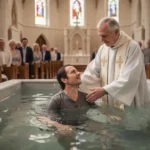
Baptism is associated with initiation into Christian faith and community. Churches differ over infant baptism and believer’s baptism, the amount of water used, the role of personal profession, and the relationship between baptism and salvation. Still, baptism commonly signifies identification with Christ, entry into the visible community, and a public response to God’s grace.
The Lord’s Supper remembers Jesus’ death and celebrates the church’s fellowship in him. Traditions disagree about whether Christ is present physically, spiritually, sacramentally, or memorially, and they differ over who may participate. These disagreements are significant, but all major approaches treat the practice as more than an ordinary meal.
Worship also includes preaching, prayer, singing, confession, testimony, silence, Scripture reading, giving, and acts of service. Churches may use ancient liturgies, contemporary music, informal gatherings, or combinations of these. Ecclesiology asks whether a church’s worship is theologically grounded, spiritually formative, and accessible to the people it serves.
Worship should not be judged only by personal preference. A service can be familiar and comforting yet fail to teach the faith, include the congregation, or direct attention toward God. Conversely, a newer or less familiar form may serve the church well if it communicates truth faithfully and helps people participate with understanding.
How ecclesiology explains church unity and division
Christianity contains many denominations and independent congregations. Some differences concern major theological convictions; others involve history, culture, worship style, language, or church governance. Ecclesiology studies both the causes of division and the theological basis for Christian unity.
Unity does not necessarily mean that every church must have identical worship, leadership, or customs. In 1 Corinthians 12, Paul’s teaching about one body with many members suggests that difference can exist within genuine belonging. At the same time, the New Testament repeatedly calls Christians to reject pride, factionalism, and hostility.
Christians commonly disagree about several ecclesiological questions:
Who may be baptized, and what does baptism accomplish?
Who may preside at Communion or the Lord’s Supper?
What authority do bishops, elders, pastors, and congregations possess?
How should Scripture, tradition, reason, and experience relate to one another?
What teachings are essential for shared Christian identity?
How should churches respond to changes in culture and public life?
Some traditions describe the church primarily through marks of the church, such as faithful preaching of the Word, proper administration of baptism and Communion, and the practice of discipline. Others emphasize apostolic succession, sacramental continuity, doctrinal confession, or visible institutional unity. These approaches should be compared carefully rather than treated as interchangeable.
Ecumenism is the effort to pursue greater understanding, cooperation, and unity among Christians. It does not require pretending that disagreements are unimportant. Productive ecumenical work involves honest theological conversation, shared service, prayer, repentance where appropriate, and a willingness to recognize genuine Christian faith beyond one’s own tradition.
Ecclesiology also helps people evaluate a local church without relying only on branding or atmosphere. You can ask whether the church teaches Scripture responsibly, treats people with dignity, handles authority transparently, welcomes meaningful participation, cares for neighbors, and provides ways for members to grow.
A congregation will not be perfect. The relevant question is whether it responds to weakness with truth, repentance, protection, and repair rather than denial. A church’s theology of community becomes most visible when people disagree, when leaders fail, and when someone with little power needs to be heard.
Frequently asked questions
Is ecclesiology only relevant to pastors and theologians?
No. Ecclesiology affects anyone choosing a church, joining a congregation, serving in ministry, or trying to understand Christian community. It helps you think about leadership, worship, membership, accountability, baptism, Communion, mission, and how believers should treat one another. Even practical questions about church governance and belonging have theological assumptions behind them.
How is ecclesiology different from church history?
Church history studies how Christian communities, beliefs, institutions, and practices developed over time. Ecclesiology asks what the church is and how it should function, while also using historical evidence to evaluate different models. The two fields overlap, but history focuses on development and events, whereas ecclesiology focuses more directly on theological identity and practice.
Do all Christian denominations have the same ecclesiology?
No. Christian traditions differ over church authority, ordained ministry, baptism, Communion, membership, governance, and the relationship between local congregations and wider institutions. They also use different language for the church’s visible and spiritual dimensions. Some beliefs are shared broadly, while other differences are central to denominational identity.
Can an independent congregation have a serious ecclesiology?
Yes. A church does not need a large denomination or formal seminary system to think carefully about its identity and responsibilities. An independent congregation still makes decisions about leadership, doctrine, membership, worship, discipline, finances, safeguarding, and mission. A sound ecclesiology gives those decisions a coherent theological framework and encourages accountability beyond personal preference.







Leave a Reply