Methodists: beliefs, worship, and church life explained
Methodists: beliefs, worship, and church life explained
If you have been invited to a Methodist service, seen a Methodist church in your community, or wondered how Methodists differ from other Christians, you are probably looking for a straightforward explanation. Methodists are Christians in the Protestant tradition who trace their movement to the ministry of John Wesley and emphasize God’s grace, personal faith, spiritual growth, and practical love of neighbor.
There is no single worldwide Methodist organization with identical rules everywhere. Methodist churches belong to several denominations and regional bodies, so worship styles and policies can differ. Still, many Methodists share a recognizable approach to Christian life: faith should shape both the heart and daily behavior, and Christians should grow through prayer, Scripture, worship, service, and fellowship.
Methodism began as a renewal movement within the Church of England during the 1700s. John Wesley, an Anglican priest, and his brother Charles Wesley organized small groups for prayer, Bible study, confession, accountability, and service to people in need. Critics reportedly used the word “Methodist” to describe their organized habits, and the name eventually became associated with the movement.
The Wesleys did not initially set out to create a separate denomination. They wanted Christians to take discipleship seriously and to experience a living faith rather than rely only on church membership or inherited religious identity. John Wesley traveled widely, preached outdoors and in churches, trained lay preachers, and developed systems of small groups that helped people practice their faith between Sunday gatherings.
Methodism spread beyond England, especially in North America. After the American Revolution, American Methodists developed their own church structures. Over time, the Methodist family grew into many denominations, including the United Methodist Church, African Methodist Episcopal churches, African Methodist Episcopal Zion churches, Christian Methodist Episcopal churches, Free Methodist churches, Wesleyan churches, and others.
A useful distinction: “Methodist” describes a broad Christian tradition, not one church with one universal statement of belief. A local congregation’s worship, leadership structure, and views on particular issues may reflect its denomination and region.
What Methodists generally believe about Christian faith
Methodist beliefs are rooted in historic Christianity. Most Methodists affirm the Trinity: one God known as Father, Son, and Holy Spirit. They believe Jesus Christ is the Son of God, that his life, death, and resurrection are central to salvation, and that the Holy Spirit works in the world and in the lives of believers.
Methodists also commonly affirm the authority of the Bible while interpreting it alongside Christian tradition, reason, and personal experience. John Wesley described these four influences as a way to help Christians think faithfully about Scripture and doctrine. The Bible holds a primary place, while tradition preserves the church’s accumulated wisdom, reason helps people examine meaning and consequences, and experience reflects God’s work in a believer’s life.
Different Methodist bodies may describe this framework in different ways. It should not be treated as a formula that makes every Methodist agree on every theological or social question. Instead, it shows why Methodist teaching often combines biblical study, historic Christian beliefs, careful reflection, and lived discipleship.
How Methodists understand God’s grace
Grace is one of the defining themes of Methodist theology. Methodists generally teach that God’s grace comes before human response, reaches people in their need, and enables them to turn toward God. This grace is not earned as a reward for being good. It is God’s freely given love and help.
Methodist teaching often describes grace in three connected ways:
Prevenient grace is God’s grace active before a person consciously responds. It awakens moral and spiritual awareness, draws people toward God, and makes a response of faith possible.
Justifying grace refers to God’s forgiving and restoring action when a person trusts in Christ. It is associated with reconciliation with God and a new standing before God.
Sanctifying grace describes the continuing work by which the Holy Spirit helps believers grow in love, holiness, wisdom, and obedience.
This emphasis means Methodists generally reject the idea that salvation is achieved by good deeds alone. At the same time, they do not view good works as optional decoration added after faith. Grace produces a changed life, and Christian service becomes a response to God’s love rather than a way to purchase it.
How salvation and Christian growth are understood
Methodists usually speak of salvation as both a gift received through faith and a continuing process of becoming more like Christ. A person may experience a decisive turning toward God, but discipleship does not end at conversion. Prayer, worship, study, service, repentance, and fellowship help believers continue responding to grace.
John Wesley used the phrase Christian perfection or “perfect love” to describe mature holiness. He did not mean that Christians become incapable of mistakes or know everything. He meant that God’s grace can form a person whose life is increasingly governed by love for God and neighbor. Methodists may use different language today, but many retain the conviction that spiritual growth is real and should be visible in conduct.
Methodists commonly hold together two dimensions of discipleship:
Works of piety: prayer, worship, receiving Communion, reading Scripture, fasting, confession, and other practices that deepen a person’s relationship with God.
Works of mercy: feeding the hungry, visiting the sick, supporting prisoners and their families, advocating for vulnerable people, and addressing conditions that cause suffering.
This combination helps explain why Methodist churches often sponsor food pantries, disaster-relief projects, community programs, hospitals, schools, and social-justice ministries. The exact programs vary, but the underlying principle is consistent: love of God should lead to concrete care for other people.
What happens during a Methodist worship service
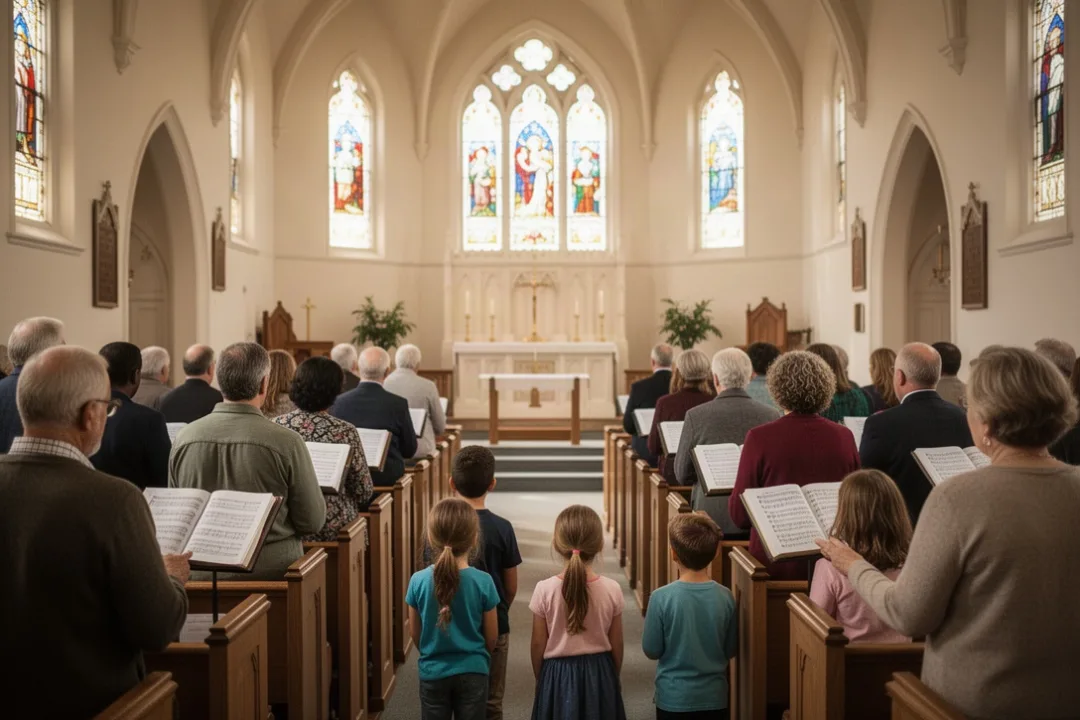
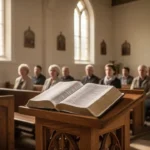
A Methodist service may be traditional, contemporary, or a mixture of both. Some congregations use an organ, hymns, formal prayers, and a structured liturgy. Others use a worship band, projected songs, informal language, and a less formal atmosphere. Many combine historic elements with modern music and preaching.
A typical service may include several of these parts:
Gathering and music: The congregation comes together through an opening hymn, song, instrumental music, or spoken welcome.
Prayer and confession: The service may include prayers of praise, intercession, confession, thanksgiving, and a declaration of God’s forgiveness.
Scripture readings: Passages from the Bible are read publicly, often from both the Old and New Testaments.
Sermon or message: A pastor or other authorized preacher explains a biblical passage and connects it with Christian faith and daily life.
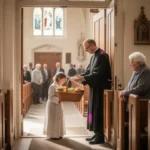
Offering: Members and visitors may have an opportunity to support the church’s ministry and charitable work. Visitors are not generally expected to give.
Communion or the Lord’s Supper: Some services include this sacrament weekly, while others observe it monthly or on another regular schedule.
Sending and blessing: The congregation is sent into the world with a closing prayer, hymn, or blessing.
You do not need to be familiar with Methodist customs before attending. A printed bulletin, screen, or worship leader usually provides instructions. If Communion is offered, the congregation will normally explain who is invited and how the service proceeds.
Why Methodist worship may feel both familiar and flexible
Methodist worship is shaped by the denomination, the congregation’s history, the pastor’s approach, and the local community. A rural church, an urban congregation, a historically Black Methodist church, and a newer church plant may have very different music and traditions while sharing core Methodist convictions.
Many services give a visible place to preaching, congregational singing, prayer, and participation. Methodists generally see worship as more than a performance led by clergy. The congregation responds, prays, sings, hears Scripture, receives the sacraments, and is sent to serve.
How Methodists view baptism and Communion
Methodists recognize baptism and the Lord’s Supper as sacraments. A sacrament is understood as a visible sign of God’s grace through which God works in the life of the church. Methodist theology does not treat these practices as merely symbolic ceremonies, although the precise explanations can vary among Methodist denominations.
Baptism marks entry into the Christian community and points to God’s grace, forgiveness, and new life. Methodist churches commonly baptize infants, children, and adults. Infant baptism reflects the belief that God’s grace reaches people before they can make a conscious profession of faith. When children baptized as infants grow older, they may later affirm the faith for themselves through confirmation or another public profession.
Adult or older-child baptism may take place by pouring, sprinkling, or immersion, depending on the congregation and the person’s circumstances. Methodists generally do not require one method as the only valid form. A person who was baptized in another Christian tradition will often not be baptized again, because baptism is understood as a one-time sign of incorporation into Christ.
Communion, also called the Eucharist or the Lord’s Supper, remembers Jesus’ final meal with his disciples and celebrates his continuing presence and grace. Methodist churches may differ in how they explain Christ’s presence in Communion, but they generally treat it as more than a casual memorial.
Many Methodist congregations practice open Communion, inviting all who sincerely seek Christ to receive, including people who are not members of that particular church. Policies and wording differ, so visitors can follow the local guidance. People who do not wish to receive may remain seated or come forward for a blessing if the congregation offers that option.
How Methodist churches are organized and led
Methodist churches often use a connectional structure. A local congregation is not entirely independent; it belongs to a wider network of churches, conferences, and ministries. This structure helps churches share clergy, resources, educational programs, mission projects, and administrative responsibilities.
The precise organization depends on the denomination, but leadership may include:
Local pastors and ministers, who preach, lead worship, provide pastoral care, administer sacraments, and guide congregational life.
Lay leaders, who help oversee ministry, participate in decision-making, teach, visit members, and support the pastor.
Church councils or committees, which address worship, finance, education, outreach, property, and other responsibilities.
District, conference, or regional leaders, who connect congregations and help coordinate ministry across a larger area.
Annual or representative conferences, where clergy and lay representatives may discuss policies, budgets, appointments, and shared mission.
In several Methodist traditions, bishops or comparable leaders supervise groups of churches and appoint or assign pastors. This differs from congregations where each local church independently calls its own minister. Methodist governance also tends to give laypeople a meaningful role in leadership rather than reserving all authority for ordained clergy.
Why Methodists emphasize small groups and spiritual practices
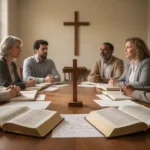
John Wesley believed that Christian faith grows through relationships and regular accountability. Early Methodists met in societies, classes, and bands that allowed people to pray together, discuss spiritual struggles, confess failures, and encourage one another. Modern Methodist churches may express this tradition through Bible studies, Sunday school classes, prayer groups, discipleship groups, and ministry teams.
These groups are not simply social clubs. Their purpose is to help people connect Sunday worship with the rest of the week. A Methodist small group might discuss a biblical passage, share prayer concerns, examine personal habits, organize service, or study a Christian book.
Common Methodist spiritual practices include:
Daily prayer and regular participation in public worship.
Reading and reflecting on Scripture.
Receiving Communion and participating in other church practices.
Fasting, confession, and examination of one’s life.
Serving people who are poor, sick, isolated, or treated unjustly.
Meeting with other Christians for encouragement and accountability.
The goal is not to collect religious activities. These practices are intended to help believers receive grace, develop love, resist destructive patterns, and become more attentive to God’s work in ordinary life.
For someone visiting a Methodist church: You can attend without becoming a member, participate as much or as little as feels appropriate, and ask a pastor about Communion, baptism, membership, or local beliefs before making any commitment.
How Methodists approach social action and public service
Methodist history includes a strong concern for social conditions as well as personal morality. John Wesley preached to people across economic classes and supported practical ministries for people who were poor, sick, imprisoned, or excluded. His followers created schools, relief efforts, medical ministries, and organized forms of community care.
Today, Methodist congregations may serve their communities through food distribution, housing assistance, refugee support, prison ministry, addiction recovery programs, disaster response, tutoring, health care, and advocacy. Some churches focus primarily on local service, while denominational agencies may work nationally or internationally.
Methodists often distinguish between individual acts of compassion and efforts to address systems that create or prolong suffering. A congregation might provide meals while also discussing hunger, housing, wages, racism, health care, or incarceration. The balance and language vary widely, and Methodists do not agree on every public-policy question.
Churches connected with historically Black Methodist traditions have played especially significant roles in African American religious, civic, and educational life. The African Methodist Episcopal Church, African Methodist Episcopal Zion Church, and Christian Methodist Episcopal Church developed within the history of Black Christian independence and leadership in the United States. Their worship and ministry may share Methodist foundations while also reflecting distinct cultural and historical experiences.
How Methodists differ from other Protestant Christians
Methodists share many beliefs with Baptists, Presbyterians, Lutherans, Episcopalians, Pentecostals, and other Protestants. They generally affirm the importance of Scripture, trust in Christ, baptism, Communion, congregational worship, and Christian service. The differences often concern emphasis, church structure, sacramental theology, and the relationship between divine grace and human response.
Several features commonly distinguish Methodist teaching:
Grace before conscious faith: Methodists often emphasize prevenient grace, which means God is already at work drawing people toward faith before they can respond fully.
Human response: Many Methodists teach that people can respond to or resist God’s grace, rather than describing salvation entirely through an unchangeable divine decree.
Growth in holiness: Methodists place strong emphasis on sanctification and the possibility of meaningful spiritual transformation throughout life.
Connectional organization: Many Methodist churches belong to wider conferences and structures rather than operating as fully independent congregations.
Open Communion in many churches: Numerous Methodist congregations invite all sincere followers of Christ, not only members of that local church, to the Lord’s Table.
Practical discipleship: Methodist tradition regularly links prayer and worship with compassion, justice, education, and service.
These are broad patterns, not strict descriptions of every congregation. A Methodist church may look similar to a neighboring church from another Protestant tradition, while its theology and governance still reflect Methodist roots.
What membership usually means in a Methodist church
Attending worship does not automatically make someone a Methodist member. A visitor may attend for weeks or years without joining. Membership usually involves learning about the congregation and denomination, publicly professing Christian faith or reaffirming baptismal vows, and making commitments to support the church’s mission.
Many Methodist congregations speak of membership commitments involving prayers, presence, gifts, service, and witness. The exact wording varies, but the idea is that membership includes more than having one’s name on a list. Members participate in worship, care for one another, support ministry financially according to their ability, serve the community, and share the hope of the gospel through their lives.
Some churches offer a membership class or meeting with the pastor before a person joins. This is a good opportunity to ask about baptism, Communion, the church’s denomination, expectations for members, children’s programs, and the congregation’s position on matters that are important to you.
Questions to ask when choosing a Methodist congregation
Because Methodist churches differ, visiting a congregation in person is more useful than relying only on its name. Look for a church where the worship, teaching, community life, and ministry align with what you are seeking.
Which Methodist denomination or conference is this congregation part of?
How does the church explain baptism and Communion?
What should a visitor expect during worship?
How are children, teenagers, older adults, and people with disabilities included?
What local service or outreach does the church support?
How are pastors, lay leaders, and major decisions organized?
Are small groups, Bible studies, or prayer groups available?
How does the congregation handle disagreements and questions?
Pay attention not only to the service but also to the congregation’s habits. A church’s theology is expressed through how it welcomes strangers, treats vulnerable people, teaches children, uses money, responds to conflict, and makes room for people who are still asking questions.
Why Methodist churches can look different from one another
The Methodist family includes churches with different histories, cultures, worship styles, and theological positions. Some are formal and liturgical; others are informal and contemporary. Some are strongly identified with social activism, while others concentrate more on evangelism, spiritual formation, or local charity. A church’s neighborhood and membership also shape its ministries.
Denominational differences can involve the authority of bishops, the role of conferences, standards for ordained ministry, the practice of Communion, and positions on social questions. Churches may also use different hymnals, worship books, membership vows, and educational materials.
That variety does not make the word Methodist meaningless. It points to a shared family resemblance: historic Christian faith, Wesleyan attention to grace, disciplined discipleship, connectional life, and service expressed through love. To understand a particular Methodist church accurately, identify its denomination and speak with its pastor or members.
How to attend a Methodist service for the first time
You can usually arrive in everyday clothing and expect a range of dress styles. Some congregations are casual, while others dress more formally. Arriving a few minutes early gives you time to find the sanctuary, childcare area, restrooms, and printed worship materials.
During the service, stand or sit as the congregation does, but do not worry about getting every movement right. You may listen during prayers, remain seated during songs, or ask someone nearby for help. If an offering plate is passed, visitors may let it go by. If Communion is served, follow the local invitation and choose the response that fits your beliefs and comfort level.
A Methodist church will often welcome questions after worship. A pastor, usher, greeter, or church member can explain the congregation’s traditions without assuming that you already understand them. You do not need to settle every theological question before taking the first step of visiting.
Frequently asked questions
Are Methodists considered Christians?
Yes. Methodists are part of the Protestant Christian tradition and affirm central Christian beliefs about God, Jesus Christ, the Holy Spirit, the Bible, salvation, baptism, and Communion. The Methodist movement began as a renewal movement within Anglican Christianity and developed into multiple denominations. Individual Methodist churches may differ in worship style and policies, but they share this broad Christian identity.
Do Methodists believe in infant baptism?
Most Methodist churches practice infant baptism as well as baptism for older children and adults. They understand baptism as a sign of God’s grace and welcome into the Christian community, not merely as a statement a person makes after reaching adulthood. Someone baptized as an infant may later confirm the faith personally. Details about baptismal promises and preparation vary by congregation.
Can anyone take Communion at a Methodist church?
Many Methodist churches practice open Communion and invite people who sincerely seek Christ to receive, even if they are not members of that congregation. The exact invitation can differ among denominations and churches. If you are uncertain, listen to the pastor’s guidance or ask before the service. You may also remain seated or request a blessing if that option is offered.
What is the difference between Methodists and Baptists?
Both are Protestant Christian traditions, but they often differ in baptism, church organization, and theology. Methodists commonly baptize infants and adults, use a connectional structure, and emphasize prevenient grace and ongoing sanctification. Baptists typically reserve baptism for professing believers and usually practice immersion, while local Baptist churches are often more independent. Individual congregations may not fit every general pattern.




Leave a Reply