Bread Wine Communion: A Guide to the Eucharist and Its Significance
Across centuries and cultures, the simple act of sharing bread and wine has become a central rite in Christian worship. Known in many traditions as Bread Wine Communion, this practice gathers communities around the table to remember, affirm, and participate in the mystery of faith. In Catholic and Orthodox churches, the term Eucharist is often used, while Protestant and Anglican communities may speak more frequently of Holy Communion or the Lord’s Supper. Despite a wide range of interpretations and liturgical practices, the core impulse remains the same: to encounter Christ in the elements and to proclaim the divine promises of grace, covenant, and unity.
This guide surveys the meaning of Bread Wine Communion, tracing its biblical roots, its development through church history, and its various theological expressions. It also examines how different traditions prepare for and celebrate the rite, what participants can expect, and how the practice speaks to personal faith and communal witness in the contemporary world. Whether you are new to the topic or seeking a deeper understanding, this article offers a structured overview of the bread-and-wine sacrament, the responsibility of the communicant, and the significance of this ancient ordinance for today.
Terminology and Core Concepts
What is the bread in Bread Wine Communion?
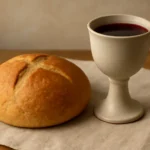
The bread used in the rite is more than a food item. It symbolizes Christ’s body, broken for and given to humanity. In many traditions, it is unleavened or baked in a way that emphasizes simplicity and accessibility, highlighting the idea of shared life and communal participation.
What is the wine or grape juice?
The wine represents Christ’s blood poured out for the forgiveness of sins. In cases where alcohol is prohibited or for practical reasons, communities may use grape juice as a substitute. The symbolism remains focused on the life offered through Christ and the new covenant established in his sacrifice.
What does Communion signify?
The word communion conveys both the act of sharing and the fellowship among believers. It is a union with Christ and a bond that unites the church together as the Body of Christ. The phrase Lord’s Supper is often used to emphasize that this is a meal instituted by Jesus during the Last Supper with his disciples.
Other related terms
Eucharist – from the Greek word for thanksgiving, emphasising the grateful response to God’s grace.
Sacrament – an outward sign of an inward grace, a visible sign of God’s presence.
Transubstantiation – a Catholic doctrinal term describing the change of the bread and wine into the actual body and blood of Christ, while the appearances remain the same.
Real Presence – the belief that Christ is truly present in the elements, though the manner of presence may be understood differently across traditions.
Memorial – a Protestant approach that emphasizes remembrance and symbolic participation, often with less emphasis on a physical change.
Historical Foundations: From the Last Supper to the Church
Biblical roots of Bread Wine Communion
The narrative of the Last Supper anchors the practice of sharing bread and wine as a practice of worship and remembrance. In the Gospel accounts, Jesus takes bread, blesses it, breaks it, and gives it to his disciples, saying, “This is my body.” He then takes the cup, saying, “This is my blood of the covenant.” These words are foundational for all later expressions of the Eucharist, the Holy Communion, and the Lord’s Supper.
The early Christian communities
In the earliest church, the bread and cup appeared within shared meals and formal liturgies. The emphasis was both table fellowship and remembrance of Christ’s sacrifice. Across the next centuries, patristic writers and liturgical texts shaped how communities understood presence, blessing, and participation. Debates about what the elements signify—whether they change in substance, how Christ is present, and what role human participation plays—formed the framework for later doctrinal developments.
Patristic and medieval developments
Over time, distinct theological languages emerged. In the Western church, the concept of sacramental reality was tied to theories about how the material elements convey grace. In the East, the emphasis often centered on mystery and the transformational encounter with God while avoiding precise metaphysical explanations. The medieval period saw substantial refinement of language about the bread and wine as means of grace, the role of the priest, and the nature of sacrifice within the liturgy.
Doctrinal Perspectives Across Christian Traditions
Catholic understanding of Bread Wine Communion
In Catholic theology, the bread and wine of the Eucharist become, by the power of the Holy Spirit and the words of the priest, the actual body and blood of Christ. This is described with the term transubstantiation, a change in the substance of the elements while their appearances remain the same. The Catholic approach emphasizes the real presence of Christ in the sacrament, the necessity of proper disposition, and the church’s authority to consecrate the elements. The rite is a sacramental offering that both memorializes the Last Supper and participates in the ongoing life of the Church.
Eastern Orthodox and Oriental Orthodox perspectives
The Orthodox tradition affirms the real presence of Christ in the bread and wine, but it avoids the technical term transubstantiation as a precise metaphysical explanation. Instead, the mystery of the Eucharist is celebrated through liturgical life, fasting, and reverence around the sacrament. For Orthodox Christians, the Holy Communion is the apex of liturgical life, a participation in the risen Christ that unites the faithful with the Church, heaven, and the covenant God makes with his people.
Lutheran and Anglo-Lutheran perspectives
In Lutheran theology, the concept of the sacramental presence is often described as consubstantiation or sacramental union: Christ is truly present in, with, and under the forms of bread and wine. The elements themselves do not cease to be bread and wine, but they become the body and blood of Christ for communicants who receive them in faith. Lutherans emphasize the ongoing gift of grace through the meal, the forgiveness of sins, and spiritual nourishment.
Reformed and Presbyterian views
Reformed and Presbyterian traditions tend to articulate a doctrine of spiritual presence or remembrance within the Eucharist. The graces conferred are real, but the emphasis may be less on a change of substance and more on God’s promise proclaimed and received through the meal. The rite serves as a visible sign of the covenant and a means by which faith is strengthened.
Anglican, Methodist, and Other Protestant perspectives
The Anglican Communion often speaks of the Eucharist as a mystery that can be understood in various ways, including the presence of Christ in the sacrament and a participation in the earthly and heavenly realities the meal represents. Methodists usually view Holy Communion as a means of grace, a way God strengthens faith and augments sanctification. In many evangelical and Pentecostal circles, the Lord’s Supper is understood as a memorial and a proclamation, sometimes with a focus on public proclamation and personal devotion.
Baptist and Anabaptist practices
For Baptists and many Anabaptist groups, the rite is often described as an ordinance rather than a sacrament, emphasizing believer’s baptism, the declaration of faith, and symbolic remembrance. In these communities, the emphasis is frequently on obedience to Christ’s command and on the communion as a public sign of faith and fellowship.
Liturgical Practice: How Bread Wine Communion Is Celebrated
Preparation and disposition
Before the Bread Wine Communion, communities typically engage in a period of preparation that may include confession, intercession, and prayer. The goal is to approach the rite with reverence, repentance where needed, and gratitude for grace. Some traditions require the faithful to be in a state of grace to receive the sacrament.
Elements and their presentation
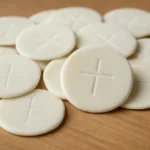
The bread and wine are prepared on a table or altar, sometimes in a formal rite of blessing. In many churches, the bread is broken or distributed by ordained ministers, and the cup (the chalice or chalices) is shared among participants. Some settings use a single cup, others use multiple cups; some use small wafers or crackers, while others use loaves or host-style bread.
Distribution and reception
To participate is often to come forward or approach a designated station where the elements are offered.
Participants receive bread, either in pieces or as a portion of the loaf, and are offered wine or grape juice.
Congregants may receive on their hands or on their tongues, depending on liturgical norms and local practice.
For many churches, the rite is followed by a prayer of thanksgiving and a concluding blessing for the gathered community.
Variations in practice across traditions
The exact practice of Bread Wine Communion varies widely. Some communities celebrate weekly, others monthly, and some on specific liturgical feasts. The use of unleavened or leavened bread, the choice of wine versus grape juice, and whether the distribution occurs at a central rail or at individual stations all reflect historical and cultural distinctions. Yet even with these differences, the central aim remains: to feed faith, to remind believers of God’s promises, and to unite the congregation around the table.
Theology of Significance: What the Bread Welcome and the Wine Means
Symbolism, sacrifice, and covenant
The bread is often read as a sign of God’s presence among his people, a reminder that God provides sustenance and life. The wine points to the blood of the covenant, signaling the new relationship established by Christ’s sacrifice. Together, they signify a covenant that binds believers to God and to one another. The rite becomes a living proclamation of the love that redeems, the grace that sustains, and the hope that transcends hardship.
Bread Wine Communion is not only a personal encounter with Christ; it is also a public act of community. Participants share the same elements, sit at the same table, and testify to their common faith. The practice emphasizes unity in the Body of Christ, reminding congregations that they are part of a larger family of faith that crosses time and place.
Continuity and eschatological anticipation
Across centuries, believers have linked the sacrament to eschatological hope—the expectation of God’s future kingdom. The act of partaking in the bread and the cup points to the reconciliation and restoration that God promises, and it invites the faithful to live in light of that promised future today.
Practical Considerations for Participants
Who should participate?
Many traditions invite all baptized believers to participate, while others practice baptismal or denominational prerequisites. In some settings, the altar or table is open to all who rightly seek Christ and have prepared their hearts; in others, admission is limited to verified members of the community. Understanding local practice helps participants approach the rite with the right attitude.
What to prepare spiritually
A brief period of self-examination, prayer, or confession can be a meaningful way to prepare for the Bread Wine Communion. Some communities offer a brief litany of forgiveness and grace, while others maintain a more quiet, contemplative approach. Regardless of format, the goal is to approach the rite with reverence and with open hearts to receive God’s grace.
Food safety and pastoral sensitivities
In modern contexts, there are practical considerations such as gluten intolerance, alcohol sensitivities, and the desire for inclusive options. Churches may offer gluten-free bread, non-alcoholic grape juice, or modified distribution methods to ensure that all can participate meaningfully. Pastoral care and hospitality often guide these choices with sensitivity to diverse needs.
Contemporary questions and pastoral guidance
In today’s multi-faith and diverse communities, questions may arise about who may participate, the meaning of the rite in a pluralistic society, and how the practice can foster unity without compromising theological convictions. Guidance from church leadership and thoughtful catechesis can help communities navigate these questions with integrity and compassion.
Variations in Practice: Bread Types, Wine, and Local Custom
Bread varieties
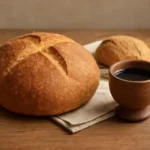
Across traditions, the bread used can range from simple unleavened wafers to loaves of bread, to wafers that are easily broken or shared at the altar. Some communities choose gluten-free options for inclusivity, while others retain traditional forms that reflect liturgical symbolism and historical memory.
The wine component is not merely a culinary choice; it carries theological meaning about the fullness of grace in Christ. In settings where alcohol is inappropriate or not preferred, grape juice is offered as an alternative. The theological significance remains in the shared meal and the communion of believers with Christ.
Reception formats
Some congregations practice a common cup system, where all receive from a single chalice, while others use multiple cups or individual portions from the plate. Some communities distribute bread and wine at the same time, others in a sequence. The differences reflect historical practice and local pastoral considerations, not a change in the fundamental meaning of Bread Wine Communion.
Frequency and liturgical setting
Weekly Eucharist celebrations occur in many traditional churches, while others observe the rite on specific Sundays (such as Easter, Christmas, or feast days) or during seasonally significant periods like Advent and Lent. The frequency shapes spiritual rhythms and the way faith is nourished through ritual.
Common Misconceptions and Clarifications
All churches celebrate the same thing—There are many distinct doctrines about how Christ is present in the elements, how the rite functions within salvation, and how to understand the relationship between sign and reality.
Receiving Communion guarantees salvation—For many traditions, participation is a sacred act of faith and discipleship, not a magical guarantee. Personal repentance and faith are considered essential complements to the rite.
Bread and wine are purely symbolic in all traditions—Some traditions affirm a real presence, while others emphasize memorial understanding; the spectrum ranges from symbolic to sacramental interpretations.
They all use the same bread and wine—The symbolic elements may differ in texture, form, and production, reflecting local culture and theological emphasis.
Ecumenical Reflections: Bread Wine Communion and Christian Unity
In our diverse Christian landscape, there is ongoing conversation about how Bread Wine Communion can contribute to greater unity among believers. The shared table is a powerful symbol of fellowship and mutual recognition. While doctrinal differences about presence and efficacy exist, many theologians and church leaders promote practices that emphasize common ground, shared mission, and collaborative outreach.
Approaches to ecumenism in practice
Affirming the familiar elements—the bread and the cup—as a shared sign of grace.
Encouraging respectful dialogue about differing understandings of presence and sacrament.
Engaging in joint services, outreach, and service projects to express unity in action.
Providing catechesis that explains the various theological perspectives without requiring uniform agreement.
Open questions for modern communities
Questions include how to extend invitation to those outside the church’s membership, how to maintain theological integrity while practicing hospitality, and how to honor conscience and tradition in a pluralistic society. These conversations reflect the ongoing journey of faith communities as they explore the depth and breadth of Bread Wine Communion as a living sign of grace.
Glossary and Quick Reference
Key terms to know
Eucharist — a term used in many traditions to describe the sacramental meal of bread and wine, emphasizing thanksgiving to God.
Holy Communion — a common name for the sharing of the elements, highlighting fellowship with Christ and the church.
Lord’s Supper — another traditional name that centers on Jesus’ Last Supper with his disciples.
Transubstantiation — Catholic doctrine describing a change in the substance of the elements, while outward appearances stay the same.
Real Presence — the belief that Christ is truly present in the elements, regardless of how it is explained theologically.
Consubstantiation — a term sometimes used in Lutheran discussions describing Christ’s presence with the elements without a complete change of substance.
Memorial — a view common in many Protestant circles that emphasizes memory and proclamation of Christ’s saving work.
Sacrament — an outward sign of inward grace, often used in Catholic, Orthodox, and some Protestant contexts.
Further Reading and Resources
For readers who want to explore Bread Wine Communion in greater depth, a variety of resources are available, including liturgical books, catechisms, systematic theologies, and denominational documents. Some recommended starting points include:
Liturgical texts that describe the order of service for the Eucharist across traditions.
Catechetical materials addressing the meaning of the Lord’s Supper and its role in faith formation.
Theological commentaries on the doctrine of the Real Presence and its various interpretations.
Pastoral essays on inclusive practices, gluten-free bread, and non-alcoholic options for the table.
Conclusion: The Living Sign of Bread and Wine
Bread Wine Communion remains a central, enduring practice in Christian worship because it speaks to the core realities of faith: grace given, sins forgiven, and believers bound together in a divine covenant. Whether described as the Eucharist, Holy Communion, or the Lord’s Supper, the rite invites participants into a journey of remembrance, reverence, and hope. By recognizing the breadth of tradition—from transubstantiation in Catholic theology to memorialist interpretations in certain Protestant circles—congregations can approach the table with humility, curiosity, and love. In a world marked by division, the Bread Wine Communion experience offers a shared space to encounter Christ, to celebrate the unity of the Body, and to live out the transformative power of grace in daily life.
Whether you are preparing to participate for the first time or seeking to deepen an ongoing practice, may the journey through the bread and wine be a source of nourishment, formation, and renewed hope. May the everyday act of sharing this sacred meal become a stronger sign of the reconciliation God desires for all creation, turning ordinary moments into encounters with the sacred—the ultimate fulfillment of the promise that Christ is with us, even to the end of the age.









Leave a Reply