Communion and Eucharist: Meaning, Differences, and Practices
Communion and Eucharist: Meaning, Differences, and Practices
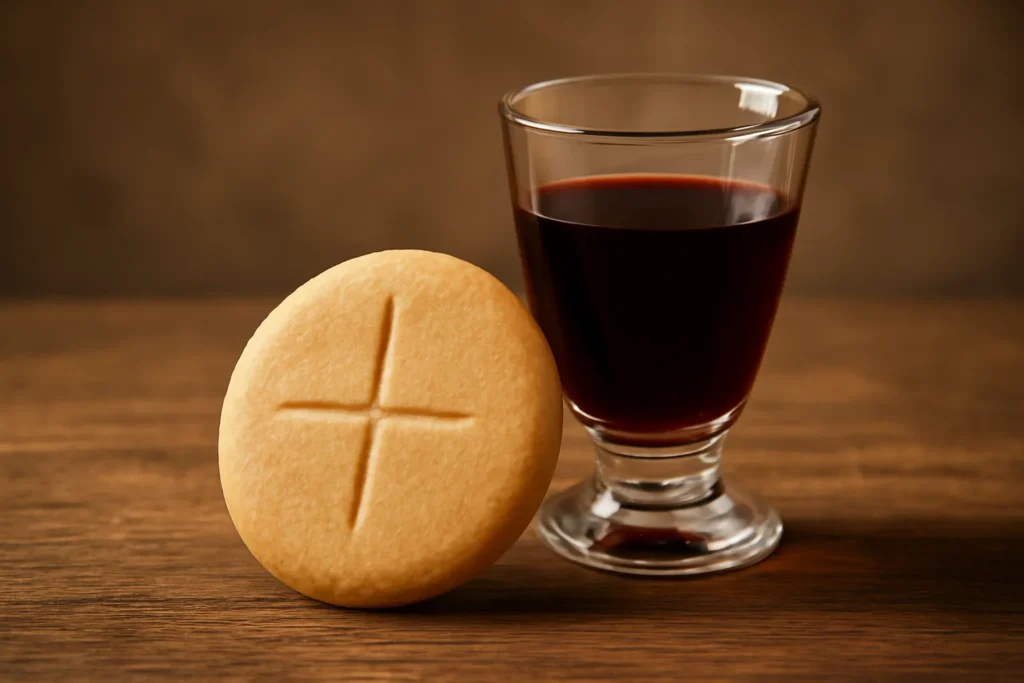
Communion, Eucharist, and the Lord's Supper are words that communities use to describe a sacred meal at the heart of Christian worship. Although these terms are often used interchangeably in casual conversation, they carry distinct nuances depending on tradition, history, and theology. This article offers a thorough exploration of the meaning of the sacrament, the differences across major Christian denominations, and the practices that help believers participate in this central act of faith. By examining language, doctrine, and liturgy, readers will gain a clearer picture of how churches commemorate the Last Supper, how they understand the presence of Christ in the elements, and how these beliefs translate into public worship and personal devotion.
The language surrounding this sacred meal is intentionally rich and varied. Each term highlights a different aspect of the same practice:
Communion emphasizes fellowship and participation with Christ and with one another. It underscores the bonds within the church community that are formed as believers share in the symbol of Christ’s life, death, and resurrection.
Eucharist comes from the Greek word Eucharistia, meaning thanksgiving. This name foregrounds the act of giving thanks to God for the gift of salvation through Jesus Christ and for the grace that believers receive in this sacramental meal.
Lord's Supper highlights the institution of the meal by Jesus at the Last Supper and its role as a memorial of that event. It often carries a more historical or biblical tone and is especially common in Protestant traditions.
Some traditions also refer to the sacrament as the Blessed Sacrament or the Holy Communion, reflecting particular devotional or theological emphases.
Across these terms, three questions frequently shape how Christians understand the rite: What is happening in the meal?Whose presence is recognized or invited?How often and by whom should believers participate? The answers to these questions differ in rich and meaningful ways among Catholic, Orthodox, and Protestant communities, but they share a common conviction that the meal is a central act of worship and formation in the life of the church.
The meaning and purpose of the Eucharist
At its core, the sacrament is about remembering, reconciling, and rejoicing in the grace of Christ. The meanings often highlighted in Christian teaching include:
Thanksgiving and praise, acknowledging God as the giver of all good gifts and recognizing the sacrifice of Jesus as the source of salvation.
Remembrance, specifically the memorial aspect of the Last Supper as recorded in the Gospels and in Paul’s letters (for example, 1 Corinthians 11). Believers recall the passion, death, resurrection, and anticipated return of Christ.
Communion and unity. The meal is a tangible sign that Christians are bound together in one body by faith in Christ, sharing one bread and one cup as a sign of their common participation in the life of Jesus.
Grace and nourishment. In many traditions, the sacrament is understood as a means by which God confers grace, strengthens faith, and nourishes the believer for Christian living and service in the world.
Sanctification and transformation. The act of partaking is believed to shape character, deepen devotion, and align the believer more closely with Christ’s example and mission.
Several key theological terms are often used to describe the way this meal relates to Christ’s presence. It is important to note that Christians disagree about the exact mechanism of presence, while often agreeing that Christ is truly present in some way. The main lines of distinction are:
Real Presence, in Catholic and Orthodox theology, often described as Christ truly present in the sacrament, whether through the physical elements or through a sacramental action that conveys grace.
Sacramental union, in many Lutheran communities, which holds that the true body and blood of Christ are present "in, with, and under" the bread and wine.
Spiritual presence or symbolic presence, in many Reformed, Reformed-leaning Anglican, and some Baptist traditions, which emphasize that Christ is spiritually present and the elements are signs pointing to grace, faith, and the assurance of salvation.
Despite differences in language and understanding, most Christian groups agree that the ritual is not mere symbolism but is oriented toward grace, faith, and the transformation of the believer and the community. This shared conviction helps explain why generations of Christians have celebrated the Eucharist with reverence, devotion, and expectancy, making it a central rite in corporate worship and private prayer alike.
Historical development and distinctive understandings across traditions
Overview of historical development
The practice of sharing bread and cup in memory of Jesus goes back to the earliest Christian communities. The Didache, an early Christian writing likely from the late first or early second century, already presents a structured pattern for breaking bread and giving thanks. Over the centuries, traditions developed distinct liturgical forms and theological explanations. By the time of the Patristic era, major strands of belief had emerged, and by the time of the Reformation, several divergent understandings of the sacrament had crystallized into doctrinal statements, creeds, and church orders. A few milestones include:
Early Church practice: The meal was a central part of worship, often integrated into a longer assembly that included the Eucharist as a centerpiece.
Patristic clarity: The Church Fathers described the meal in strong terms of mystery, grace, and transformation, while avoiding overly precise philosophical explanations that would later become contested.
Medieval Catholic doctrine: The Roman Catholic tradition developed the doctrine of transubstantiation, the claim that the substance of bread and wine changes into the body and blood of Christ while the appearances remain.
Eastern Orthodox emphasis: The Orthodox church preserved a sense of mystery and continuity with the ancient forms, emphasizing the Real Presence and the liturgical mystery expressed in the Divine Liturgy, often with substantial use of ancient hymns, icons, and ritual actions.
Protestant reforms: In the 16th century, reformers such as Luther, Zwingli, and Calvin offered varied interpretations—ranging from the sacramental union to symbolic remembrance or spiritual presence—which continued to diversify the practice within Reformation and post-Reformation churches.
Post-Reformation diversity: In later centuries, Anglican, Methodist, and Baptist communities developed their own liturgical patterns and theological explanations, balancing continuity with reform, and often emphasizing the communal aspect and the ordinance-habit in different ways.
The Catholic understanding
In the Roman Catholic tradition, the Eucharist is situated at the center of the Mass, often described as the “source and summit” of the Christian life. Key elements include:
Transubstantiation: The bread and wine become, in a real and substantial way, the body and blood of Christ through the words of institution pronounced by the priest in the context of the liturgy.
Real Presence: Christ is truly present in the elements, not merely symbolically or spiritually. This presence is believed to endure as long as the elements exist and continues to bless the faithful who receive them.
Consecration and reception: The consecration is followed by the distribution of the Eucharist to the faithful, who approach with reverence, often kneeling or standing, depending on local custom.
Reservation and adoration: In many churches, a portion of the Eucharist is reserved in a tabernacle for use outside the Mass or for devotional prayer, and believers may engage in adoration before the Blessed Sacrament.
Communion under one or both kinds in practice: Some contexts emphasize bread alone; others offer both bread and wine to the communicants, according to local discipline and pastoral considerations.
In the Eastern Orthodox tradition, the Eucharist is celebrated within the Divine Liturgy, a richly symbolic and highly participatory rite that emphasizes mystery and transcendence. Distinctive features include:
Leavened bread (prosphora) used for the Eucharist, prepared with reverence in accordance with ancient liturgical norms.
The Epiklesis and anaphora, atmospheric prayers that invoke the Holy Spirit to sanctify the gifts and the congregation.
Real Presence affirmed in a manner that stresses mystery and the transformative power of the sacrament, while avoiding overly systematic philosophical explanations.
Communion practices: The faithful approach with reverence, often receiving both Body and Blood together in the sacrament, and in many parishes partaking in a processional or continuous distribution during the service.
Communion as koinonia: The act underlines the unity of the Church, the forgiveness of sins, and the eschatological hope of the Kingdom.
The Protestant spectrum: Luther, Calvin, Anglicans, and others
Protestant approaches to the Eucharist span a broad spectrum. While the word Eucharist is used by many, the theological emphasis can differ markedly:
Lutheran: Emphasizes consubstantiation in common parlance, though many theologians prefer sacramental union to describe how Christ is truly present in the elements without the bread and wine themselves undergoing a change. Believers receive the hardware of grace via the sign and sustenance of Christ’s body and blood.
Reformed and Presbyterian: Often emphasize spiritual presence and symbolic significance, viewing the elements as signs that point to grace and faith rather than as a vehicle of grace in and of themselves.
Anglican and Episcopal: Generally hold a “via media” or middle way, with some parishes holding to a more Catholic understanding of the Real Presence alongside a Protestant emphasis on faith and proclamation—a variety often reflected in parish practice and catechesis.
Baptist and Free Church traditions: Frequently describe the rite as an ordinance rather than a sacrament, commemorating Jesus’ commands and the believer’s faith, often emphasizing local church practice and personal decision, with some communities engaging in symbolic or memorial interpretations.
Ritual practice and liturgical form
Practices surrounding Communion/Eucharist vary dramatically across traditions, but there are shared structural elements that tend to recur in most Christian liturgies. Here is a broad outline of typical movements within a service:
Preparation. Believers confess, reflect, and prepare themselves spiritually. Fasting, examination, and repentance are common in many traditions, alongside catechetical instruction for new communicants.
Prayer of Thanksgiving and the institution narrative. The central moment often includes the words of Jesus at the Last Supper, followed by a blessing and invocation of the Holy Spirit over the gifts.
Consequence and sanctification. The elements are set apart as sacred, and the church moves toward the distribution of the bread and cup to the faithful.
Distribution. Communicants approach to receive the elements, sometimes with the sign of reverence—kneeling, bowing, or a simple bow—and often with both bread and wine or a sign of the cup depending on tradition.
Communion hymn or prayer. A time of contemplation and gratitude, often accompanied by hymns, chants, or liturgical prayers.
Aftercare. The service ends with thanksgiving prayers, a blessing, and a closing exhortation to live out the mission of Christ in daily life.
Glossing the above, here are some distinctive liturgical notes by tradition:
Catholic liturgy: The Mass centers on the Eucharistic prayer, a sequence of prayers, the epiclesis in some contexts, and the solemn consecration. The faithful typically receive the host and, in some places, the wine as part of the communion rite. The rite may conclude with a kiss of peace, a blessing, and a >communal dismissal into mission and service.
Orthodox liturgy: The Divine Liturgy integrates the Great Entrance, the double communion practice, and the continuous, highly symbolic prayers that underscore divine mystery. The faithful often receive the Eucharist with reverence, in a procession or a direct approach, depending on the parish custom.
Lutheran and Anglican patterns: The arrangement tends to emphasize the grace through faith and the presence of Christ in the sacrament, while allowing for a variety of reception styles—bread only, or both bread and wine, depending on the parish and theological stance.
Reformed and Baptist patterns: Emphasize the memorial aspect and the symbol of Jesus’ sacrifice, with reception framed as an act of obedience and public profession of faith, often with a strong pastoral emphasis on self-examination and unity in Christ.
Frequency, accessibility, and forms of distribution
How often a church celebrates the Eucharist, and who may participate, reflects both tradition and local pastoral concerns. Common patterns include:
Weekly or twice weekly mass or liturgy, particularly in Catholic and Orthodox communities, reflecting the centrality of the rite in worship.
Monthly or quarterly schedules in some Protestant congregations, especially those that emphasize preaching and teaching but still value regular communion as a life-shaping practice.
Open communion versus closed communion (or restricted communion) as a policy. Open communion invites all baptized Christians or all who confess faith in Christ to participate, while closed or restricted communion limits the practice to members of a particular church or communion group.
Distribution practices: Some traditions offer both bread and wine to all communicants, while others distribute only the bread, or offer wine to the priest or a few ministers. Some churches practice intinction (dipping the bread into the cup) or administer the cup in individual chalices, often to address safety, access, and pastoral concerns.
The question of who can participate is often tied to doctrinal, sacramental, and pastoral considerations. Some churches emphasize the importance of baptism as entry into communion, while others emphasize the profession of faith and repentance as prerequisites. In some ecumenical settings, pastors and lay leaders seek common ground, recognizing that even when doctrinal understandings differ, the practice of sharing in the meal remains a powerful witness to Christian unity and hope.
Preparation for receiving the Eucharist
Across traditions, believers are encouraged to approach the sacrament with reverence, discernment, and a prepared conscience. Common preparatory practices include:
Confession or repentance, especially in Catholic and Orthodox contexts, to seek forgiveness and heal broken relationships with God and neighbor.
Fasting, typically abstaining from food and drink for a period before communing, to focus attention on spiritual nourishment rather than physical hunger.
Self-examination, reflecting on faith, motives, and the alignment of life with the gospel message.
Participation in the life of the church, including baptismal faith, catechesis, and regular prayer, as a sign of readiness to partake in the mystery with integrity.
Pastoral guidance about preparation may vary. Some churches place a strong emphasis on the necessity of sacramental confession before reception, while others focus on the believer’s faith in Christ and a genuine repentance. The shared aim is to ensure that the participants approach the sacred rite with humility, gratitude, and a right relationship with God and neighbor.
Ethical and pastoral considerations surrounding communion
Because the Eucharist is deeply sacred and formative for the life of the church, communities pay careful attention to issues of moral responsibility, church discipline, and pastoral sensitivity. Some typical concerns include:
Self-examination and discernment: Believers are invited to reflect on their faith and relationships, including the reconciliation of any conflicts or offenses with others in the community.
Unity and reconciliation: The meal is a sign of the church’s unity, calling congregants to pursue healing and reconciliation wherever there is division or estrangement.
Pastoral caution in reception: In some settings, those who are not yet baptized or who hold beliefs significantly divergent from the church’s teaching may be invited to observe or participate in a non-committal way rather than partake in the elements.
Social and ethical concerns: Some communities reflect on how the church distributes resources, serves the world, and lives out the grace celebrated in the Eucharist through acts of mercy, justice, and care for the vulnerable.
These considerations exemplify the deeper learning that accompanies the sacrament: it is not merely a ritual act, but a living invitation to moral formation, communal love, and mission in the world. The way a community teaches, governs, and practices communion often reveals its underlying theology of grace, faith, and salvation, while also shaping the daily life of its members.
Readers often ask questions that touch the heart of ecumenical dialogue and personal faith. Here are some frequently asked questions and concise answers:
Is the Eucharist a feast or a memorial? Across traditions, believers affirm a memorial aspect, remembering Christ’s saving work. Many also emphasize a feast-like, transformative dimension where grace is received. Some traditions stress a real presence, while others highlight symbolic significance; all versions view the rite as central to Christian identity.
What about children at Communion? Practices vary. Some churches welcome children who have been baptized and instructed in the faith to participate, while others reserve communion for those who have reached a certain level of catechesis or church membership. Alternative rites or prayers are common in communities that delay reception until a later age or level of understanding.
Is there one right interpretation of the Eucharist? No single interpretation unites all Christians. The diversity reflects a shared reverence for Jesus and a commitment to interpret Scripture and tradition within a living church. Ecumenical conversations aim to honor differences while seeking common ground on the central significance of the meal as a sign of grace and fellowship.
How do churches address social and ethical questions in light of Communion? Many communities connect the meal to the way they treat others, work for justice, and care for creation. The Eucharist is often read as an invitation to live out the gospel in daily life—feeding the hungry, befriending the stranger, and pursuing peace and reconciliation.
Practical considerations for readers, travelers, and curious learners
For those who move between churches or who wish to participate respectfully in unfamiliar settings, here is a practical guide to navigating the practice of communion:
Observe reverence: Treat the sacred space, the elements, and the leaders with respect. Stand or kneel as customary, bow when appropriate, and listen attentively to the prayers and instructions given by the clergy.
Follow local customs: Participate in the mode of reception that your tradition practices. If you are uncertain whether you should partake, ask a church member or a leader for guidance.
Understand the symbolic language: Even when you do not share the same theological explanation as others, honoring the symbolism and the intent of the rite is part of shared Christian hospitality.
Be mindful of denominational policies: Open or closed communion and other rules are often tied to theological or pastoral aims. Respect the policy of the congregation you attend.
Prepare spiritually: If you are a guest or a seeker, approach the rite with prayer, repentance, and an honest desire to seek Christ in faith, even if you do not share every doctrinal conclusion.
Conclusion: A shared meal with diverse expressions
Across Christian traditions, Communion, Eucharist, and the Lord's Supper denote a sacred meal that Christ instituted with his disciples at the Last Supper. While the exact understanding of the presence of Christ, the mechanics of transformation, and the disciplinary rules around reception differ, all mainline Christian communities affirm some version of the following commitments:
The meal is a central act of worship and a primary way believers encounter and respond to God's grace.
The rite fosters community and unity, linking local congregations to the universal church and to the fellowship of saints across time and space.
The practice calls believers to repentance, faith, and mission, inviting them to live out the grace they receive in acts of love, mercy, and justice.
The ritual remains a site of mystery and meaning, where human words meet divine action in worship, prayer, and sacramental grace.
For readers who want to understand more deeply, a good next step is to study the primary sources and official documents from different traditions. The Roman Catholic Catechism, the Orthodox Gospel and Liturgy texts, and Protestant confessional statements (such as the Lutheran Formula of Concord or the Anglican Thirty-Nine Articles and the Book of Common Prayer) offer authoritative explanations of how each community envisions the sacrament. Engaging with these sources, alongside careful listening to the lived practice of local churches, helps believers appreciate the rich tapestry of Christian faith around this most ancient and enduring ritual.
In sum, the Communion and Eucharist are more than a ritual memory; they are a living act of grace that binds believers to Christ and to one another. Whether described as Real Presence or spiritual presence, whether celebrated weekly or less frequently, and whether received in one form or two, the meal remains a powerful sign of God’s mercy and a durable invitation to participate in the life of Jesus Christ. As communities continue to explore, celebrate, and interpret the sacrament in changing contexts, what endures is the call to a common meal that embodies hope, reconciliation, and the transformative power of grace in the world.






Leave a Reply