Deacon definition: Role, duties, and Christian meaning
Deacon definition: Role, duties, and Christian meaning
If you have heard someone called a deacon at church, you may wonder what the title actually means. Is a deacon a pastor, a volunteer, or a member of the clergy? The answer depends on the Christian tradition, but the central idea is consistent: a deacon is a person appointed to serve the church and its people.
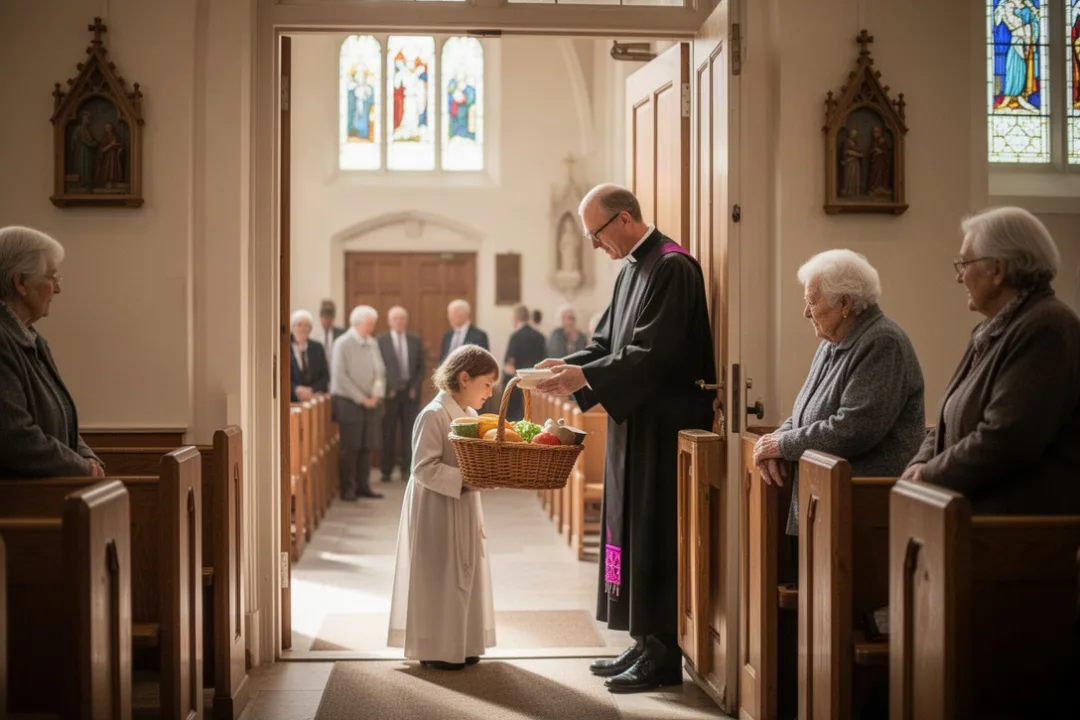
The word usually refers to someone whose ministry connects spiritual care with practical service. Deacons may help lead worship, assist with communion or baptism, visit people who are sick, support families in need, teach, organize church ministries, or help oversee the congregation’s daily work. In some churches, deacons are ordained clergy; in others, they are elected lay leaders.
Plain definition: A deacon is a Christian servant or ministry leader who supports the church through worship, pastoral care, teaching, administration, and service to people in need.
The English word deacon comes through Latin and Greek terms associated with serving or ministering. The New Testament uses related language for people who serve others, assist Christian communities, and carry out responsibilities on behalf of the church. The word’s basic sense is not status or personal power; it is active service entrusted to a recognized leader.
That meaning helps explain why the role looks different from one church to another. A Catholic deacon, a Baptist deacon, and a deacon in an Episcopal or Lutheran congregation may have very different duties and authority. They share a tradition of service, but their training, ordination, and relationship to pastors or priests are not identical.
Some churches treat deacons as part of a formal order of ministry. Other congregations use “deacon” for respected members who help govern the church, care for members, or coordinate practical work. The title can therefore describe an ordained office, a governing position, or a ministry of service.
How to understand a deacon’s role step by step
Although the details vary, you can usually understand a deacon’s role by looking at four connected responsibilities. These show how the position supports both the congregation’s worship and its everyday life.
Recognized service: The church identifies a person as having the character, maturity, and ability to serve others faithfully.
Practical care: The deacon helps respond to concrete needs, such as meals, transportation, visits, financial assistance, or support during a crisis.
Participation in worship: Depending on the denomination, the deacon may read Scripture, lead prayers, assist with communion, preach, or help prepare the service.
Support for church leadership: Deacons may work with pastors, priests, elders, or a church council to care for members and manage ministry responsibilities.
A deacon is not automatically the person in charge of a congregation. In many churches, the senior pastor, priest, minister, rector, or bishop holds different responsibilities. A deacon’s work usually complements that leadership by making sure people receive care and the church’s ministries function faithfully.
What deacons do in everyday church life
The daily work of a deacon depends on the church’s needs and its governing structure. One deacon may spend much of the week visiting older members, while another may focus on worship services, youth programs, or community outreach. Some serve in a highly visible way, and others work quietly behind the scenes.
Common responsibilities include:
Visiting and pastoral care: Deacons may visit people in hospitals, nursing homes, homes, or care facilities and offer prayer, conversation, and practical support.
Helping people in need: They may coordinate food assistance, emergency funds, housing referrals, clothing, transportation, or other forms of help.
Assisting during worship: A deacon may read from Scripture, lead prayers, distribute communion, help prepare the sanctuary, or dismiss the congregation for service.
Teaching and discipleship: Some deacons teach classes, lead small groups, mentor younger members, or explain Christian practices.
Supporting families: They may help arrange meals after a death, coordinate care during an illness, or connect families with church and community resources.
Church administration: In congregations where deacons are governing leaders, they may help make decisions about budgets, property, membership care, and ministry programs.
Community outreach: A deacon may organize partnerships with shelters, food pantries, prison ministries, schools, or neighborhood organizations.
These duties have a common purpose: turning the church’s concern for people into organized, personal action. A deacon may not personally solve every problem, but the deacon often helps the congregation notice needs and respond responsibly.
What the Bible says about deacons
The New Testament provides the main biblical foundation for the office of deacon, although it does not offer one complete job description used by every later church. Acts 6 describes a situation in which the growing Christian community needed dependable people to help distribute food fairly to widows. The apostles focused on prayer and proclaiming the message, while others took responsibility for this important service.
That passage is often connected with the later development of the diaconate because it shows the church appointing trusted people to meet practical needs. The service was not treated as unimportant. Fair distribution required wisdom, integrity, impartiality, and spiritual maturity.
First Timothy 3:8–13 gives qualifications for deacons. In paraphrased form, the passage emphasizes qualities such as honesty, self-control, faithfulness, a clear conscience, and a good reputation. It also discusses household and family responsibilities, reflecting the idea that a person’s character should be visible in ordinary life, not only during public ministry.
Romans 16:1 refers to Phoebe as a diakonos of the church at Cenchreae. The Greek term can be translated in ways that emphasize service or ministry, and Christian traditions differ over how this reference relates to the later formal office of deacon. It does clearly present Phoebe as a trusted Christian worker who served the church and assisted others.
The biblical picture therefore places character before title. A person is not suited to be a deacon merely because they are organized, influential, or willing to speak in public. The role calls for reliability, humility, sound judgment, and concern for people who may be overlooked.
How Catholic deacons serve the church
In the Catholic Church, a deacon is an ordained minister who receives the sacrament of Holy Orders. The diaconate is the first level of the threefold order of bishops, priests, and deacons. A deacon is not a priest, but he is part of the ordained clergy and has specific liturgical and pastoral responsibilities.
Catholic deacons serve in three closely related areas: the ministry of the Word, the ministry of the altar, and the ministry of charity. The ministry of the Word may include proclaiming the Gospel at Mass, preaching when permitted, teaching, and helping people understand the Christian faith. The ministry of the altar includes assisting the priest during worship and, according to Church law and local authorization, baptizing, witnessing marriages, and presiding at certain services.
The ministry of charity expresses the deacon’s service to people in need. Catholic deacons may work with hospitals, prisons, shelters, food programs, immigrant communities, families, or parish outreach efforts. Their work is not limited to ceremonial duties; service to vulnerable people is a central part of the vocation.
Catholic deacons may be transitional deacons or permanent deacons. A transitional deacon is a seminarian preparing for priestly ordination. A permanent deacon is ordained to remain a deacon and may be married before ordination, subject to the Church’s rules. Permanent deacons often have jobs and family responsibilities outside the parish while serving the church in a part-time or volunteer capacity.
Because Catholic practice is governed by canon law and local diocesan policy, the exact responsibilities of a deacon can differ. A deacon’s authority is also distinct from that of a priest. For example, a deacon does not preside at the Eucharistic Prayer or celebrate Mass as a priest does.
How Orthodox deacons serve in worship and ministry
Eastern Orthodox and Oriental Orthodox churches also recognize the diaconate as an ordained ministry. In Orthodox worship, the deacon has a prominent liturgical role. He may lead petitions, announce parts of the service, carry out processions, help coordinate the congregation’s responses, and assist the priest or bishop at the altar.
The Orthodox deacon’s ministry is strongly connected with the church’s public prayer. His role helps the congregation move through the service in an orderly way and brings the community’s prayers before God. He may also teach, visit members, participate in charitable work, and support parish life outside worship.
As in Catholic practice, an Orthodox deacon is not a priest. The deacon assists the priest or bishop but does not perform every sacramental function. The length and structure of preparation, as well as expectations for ministry, are determined by the relevant church and diocese.
How Protestant churches use the title deacon
Protestant churches do not have one universal definition of deacon. The role may be an ordained ministry, a lay office, or a governing body made up of several deacons. The meaning is best understood by asking how a particular denomination organizes leadership.
In many Baptist churches, deacons are members chosen by the congregation to provide spiritual care, assist the pastor, and help oversee church affairs. They may visit members, counsel families, help with benevolence, participate in decisions, and support the church’s financial or administrative work. Some Baptist congregations have a deacon board, while others use the title for individual ministry leaders.
In Presbyterian and Reformed traditions, the diaconate often focuses on ministries of compassion, justice, stewardship, and care. Deacons may serve on a governing body or work alongside elders, depending on the denomination. Their responsibilities can include helping people facing poverty, coordinating congregational care, and directing church resources toward community needs.
In Anglican and Episcopal churches, the deacon is an ordained order of ministry. Deacons may proclaim the Gospel, assist at the Eucharist, preach, baptize in certain circumstances, and lead or organize service ministries. The deacon’s liturgical role often visibly connects worship with service to the world beyond the church building.
In some non-denominational churches, deacons are appointed or elected lay leaders. They may oversee facilities, welcome visitors, distribute communion, help with benevolence, or provide member care. Another non-denominational church may use “deacon” for a senior ministry leader with preaching and administrative responsibilities.
These differences do not make one definition correct and the others incorrect. They show that “deacon” is a shared Christian title with denomination-specific practice.
When the title is unclear: Ask whether the church’s deacons are ordained clergy, elected lay leaders, or members of a governing board. That one question usually clarifies the role quickly.
Are deacons clergy or lay leaders?
The answer depends on the church. In Catholic, Eastern Orthodox, Oriental Orthodox, Anglican, and some Lutheran traditions, deacons are generally ordained ministers. They may wear distinctive vestments, receive formal theological preparation, and carry out duties assigned by bishops or other church authorities.
In many Baptist, independent, evangelical, and other Protestant congregations, deacons are lay leaders rather than ordained clergy. They may have significant authority and responsibility without being considered ministers in the same formal sense. A church can also have both ordained ministers and lay deacons.
The distinction matters because ordination affects what a deacon may do in worship, which authority the deacon holds, and what training the church expects. A lay deacon may lead a care ministry or serve on a board, while an ordained deacon may be authorized to preach, baptize, witness marriages, or assist at the altar.
Can women be deacons?
Christian traditions answer this question differently. Many Protestant denominations ordain women as deacons or elect women to serve as deacons. In those churches, women may carry out the same responsibilities as men, including preaching or leading ministries when the denomination permits those functions.
The Anglican and Episcopal traditions, along with several Lutheran and other Protestant bodies, include women in ordained diaconal ministry. Some Baptist and independent churches also appoint women as deacons, while others limit the office to men according to their interpretation of Scripture and church tradition.
The Catholic Church and Eastern Orthodox churches do not currently ordain women to the sacramental diaconate in the same way they ordain male deacons. Historical discussions about women called “deacons” in early Christian communities are complex, and churches do not all interpret that evidence in the same way.
Because policies differ, the most accurate answer about a particular woman’s role comes from her denomination or local congregation. A woman may be called a deacon, serve on a deacon board, or lead diaconal ministries even when her church does not consider that position ordained.
What qualities churches look for in a deacon
Churches typically look beyond public speaking or administrative talent when choosing deacons. The role involves trust, confidential information, conflict, and contact with people experiencing illness, grief, financial hardship, or family strain.
Common qualities include:
Integrity: The person handles money, private information, and responsibility honestly.
Compassion: The person notices suffering and responds with patience rather than judgment.
Reliability: The person follows through on visits, commitments, schedules, and promises.
Spiritual maturity: The person demonstrates a steady faith and a willingness to keep learning.
Discretion: The person protects the privacy of people receiving care.
Fairness: The person avoids favoritism and treats people with equal respect.
Cooperation: The person can work with pastors, priests, elders, staff, volunteers, and other deacons.
Practical wisdom: The person knows when to offer help directly and when to refer someone to professional or community services.
Being a deacon does not mean being a professional therapist, doctor, lawyer, or social worker. A responsible deacon recognizes personal limits and seeks qualified assistance when a situation involves abuse, serious mental health concerns, medical danger, legal issues, or immediate risk.
How a deacon differs from a pastor, priest, elder, and bishop
Church titles overlap in everyday conversation, but they do not always describe the same office. A pastor generally provides ongoing spiritual leadership for a congregation, including preaching, teaching, worship leadership, pastoral care, and administration. In some traditions, “pastor” is a function rather than a specific level of ordination.
A priest is an ordained minister in Catholic, Orthodox, Anglican, and some other traditions. Priests normally preside over the Eucharist or Mass and administer sacraments according to their church’s rules. A deacon assists but does not have the full priestly role.
An elder may be a spiritual overseer, governing leader, or mature church member, depending on the denomination. In some churches elders and deacons have distinct responsibilities: elders focus more on teaching and spiritual oversight, while deacons focus more on service and practical care.
A bishop provides oversight for multiple congregations or clergy in traditions that use episcopal government. Bishops may ordain ministers, supervise dioceses, and preserve church order. A deacon normally serves under the authority of a bishop, priest, pastor, or local governing body, depending on the denomination.
These comparisons are general rather than universal. Some churches combine offices, use different names, or assign duties in ways that do not fit a single model.
What “deacon” means outside a church title
In ordinary speech, “deacon” may refer to the person, the office, or the group that carries out the work. Someone might say, “The deacon visited my family,” meaning an individual ministry leader. A church may announce a “meeting of the deacons,” meaning a board responsible for member care or governance.
The title is also sometimes used in names for church buildings, schools, charitable programs, or organizations. In those cases, the word usually points to a tradition of Christian service rather than identifying a particular ordained minister.
If you encounter the term in a historical or biblical discussion, pay attention to the context. It may describe a formal office, a trusted servant, or a translation of a Greek word that has a broader meaning than the modern title.
How to find the exact deacon definition at a specific church
If you need to know what a deacon does in one congregation, the church’s own explanation is more useful than a general dictionary definition. You can usually find the answer by checking its denomination, bylaws, ministry handbook, or staff directory.
Identify the church tradition: Determine whether it is Catholic, Orthodox, Anglican, Lutheran, Baptist, Presbyterian, Methodist, non-denominational, or another body.
Ask whether the deacon is ordained: This distinguishes a formal clergy role from a lay leadership position.
Look at worship responsibilities: Find out whether the deacon reads Scripture, preaches, assists with communion, baptizes, or leads prayers.
Ask about care and governance: Learn whether deacons visit members, manage benevolence, oversee ministries, or make congregational decisions.
Check who supervises the role: The pastor, priest, rector, bishop, elders, church council, or congregation may provide oversight.
The simplest definition remains useful: a deacon is someone entrusted with Christian service. To understand the full meaning, add the local church’s tradition, authority structure, and expectations. That combination tells you whether the deacon primarily serves at the altar, cares for people, governs the congregation, or does all three.
Frequently asked questions
Is a deacon the same as a pastor?
No. A pastor usually provides broad spiritual leadership for a congregation, while a deacon focuses on service, care, worship assistance, or church governance. In some traditions, a deacon is ordained clergy; in others, the role is held by a lay leader. A deacon may preach or lead ministries in certain churches, but the title does not automatically mean the person is a pastor.
What is the difference between a deacon and an elder?
The distinction varies by denomination, but elders commonly provide spiritual oversight, teaching, and governance, while deacons traditionally emphasize practical service and care for people in need. Some churches give elders and deacons separate governing roles; others use the offices differently or have only one of them. The church’s bylaws and denominational tradition provide the most precise answer.
Do deacons get paid?
Some deacons receive a salary or stipend, especially when they are full-time ordained ministers or hold a formal staff position. Many serve voluntarily while working elsewhere, particularly in congregations where deacons are lay leaders. Compensation depends on the church’s budget, denomination, workload, and employment arrangement rather than on the title alone.
Can a deacon perform a wedding or baptism?
In some traditions, an ordained deacon may baptize or officiate at a wedding under specific conditions and with proper authorization. In other churches, only a priest, pastor, or another authorized minister may perform those services. A deacon’s authority is determined by denominational rules and local church policy, so the title by itself does not answer the question.




Leave a Reply