What is a catechist? Role, duties, and how to serve
What is a catechist? Role, duties, and how to serve
A catechist is a person who teaches the Christian faith and helps others grow in their relationship with God. In Catholic communities, catechists commonly lead religious education, sacramental preparation, Bible formation, or adult faith classes.
A catechist may be a volunteer or paid minister, a layperson or religious, and may serve children, teenagers, adults, families, or candidates preparing for Christian initiation. The role combines teaching with personal example, listening, prayer, and community-building.
The central task of a catechist is to communicate the faith clearly and faithfully. That usually includes explaining Christian beliefs, connecting them to Scripture and worship, and helping learners see how faith shapes everyday decisions.
A catechist does more than present information. Effective formation invites people to understand, respond, practice, and grow. A lesson about forgiveness, for example, might include a Gospel passage, a discussion of reconciliation, a prayer, and a practical way to repair a strained relationship.
The specific duties depend on the parish, school, denomination, age group, and program. Common responsibilities include:
Planning and teaching regular faith-formation sessions.
Preparing children and adults for sacraments or rites of Christian initiation.
Explaining Scripture, Christian doctrine, moral teaching, and prayer.
Creating a welcoming environment for questions and honest discussion.
Communicating with parents, guardians, clergy, and parish staff.
Keeping attendance, permission forms, lesson plans, or other program records.
Recognizing when a learner needs pastoral, academic, or safeguarding support.
The catechist’s work often continues outside the classroom. A strong catechist may check in with a family, attend worship with learners, suggest a prayer practice, or help a young person find a meaningful way to serve others.
What the word catechist means
The word catechist comes from a Greek term associated with teaching by word of mouth or instruction. In Christian use, it refers to someone who gives organized formation in the faith, not merely someone who answers an occasional religious question.
People sometimes use the word interchangeably with religious education teacher, but the terms are not always identical. A religious education teacher may focus primarily on a class curriculum, while a catechist is often understood to accompany learners more broadly through teaching, prayer, worship, and Christian living.
The title is especially common in Catholic settings, although other Christian traditions have people who perform similar work under titles such as Sunday school teacher, Christian education leader, Bible teacher, discipleship leader, or formation minister.
A catechist teaches the faith while helping people encounter it as a way of life.
How a catechist differs from a priest, pastor, or theologian
A catechist is not automatically an ordained minister. In many churches, catechists are lay Christians serving through a ministry or volunteer role. They may teach under the direction of a pastor, priest, director of religious education, or other authorized leader.
A priest or pastor normally has responsibilities that a catechist does not, including presiding at worship according to the rules of that tradition, providing sacramental ministry where applicable, and offering pastoral leadership to the congregation. A catechist supports the community’s teaching mission rather than replacing ordained ministry.
A theologian studies and develops careful reflection on God, Christian doctrine, Scripture, history, and related subjects. A catechist may use theological knowledge, but the practical assignment is different: make the faith understandable, livable, and appropriate for a particular group.
These roles can overlap. A priest may teach a class, a theologian may serve as a catechist, and a catechist may have substantial theological training. The title describes the person’s ministry of formation, not a complete statement of education or church status.
Where catechists serve
Catechists serve in many settings, from a parish classroom to a family’s home. Their work may be formal, with a set curriculum and scheduled sessions, or more relational, with individual accompaniment over a period of months.
Parish religious education: Weekly classes for children and teens who attend public, private, or home schools.
Parish schools: Faith instruction integrated into a broader academic program.
Sacramental preparation: Formation for baptism, confirmation, first communion, reconciliation, marriage, or other rites, depending on the tradition.
Adult faith formation: Bible studies, doctrine classes, discussion groups, and sessions for lifelong learning.
Christian initiation programs: Accompaniment for adults or children exploring or entering the church.
Youth ministry: Small groups, retreats, service projects, and discussions that connect belief with real questions.
Family ministry: Resources and conversations that help parents or guardians practice faith at home.
Some catechists serve people in hospitals, prisons, military communities, migrant communities, or remote areas. In places with few clergy or formal programs, catechists may have a particularly visible role in leading prayer, sharing teaching, and sustaining local Christian life.
The content depends on the church and the learners’ needs, but catechesis commonly includes several connected dimensions of Christian life. A lesson should not treat faith as a list of disconnected facts.
Doctrine covers what the church believes about God, Jesus Christ, the Holy Spirit, creation, salvation, the church, human dignity, and eternal life. The catechist presents these teachings accurately while explaining their meaning in language the group can understand.
Scripture provides the central story and witness of Christian faith. A catechist helps learners read biblical passages in context, recognize different literary forms, and connect the text with prayer and discipleship. References such as Matthew 5–7, Luke 15, John 15, or 1 Corinthians 13 can guide discussion without reducing the Bible to isolated quotations.
Worship and prayer show how belief is celebrated and practiced. Learners may explore the parts of a service, the meaning of sacraments, different forms of prayer, the church calendar, or the significance of silence and communal worship.
Christian morality addresses how people treat God, themselves, other people, and the wider world. A catechist should present moral teaching with both clarity and compassion, allowing room for genuine questions about conscience, suffering, relationships, justice, technology, and responsibility.
Mission and service connect faith with action. Learners can examine how Christians respond to poverty, loneliness, discrimination, conflict, environmental concerns, and local needs. Service is not an optional decoration added after the “real” lesson; it helps learners see how faith becomes visible.
Teaching principle: A good lesson connects head, heart, and hands: what learners understand, how they respond, and what faithful action they can take.
Qualities that make an effective catechist
Knowledge matters, but knowledge alone does not make someone an effective catechist. Learners remember whether the teacher was prepared, trustworthy, patient, and attentive.
Faithfulness means representing the church’s teaching accurately rather than presenting personal opinions as official doctrine. It also means recognizing legitimate differences in interpretation and directing complex questions to an appropriate pastor or trained leader.
Clarity helps learners understand unfamiliar words and ideas. A catechist should explain terms such as grace, covenant, repentance, vocation, sacrament, and discipleship instead of assuming everyone already knows them.
Humility allows a catechist to say, “I do not know, but I will find out.” That response builds more trust than a rushed or inaccurate answer. It also models the lifelong learning that Christian formation seeks to encourage.
Empathy is essential because learners bring different family backgrounds, abilities, cultures, questions, and experiences of church. A person who seems distracted may be dealing with grief, anxiety, a learning difference, family conflict, or uncertainty about belonging.
Other valuable qualities include:
The ability to listen without immediately correcting or dismissing.
Respect for parents, guardians, clergy, coworkers, and fellow volunteers.
Comfort with age-appropriate humor and creativity without making the lesson chaotic.
Consistency in attendance, preparation, communication, and follow-through.
Willingness to receive feedback and adjust teaching methods.
Commitment to safeguarding and appropriate professional boundaries.
How to become a catechist
Most people begin by speaking with a parish pastor, religious education director, school leader, or diocesan office. The church may ask about your experience, availability, faith background, preferred age group, and reasons for wanting to serve.
Requirements vary considerably. Some programs provide training before the first class; others expect volunteers to complete orientation, background screening, child-safety training, and ongoing formation. A formal degree is not always required, especially for an entry-level volunteer role, but preparation is still necessary.
Identify a parish, school, or ministry that needs catechists.
Discuss the role, schedule, curriculum, age group, and expectations with the program leader.
Complete any required application, background check, safeguarding training, and orientation.
Study the church’s basic teachings and review the assigned curriculum before teaching.
Observe an experienced catechist or assist with a class when possible.
Plan a lesson with a clear purpose, suitable activities, and time for prayer or reflection.
Ask for feedback and continue developing through workshops, reading, mentoring, or formal certification.
Some dioceses and denominations offer structured catechist certification. Programs may cover Scripture, doctrine, liturgy, pastoral skills, child development, evangelization, cultural awareness, and classroom management. Ask the local church which programs it recognizes, since names and standards differ.
How to plan a strong catechetical lesson
Start with a single learning goal. “Students will understand Christianity” is too broad for one session. A more useful goal might be, “Learners will explain why Christians pray for others and choose one person or situation to include in prayer this week.”
Choose content that fits the group’s age, attention span, prior knowledge, and emotional maturity. Younger children may need concrete images, movement, repetition, and short activities. Teens often need room for honest disagreement and real-world application. Adults usually benefit from context, respectful discussion, and opportunities to connect faith with experience.
A practical lesson sequence might include:
Welcome: Greet people by name and establish a calm, respectful tone.
Connection: Begin with a question, experience, image, or situation related to the topic.
Teaching: Present one or two central ideas using clear language and appropriate examples.
Engagement: Invite discussion, reading, creative work, role-play, or small-group reflection.
Application: Identify one way learners can pray, act, or think differently during the week.
Prayer and review: Return to the main point and close in a way suited to the group.
Use the official curriculum as a foundation, not as a script that prevents responsiveness. If a learner raises an urgent question, acknowledge it and decide whether to address it immediately, schedule a follow-up, or consult the program leader.
Practical tips and common catechist mistakes
Small choices can make a significant difference in whether learners feel engaged and safe. The best methods are usually simple: clear expectations, thoughtful preparation, active listening, and activities that serve the purpose of the lesson.
Do define the main point. Write one sentence that you want learners to remember.
Do learn names and pronounce them correctly. Personal attention communicates belonging.
Do vary the method. Combine explanation with discussion, prayer, movement, art, music, or service when each supports the goal.
Do leave time for questions. A rushed ending can make learners feel that their concerns are unwelcome.
Do prepare a backup activity. Technology can fail, attendance can change, and a planned exercise may not work.
Do follow safeguarding rules exactly. Never improvise around supervision, transportation, communication, or reporting requirements.
Do avoid pretending to know everything. Record difficult questions and return with a careful answer.
Do contact families respectfully. Share useful information without discussing a learner’s private situation publicly.
Do not lecture for the entire session. Learners need opportunities to process and respond.
Do not use shame as a teaching tool. Correction can be firm without humiliating anyone.
Do not assume every family has the same religious vocabulary or practice. Explain expectations and offer help.
Do not turn personal political or cultural preferences into church teaching. Keep the focus on the lesson and the tradition being taught.
One common mistake is trying to cover too much material. A shorter lesson that learners understand and remember is more effective than a crowded session filled with disconnected facts.
How catechists teach children and teenagers
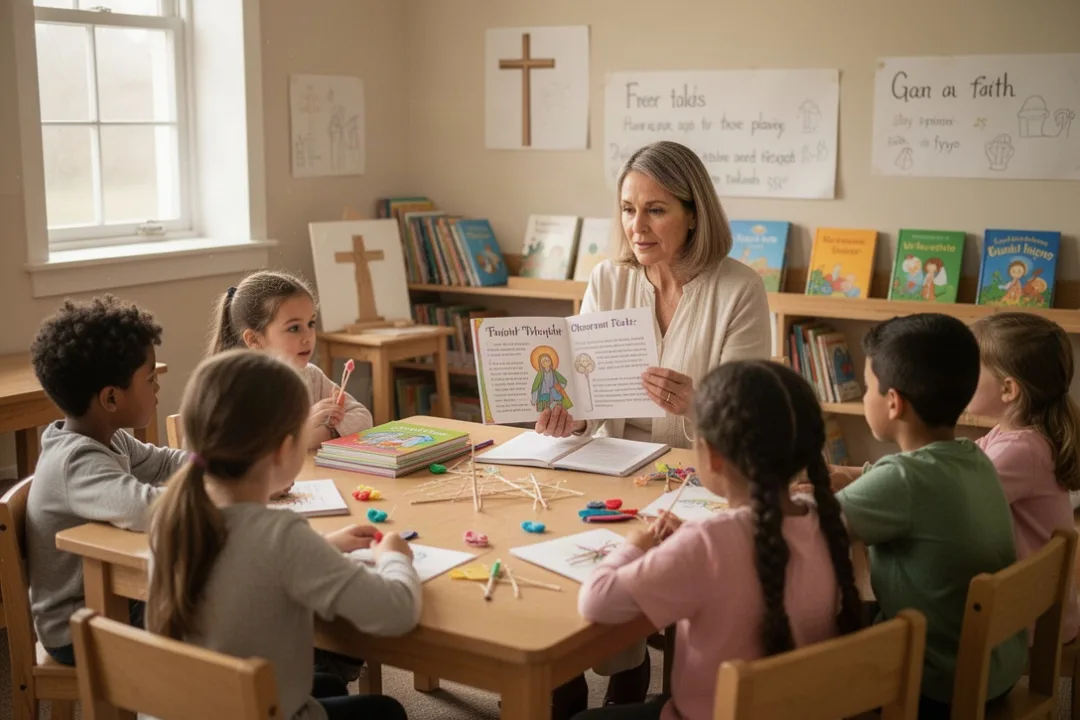
Children learn through repetition, relationships, sensory experience, stories, questions, and consistent routines. A catechist can use objects, drawings, songs, short Scripture passages, simple dramatic activities, and concrete examples from family or school life.
Children should be treated as active participants, not empty containers waiting to be filled. Ask what they notice, what they wonder, and how they might respond. Avoid questions that have only one acceptable answer when the goal is reflection rather than factual recall.
Teenagers need both intellectual honesty and respectful challenge. They may be asking whether faith is compatible with science, how to respond to suffering, why churches disagree, or how Christian ethics apply to friendships and online behavior. Dismissing those questions can push them away; accepting every idea without guidance can leave them confused.
Set clear boundaries while giving young people a meaningful voice. A catechist should never pressure a teenager to disclose personal information in front of peers. Sensitive conversations require privacy, appropriate supervision, and compliance with the church’s safeguarding policies.
How catechists teach adults
Adult learners bring experience, convictions, doubts, and sometimes painful memories of religion. They generally respond well when a catechist respects their intelligence and life history rather than speaking to them as if they were children.
Adult formation works best when participants can ask questions, examine sources, discuss differences, and connect the topic with ordinary responsibilities. A session about prayer might include different prayer practices, space to name obstacles, and an invitation to establish a realistic routine.
Keep discussion focused and prevent a few confident voices from taking over. Set expectations at the beginning: listen carefully, disagree respectfully, avoid personal attacks, and distinguish between sharing an experience and making a claim about official teaching.
Adults also need clear next steps. Recommend a manageable reading, prayer practice, service opportunity, worship experience, or conversation at home. Formation becomes more lasting when people can practice what they have learned between meetings.
Safeguarding and boundaries for catechists
Anyone working with minors or vulnerable adults has a serious responsibility to protect their dignity and safety. Catechists must follow the policies of their church, school, diocese, or ministry, including rules about supervision, physical contact, electronic communication, transportation, and reporting concerns.
Never promise secrecy if a child or vulnerable person shares information about abuse, self-harm, or danger. Listen calmly, avoid leading questions, write down facts according to the required procedure, and report the concern through the designated channels. A catechist should not conduct an investigation.
Healthy boundaries also apply to ordinary communication. Use approved group or family channels rather than private personal messaging when possible, keep conversations appropriate to the ministry, and involve the responsible program leader when a situation becomes complicated.
Safety reminder: Local safeguarding procedures control what you must do when a concern arises. Learn those procedures before teaching, and ask the program leader about anything you do not understand.
How a catechist can handle difficult questions
Difficult questions are not interruptions to real catechesis; they are often signs that learners are taking the subject seriously. Begin by clarifying the question. “Why does God allow suffering?” may involve a philosophical concern, personal grief, anger, or a recent event.
Respond to the person as well as the topic. A precise explanation may be inappropriate if someone is grieving. You might acknowledge the pain, offer the tradition’s teaching carefully, and suggest a private conversation or pastoral support.
For doctrinal questions, distinguish between what the church officially teaches, what theologians debate, and what remains uncertain. Use reliable church resources and the approved curriculum. Do not invent an answer to protect your authority.
Questions about other religions, denominations, or people with different beliefs should be handled with accuracy and respect. Explain differences without caricature, and help learners understand that Christian conviction does not require contempt for neighbors.
How to tell whether catechetical ministry is right for you
Catechetical ministry may suit you if you enjoy helping people learn, can commit to regular preparation, and are willing to keep growing in your own faith and knowledge. You do not need to have a perfect life or an answer to every question. You do need reliability, teachability, patience, and respect for the church’s teaching mission.
Before accepting a position, ask practical questions about the time commitment, training, curriculum, age group, class size, communication expectations, substitute coverage, and support available when challenges arise. A role that fits your schedule and abilities is more sustainable than one accepted from pressure or guilt.
Begin by assisting an experienced catechist, observing a class, or helping with a one-time event. That experience can show you whether you prefer teaching children, accompanying teens, leading adults, organizing materials, or supporting families behind the scenes.
When catechists teach with preparation and humility, they do more than transfer religious information. They help people ask better questions, recognize God’s presence, participate in the life of the church, and practice faith through prayer, worship, service, and daily decisions.
Frequently asked questions
Do catechists need a theology degree?
Usually, no. Many catechists serve as trained volunteers and complete parish, diocesan, or denominational formation instead of earning a degree. Requirements vary by role and location. A theology degree can be useful for advanced teaching or leadership, but every catechist needs appropriate preparation, knowledge of the curriculum, safeguarding training, and ongoing support.
Can a non-Catholic be a catechist?
That depends on the church or program. Catholic catechists are generally expected to support and accurately teach Catholic doctrine, participate in the church’s life, and meet local requirements. Other Christian traditions use different standards. Ask the supervising pastor, religious education director, or denominational leader about eligibility for the specific ministry.
Is a catechist allowed to answer questions about church teaching?
Yes, answering questions is part of catechetical work, but the answer should be accurate and appropriate to the catechist’s role. When a question involves complex doctrine, pastoral care, abuse, mental health, or a sacramental decision, the catechist should consult or refer the learner to the responsible clergy member or trained professional.
How much time does catechist work require?
The schedule varies. A weekly class may require several hours for teaching, preparation, communication, and meetings. Sacramental programs, retreats, and initiation ministries can require additional sessions. Before agreeing, ask for the complete calendar and expectations, including training, background checks, parent communication, substitute coverage, and planning meetings.







Leave a Reply