Have you heard the word Hallel during a Jewish holiday service and wondered what it means? Hallel is a set of Psalms recited as an expression of praise and thanksgiving to God, especially on festivals and other days associated with deliverance or joy.
The word comes from the Hebrew root hallel, meaning to praise or celebrate. In Jewish prayer, “Hallel” usually refers specifically to Psalms 113–118. These chapters praise God’s greatness, remember divine rescue, and give voice to communal gratitude. Depending on the day and the community, worshipers recite either the complete set, called Full Hallel, or an abbreviated form, called Partial Hallel.
Hallel is not simply a collection of uplifting words. It is a structured act of public praise that connects a community’s present worship with the biblical experiences of redemption, pilgrimage, and thanksgiving. The Psalms move between personal faith, national memory, and celebration before God.
The central idea is that praise responds to what God has done and continues to do. Hallel may recall the Exodus from Egypt, the return of Israel from danger, the preservation of the Jewish people, or the hope that God’s goodness will be recognized by all nations.
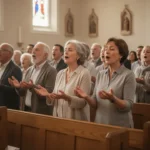
In the synagogue, Hallel is generally recited as part of the morning service on particular holidays. It may be chanted or read according to the prayer customs of the congregation. Some passages include responsive singing, with a leader and congregation alternating lines or phrases.
Essential meaning: Hallel is the Jewish prayer of praise drawn primarily from Psalms 113–118. “Full” and “Partial” Hallel describe how much of this collection is recited on a given day.
Which Psalms make up Hallel
The traditional Hallel collection consists of six Psalms, numbered 113 through 118 in the standard biblical order. Each contributes a different aspect of praise, and together they create a movement from God’s universal greatness to a community’s grateful celebration.
Psalm 113 praises God’s name and emphasizes that God is exalted above all yet attentive to the lowly.
Psalm 114 remembers the Exodus, describing nature itself as responding when Israel leaves Egypt and enters the land of promise.
Psalm 115 contrasts the living God with powerless idols and calls Israel to trust in divine care.
Psalm 116 expresses personal gratitude after distress, danger, or answered prayer.
Psalm 117 is the shortest of the collection and calls all peoples to praise God for enduring kindness and faithfulness.
Psalm 118 celebrates deliverance, thanksgiving, and the experience of entering sacred space with praise.
These Psalms are not arranged as a single continuous story. Instead, they bring together several recurring themes: freedom from oppression, trust during hardship, gratitude after rescue, and the belief that God’s mercy endures. That combination makes Hallel suitable for days when Jewish memory and present celebration meet.
When Hallel is recited
Hallel is associated with days that have a special character of joy, remembrance, or thanksgiving. The exact practice varies among Jewish communities, and some days have different customs concerning the blessing or the omission of certain passages.
Full Hallel is traditionally recited on the following occasions:
The first days of Passover: Full Hallel is recited during the early festival days. In many traditions, the later days of Passover use Partial Hallel.
Shavuot: The festival commemorating the giving of the Torah is a full-Hallel occasion.
Sukkot: Full Hallel is recited throughout the days of the festival, including the special observance of Shemini Atzeret in communities where that day is observed separately.
Shmini Atzeret: Many communities recite Hallel on this festival day, while customs can differ regarding associated practices.
Rosh Chodesh: The beginning of a Hebrew month includes Partial Hallel in the standard practice of many Jewish communities.
Hanukkah: Full Hallel is recited on each day, remembering the rededication of the Temple and the deliverance associated with the holiday.
On Rosh Hashanah and Yom Kippur, Hallel is not ordinarily recited, even though those days are holy. Their liturgy emphasizes judgment, repentance, confession, and awe rather than the festival pattern normally associated with Hallel.
On Purim, Hallel is also not recited in the usual way. Rabbinic explanations connect this with the fact that the Purim deliverance took place outside the Land of Israel and that the miracle was not expressed through a complete change in political sovereignty. Instead, the holiday’s praise is expressed through other parts of its observance and liturgy.
How Full Hallel and Partial Hallel differ
Full Hallel includes Psalms 113–118 in their entirety. It is used on the major festivals and on Hanukkah, when the day’s character calls for a more complete expression of communal praise.
Partial Hallel, sometimes called Half Hallel, omits selected sections from Psalms 115 and 116. The term can be confusing because Partial Hallel is not exactly half the length of Full Hallel. It is an abbreviated form that preserves the main structure while reducing the amount recited.
The distinction reflects a difference in the way Jewish tradition evaluates occasions of joy. Some days are important enough for Hallel but do not carry the same full festival status as Passover’s opening days, Shavuot, Sukkot, or Hanukkah. The liturgy therefore acknowledges joy while using a shorter form.
Rosh Chodesh is a familiar example. The beginning of a month is marked with special prayers and Partial Hallel, but it does not have the same level of sanctity as a biblical festival. The form of Hallel corresponds to that intermediate status.
Practical distinction: If a prayer book labels a section “Hallel,” check whether the day calls for Full or Partial Hallel. The headings and directions in the prayer book usually identify the correct version.
How Hallel fits into the service
Hallel is usually placed after the main section of the morning prayer service, often following the Amidah and related prayers. The exact order can differ by rite, synagogue custom, and holiday. A congregation may also include additional songs, readings, or responsive passages around it.
Before Hallel, many communities recite a blessing over the recitation of Hallel. In other communities or on certain days, the blessing is treated differently. This variation is connected to Jewish legal and liturgical customs, so the practice in one synagogue may not match the practice in another.
Psalm 118 contains several passages that are particularly prominent in communal worship. The congregation may repeat certain lines, respond to a leader, or sing sections together. This participatory style reinforces the fact that Hallel is meant to be more than private reading.
On days when Hallel is recited, the service may also include special melodies. The same words can sound different in a quiet weekday setting, a lively Hanukkah service, or a large festival congregation. The musical approach varies, but the purpose remains shared praise.
What to do if you are following along
If you are unfamiliar with the service, you do not need to know every tune before participating. A Hebrew-English prayer book can help you identify the Psalms, and many congregations provide transliteration or page directions.
Find the Hallel section in the prayer book before the service begins, if possible.
Check the day’s instructions to see whether the congregation is reciting Full or Partial Hallel.
Follow the leader’s pace during responsive passages rather than reading far ahead.
Join the singing or responses when you feel comfortable; listening is also a valid way to learn the structure.
Ask about local custom if the blessing, melody, or order differs from another synagogue you know.
Because Hallel is often recited in a group, staying with the congregation matters more than finishing every line independently. The communal rhythm is part of the prayer’s meaning.
Why Hallel is connected with Passover
Passover is closely associated with Hallel because the holiday centers on the Exodus from Egypt, the foundational story of Jewish liberation. Psalm 114 directly evokes that departure, while other Hallel Psalms express the fear, trust, and gratitude that accompany rescue.
Hallel is recited in the synagogue during Passover, but its words also have a place in the Passover Seder. The Seder includes selected Psalms and blessings as part of its telling and celebration of the Exodus. The precise division and placement can vary by tradition.
The Seder setting also explains why Hallel has a strong connection with the meal and with the idea of praise after eating. The Exodus is not remembered only as a historical event; it is retold through food, questions, symbols, songs, and ritual actions. Hallel gives that remembrance a direct voice of gratitude.
Passover also illustrates why Hallel can be both joyful and serious. The story includes suffering and oppression as well as freedom. Jewish tradition preserves awareness of human pain even while celebrating redemption, so the holiday’s praise does not require forgetting the hardship that preceded it.
Why Hallel is recited on Hanukkah
Hanukkah includes Full Hallel because it commemorates a period of deliverance and Temple rededication. The holiday’s public praise recognizes the survival of Jewish religious life and the restoration of worship in Jerusalem.
Unlike the biblical festivals, Hanukkah is a later rabbinic holiday. Its inclusion of Full Hallel shows that Jewish prayer can respond to historical rescue as well as to events described in the Torah. The community gives thanks through the Psalms, the lighting of the hanukkiah, and other holiday practices.
The Hallel of Hanukkah is recited each day of the holiday. Since the number of days differs in the traditional calendar structure depending on the setting of the month, the dates of Hanukkah vary on the Gregorian calendar, but its Hallel practice remains tied to all eight days.
The mood of Hanukkah Hallel is often especially musical. Children and adults may recognize familiar melodies, and some communities give the Psalms a lively communal treatment. The service links ancient biblical poetry with the later story remembered by the holiday.
What the language of Hallel emphasizes
Several ideas recur across Psalms 113–118. First is the belief that God’s greatness is compatible with compassion. The Psalms praise God as exalted while also describing attention to people who are poor, vulnerable, or brought low.
Another theme is the contrast between the living God and objects that cannot speak, see, hear, or act. This contrast is especially clear in Psalm 115. Its purpose is not merely to criticize other religious practices; it calls Israel to place trust in a God understood as active, responsive, and faithful.
The Psalms also connect praise with memory. The Exodus is not treated as a distant fact that no longer matters. It becomes a continuing reason for trust and a model for understanding later experiences of danger and deliverance.
Personal experience appears alongside national history. Psalm 116 speaks from the perspective of someone who has faced distress and now gives thanks. That movement—from fear to rescue, then from rescue to public praise—helps individuals see their own prayers within the larger story of the community.
Finally, Hallel repeatedly presents praise as something that can extend beyond Israel. Psalm 117 calls all peoples to recognize divine kindness and faithfulness. The collection therefore combines particular Jewish memory with a universal hope that all humanity may acknowledge God.
Why Psalm 118 receives special attention
Psalm 118 is the final and longest Psalm in Hallel. It gathers several of the collection’s major subjects: thanksgiving, danger, deliverance, procession, sacred space, and communal celebration.
One recurring refrain in the Psalm emphasizes that God’s kindness endures. Because the refrain is repeated, it is especially suited to communal participation. A leader may recite a line and the congregation may answer, creating a shared declaration rather than a private meditation.
The Psalm also describes moving toward the sanctuary and giving thanks there. This makes it particularly fitting for festival prayer, when worshipers gather as a community and the service takes on a more public character.
Some lines from Psalm 118 have acquired significance in later Jewish and Christian interpretation. Their meaning should be understood within the Psalm’s own setting and within the traditions that use them. In Jewish Hallel, the Psalm functions as part of a larger sequence of praise rather than as an isolated quotation.
How customs can vary between Jewish communities
There is no single musical or procedural style for Hallel across all synagogues. Ashkenazi, Sephardic, Mizrahi, Yemenite, and other traditions may differ in melody, pronunciation, pacing, responsive patterns, and the use of instruments or congregational singing outside the service.
Even communities that use the same prayer book may differ over details. These can include whether a blessing is recited on Rosh Chodesh, how the congregation divides the passages, and which verses receive a repeated response.
Some communities also maintain special practices on Israeli Independence Day or other modern occasions. The status of these days and the inclusion or form of Hallel are subjects of differing rabbinic and communal practice. A local prayer book or rabbi can explain the custom followed in a particular synagogue.
These differences do not change the basic definition of Hallel. They show how Jewish liturgy preserves a common structure while allowing communities to express praise through their own inherited forms.
How to understand Hallel beyond the word “praise”
Translating Hallel as “praise” is accurate but incomplete. The prayer also involves remembering, responding, and witnessing. The worshiper does not merely state that God is praiseworthy; the worshiper joins a community that identifies divine goodness in history and in personal life.
Hallel can therefore be understood as a discipline of attention. It directs the mind toward moments of rescue, generosity, and faithfulness, while placing those moments within a larger religious story. The Psalms do not suggest that life is always free of danger. They show how praise can follow fear without denying that fear existed.
The communal setting adds another dimension. A person may arrive at synagogue tired, distracted, or carrying private concerns, while the congregation recites words of gratitude together. Hallel allows the community’s memory and music to support individual prayer.
At the same time, Hallel is not limited to a particular emotional state. You do not have to feel celebratory in order to participate honestly. Jewish liturgy often gives worshipers words that express the community’s response even when a person’s private feelings are more complicated.
Common questions about saying Hallel
Is Hallel a standalone prayer? It is a defined liturgical section made up mainly of Psalms 113–118, but it is usually integrated into a larger service. It may include a blessing before the Psalms, responsive passages, and closing prayers depending on the community.
Does Hallel have to be sung? No. Hallel may be chanted, sung, or read aloud. Singing is common because the Psalms are communal praise, but the essential practice is the recitation itself and the participation of the congregation.
Is Hallel recited at every Jewish holiday? No. It is associated with selected festivals and occasions of joy or deliverance. Rosh Hashanah, Yom Kippur, and Purim have distinctive reasons why the standard Hallel service is not recited.
Why does Partial Hallel omit passages? Jewish tradition distinguishes between days with full festival status and other occasions that still call for praise. Partial Hallel recognizes the day’s significance while using an abbreviated selection of the Psalms.
Frequently asked questions
How do you pronounce Hallel?
Hallel is commonly pronounced “hah-LEL,” with the emphasis on the second syllable. The Hebrew word is related to a root meaning praise. Pronunciation can vary slightly among Jewish communities because Hebrew vowels and consonants may be pronounced differently in Ashkenazi, Sephardic, Mizrahi, and other traditions.
Is Hallel the same as the word hallelujah?
They are related. “Hallelujah” combines a form of the Hebrew verb meaning “praise” with “Yah,” a shortened form associated with God’s name. Hallel is the name used for the specific collection of Psalms and the liturgical recitation built around them.
Can someone recite Hallel privately?
Hallel is especially designed for communal worship, but a person can study or read Psalms 113–118 privately. The formal requirements surrounding the blessing, timing, and full recitation depend on the day and Jewish legal tradition, so local guidance is useful for personal practice.
What is the difference between Hallel and Pesukei dezimra?
Both include biblical songs and Psalms, but they serve different purposes in the prayer service. Pesukei dezimra is a regular preparatory section of morning prayer, while Hallel is a special collection of Psalms recited on designated festivals, holidays, and other occasions of praise.







Leave a Reply