Monastary or monastery? Meaning, spelling, and traditions
Monastary or monastery? Meaning, spelling, and traditions
If you typed “monastary” into a search box, you are probably looking for the word “monastery.” A monastery is a religious community and the place where monks or nuns live, worship, work, and follow a shared spiritual rule. The misspelling is common because the word’s pronunciation can make the second vowel easy to overlook.
Monasteries exist in several religious traditions, including Christianity, Buddhism, Hinduism, and Jainism. Their buildings and customs differ, but many share a pattern of prayer or meditation, disciplined daily routines, communal work, learning, and periods of silence. Some welcome visitors, preserve historic art, produce food or crafts, or provide retreats for people seeking a quiet place to reflect.
Spelling note: The standard English spelling is monastery, pronounced roughly “MON-uh-stair-ee.” “Monastary” is a frequent misspelling, not a separate type of religious building.
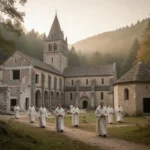
The word monastery refers both to a religious community and to the buildings connected with that community. Depending on context, it may describe a small rural house occupied by a few religious members, a large historic complex, or a group of buildings surrounding a central courtyard.
The word is related to the idea of living alone or apart for religious purposes. Early Christian monastics often sought solitude in deserts and remote places, while later communities developed shared forms of life. In a communal monastery, members live together under an established rule rather than practicing religion entirely on their own.
A monastery may include several practical spaces:
A chapel or church for worship and religious services.
Cells or rooms where monks or nuns sleep and keep personal belongings.
A refectory, meaning a communal dining room.
A cloister, often a covered walkway around an open courtyard.
A library or study area for reading, teaching, and preserving manuscripts.
Workspaces for gardening, cooking, brewing, weaving, printing, or other tasks.
Guest accommodations for visitors, pilgrims, students, or retreatants.
Not every monastery has all of these features. A modern community may use an ordinary house, while a historic European monastery may contain churches, workshops, farms, defensive walls, and extensive archives.
How a monastery differs from related religious communities
Several words describe places or communities devoted to religious life, and their meanings overlap. Understanding the distinctions can make descriptions of monasteries easier to follow.
Monastery and convent
In common English, convent often refers to a community or residence of women religious, while monastery may refer to a community of men. The distinction is not universal. In some Christian traditions, “convent” can describe a religious house more generally, and historical usage varies by country and denomination.
Monastery and abbey
An abbey is a monastery or convent led by an abbot or abbess. The title suggests a particular level of organization and leadership, but not every monastery is an abbey. An abbey may have authority over other religious houses or may simply be a historically important community with an abbot or abbess.
Monastery and priory
A priory is a religious house led by a prior or prioress. In some traditions, a priory is smaller or subordinate to an abbey, although the exact arrangement depends on the religious order and historical period.
Monastery and hermitage
A hermitage is associated with a hermit, or a person who lives in relative solitude for religious reasons. A monastery generally involves a community, shared practices, and common responsibilities. A hermitage may be a single dwelling, a small group of dwellings, or a place connected with a wider religious institution.
Monastery and temple
A temple is usually a place of worship, while a monastery is a residence and community for religious practitioners. A Buddhist monastery may include a temple or shrine, but the two terms do not mean exactly the same thing. One describes the broader community and living arrangement; the other emphasizes worship or ritual space.
Why people choose monastic life
People enter monasteries for different personal and religious reasons. A person may feel called to a life centered on prayer, meditation, service, study, or detachment from ordinary social expectations. The decision is usually gradual rather than impulsive, and many communities require a period of discernment before someone becomes a permanent member.
Monastic life is not simply an escape from work or responsibility. Members typically accept structured duties, communal expectations, and limits on personal freedom. They may care for elderly residents, teach, prepare meals, maintain buildings, welcome guests, make goods for sale, or manage farmland.
Many Christian communities describe their commitments through vows or promises such as poverty, chastity, and obedience. The wording and meaning differ among orders. Buddhist monastics follow disciplinary codes that vary across traditions, while Hindu and Jain communities have their own teachings, vows, and institutional customs.
Common motivations include:
Seeking a life organized around prayer, contemplation, or meditation.
Joining a community with shared religious convictions.
Serving other people through education, hospitality, health care, or charity.
Studying sacred texts, philosophy, language, music, or history.
Practicing simplicity and reducing dependence on possessions.
Following a family, cultural, or spiritual tradition.
Motivation alone does not determine whether someone can join. Communities may consider a person’s health, age, personal history, financial obligations, emotional readiness, and ability to live cooperatively. A monastery is a demanding community, not merely a peaceful setting.
What happens during a typical monastic day
Daily life differs widely, but most monasteries use a regular schedule. The timetable gives the day a predictable rhythm and makes space for worship, work, rest, meals, study, and personal reflection.
In many Christian monasteries, the day includes several services or times of communal prayer. Some communities follow a pattern historically known as the Liturgy of the Hours, with prayers at set times throughout the day. Buddhist monasteries may schedule meditation, chanting, alms practices, teachings, and communal work. Hindu and Jain communities may organize the day around worship, meditation, study, discipline, and service.
A simplified day might include:
Early rising and personal preparation.
Communal prayer, meditation, chanting, or worship.
A shared breakfast or another morning meal.
Work such as gardening, cleaning, teaching, cooking, or administration.
Study, spiritual direction, or additional communal practice.
Meals taken according to the community’s religious customs.
Quiet personal time and evening worship.
Rest at a set hour.
Silence may be required at certain times, especially overnight, during meals, or in particular buildings. Other monasteries allow conversation but ask members to avoid unnecessary speech. Silence is generally meant to support attention and prayer, not to create an unfriendly atmosphere.
Monastic work can look surprisingly ordinary. Members repair roofs, answer emails, wash dishes, harvest vegetables, balance budgets, care for animals, or maintain online archives. The difference is that these tasks are understood as part of a shared vocation rather than as separate from spiritual life.
Different kinds of monasteries around the world
There is no single worldwide model of a monastery. Religious traditions, climates, historical periods, and local cultures have shaped many forms of communal life.
Christian monasteries
Christian monastic communities include traditions such as Benedictine, Cistercian, Trappist, Carthusian, Orthodox, and Eastern Catholic communities. Some emphasize community prayer and hospitality; others place greater weight on silence, manual labor, scholarship, or solitude.
Benedictine communities are associated with the Rule of Saint Benedict, a foundational guide for communal Christian monastic life. Trappist communities are known for a particularly disciplined form of Cistercian life. Eastern Orthodox monasteries follow their own liturgical and spiritual traditions, often with a strong emphasis on continuous prayer and ascetic practice.
Buddhist monasteries
Buddhist monasteries may be called viharas, wats, gompas, or temples, depending on the language and tradition. Residents may meditate, study Buddhist teachings, observe disciplinary rules, teach lay visitors, and perform ceremonies.
In some countries, monks and nuns depend partly on offerings from lay communities. In others, monasteries operate schools, retreat centers, publishing programs, or cultural institutions. Architecture may include meditation halls, stupas, shrines, classrooms, dormitories, and large courtyards.
Hindu and Jain monastic communities
Hindu monastic life includes several lineages and institutions, with members sometimes known as sannyasis, swamis, or sadhus, depending on their tradition and role. Some live in ashrams or mathas, where they study, practice devotion, teach, and serve visitors.
Jain monastics follow rigorous practices shaped by nonviolence, self-discipline, renunciation, and careful attention to living beings. Their communities may travel rather than remain permanently in one monastery, although established religious centers also exist.
Women’s and men’s communities
Some monasteries are home to men, some to women, and some religious institutions support both while maintaining separate residences. The rules, clothing, authority structures, and daily responsibilities depend on the tradition. Women’s monasteries have played major roles in education, health care, manuscript preservation, art, and community service throughout history.
Different traditions use different standards: Avoid assuming that every monastery has monks who live in silence, own nothing personally, or follow the same schedule. Ask the specific community about its customs rather than applying one tradition to all monasteries.
What monasteries have contributed to history and culture
Monasteries have often been places of education, preservation, hospitality, and skilled labor. Their contributions were shaped by their religious purposes, but they also affected agriculture, architecture, music, medicine, art, and local economies.
In medieval Europe, some monasteries copied and preserved religious and classical texts. Scribes worked by hand in scriptoria, and communities maintained libraries that survived wars, political changes, and the loss of other institutions. Monastic scholars also taught languages, theology, philosophy, mathematics, and music.
Monasteries developed farms, orchards, vineyards, breweries, bakeries, and workshops. Their agricultural knowledge could influence surrounding communities, while their guesthouses gave travelers and pilgrims a place to stay. Some institutions operated infirmaries or provided food and assistance to people in need.
Across Asia, Buddhist monasteries have served as centers of learning, meditation, art, and cultural exchange. They have preserved languages, transmitted philosophical teachings, supported traditional painting and sculpture, and educated generations of monastics and lay students.
These historical contributions should not erase the complexities of monastic history. Monasteries sometimes held significant wealth, owned land, participated in political systems, or benefited from unequal social arrangements. A complete understanding recognizes both their spiritual and cultural achievements and the limitations of the societies in which they existed.
How to visit a monastery respectfully
Some monasteries welcome tourists, pilgrims, researchers, and retreatants. Others are private communities with limited access. Before traveling, check the monastery’s official information or contact the community directly. A historic building open for tours may not have the same rules as a functioning monastery.
Follow the community’s instructions about clothing, photography, food, silence, and restricted areas. A visitor should remember that the site may be someone’s home and place of worship, not simply a museum or scenic landmark.
Practical tips and common mistakes to avoid
Check opening hours before arriving. Services, retreats, holidays, and private observances can change access.
Dress modestly. Cover shoulders and knees when the community requests it, and remove hats or shoes if required.
Ask before taking photographs. Never photograph worshippers, monks, nuns, private rooms, or ceremonies without permission.
Silence your phone. Avoid calls, loud conversation, and music near chapels, shrines, meditation halls, and cloisters.
Stay within visitor areas. Do not enter cells, offices, kitchens, gardens, or residential buildings unless invited.
Do not interrupt religious practice. Wait until a service or meditation period ends before asking questions.
Follow food rules carefully. Some communities prohibit meat, alcohol, certain foods, or eating in specific areas.
Bring appropriate payment if needed. A retreat, guided tour, meal, or overnight stay may involve a fee or suggested donation.
Ask about accessibility in advance. Historic monasteries may have stairs, uneven paths, or limited transportation access.
Do not treat residents as attractions. Their clothing, vows, and daily practices are religious commitments, not photo opportunities.
If you attend a retreat, expect more structure than you would find at a hotel. You may be asked to follow a schedule, observe silence, help with simple chores, avoid alcohol, or leave electronic devices aside. The purpose is usually participation in a way of life, not entertainment.
What to expect from a monastery retreat
A retreat can last from several hours to weeks, depending on the institution. Some programs are designed for complete beginners and include instruction, while others assume that participants already understand the tradition’s prayers, meditation methods, or rules.
Before booking, find out what the fee includes, where you will sleep, whether meals are provided, and how much free time you will have. Ask whether the program is silent, partly silent, or conversational. You should also learn whether participants are expected to attend every service or help with community work.
A monastery retreat may include:
Guided meditation, prayer, chanting, or spiritual talks.
Simple communal meals served at set times.
Periods of silence and individual reflection.
Walking, gardening, cleaning, or other practical work.
Opportunities to speak with a monk, nun, teacher, or retreat leader.
Rules about clothing, technology, reading, exercise, and personal conduct.
Retreats are not always comfortable. Early mornings, simple food, silence, shared facilities, and limited internet can feel unfamiliar. Those conditions are often intentional, creating distance from ordinary routines so participants can pay closer attention to their thoughts, habits, and relationships.
Use monastery when you mean a religious community or the place where its members live. For example: “The mountain monastery welcomes visitors during the summer,” or “She spent a week at a Buddhist monastery.” The plural is monasteries, not “monasterys.”
Use monastic as an adjective for something related to monks, nuns, or monastery life. Examples include “monastic discipline,” “monastic architecture,” and “a monastic community.” Use monk or nun for an individual member, while recognizing that other traditions may use different terms.
Common forms include:
Correct: monastery
Common misspelling: monastary
Plural: monasteries
Related adjective: monastic
Related community member: monk, nun, or a tradition-specific term
If you are searching for a specific place, try the correct spelling along with a location or tradition, such as “Buddhist monasteries in California” or “historic monasteries in New England.” That will usually produce more accurate results than searching for the misspelled form alone.
Questions to ask before researching a specific monastery
Monasteries can be active religious communities, historic landmarks, retreat centers, schools, or combinations of these. Clarify what kind of place you are researching before drawing conclusions from photographs or travel descriptions.
Useful questions include:
Is the monastery still an active religious community?
Which religious tradition and order does it follow?
Can the public enter the worship spaces or residential grounds?
Does the community offer tours, retreats, services, or lodging?
Are visitors expected to follow clothing, silence, or photography rules?
Is the building primarily a historic site rather than a functioning monastery?
Are donations, reservations, or advance permission required?
These questions help distinguish a working monastery from a former monastery now used as a museum, hotel, school, or private residence. They also show respect for the community’s current purpose and boundaries.
Why the correct spelling matters
Correcting “monastary” to monastery is useful because spelling affects what information you can find. Libraries, maps, travel websites, academic databases, and official religious organizations generally use the standard spelling, so the correct form gives you broader and more reliable search results.
The word also opens the door to a larger subject than architecture. A monastery is a place shaped by a community’s beliefs, schedule, work, relationships, and obligations. Once you know the spelling, you can research the particular tradition and location with greater accuracy instead of assuming that every monastery follows the same model.
Frequently asked questions
Is “monastary” a correct spelling?
No. The standard spelling is “monastery.” “Monastary” is a common misspelling, likely influenced by the way the word sounds when spoken. The plural form is “monasteries,” and the related adjective is “monastic.” Search engines may still recognize the misspelled version, but using “monastery” will usually produce more precise results.
What is the main purpose of a monastery?
A monastery provides a shared setting for religious practice and disciplined community life. Residents may pray, meditate, study, work, teach, care for guests, or serve local communities. The specific purpose depends on the tradition, but monasteries generally organize daily life around spiritual commitments rather than ordinary family, commercial, or recreational routines.
Can anyone stay at a monastery?
Not every monastery offers lodging, and those that do may have strict requirements. Some accept visitors for guided retreats, pilgrimages, or short stays, while others are closed to overnight guests. Contact the community beforehand to ask about reservations, costs, meals, clothing, silence, age limits, and participation in scheduled activities.
Are monasteries only found in Christianity?
No. Monastic communities exist in several religious traditions, including Buddhism, Hinduism, and Jainism. Their names, buildings, rules, clothing, rituals, and relationships with surrounding communities can differ greatly. “Monastery” is a broad English term, so the most accurate description should identify the particular religion, lineage, or order involved.







Leave a Reply