Island of Patmos: History, sights, and travel guide
Island of Patmos: History, sights, and travel guide
Are you wondering whether the island of Patmos is mainly a religious destination or a place where you can enjoy a full Greek island vacation? It is both. Patmos combines a deeply significant Christian heritage with whitewashed villages, clear Aegean water, small beaches, boat excursions, local food, and a peaceful atmosphere that feels different from larger Greek islands.
Patmos belongs to Greece’s Dodecanese islands and lies in the southeastern Aegean Sea, relatively close to the coast of Asia Minor. Most visitors arrive through the port of Skala, then explore the hilltop settlement of Chora, the Monastery of Saint John the Theologian, the Cave of the Apocalypse, and the island’s scattered coves and villages.
The essential answer: Visit Patmos if you want history, spirituality, architecture, and a slower island experience. Plan your days around the island’s hills, limited public transportation, and ferry connections rather than expecting the nightlife or scale of Santorini, Mykonos, or Rhodes.
Why the island of Patmos is historically important
Patmos is best known as the place where, according to Christian tradition, John the Apostle received the visions recorded in the Book of Revelation. The biblical text identifies Patmos as the island where John was present because of his testimony, while later tradition associates a rocky cave near Chora with his visions and with the dictation of Revelation to his disciple Prochorus.
The connection gives the island a significance that reaches far beyond its size. For many Orthodox Christians, Roman Catholics, and other visitors interested in early Christianity, Patmos is a pilgrimage destination. For travelers without a religious purpose, the same sites provide a vivid way to understand the island’s long history, architecture, and role in the eastern Mediterranean.
The most important landmark is the Monastery of Saint John the Theologian, a fortified monastery built above Chora. It was founded in 1088 by Christodoulos Latrinos, a monk who received the island from the Byzantine emperor Alexios I Komnenos. The monastery still functions as a religious community and preserves manuscripts, icons, ecclesiastical objects, and other historic treasures.
Along with the monastery and the Cave of the Apocalypse, the historic settlement of Chora forms a UNESCO World Heritage site. The designation recognizes the cultural importance of this group of buildings and the way religious, residential, and defensive architecture developed together on the hill above the port.
How Patmos is laid out for visitors
Understanding the island’s basic geography makes planning much easier. Skala is the main port and the practical center for arrivals, shops, restaurants, car rentals, taxis, and many accommodations. The town stretches around a sheltered bay and is generally the easiest base if you want transport and waterfront dining close by.
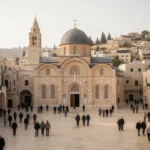
Chora sits inland and uphill from Skala. Its narrow lanes, white houses, old mansions, churches, and monastery create Patmos’s most distinctive townscape. The Cave of the Apocalypse lies on the route between Skala and Chora, below the monastery and above the coast.
Other areas offer a quieter stay. Grikos, on the southeastern side of the island, has a sheltered bay and several places to stay. Kambos, northeast of Chora, is associated with a broad beach and a more relaxed rural setting. Smaller coves and villages are spread across the island, so a vehicle can make a significant difference if you want to explore beyond the main landmarks.
What to see on Patmos step by step
A first visit works well when you follow the island’s main historical route before setting aside time for beaches and boat trips. You do not need to rush, but the religious sites have opening hours and may close during services or other observances.
Start in Skala. Walk around the harbor, identify the bus and taxi points, and check your onward transport before heading inland. Skala is also a convenient place to buy water, snacks, and any supplies you need for a day away from town.
Visit the Cave of the Apocalypse. The cave is a compact, atmospheric site associated with John’s visions. The approach and interior include steps and uneven surfaces, so comfortable shoes are useful.
Continue to Chora. Allow time to walk beyond the main road. The lanes reveal whitewashed homes, stone details, small chapels, and views over the surrounding sea.
Enter the Monastery of Saint John the Theologian. See the courtyards, churches, walls, and museum collections while observing the site’s religious character and visitor rules.
Choose a beach or coastal stop. After the historical sites, spend part of the day at Grikos, Kambos, Agriolivado, Lambi, or another accessible shore, depending on sea conditions and transport.
Leave room for a slower evening. Return to Skala or dine in Chora, where the changing light over the harbor and hills is part of the experience.
Exploring the Cave of the Apocalypse
The Cave of the Apocalypse is not a large cavern designed as a conventional tourist attraction. It is a small, sacred space incorporated into a monastery complex, with a narrow rocky interior and religious features that commemorate the traditional story of John’s revelation. Its importance comes from its spiritual and historical associations rather than its size.
Inside, you will see a rock formation traditionally identified with the place where John rested and a fissure associated with the voice through which the revelation was received. These interpretations belong to the island’s long-established religious tradition. Visitors should treat them as part of a living place of worship, not simply as museum displays.
Dress modestly and keep your voice low. Photography rules can vary by area, and some parts may restrict photography altogether. The steps can be challenging for people with limited mobility, and the cave’s compact layout may be difficult for wheelchairs or large strollers.
Visiting the Monastery of Saint John the Theologian
The monastery dominates Chora from its elevated position, with thick stone walls that give it the appearance of a fortress. Its location was practical as well as symbolic: the height offered protection and a commanding view, while the enclosed complex created a place for worship, study, and monastic life.
Inside, look for the central courtyard, chapels, arcades, and museum areas. Collections may include Byzantine and post-Byzantine icons, manuscripts, documents, vestments, and other objects connected with the history of the monastery. Displays and access can change, so do not assume every room will be open on every visit.
Visitors are expected to follow monastery dress standards. Shoulders and knees should generally be covered, and clothing that is suitable for a beach is not appropriate inside the religious complex. A light shirt or scarf and longer shorts or trousers are useful additions to a day bag.
“The island of Patmos” is described in Revelation as the place where John was present because of his testimony; the Cave and monastery preserve the later tradition associated with that account.
Give yourself time to look at Chora as a historic settlement rather than walking directly to the entrance. Many homes were built with defensive considerations, and the irregular streets reflect centuries of adaptation to the hill. The village is especially rewarding in the early morning or later afternoon, when the light is softer and the lanes are less exposed to the midday heat.
What Chora offers beyond the monastery
Chora is one of the Aegean’s most distinctive historic towns. Its whitewashed houses sit closely together around the monastery, while older mansions and small churches add variety to the otherwise simple palette. Arched passages and narrow lanes can make a short walk feel surprisingly intricate.
Some homes show the influence of wealthy maritime families, with larger proportions and more formal details than ordinary island houses. The town also has cafés, tavernas, galleries, and small shops, although its appeal does not depend on shopping. The main pleasure is moving slowly through a protected historic environment and finding viewpoints across the hills and sea.
Chora is hilly, and polished stone or uneven paving can become slippery. Wear shoes with a secure sole, especially if you plan to walk after sunset. If you have mobility limitations, ask your accommodation or a local driver about the most practical drop-off points because not every lane is accessible by vehicle.
Which beaches and coastal areas to choose
Patmos is not known for one enormous resort beach. Instead, it offers a collection of small bays and varied shorelines, including sandy stretches, pebbly coves, and rocky swimming spots. Water conditions, shade, food service, and sun loungers differ from one beach to another and can change from season to season.
Grikos: A sheltered bay with accommodation, tavernas, and easy access to the striking rock formation known as Petra, often called Kallikatsou Rock. The area is convenient for a relaxed swimming day.
Kambos: A broad, approachable beach in the north with nearby services and a less urban feel than Skala. Wind can affect comfort and water conditions.
Agriolivado: A small beach near Skala that can suit travelers who want a relatively convenient coastal stop without a long journey.
Lambi: Known for its distinctive multicolored pebbles and clear water. The beach can be more exposed, so check wind conditions before making it your main swimming destination.
Psili Ammos: A more secluded sandy beach that usually requires a boat trip or a walk along a trail, depending on current access. Bring water and sun protection because facilities may be limited.
Do not remove colorful stones from Lambi or other beaches. Beyond the environmental impact of collecting, pebbles form part of the landscape that makes these shores distinctive. Bring reusable water, reef-conscious sun protection, and a small bag for anything you carry to the beach.
How to get to Patmos
Patmos has no commercial airport, so most visitors arrive by sea. Ferry connections vary by season and may link the island with Piraeus, Rhodes, Kos, Leros, Kalymnos, Lipsi, or other destinations in the Dodecanese and eastern Aegean. The exact route depends on the vessel and date.
Travel time can differ substantially between a fast passenger vessel and a slower conventional ferry. A direct connection that looks simple on a map may not operate every day, especially outside the main summer period. Check the current timetable with the ferry operator or a reliable booking service before building a tightly timed itinerary.
If you are flying from another country or from Athens, you may need to combine a flight to an island with an airport and a subsequent ferry. Rhodes and Kos are common points for broader island connections, but the best option depends on the route available during your travel dates. Allow a buffer between separate tickets in case weather or ferry delays affect the schedule.
Plan around the ferry: On a small island without an airport, the arrival and departure sailing can shape your whole trip. Recheck times shortly before travel, especially when connecting from a flight or transferring between separate ferry bookings.
Patmos is manageable, but distances that look short on a map can involve steep roads and exposed walks. Local buses connect major places during the travel season, and taxis serve the port, Chora, beaches, and accommodations. Services may be less frequent outside the busiest months, so ask for the latest timetable rather than relying on an old online post.
A rental car or scooter gives you the greatest flexibility, particularly if you want to visit several beaches in one day. Use care on narrow roads, bends, and steep sections, and only rent a scooter if you are properly licensed and comfortable with the conditions. Parking near Chora may require leaving the vehicle outside the narrowest lanes.
Walking works well for some routes, including parts of the connection between Skala, the Cave of the Apocalypse, and Chora, but the heat can make the journey demanding. Carry water, wear a hat, and avoid treating a shaded-looking route as an easy walk without checking the elevation.
Where to stay on Patmos
Skala is usually the most practical base for first-time visitors. You will be near the ferry port, restaurants, shops, car rentals, and transport connections. It is particularly convenient if you have luggage, arrive late, or want to take boat trips from the harbor.
Chora suits travelers who value historic surroundings and atmosphere over direct beach access. Staying there places you close to the monastery and Cave of the Apocalypse, but the lanes and hill can make luggage transfers more complicated. Confirm where a taxi can drop you before arrival.
Grikos works well for a quieter coastal stay. It offers a beautiful bay and a more resort-like setting without the scale of a major package-tourism destination. Other rural areas can provide greater peace, but you should verify transport, grocery access, and whether the property is open during your chosen season.
Choose Skala for transport, services, and easy first-night logistics.
Choose Chora for architecture, views, and proximity to the island’s principal religious sites.
Choose Grikos for a calm bay, swimming, and a quieter coastal setting.
Choose a more remote stay only after confirming road access, meals, and transportation.
When to visit Patmos
The main travel season runs through the warmer months, when ferries, restaurants, tours, and beach services are most available. Late spring and early fall can offer a pleasant balance of open services, milder temperatures, and fewer visitors than the height of summer, although schedules are more limited than in peak season.
Summer brings the warmest weather and the broadest choice of connections, but popular religious sites and beaches can be busier. The strongest winds can also affect swimming and boat departures. September often remains suitable for the sea, while conditions in spring may vary more from day to day.
Winter is quieter and can reveal a more local side of the island, but many tourist businesses operate on reduced schedules or close. Ferry connections are also more limited, so an off-season visit requires more advance checking and flexibility.
What to eat and drink on the island
Patmos’s food reflects the broader flavors of the Dodecanese and Aegean: fresh fish, grilled seafood, local cheeses, vegetables, legumes, and olive oil. Menus vary by restaurant and season, so asking what arrived that day can be more useful than looking for a single signature dish.
Look for local-style pies, savory pastries, sun-ripened tomatoes, stuffed vegetables, grilled meats, and simple salads. Sweet options may include pastries made with honey, nuts, or cheese. A leisurely meal in Skala or Chora is part of the island experience, but restaurants in smaller coastal areas may have more limited hours outside summer.
For a beach outing, buy water and food before leaving the main towns unless you have confirmed that a taverna or kiosk will be open. A small cooler, reusable bottle, and basic snacks are helpful for more isolated beaches such as Psili Ammos.
How to prepare for religious and cultural sites
Patmos is welcoming to visitors, but its most famous places are still active religious sites. Treat services, monks, worshippers, and sacred objects with discretion. Silence your phone, avoid blocking entrances, and follow instructions about photography, clothing, and where you may walk.
Modest clothing for the monastery and Cave of the Apocalypse.
Supportive walking shoes for stone lanes, steps, and uneven paths.
Sun protection, including a hat, sunscreen, and sunglasses.
Water and small snacks for beach or hill walks.
A light layer for ferry crossings, windy evenings, and air-conditioned transport.
Cash and a payment card, since smaller businesses may not accept every payment method.
Ask before photographing people, religious ceremonies, or interiors where the rules are not obvious. A respectful visit does not require shared religious beliefs; it requires recognizing that the monastery and cave have meaning for people who come to pray as well as for those who come to learn.
How many days to spend on Patmos
A single full day can cover the Cave of the Apocalypse, Chora, the monastery, and a short stop in Skala, but the schedule will feel compressed. Two or three nights give you time to combine the historic sites with swimming and an unhurried meal.
With four or more nights, you can explore several beaches, take a boat trip, walk at a slower pace, and leave room for a weather-related change. Extra time is especially useful if ferry connections make your arrival or departure day only partly available.
A sensible short itinerary might look like this:
Arrival day: Settle into Skala or your accommodation, walk the harbor, and confirm transport for the next day.
Historic day: Visit the Cave of the Apocalypse, explore Chora, and tour the Monastery of Saint John the Theologian.
Coastal day: Choose one or two beaches, or join a boat excursion if conditions are favorable.
Flexible day: Revisit a favorite area, explore a quieter village, or keep the day open for weather and ferry changes.
Patmos rewards travelers who leave some space in the schedule. Its central landmarks are essential, but the character of the island also comes from quiet lanes, changing sea views, small chapels, and the contrast between a busy port and a contemplative hilltop monastery.
Practical considerations for a smoother visit
Book accommodation and ferry tickets early for the busiest summer dates, particularly if you need a specific room type or are traveling with a vehicle. Confirm cancellation terms and check whether your lodging is within easy walking distance of a road accessible to taxis.
Do not assume every ferry runs daily or that a map pin represents a paved, shaded path. Check current information locally for beach access, bus times, monastery hours, boat trips, and road conditions. Weather can change plans in the Aegean, so keep one flexible period in your itinerary.
Patmos is a strong choice when you want an island with a clear sense of place rather than a long list of large attractions. Its religious heritage gives the trip a distinctive center, while the sea, villages, food, and quiet coves make it suitable for travelers seeking culture and rest in the same destination.
Frequently asked questions
Is Patmos worth visiting if I am not religious?
Yes. The island’s religious heritage is central, but you can appreciate the monastery, cave, Byzantine art, historic architecture, beaches, food, and coastal scenery from a cultural or historical perspective. Chora is especially rewarding for visitors interested in traditional island settlements, and the surrounding bays provide plenty of time away from the principal religious sites.
How do I reach Patmos from Athens?
The usual route is by ferry from the port of Piraeus, although the exact service, travel time, and frequency depend on the vessel and season. Another option is flying to an island with an airport, such as Kos or Rhodes, then continuing by ferry. Check current schedules before booking connecting transport.
Can I visit Patmos as a day trip?
A day trip is possible when ferry times allow, but it gives you limited time and leaves little protection against delays. You can usually see Skala, the Cave of the Apocalypse, Chora, and the monastery with careful planning. Staying at least two nights is more comfortable and lets you add a beach or boat outing.
What should women and men wear at the monastery?
Visitors of all genders should choose modest clothing that covers the shoulders and knees. Beachwear, very short shorts, and bare midriffs are unsuitable. A lightweight shirt, scarf, or longer layer can make it easy to adjust your clothing before entering the monastery or other religious areas.









Leave a Reply