The Knights of St John were the members of a Christian religious order officially known as the Order of the Hospital of St John of Jerusalem, commonly called the Hospitallers. They began by caring for sick and poor pilgrims in Jerusalem, later becoming a major military and naval power in the Mediterranean.
After losing Jerusalem, Acre, Rhodes, and finally Malta, the order changed considerably. Its surviving branches now focus mainly on medical care, emergency response, humanitarian aid, and service to vulnerable people, rather than warfare.
The phrase “Knights of St John” is a general name for the members of the Hospitaller order. It refers to their dedication to St John the Baptist and to the hospital in Jerusalem that served Christian pilgrims visiting the Holy Land.
The order was both religious and military. Its members followed a disciplined communal life, while its armed knights defended territories, castles, roads, ships, and travelers. The order also employed priests, medical workers, administrators, sailors, soldiers, and servants.
The Hospitallers should not be confused with the Knights Templar. Both orders operated in the Crusader states and sometimes fought alongside one another, but they had different origins and primary responsibilities. The Templars developed chiefly as protectors of pilgrims and military forces; the Hospitallers retained a strong hospital and charitable mission throughout their history.
The clearest definition: “Knights of St John” usually means the Hospitallers, a religious order founded around a hospital in Jerusalem that combined care for the sick with armed defense.
A short history of the Hospitallers
The order grew from a charitable institution serving pilgrims in Jerusalem before the First Crusade. Its early community provided food, shelter, and medical attention to people who had traveled long distances to visit holy sites. Over time, the institution became more organized and gained support from rulers and wealthy donors.
Pope Paschal II formally recognized the order in the early 12th century. This recognition gave the Hospitallers a clearer legal and religious identity, allowing them to own property, receive donations, and establish houses in different parts of Europe.
As political and military conditions in the Holy Land changed, the Hospitallers took on defensive duties. They built and managed fortifications, maintained armed forces, and helped protect Christian-held territories. Their military role expanded, but hospital care remained central to their identity.
When the Crusader stronghold of Acre fell in 1291, the order could no longer maintain its headquarters in the Holy Land. It first moved to Cyprus, then established itself on the island of Rhodes in the early 14th century. From Rhodes, the knights developed an important naval force and defended the island against major attacks.
The Ottoman conquest of Rhodes in 1522 forced another relocation. In 1530, Emperor Charles V granted Malta, Gozo, and Tripoli to the order. The knights became known as the Knights of Malta, although they remained part of the wider Hospitaller tradition.
Napoleon captured Malta in 1798. The order lost its territorial base and never recovered a state comparable to the island it had governed. Its headquarters eventually settled in Rome, where its successor organization continues charitable and diplomatic activities.
How the order developed, step by step
Hospital service in Jerusalem: A charitable community cared for pilgrims, the sick, and the poor near the holy sites.
Religious recognition: The community became a formal religious order with rules, leadership, property, and international support.
Military expansion: The Hospitallers began defending pilgrims and Christian territories while continuing hospital work.
Relocation after Acre: After the Crusader states collapsed, the order moved from the Holy Land to Cyprus.
Rule from Rhodes: The knights governed Rhodes, strengthened its defenses, and operated a powerful Mediterranean fleet.
Settlement in Malta: After leaving Rhodes, they received Malta and built a new center of government, religion, and medicine.
Loss of territory: Napoleon’s occupation ended the order’s rule over Malta and changed its political role.
Modern humanitarian service: The surviving order and related St. John organizations concentrate on health care, disaster relief, and social assistance.
What the Knights of St John believed and practiced
The Hospitallers were a Catholic religious order. Their members were expected to live according to religious vows and the order’s rules, although the exact duties and categories of membership changed over time.
Three ideals shaped their public identity: service to the sick, defense of the Christian faith, and obedience to the order’s leadership. In the medieval and early modern periods, those ideals were expressed through hospitals, fortresses, naval patrols, religious ceremonies, and support for pilgrims.
The order was not made up only of knights. It included religious brothers, chaplains, medical personnel, administrative officers, craftsmen, sailors, and soldiers. The knights formed the best-known military class, but the institution depended on many other people.
Members were also divided by rank and origin. In different periods, the order organized its European members into “langues,” or national groupings. These groups helped provide money, recruits, leadership, and political connections. The exact arrangement changed over time, but the system reflected the order’s broad European support network.
Why the hospital was so important
The word Hospitaller comes from the order’s hospital function. In medieval Jerusalem, hospitals were not simply places for short medical appointments. They could provide beds, food, nursing, spiritual care, and shelter for people who were ill, injured, elderly, or unable to support themselves.
The order’s hospitals served pilgrims and local residents, although access and treatment depended on the period and circumstances. Medical knowledge was limited by modern standards, but organized care, cleanliness, food, nursing, and rest could still make a meaningful difference.
At Rhodes and Malta, the Hospitallers continued to connect charitable care with institutional medicine. Their hospitals became symbols of the order’s public purpose. The famous hospital built in Valletta after the knights established their Maltese capital reflected this commitment to treating patients with dignity and discipline.
The hospital also reinforced the order’s political legitimacy. A military organization could present itself not merely as a fighting force, but as a guardian of the sick and a provider of public services. That combination helped the Hospitallers attract donations and maintain support across Europe.
The Knights of St John in Jerusalem and the Crusader states
During the Crusader period, Jerusalem and other Christian-held territories were politically unstable. Pilgrims traveling between ports, cities, and holy sites faced disease, robbery, and armed conflict. The Hospitallers responded to these needs through a mixture of care, protection, and logistics.
The order acquired land, castles, and revenue-producing estates in the Holy Land and throughout Europe. These resources supported its hospitals and military activities. European houses sent money, supplies, horses, weapons, and personnel to the eastern Mediterranean.
The knights defended strategic positions and sometimes held castles in exposed frontier regions. Their fortifications were not only military installations; they were also administrative centers that controlled routes, stored supplies, and supported local populations connected to the order.
The fall of Acre in 1291 marked the end of the main Crusader presence in the Holy Land. The Hospitallers survived because they had an international organization, financial resources, and experienced leadership. Their next base, Cyprus, was useful but politically difficult, encouraging them to seek a more secure territorial home.
What happened on Rhodes
The Hospitallers captured Rhodes in 1309–1310 and made it their headquarters for more than two centuries. The island gave them a defensible base near the routes connecting the eastern Mediterranean, Anatolia, Egypt, and the Aegean.
On Rhodes, the knights became a major naval and military power. They built and repaired fortifications, organized garrisons, and used ships to patrol waters and attack or intercept enemy vessels. Their position placed them in continuing conflict with Muslim powers, especially the Ottoman Empire.
The siege of Rhodes in 1522 ended the order’s rule there. Sultan Suleiman I led the Ottoman forces, which eventually overcame the island’s defenses after a long campaign. The knights negotiated terms for departure and later moved to Malta.
Rhodes remains important to the order’s story because it shows how the Hospitallers changed from a Jerusalem-based charitable institution into a territorial and naval power. The island’s walls and old town also preserve visible evidence of their presence.
What the Knights of Malta accomplished
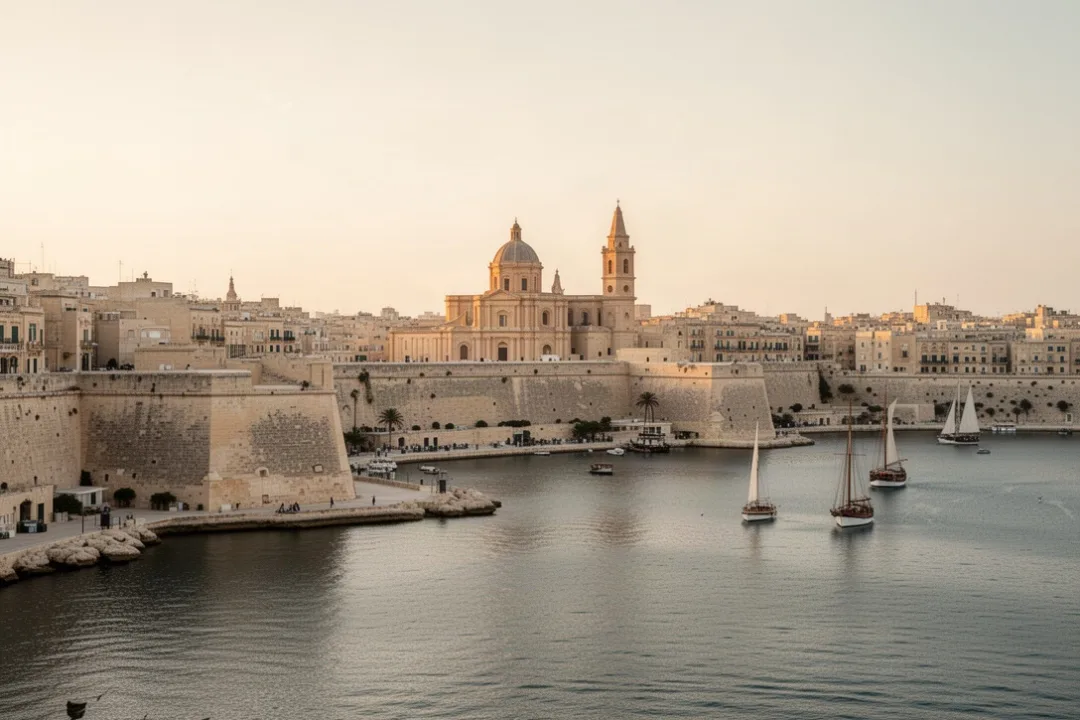
Malta gave the order a new base and a new public identity. The knights fortified the island, improved its harbors, and built the city of Valletta after the 16th-century conflict with the Ottoman Empire. The city became a center of government, religion, commerce, and military planning.
The order’s best-known military episode in Malta was the Great Siege of 1565. Ottoman forces attacked the island, but the Hospitallers and their allies successfully defended it. The siege became a defining event in European memory and greatly increased the order’s prestige.
Malta was also a place of medical and administrative development. The order maintained hospitals, organized public works, and supervised a territory with a mixed population and complex relationship with neighboring powers. Its authority was religious in origin but also political, economic, and military.
The knights operated galleys and other vessels from Malta. Naval warfare in the Mediterranean involved commerce, raids, prisoner-taking, convoy protection, and struggles over strategic ports. Modern readers should understand that the order’s maritime role existed within the harsh practices of early modern warfare.
After Napoleon seized Malta in 1798, the order lost the territorial authority that had defined its public life for centuries. Its members dispersed, and its leadership eventually reorganized around charitable and diplomatic work rather than military government.
Symbols associated with the Knights of St John
The most recognizable symbol is the eight-pointed cross, often called the Maltese cross. Its four arms and eight points have been interpreted in connection with Christian virtues and the responsibilities of the order’s members. The exact symbolism has been explained in different ways across the centuries.
The cross appeared on clothing, banners, buildings, seals, ships, and official objects. Its association with the Hospitallers became especially strong after the order settled in Malta, which is why many people now call it the Maltese cross.
The order also used colors and heraldic devices connected with its religious and military identity. A red field with a white cross is strongly associated with the order and its historical branches, although symbols may differ among modern organizations that claim or share the St. John tradition.
Symbol warning: A Maltese cross does not automatically identify one particular modern organization. Similar crosses appear in heraldry, emergency services, charities, and independent orders with different legal and historical relationships to the original Hospitallers.
How the Hospitallers differed from other medieval orders
Knights Templar: The Templars were founded primarily to protect pilgrims and became a major military and financial organization. Their order was suppressed in the early 14th century.
Teutonic Order: The Teutonic Knights began with a hospital connection in the Holy Land but became especially associated with campaigns and territorial rule in northeastern Europe.
Hospitallers: The Knights of St John maintained a continuous institutional tradition from their Jerusalem hospital through their bases in Cyprus, Rhodes, Malta, and Rome.
Secular chivalric orders: Some later orders were honors granted by monarchs rather than religious communities with the same historical origins as the Hospitallers.
These distinctions matter because popular books and films often group all medieval knights together. Their clothing, symbols, and military activities could look similar, but their rules, legal status, leadership, and institutional histories were different.
What “Knights of St John” means today
Today, the name may refer to the Sovereign Order of Malta, to national organizations using the name St John, or to historical references to the medieval Hospitallers. The exact meaning depends on the context in which you encounter it.
The Sovereign Order of Malta is the modern successor to the Catholic Hospitaller order. It is headquartered in Rome and carries out medical, social, and humanitarian work through national associations and other institutions. It also maintains diplomatic relations with many states, although its status is unusual and should not be confused with the territorial kingdom the order once governed in Malta.
Other St John organizations developed in different settings, especially in the British Empire and Commonwealth. St John Ambulance groups are known for first-aid education, ambulance services, community health programs, and emergency support. Some are historically related to the broader revival of the Order of St John, but they are not all the same organization.
The Order of St John in the United Kingdom is another modern organization connected to the tradition. It supports charitable work and is associated with St John Ambulance in the United Kingdom. Related bodies in other countries may have their own governance, membership requirements, and charitable programs.
Modern members may include people who receive honors, volunteers, medical professionals, donors, or participants in charitable activities. The word “knight” no longer necessarily means a mounted warrior. In many modern contexts, it identifies a rank, honor, or membership within a service-oriented organization.
How to identify a reference to the Knights of St John
If you see the phrase in a museum label, book, church record, or family document, check the surrounding details. References to Jerusalem, Rhodes, Malta, galleys, or Crusader castles usually concern the medieval or early modern Hospitallers.
References to first aid, ambulances, hospitals, disaster response, or humanitarian programs usually concern a modern St John organization. References to formal honors, diplomatic activity, or a Catholic charitable body may point to the Sovereign Order of Malta or one of its national associations.
Look for the date: Medieval and early modern dates indicate the historical Hospitallers; modern dates usually indicate a successor or related charity.
Check the location: Jerusalem, Acre, Cyprus, Rhodes, and Malta identify major stages of the order’s history.
Read the full name: “Order of Malta,” “Sovereign Order of Malta,” “Order of St John,” and “St John Ambulance” are not interchangeable labels.
Examine the activity: Warfare and fortress-building belong mainly to the historical order; health care and humanitarian relief describe its modern legacy.
Verify the symbol: A Maltese cross can suggest the tradition, but it does not by itself establish an organization’s identity.
Why the Knights of St John still matter
The order’s history shows how a religious institution could change in response to political upheaval. The Hospitallers survived the loss of Jerusalem, the collapse of the Crusader states, the conquest of Rhodes, and the end of their rule in Malta by adapting their organization and preserving their charitable purpose.
Their story also illustrates the close connection between health care and public authority in premodern societies. Hospitals were places of compassion, but they also required land, money, administration, trained workers, and political protection. The Hospitallers combined all of these elements on an international scale.
The legacy is complicated. The knights provided care and defended communities, but they were also participants in crusading warfare, territorial expansion, naval conflict, and the coercive practices of their time. A balanced account recognizes both their charitable achievements and their role as an armed institution.
For modern readers, the most direct connection is the continuing emphasis on service to people in need. The military knights disappeared as a political force, but their hospital tradition survives in organizations that provide first aid, medical assistance, emergency relief, and support for vulnerable communities.
Where to see the Knights of St John today
Malta offers the most concentrated physical evidence of the order’s later history. Valletta contains churches, fortifications, museums, and other buildings connected with the knights. The former hospital, known as the Sacra Infermeria, helps visitors understand how the order linked medical care with its religious and civic responsibilities.
Rhodes preserves the medieval city and fortifications associated with the Hospitallers. Visitors can see the Street of the Knights, the Palace of the Grand Master, and sections of the defensive works, although buildings and collections have changed over many centuries.
Rome is important for the modern order. Its institutional headquarters and related properties reflect the Hospitallers’ post-Malta history. Museums and archives in several European countries also preserve manuscripts, weapons, religious objects, maps, and records from the order’s estates and hospitals.
When visiting a site, pay attention to more than the battle stories. Hospitals, kitchens, chapels, water systems, warehouses, and administrative buildings reveal how the knights actually governed, cared for patients, supplied ships, and supported daily life.
Frequently asked questions
Were the Knights of St John the same as the Knights Templar?
No. They were separate religious military orders with different origins and institutional histories. The Knights Templar focused heavily on military protection and were dissolved in the early 14th century. The Hospitallers began with hospital care, developed military responsibilities, and continued through later bases in Rhodes, Malta, and Rome.
Why are the Knights of St John called the Knights of Malta?
The Hospitallers received Malta as their base in 1530 after losing Rhodes. They governed the islands for centuries, so “Knights of Malta” became a widely used name for them. The name describes a major period in their history, while “Knights of St John” emphasizes the order’s original dedication to St John and its hospital mission.
Do the Knights of St John still exist?
Their original medieval military role no longer exists, but the Hospitaller tradition continues through modern organizations. The Sovereign Order of Malta and various national St John bodies conduct medical, charitable, first-aid, and humanitarian work. These organizations are related to the tradition in different ways and should not automatically be treated as one single institution.
What does the Maltese cross represent?
The eight-pointed Maltese cross is strongly associated with the Hospitallers, especially during their centuries in Malta. Its points have been linked with virtues and duties expected of members. Today, similar crosses are used by several charities, emergency organizations, and heraldic bodies, so the symbol alone does not identify a specific group.








Leave a Reply