Golgotha: Meaning, location, and biblical significance
Golgotha: Meaning, location, and biblical significance
If you have heard the name Golgotha during a church service or while reading the Passion narratives, you may wonder what it means and where it was. Golgotha is the place outside Jerusalem associated with the crucifixion of Jesus. The name is usually understood as “Place of the Skull,” and the Latin name Calvary comes from the same idea.
The New Testament presents Golgotha as a location near Jerusalem where Jesus was crucified after being sentenced by Pontius Pilate. The exact appearance of the site in the first century is uncertain, but Christian tradition has long connected it with the area now occupied by the Church of the Holy Sepulchre.
Golgotha comes from an Aramaic or Aramaic-related expression meaning “Place of the Skull.” The Greek form appears in the New Testament accounts of Jesus’ death. The name was later rendered in Latin as Calvaria, which led to the English term Calvary.
The phrase does not necessarily mean that the hill looked exactly like a human skull. Some people have suggested that the name described a rocky formation, while others think it referred to a place associated with executions or exposed bones. The biblical text gives the name but does not explain its origin, so the reason cannot be established with certainty.
Golgotha is called a place rather than a clearly identified mountain in the Gospel narratives. Christian art and devotional language often portray it as a hill, but the New Testament does not require a tall, isolated peak. In Jerusalem’s changing urban landscape, a modest rocky rise or quarry edge could have stood outside the city walls and still have been described as a significant place.
Language note: Golgotha, Calvary, and “Place of the Skull” refer to the same traditional location associated with Jesus’ crucifixion, but they come from different languages and forms of translation.
Where Golgotha was located in Jerusalem
The Gospels place Golgotha outside Jerusalem, near a road and close enough for people to see or hear about the execution. Hebrews also refers to Jesus suffering outside the city gate, a detail that fits the Gospel setting. The location therefore had to be beyond the city’s boundaries at the time of the crucifixion, although later construction changed the area substantially.
Two main locations have been proposed. The first is the site preserved by ancient Christian tradition at the Church of the Holy Sepulchre in Jerusalem’s Old City. The second is the area known as Gordon’s Calvary, near a rocky escarpment sometimes called the Garden Tomb. Most historical and archaeological discussions give greater weight to the Church of the Holy Sepulchre, but absolute proof is not available.
Why the Church of the Holy Sepulchre is widely favored
The Church of the Holy Sepulchre stands within the present-day Old City, but that does not mean it was inside Jerusalem when Jesus was crucified. The city expanded over time, and an area outside the earlier wall could later become part of the built-up city. This distinction is central to evaluating the site.
Several lines of evidence support the traditional location. The area appears to have included stone quarries and rock formations in the first century. Such places could have stood outside the city and later been reused for tombs. The location also has a long-standing Christian association with both the crucifixion and burial of Jesus.
Ancient Christian writers connected the site with the events of Jesus’ death and burial, and a major church complex was established there in late antiquity. The current building has been repaired, altered, and reconstructed many times, but parts of the underlying terrain remain visible inside the church.
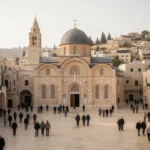
Within the Church of the Holy Sepulchre, a raised rocky section is traditionally identified with Golgotha. Nearby, another area is associated with the tomb. The church’s chapels and stations reflect centuries of worship, and the site is shared and administered by several Christian communities according to long-established arrangements.
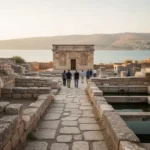
Gordon’s Calvary became especially influential among some Protestant visitors in the modern period. The site has a rocky face that can appear, from certain angles, to resemble a skull. A nearby garden and tomb also create a setting that many visitors find easy to connect with the Gospel descriptions.
However, visual resemblance alone is weak evidence. The skull-like appearance may have been shaped by natural erosion and later damage, and the tomb at the Garden Tomb is generally dated by many scholars to a period earlier than the first century. It remains a meaningful place of prayer for many Christians, but it is not the location most historians consider most likely.
Traditional Church of the Holy Sepulchre: supported by early Christian memory, archaeological features, and a setting that could have been outside the first-century city wall.
Gordon’s Calvary and the Garden Tomb: visually compelling to many visitors but supported by less persuasive historical and archaeological evidence.
Certainty: no surviving source identifies the site with complete modern precision, so responsible explanations distinguish tradition from proof.
What the Gospels say about Golgotha
All four canonical Gospels identify the crucifixion site as Golgotha or explain the name as the Place of the Skull. Mark, Matthew, Luke, and John each describe the execution, but their accounts emphasize different details. Together they place the event outside Jerusalem and connect it with crucifixion, burial, and the public nature of Roman punishment.
Mark and Matthew describe Jesus being brought to Golgotha and offered wine mixed with a substance before crucifixion. They also mention people mocking him and refer to darkness during the period of his death. These accounts emphasize the humiliation of Jesus and the apparent collapse of his public mission from the viewpoint of onlookers.
Luke describes the journey to the execution site and includes Jesus’ concern for the women of Jerusalem who mourned for him. It also records Jesus’ prayer for forgiveness and his conversation with the two criminals crucified beside him. Luke’s account highlights mercy, repentance, and trust in God even during suffering.
John gives several details that are distinctive to his Gospel. Jesus carries the charge written for the cross, and the inscription identifies him as “King of the Jews” in multiple languages. John also records the presence of Jesus’ mother and the beloved disciple near the cross, placing attention on identity, witness, and responsibility.
The Gospel accounts do not provide a modern map reference, measurements, or a description detailed enough to reconstruct the terrain confidently. They are theological narratives as well as historical accounts. Their central concern is what happened to Jesus and what his death means, not the architectural appearance of Golgotha.
How crucifixion shaped the meaning of Golgotha
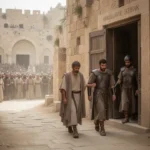
Crucifixion was a Roman execution method designed to inflict pain and public shame. It was commonly associated with enslaved people, rebels, and others whom Roman authorities wanted to punish visibly. The location near a road would have made the warning clear to passersby: Rome had the power to execute those it considered threats.
That setting helps explain the significance of Golgotha in the Christian story. The cross was not originally a private religious symbol. It represented state violence, disgrace, and defeat. Christian faith later interpreted Jesus’ crucifixion as the means of redemption, but the physical and social horror of the execution remains part of the Gospel message.
The inscription identifying Jesus as “King of the Jews” carried political force. Pilate’s title presented Jesus as a claimant to kingship, whether or not Roman officials treated the claim as a serious military threat. In the Gospel narratives, the wording also creates an irony: the condemned man is publicly mocked as a king, while Christians understand him as the true Messiah.
Golgotha therefore represents more than a geographical point. It brings together Roman power, Jewish religious expectation, human suffering, and Christian belief about salvation. The place matters because of the event associated with it, while the event matters partly because of the public and degrading setting in which it occurred.
How Golgotha relates to Jesus’ burial place
The Gospel narratives connect Golgotha with a nearby burial place. Joseph of Arimathea is described as requesting Jesus’ body from Pilate and placing it in a new or unused tomb. John describes the tomb as being in a garden near the place of crucifixion, which explains why the crucifixion and burial locations are treated together in Christian tradition.
In the first century, tombs were often cut into soft limestone. A burial cave could include a small entrance and an inner chamber where a body was placed. The Gospel references to a stone at the entrance fit this general burial practice, although the accounts do not provide enough information to identify the exact tomb through description alone.
The Church of the Holy Sepulchre contains a shrine associated with the tomb of Jesus, commonly called the Aedicule. The present structure has been rebuilt and restored over time. What visitors see today is not an untouched first-century tomb, but a carefully preserved sacred location built around a site that Christian tradition has identified for many centuries.
The Garden Tomb is also associated with Jesus’ burial by many Protestant pilgrims. Its peaceful garden setting can support prayer and reflection, but the setting should not be confused with conclusive archaeological identification. A place may carry genuine devotional importance even when historical certainty remains limited.
What Golgotha means in Christian theology
For Christians, Golgotha is inseparable from the doctrine of the cross. The crucifixion is understood in different ways across Christian traditions, but it commonly represents Jesus’ self-giving love, the seriousness of sin, reconciliation between God and humanity, and the opening of the way to resurrection hope.
The New Testament uses several images to interpret Jesus’ death. Some passages describe it as a sacrifice, while others emphasize victory over evil, identification with human suffering, or the revelation of God’s love. No single phrase captures every Christian interpretation, and different churches give different weight to these themes.
Paul’s letters connect the cross with reconciliation and the transformation of human life. The Letter to the Hebrews presents Jesus’ suffering outside the city as part of a larger priestly and covenantal argument. First Peter connects Christ’s suffering with faithful endurance. These writings do not merely preserve a travel detail about Golgotha; they treat the cross as central to Christian identity.
The cross is remembered not simply as the place where Jesus died, but as the place where Christians believe God’s saving work was revealed through suffering.
Golgotha also guards Christian theology against a sentimental view of Easter. The resurrection is not presented as an escape from a symbolic problem. It follows a real death marked by pain, abandonment, injustice, and burial. Remembering Golgotha keeps the Christian proclamation of resurrection connected to the suffering that came before it.
How Christians remember Golgotha today
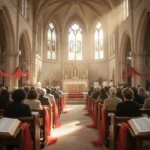
Golgotha is remembered during Holy Week, especially on Good Friday. Churches may read the Passion narratives, pray before a cross, sing hymns, observe silence, or walk through the Stations of the Cross. These practices differ by denomination and culture, but they direct attention to Jesus’ suffering and death.
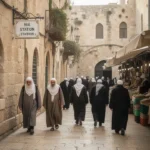
In Jerusalem, pilgrims visit the Church of the Holy Sepulchre to pray at the traditional sites of crucifixion and burial. The experience can be crowded and emotionally intense, particularly during major Christian festivals. Visitors may encounter several worship traditions sharing the same building, each with its own languages, ceremonies, and customs.
A respectful visitor does not need to prove the exact location before praying there. Many pilgrims approach the site as a place of memory rather than as an archaeological exhibit. At the same time, informed pilgrimage makes room for uncertainty and avoids claiming evidence that scholars cannot establish.
Practical tips and common mistakes when learning about Golgotha
Questions about Golgotha often become confusing because biblical language, later tradition, archaeology, and devotional practice are mixed together. The following habits help you separate what the sources say from what later Christians have inferred.
Separate the names: Golgotha is the Greek-transliterated form connected with the Aramaic name, while Calvary comes through Latin. They are not two different crucifixion sites.
Do not assume Golgotha was a large mountain: the Gospels identify a place called the Place of the Skull, not a clearly described alpine-style peak.
Remember the first-century city boundary: the Church of the Holy Sepulchre is inside today’s Old City, but the area could have been outside Jerusalem’s earlier wall.
Distinguish tradition from proof: an ancient association is significant evidence, but it does not provide the same certainty as a modern address or an inscription naming the site.
Do not treat a skull-shaped rock as decisive: appearance can inspire a tradition, but archaeology and historical context carry greater weight.
Read all four Gospel accounts: each Gospel contributes details that help explain the event, and differences in emphasis do not turn Golgotha into four separate places.
Keep crucifixion in its Roman context: the cross represented a public execution and warning before it became a familiar Christian symbol.
Allow for different theological interpretations: Christians agree on the central importance of Jesus’ death but may explain its saving meaning in different ways.
Best-supported location: The Church of the Holy Sepulchre is generally considered the more historically plausible site, although the precise location of first-century Golgotha cannot be demonstrated with absolute certainty.
Why the location still matters if certainty is impossible
Historical uncertainty does not make Golgotha meaningless. Ancient cities were rebuilt, walls moved, quarries disappeared under later structures, and sacred sites were developed over centuries. A precise modern reconstruction may be impossible even when the broad setting—outside Jerusalem, near a road, and close to a burial place—is historically credible.
For many Christians, the location matters because faith is connected to events believed to have occurred in the real world. Golgotha is not only an illustration of an abstract religious principle. It points to Jesus’ death in a particular city, under a particular government, at a particular point in the history of Jerusalem.
For historians and archaeologists, the site matters for another reason. It shows how physical places, memory, worship, and political change interact. The church built over the traditional site is itself evidence of centuries of Christian devotion, even though the current building is not identical to the first-century landscape.
Golgotha remains a name that carries both geographical uncertainty and religious certainty for many believers. The first concerns the exact patch of ground; the second concerns what Christians believe Jesus’ crucifixion accomplished. Keeping those questions distinct leads to a clearer and more honest understanding of the site.
Golgotha’s place in the story of Easter
Golgotha stands between the final meal Jesus shared with his disciples and the empty tomb proclaimed on Easter. It marks the point at which Jesus is condemned, crucified, and buried. In the structure of the Gospel story, it is both an ending and the setting from which the resurrection message becomes meaningful.
The name is therefore remembered in churches around the world even by people who will never visit Jerusalem. When Christians hear “Golgotha,” they are hearing a reference to the cross, the suffering of Jesus, and the hope of resurrection. Its meaning is geographic, historical, liturgical, and theological at the same time.
Frequently asked questions
Is Golgotha the same place as Calvary?
Yes. Golgotha is the name used in the Greek New Testament for the site associated with Jesus’ crucifixion, while Calvary comes from the Latin term for “skull.” The two names developed through different languages and traditions, but they refer to the same traditional location rather than two separate places.
Can tourists visit Golgotha today?
Visitors can visit the traditional Golgotha site inside Jerusalem’s Church of the Holy Sepulchre. A raised rock associated with the crucifixion is preserved within the church complex. Another location, Gordon’s Calvary near the Garden Tomb, is also open to visitors and used for prayer, although it has less historical support.
Why was Jesus crucified outside Jerusalem?
Roman crucifixions were public punishments, so executions were often carried out outside a city or near a busy route. The Gospel accounts place Golgotha outside Jerusalem, and the Letter to the Hebrews also refers to Jesus suffering outside the city gate. The setting made the execution visible and conveyed Rome’s authority.
Does “Place of the Skull” mean Golgotha looked like a skull?
Not necessarily. The name may have referred to the appearance of the terrain, a place connected with executions, or another local association that is no longer known. A skull-shaped rock at Gordon’s Calvary helped popularize that interpretation, but the biblical text does not explain why the site received its name.






Leave a Reply