Bethlehem is a Palestinian city in the West Bank, about six miles (10 kilometers) south of Jerusalem. It is best known as the traditional birthplace of Jesus and as the home of the Church of the Nativity, one of Christianity’s oldest continuously significant worship sites.
The answer to “Bethlehem where is” can be confusing because the city is connected to several names and places. Modern Bethlehem is in the West Bank, south of Jerusalem. Biblical Bethlehem was in the ancient region of Judea, and another town called Bethlehem exists in northern Israel near Nazareth.
Modern Bethlehem sits in the central West Bank, in the hills south of Jerusalem. It is part of the Bethlehem Governorate and functions as an important Palestinian cultural, religious, and tourism center. The city is close to Beit Jala and Beit Sahour, two neighboring towns with their own historical and religious importance.
Jerusalem is the nearest major city. From central Jerusalem, Bethlehem is roughly a 20- to 30-minute drive in light traffic, although travel time can vary substantially because of road conditions, security procedures, congestion, and access points. The two cities are geographically close but are separated by political and administrative boundaries.
Bethlehem lies in the Palestinian territories, commonly described geographically as the West Bank. The Palestinian Authority administers many civilian affairs in the city, while the wider area is affected by Israeli security control, movement restrictions, and changing access arrangements. The political status of the West Bank is disputed, so maps and government websites may use different labels.
The simplest location: Bethlehem is in the West Bank, south of Jerusalem, in the hills of the historic land of Judea.
The city is not on the Mediterranean coast and does not have its own commercial airport. Visitors generally reach it by road from Jerusalem or from other cities in Israel and the West Bank. The nearest major international aviation hub commonly used by visitors is Ben Gurion Airport near Tel Aviv, although the most practical route depends on nationality, entry requirements, current conditions, and the purpose of travel.
Why Bethlehem is associated with the birth of Jesus
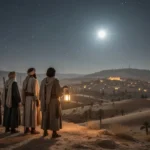
Bethlehem’s global reputation comes primarily from the New Testament accounts of Jesus’ birth. The Gospel of Matthew identifies Bethlehem in Judea as the birthplace of Jesus, while the Gospel of Luke describes Mary and Joseph traveling there before the birth. These accounts made the city central to Christian tradition.
The city’s significance also reaches back into the Hebrew Bible. Bethlehem is associated with King David, who is described as coming from the town and being anointed there by the prophet Samuel. The Book of Micah connects a ruler of Israel with Bethlehem, a passage later understood by Christians as pointing toward the Messiah.
For Christians, Bethlehem therefore represents more than a location on a map. It connects the stories of David, the expected Messiah, Mary, Joseph, and Jesus. Christmas celebrations around the world frequently refer to Bethlehem, even when people have never visited the city.
The biblical town was small compared with modern cities, and the exact layout described or implied in ancient accounts cannot be reproduced perfectly on a present-day map. Still, the continuity of the name and the long-standing local tradition make Bethlehem one of the most recognizable biblical locations in the world.
Where the Church of the Nativity stands in Bethlehem
The Church of the Nativity stands in Manger Square, in the historic center of Bethlehem. The church is built over a grotto traditionally identified as the place where Jesus was born. A small opening and a star-shaped marker in the grotto are associated with that tradition, although the site’s religious meaning is based on centuries of worship and interpretation rather than modern archaeological proof of every detail.
The building has a long and complex history. A church was established at the site in the fourth century during the reign of the Roman emperor Constantine. The present structure includes major elements from a sixth-century rebuilding under the Byzantine emperor Justinian, along with later additions, repairs, and changes made by different Christian communities.
The Church of the Nativity is shared and managed through longstanding arrangements involving several Christian traditions, particularly the Greek Orthodox, Armenian Apostolic, and Roman Catholic communities. Those arrangements influence worship schedules, maintenance responsibilities, and access to different parts of the complex.
The church forms part of a historic area that includes the Church of Saint Catherine, the grottoes beneath the churches, and routes connected with the traditional Christmas story. The Nativity Church and the Pilgrimage Route in Bethlehem were added to the UNESCO World Heritage List in 2012.
Visitors often enter through a small doorway known as the Door of Humility. Its low height requires people to bend as they enter. The doorway’s design is commonly associated with protecting the church from unwanted entry and encouraging visitors to approach the sacred space with humility.
How Bethlehem connects with Jerusalem and nearby biblical places
Bethlehem and Jerusalem are close geographically, but they are separate cities with different governing arrangements. Jerusalem is north of Bethlehem and is sacred to Judaism, Christianity, and Islam. Bethlehem is especially associated with Jesus’ birth and with David’s early life.
The road between the two cities passes through a landscape of hills, dense urban development, and Palestinian communities. Depending on the route and current conditions, travelers may encounter checkpoints, barriers, or controlled crossings. A short distance on a map does not guarantee a short or straightforward journey.
Several nearby places are often included in a Bethlehem visit:
Beit Sahour: a town east of Bethlehem traditionally associated with the Shepherds’ Fields mentioned in Christian pilgrimage traditions.
Beit Jala: a town west of Bethlehem known for its historic churches, local communities, and hillside setting.
Rachel’s Tomb: a site north of Bethlehem associated with Rachel in the Hebrew Bible and with Jewish, Christian, and Muslim traditions. Access arrangements can be sensitive and may change.
Solomon’s Pools: ancient water reservoirs south of Bethlehem, connected with historic water systems and the wider landscape around the city.
Herodium: an archaeological site southeast of Bethlehem associated with Herod the Great and visible from parts of the surrounding region.
These places are not all within the city center, and some are subject to different access rules. A map may show them as nearby while road access, jurisdiction, or security conditions make the actual trip more complicated.
What Bethlehem looks like today
Modern Bethlehem is a busy Palestinian city rather than an open-air biblical village. Its streets include homes, schools, churches, mosques, restaurants, hotels, shops, workshops, and public spaces. Tourism is an important part of the local economy, but residents also work in education, health care, construction, retail, government, and other sectors.
The historic center is organized around Manger Square, where visitors find the Church of the Nativity and nearby religious buildings. Narrow streets lead through the old city, and stone houses reflect the architectural character common in the central West Bank. The surrounding hills are densely developed in places, with roads and neighborhoods extending beyond the old center.
Bethlehem has a substantial Christian population and a large Muslim population. The city’s identity is shaped by religious history, Palestinian culture, family networks, local businesses, and its position near Jerusalem. Christian festivals remain highly visible, especially around Christmas, but Bethlehem is active throughout the year.
Christmas in Bethlehem is celebrated according to different church calendars. Western churches generally mark Christmas on December 25, while some Eastern churches celebrate it in early January according to their liturgical calendars. The city may therefore have several major religious observances during the winter season.
Public celebrations often focus on Manger Square, processions, church services, decorations, and cultural events. Large celebrations can bring crowds and temporary traffic controls. The atmosphere and schedule vary from year to year, so travelers should confirm current arrangements before planning a visit during a major holiday.
Because Bethlehem is in the West Bank, travel there involves more than ordinary sightseeing logistics. The city is accessible to many visitors, but entry requirements, road access, checkpoints, and security conditions can change. The practical experience depends on your passport, where you enter the region, your itinerary, and current instructions from authorities.
Visitors arriving through Israel may receive an entry record rather than a passport stamp, depending on the border crossing and current procedures. Rules can differ for travelers who plan to continue to other countries or visit places with their own entry restrictions. Check the latest official guidance before departure rather than relying on an old travel blog or a previous visitor’s experience.
A guided day trip from Jerusalem is a common option because a local guide can explain the history and help with transport. Independent travelers may use buses, taxis, or organized transfers, but public transportation routes and crossing procedures require advance checking. Drivers may not be permitted or willing to cross every boundary, and rental-car insurance may not cover all areas.
Travel conditions can change quickly during periods of unrest, religious holidays, demonstrations, or security operations. A site that was open earlier in the day may close temporarily, and a route that appears available online may not be practical. Use current notices from your government, transportation providers, accommodation, and local authorities.
Plan for flexibility: confirm access, opening hours, transport, and safety updates shortly before leaving Jerusalem or another starting point. Do not assume that a previous visit or an old map reflects current conditions.
Practical tips and common mistakes when visiting Bethlehem
A little preparation makes a Bethlehem visit easier, especially if you are combining it with Jerusalem or other West Bank destinations. These steps address the most common sources of confusion:
Check the location carefully: search for Bethlehem in the West Bank, not Bethlehem, Pennsylvania, Georgia, or the Bethlehem near Nazareth.
Allow extra travel time: the distance from Jerusalem is short, but traffic and crossings can add significant delays.
Carry identification: keep your passport or required travel document available, while storing a secure copy separately.
Wear respectful clothing: churches and other religious sites may expect covered shoulders and knees, and modest clothing is the safest choice.
Confirm church schedules: services, religious ceremonies, restoration work, and crowd control can limit access to the grotto.
Use a reputable guide or transport provider: choose a company with recent reviews and clear information about the itinerary and pickup location.
Carry some local payment options: businesses may accept different currencies and payment methods, but card acceptance is not universal.
Do not photograph worshippers without permission: the church is an active place of worship, not only a tourist attraction.
Plan meals and water: restaurants and shops are available, but schedules may change on religious holidays or during closures.
Check return transport: confirm how and when you will get back, particularly if you are traveling independently.
One common mistake is treating Bethlehem as though it were simply another neighborhood of Jerusalem. The cities are close, but a visit crosses a political boundary and may involve different transport arrangements. Another mistake is assuming that every attraction associated with Bethlehem lies within walking distance of Manger Square.
It is also easy to confuse religious tradition with archaeological certainty. The Church of the Nativity is an ancient and deeply important place of worship, but the exact details of events from the first century cannot all be verified through modern excavation. Visitors can respect both the spiritual tradition and the limits of historical evidence.
How Bethlehem differs from other places called Bethlehem
The name Bethlehem appears in several locations, which can create search and travel errors. The Bethlehem connected with Jesus’ birth is the city in the West Bank south of Jerusalem. It should not be confused with Bethlehem in Galilee, a small community in northern Israel near Nazareth.
Bethlehem, Pennsylvania, is a separate American city founded in the colonial period and associated with Moravian history. There are also towns and communities named Bethlehem in other parts of the United States and around the world. Online map results may display one of these places if you search only for the name.
For accurate directions, include a location such as “Bethlehem, West Bank” or “Church of the Nativity, Bethlehem”. When booking accommodation or transportation, check the country or territory listed by the provider and confirm the pickup point in writing.
What Bethlehem means in Judaism, Christianity, and Islam
Bethlehem has a particularly strong place in Christianity because of its association with Jesus’ birth. It also matters in Judaism through its connection with David and with Rachel’s traditional burial place nearby. These overlapping traditions are part of what makes the city significant beyond a single religious community.
Islamic tradition also recognizes Jesus, known as Isa, as an important prophet, and Mary, known as Maryam, as a revered figure. The Qur’an includes an account of Mary and the birth of Jesus, though the details and geographic associations are not identical to the Christian Gospel narratives.
Religious importance does not erase the city’s ordinary human character. Bethlehem is home to families, businesses, students, workers, and visitors whose daily concerns include housing, employment, education, transportation, and political uncertainty. Understanding that modern reality gives a fuller picture than viewing the city only as a scene from a Christmas story.
Why Bethlehem remains historically important
Bethlehem matters because several layers of history remain connected in one place. Ancient biblical traditions, Roman and Byzantine construction, medieval Christian devotion, Ottoman-era urban life, modern Palestinian identity, and international pilgrimage all shape the city’s character.
The Church of the Nativity is particularly valuable because it preserves evidence of long-term worship and repeated rebuilding. Its architecture, mosaics, columns, caves, and surrounding streets reflect changes made over many centuries. Conservation work is an ongoing concern because the building must serve worshippers while protecting fragile historic fabric.
Bethlehem also demonstrates how a small geographic location can acquire worldwide meaning. Its name is familiar to billions of people, yet the city itself is a living community with a complicated political setting. Asking “where is Bethlehem?” therefore has both a geographic answer and a historical one: it is a real city in the West Bank whose significance reaches far beyond its size.
How to describe Bethlehem accurately
For a clear one-sentence description, say: “Bethlehem is a Palestinian city in the West Bank, about six miles south of Jerusalem, traditionally identified as the birthplace of Jesus.” This wording gives the modern location, the nearby reference point, and the reason the city is famous.
If you are writing directions, add the specific destination and travel context. For example, the Church of the Nativity is in central Bethlehem near Manger Square, while Beit Sahour and Herodium are nearby but separate destinations. This distinction helps readers understand that “Bethlehem” can refer to both the city and the wider area associated with its religious sites.
The most useful map search is usually the exact attraction rather than the city name alone. Search for the Church of the Nativity, Manger Square, or your accommodation, then verify the route with a current local source. That approach reduces confusion between the historic city and other places named Bethlehem.
Frequently asked questions
Is Bethlehem in Israel or Palestine?
Bethlehem is in the West Bank, a Palestinian territory. The Palestinian Authority administers many civilian matters in the city, while the wider region is subject to Israeli security and access arrangements. Political descriptions vary because the status of the West Bank is disputed, but the geographic location is clear: Bethlehem lies south of Jerusalem in the central West Bank.
How far is Bethlehem from Jerusalem?
Bethlehem is approximately six miles, or 10 kilometers, south of Jerusalem. The drive can take around 20 to 30 minutes in favorable traffic, but checkpoints, congestion, road closures, and security conditions can make the journey considerably longer. Always check current transport information rather than planning solely from the distance shown on a map.
Can tourists visit Bethlehem?
Many tourists and pilgrims visit Bethlehem, often as a day trip from Jerusalem or as part of a longer West Bank itinerary. You will need to follow current entry, identification, transport, and safety requirements. Opening hours and access to religious sites can change, so confirm arrangements shortly before traveling and consider using a reputable local guide.
Is Bethlehem the same place mentioned in the Bible?
The modern city in the West Bank is traditionally identified with biblical Bethlehem of Judea, the town associated with David and the birth of Jesus in Christian tradition. Historical and archaeological evidence cannot verify every detail of the biblical narratives, but the city’s name, location, and long-established worship traditions connect it with that ancient place.








Leave a Reply