Mount Carmel, Israel: A practical guide to visiting
Mount Carmel, Israel: A practical guide to visiting
Are you trying to decide whether Mount Carmel in Israel deserves time on your itinerary, or wondering where to begin once you reach Haifa? The answer is yes, especially if you want one area that combines Mediterranean views, forests, history, and religious landmarks. Mount Carmel is not a single summit or a small attraction. It is a broad mountain ridge and surrounding landscape overlooking Haifa and the coast, with several distinct places to visit.
You can explore the urban northern slopes around Stella Maris and the Bahá’í Gardens, hike through Carmel National Park, visit the Carmelite site at Muhraka, or stop in nearby Druze communities for food and local culture. A first visit works best when you choose one geographic section rather than trying to see every part of the mountain in a few hours.
Mount Carmel is a limestone mountain range in northern Israel that extends along the Mediterranean coast near Haifa. Its northern end rises above the city, while the ridge continues southeast through wooded countryside and communities including Daliyat al-Karmel and Isfiya. The mountain is known for its green slopes, sea-facing viewpoints, caves, archaeological remains, and religious associations.
The word “Carmel” is commonly connected with ideas of a fertile garden or vineyard, a fitting name for a landscape that historically supported vegetation and agriculture. The modern mountain includes both densely built urban areas and protected open space. That contrast is part of the experience: one moment you may be looking over Haifa’s port and apartment blocks, and the next you may be walking beneath pine, oak, and Mediterranean scrub.
Mount Carmel is also significant in the Hebrew Bible. The prophet Elijah is associated with the mountain in 1 Kings 18, where a confrontation with prophets of Baal is described. The biblical account places Carmel within the story of rain, drought, and the affirmation of worship of the God of Israel. Several later religious traditions identify particular locations on the ridge with events connected to Elijah, although the precise historical locations are matters of tradition rather than something that can be proven from the landscape itself.
Plan by area: The Haifa side is best for urban sights, monasteries, gardens, and panoramic views. The southern and central ridge is better for forests, hiking, picnic areas, and visits to the Druze villages.
How to choose the right Mount Carmel experience
Before you set out, decide what you most want from the mountain. The different areas are spread out, and a plan built around your interests will save time on winding roads and short but potentially slow urban journeys.
For city views and architecture: focus on Haifa’s upper neighborhoods, the Bahá’í Gardens, and the Stella Maris area.
For religious history: visit Stella Maris Monastery, the nearby cave traditionally associated with Elijah, and Muhraka if you have transportation.
For hiking and nature: choose trails in Carmel National Park and check current trail conditions before leaving.
For local food and culture: include Daliyat al-Karmel or Isfiya, while observing local customs and checking restaurant hours.
For a short visit: select one viewpoint, one major landmark, and one walk rather than crossing the entire ridge.
For families: favor accessible viewpoints, shaded picnic areas, and shorter marked paths over exposed hikes in the afternoon.
The mountain suits several kinds of travelers, but it is not equally convenient for all of them. A visitor staying in Haifa can reach the northern sites without a car, while a traveler who wants to combine forests, Muhraka, and village restaurants will usually find a rental car or organized tour more practical.
How to visit Mount Carmel step by step
1. Start with the Haifa section if you have limited time
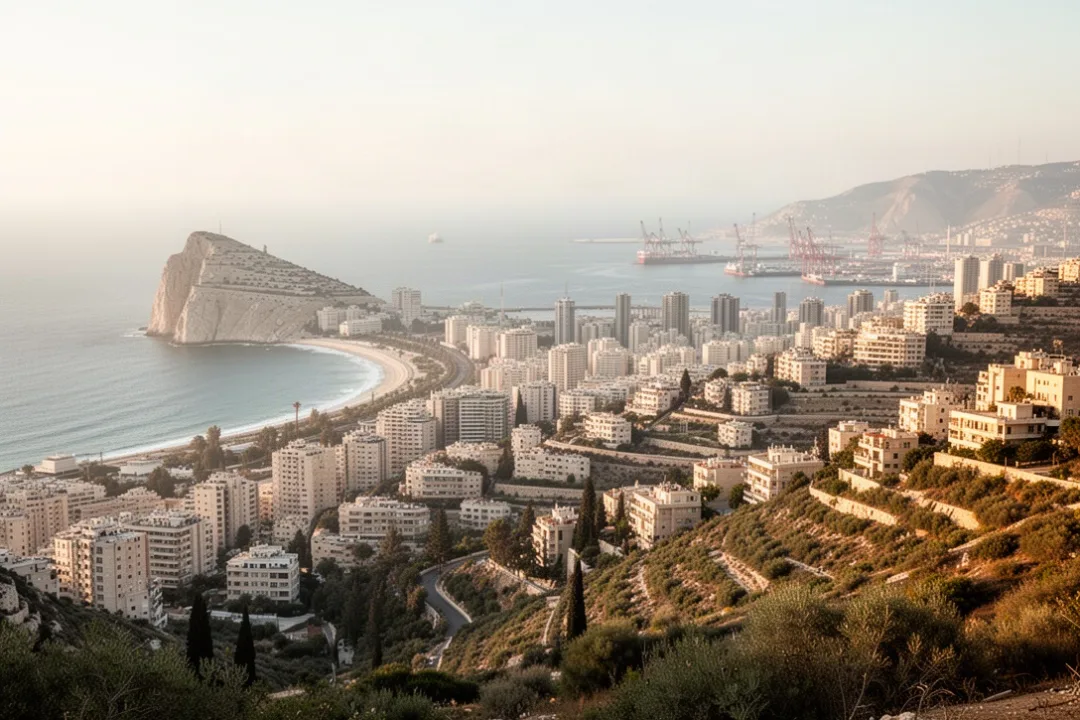
For a first visit lasting only a few hours, begin on the northern part of the ridge above Haifa. The city climbs the slope, so several streets and viewpoints offer wide views across Haifa Bay, the port, and the Mediterranean. Visibility changes with humidity, dust, and weather, so a hazy view does not necessarily mean you chose the wrong location.
The Bahá’í World Centre is one of Haifa’s most recognizable landmarks. Its terraced gardens descend the northern slope of Mount Carmel in carefully maintained geometric bands. The gardens are connected with the Shrine of the Báb and are a place of worship as well as a major visitor site. Access arrangements, visiting hours, and which terraces are open can change, so check the official visitor information before going.
Dress respectfully and follow the site’s instructions. The gardens are not simply a photo stop: visitors are expected to behave quietly and protect the landscaping. The terraces also involve stairs and slopes, so travelers with limited mobility should confirm which entrances and viewing areas are accessible.
2. Walk or travel up to Stella Maris
Stella Maris occupies a prominent position on the western side of Haifa’s Carmel ridge. The Carmelite monastery there is associated with the order’s tradition of devotion to the prophet Elijah and with the broader history of Mount Carmel. The present building reflects more recent construction and religious use, but the site connects visitors with a long history of Christian pilgrimage on the mountain.
Inside and around the monastery, expect a functioning religious setting rather than a conventional museum. Opening arrangements may vary, and worship services can affect access. Modest clothing, quiet behavior, and attention to posted instructions are appropriate. Religious sites may close temporarily for services, holidays, maintenance, or security reasons.
A small cave traditionally identified with Elijah is associated with the Stella Maris area. The tradition is meaningful to visitors from several Christian communities, but the identification should be understood as a religious tradition, not as a conclusively established archaeological fact. The surrounding area also provides striking coastal views, particularly when the air is clear.
Mount Carmel is rewarding when you leave the main streets for a walk, even if you do not plan a demanding hike. Paths near the urban edge can offer a sense of the mountain’s vegetation and terrain, while longer routes in the national park lead through woodland, open rock, and seasonal greenery. The exact condition of any path depends on weather, maintenance, and wildfire restrictions.
Use marked trails and avoid treating a viewpoint road as a trailhead unless signs indicate that parking and access are permitted. Some routes include uneven stone, exposed sections, or steep drops. Sturdy shoes, water, sun protection, and a charged phone are sensible even for a short outing.
4. Drive or tour through the central and southern ridge
If you have a full day, continue toward the central or southern Carmel area. The scenery becomes less urban, with forest roads, overlooks, picnic areas, and trails. Carmel National Park protects a large portion of this landscape, although it is best understood as a network of natural areas and routes rather than one attraction with a single entrance.
A car makes it easier to combine several stops, but winding roads can take longer than the distance on a map suggests. Allow time for parking, walking from roadside stops, and checking whether a particular road or trail is open. Organized tours can simplify transport and provide context, but they may offer less flexibility for long walks or unplanned stops.
5. Visit Muhraka for religious history and a broad view
Muhraka, also known as the Monastery of the Prophet Elijah, is located on the southeastern Carmel ridge near Daliyat al-Karmel. Carmelite tradition identifies this area with the biblical contest involving Elijah and the prophets of Baal. The site’s elevated position makes it valuable for both its religious meaning and its expansive view across the Jezreel Valley and surrounding countryside.
The viewpoint can be especially impressive on a clear day, but the site may be closed or have restricted hours outside regular visiting times. Confirm current access before making it the central destination of your day. If you visit a monastery, chapel, or memorial area, follow any requests regarding photography, clothing, and silence.
6. Include a Druze village respectfully
Daliyat al-Karmel and Isfiya are important parts of the Carmel region and are home to Druze communities. Visitors may find restaurants, cafés, shops, and local specialties, but these are living communities rather than open-air theme parks. Treat residential streets and religious places with the same consideration you would show anywhere else.
Food is one of the easiest ways to experience the region. Depending on the establishment, you may encounter flatbreads, salads, grilled dishes, stuffed vegetables, coffee, and regional sweets. Menus and opening days vary, so do not assume that every restaurant serves throughout the afternoon or evening. A local recommendation or reservation can be useful during weekends and holidays.
7. Finish before darkness if you are hiking or driving unfamiliar roads
Many travelers underestimate how quickly a mountain outing becomes complicated after sunset. Trail markings are harder to follow, roadside parking is less visible, and forest roads may have limited lighting. Plan to return to your accommodation or a clearly identified town before dark unless you have specific local knowledge and suitable equipment.
Check weather, trail status, and site opening information on the morning of your visit.
Choose a realistic area rather than placing northern Haifa and southern Carmel stops into a rushed schedule.
Carry water, snacks, sun protection, and a small layer for changing conditions.
Save your accommodation address and transport details before leaving reliable phone coverage.
Follow temporary closures, wildfire notices, and instructions from park staff or local authorities.
What to see around Haifa’s Mount Carmel slopes
The northern slope gives you the clearest sense of how Mount Carmel shapes Haifa. The city is built on rising ground, and streets often open onto views that extend from the harbor toward the bay and the Galilee. Some of the best views are not at a single official lookout; they appear along the upper neighborhoods, public terraces, and established visitor sites.
The Bahá’í Gardens are the most distinctive formal landscape on the mountain. Their terraces create a strong visual axis down toward the city and sea. Visitors should use designated entrances and check the current rules, because access may be guided, limited to certain sections, or affected by religious observances.
Stella Maris offers a different atmosphere. Its significance comes from the combination of Carmelite history, biblical tradition, and the dramatic position above the coast. The cable car linking the Bat Galim area with Stella Maris may be useful for some travelers, but service can vary. Check the current operating schedule rather than relying on an old guidebook or an assumption that it runs every day.
Haifa’s urban setting also makes Mount Carmel a useful base for a wider northern Israel trip. You can stay in the city and make day visits to the mountain, or use the mountain as one part of a route that includes Acre, the Galilee, or other coastal destinations. Travel times depend heavily on traffic and the exact starting point.
Where hiking and nature fit into a Mount Carmel visit
Carmel National Park and the surrounding reserve areas protect a landscape of Mediterranean woodland, rocky slopes, ravines, and seasonal wildflowers. Some plants are evergreen, while others change sharply between the dry summer and wetter winter months. In spring, vegetation can be especially attractive, but conditions vary by rainfall and recent weather.
Hiking difficulty is determined by more than distance. A short trail can still involve steep grades, loose rock, sun exposure, and difficult footing. Read the route description, not just the mileage, and ask park staff or a local guide if you are uncertain about conditions.
Short scenic walks: choose established paths near viewpoints or picnic areas and allow time to return along the same route.
Longer day hikes: arrange transport at both ends if the route is not circular, and carry more water than you expect to need.
Family outings: select shaded, clearly marked routes and keep children away from cliff edges and unstable rock.
Summer walks: start early, avoid the hottest afternoon hours, and confirm that fire restrictions have not closed the area.
Winter walks: watch for slippery rock, mud, sudden rain, and stream crossings after storms.
Wildfire is a serious concern in Mediterranean forest areas. Do not light fires outside specifically authorized places, discard cigarettes, or leave glass and other flammable waste behind. Authorities can close trails or forests with little notice when conditions become dangerous.
Heat and water warning: A pleasant temperature in Haifa can feel much hotter on an exposed ridge. Carry water from the start, and do not depend on a café, fountain, or store being open along a trail.
How to reach Mount Carmel from Haifa and elsewhere
Haifa is the most convenient base for the urban Mount Carmel sights. Trains and buses connect Haifa with other parts of Israel, and local buses serve many neighborhoods on the mountain. Public transportation is most practical for the Bahá’í Gardens, upper Haifa, and Stella Maris when you are comfortable walking between stops and checking local routes.
For the national park, Muhraka, and the Druze villages, public transportation can be less straightforward. Services may be infrequent, routes may not connect neatly, and the last return trip may be earlier than expected. A rental car, private driver, or organized excursion can make a major difference when your plan includes several rural stops.
Driving requires patience. Haifa’s steep streets, traffic, narrow roads, and limited parking can slow you down, while mountain routes may include bends and cyclists. Use designated parking areas and never block a road or trail access point for a quick photograph.
Ride-hailing and taxis can help with individual urban transfers, but arranging a return from a remote trail or monastery may be difficult. If you take a taxi to a rural destination, agree on the return plan before leaving. Mobile service is not guaranteed in every valley or forested section.
When to visit Mount Carmel
Spring and fall are generally comfortable seasons for combining sightseeing with walking. Spring can bring fresh greenery and flowers, while fall often offers pleasant temperatures after the hottest part of summer. Visibility still depends on humidity, dust, and weather systems.
Summer can be hot, particularly on exposed trails, but early mornings and late afternoons may work well for viewpoints and short walks. The risk of wildfire and trail closures may also be higher during dry periods. Winter brings cooler weather and occasional rain; wet conditions can make rock and unpaved paths slippery.
Religious holidays, weekends, and school breaks can affect crowd levels and opening arrangements. Major sites may be busier than expected, while restaurants and transportation may follow special schedules. Checking current information close to your travel date is more reliable than relying only on general seasonal advice.
What to pack and how to behave respectfully
Your packing list depends on whether you are visiting viewpoints or hiking, but a few items are useful almost everywhere on the mountain. Bring comfortable walking shoes, water, sunscreen, a hat, and a light layer. A paper backup of important addresses can help if your phone battery runs down.
Religious sites require extra awareness. Wear clothing that is not excessively revealing, keep your voice low, and ask before photographing people or interiors. Some places may request that visitors cover shoulders or legs, remove hats, or avoid photography during worship.
Natural and residential areas deserve equal care. Stay on marked paths, take rubbish with you, keep noise low, and do not collect plants, stones, or archaeological objects. If you see a gate, barrier, or closure sign, do not bypass it for a shorter route.
A balanced day can begin in Haifa and continue into the southern Carmel, but it should not attempt every attraction. Start with the Bahá’í Gardens or another approved city viewpoint in the morning, when the light and temperatures are often more comfortable. Allow time for the visit itself and for walking between nearby streets.
Continue toward Stella Maris for the monastery area, the traditional Elijah cave, and the coastal view. Confirm visiting arrangements in advance, particularly if your trip falls on a religious holiday. Have lunch in Haifa or continue toward the villages if your transportation and timing allow.
In the afternoon, choose either a short national park walk or a drive toward Muhraka and Daliyat al-Karmel. Trying to do both at length can make the day feel rushed. If you select Muhraka, allow extra time for the mountain road and check the site’s access before departure.
Morning: Bahá’í Gardens or an upper Haifa viewpoint.
Late morning: Stella Maris and its surrounding religious landmarks.
Midday: Lunch in Haifa or a Carmel village, depending on your route.
Afternoon: One marked nature walk or a visit to Muhraka.
Early evening: Return before darkness and allow a traffic buffer in Haifa.
Travelers without a car may prefer to devote the entire day to Haifa’s northern Mount Carmel sites. That plan is less ambitious but often more enjoyable, because it leaves time for the gardens, religious landmarks, city views, and a relaxed meal rather than requiring several complicated transfers.
How Mount Carmel connects history, faith, and landscape
The mountain’s appeal comes from the way different layers of meaning occupy the same terrain. Biblical stories associate Carmel with Elijah and the challenge to the prophets of Baal. Jewish, Christian, Muslim, and Druze traditions all contribute to the cultural landscape, while the Bahá’í World Centre gives the Haifa ridge an additional global religious significance.
Those traditions should not be flattened into one story. A cave may be sacred to one community because of a long-held association, while an archaeological site may provide evidence for a different period entirely. Listening to local guides and reading site information can help you understand the distinction between documented history, religious memory, and later interpretation.
The mountain is also environmentally significant. Its forests and open areas provide habitat close to a major city, and its coastal position creates views that have strategic, economic, and symbolic importance. Visiting responsibly means treating the mountain as both a destination and a living landscape used by residents, worshipers, hikers, and wildlife.
Questions to check before you leave
Confirm the opening hours of religious and landscaped sites, the operating schedule of any cable car or special transport, and the status of trails in the area you plan to visit. Check weather and wildfire information on the day of your hike. If regional security conditions or local instructions affect travel, follow current guidance from Israeli authorities, park officials, and your accommodation.
It also helps to decide where you will eat, refill water, and end your day. Remote portions of Mount Carmel have fewer services than Haifa, and a beautiful viewpoint may have no nearby store or restroom. A small amount of advance planning lets you spend more time noticing the mountain itself rather than solving avoidable transport problems.
Frequently asked questions
Is Mount Carmel the same place as Haifa?
No. Haifa is a city built partly on the northern slopes of Mount Carmel, while Mount Carmel is a larger mountain ridge and regional landscape. Some of the best-known sites, including the Bahá’í Gardens and Stella Maris, are within Haifa. Other attractions, such as Muhraka and many forest trails, are farther south and may require a car, taxi, or organized tour.
Can you visit Mount Carmel without a car?
Yes, particularly if you concentrate on Haifa’s urban sights. Local transportation and walking can connect you with the Bahá’í Gardens, upper-city viewpoints, and Stella Maris. Reaching forest trails, Muhraka, and the Carmel villages is less convenient without private transportation, so check connections carefully or arrange a guided day trip.
How much time should you spend on Mount Carmel?
Allow at least half a day for the main Haifa landmarks, including a viewpoint and one religious or garden site. A full day is better if you want to add hiking, Muhraka, or a Druze village. Longer stays make sense for travelers who want several trails, relaxed sightseeing, and time to explore Haifa itself.
Is Mount Carmel suitable for children?
Yes, but choose the outing carefully. City viewpoints, gardens, and short established paths can work well for families. Longer trails may include steep ground, loose stones, heat, and exposed edges. Bring plenty of water, supervise children near overlooks, follow closure signs, and avoid strenuous walks during the hottest part of the day.





Leave a Reply