Prophets and prophecy in the Bible: meaning and purpose
Prophets and prophecy in the Bible: meaning and purpose
When you read a biblical prophecy about judgment, restoration, or a future king, you may wonder, “Was this predicting an event, or was it speaking to people’s problems at the time?” Often, the answer is both. Prophets and prophecy in the Bible communicated God’s message to specific people in specific circumstances, while sometimes pointing beyond those circumstances to later events or ultimate hope.
A prophet was not simply someone who guessed the future. Prophets called people back to faithful worship, challenged injustice, warned of consequences, explained God’s actions, and offered hope. Their messages could include prediction, but prophecy was broader: it was a claim to speak on God’s behalf.
Central idea: Biblical prophecy should be read first as a message from God to a real audience, then considered for its wider fulfillment and meaning. Ignoring the original setting can lead to confident but careless interpretations.
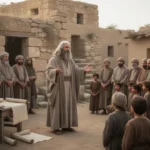
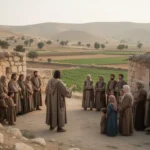
The Bible presents prophets as people called to deliver a message they had received from God. Their work was not limited to temples or private visions. They spoke to kings, priests, merchants, families, armies, and entire nations. Some served for many years, while others appear briefly in a single account.
Prophets often stood outside the centers of power. Nathan confronted King David after David’s sin involving Bathsheba and Uriah (2 Samuel 12). Elijah challenged King Ahab and the worship of Baal (1 Kings 17–18). Amos addressed wealthy people whose prosperity depended on exploiting the poor (Amos 2–6). Their authority came from the message they carried, not from political office.
Prophets also worked alongside other forms of leadership. Moses served as Israel’s covenant mediator and is described as a prophet in Deuteronomy 34:10. Samuel functioned as a prophet, judge, and adviser to Israel’s kings. Jeremiah served during political crisis, while Ezekiel ministered among exiles in Babylon. These examples show that prophetic ministry could take different forms.
Not every prophet was a man. Miriam is called a prophetess in Exodus 15:20, and Deborah is described as a prophetess and judge in Judges 4:4. Huldah gave authoritative counsel during the reforms of King Josiah (2 Kings 22:14–20). In the New Testament, Anna is identified as a prophetess in Luke 2:36, and Philip’s four daughters prophesied in Acts 21:8–9.
Why prophecy includes more than future predictions
Modern usage often makes “prophecy” mean a prediction about the future. In the Bible, prophecy commonly involved speaking God’s truth into the present. A prophet might expose idolatry, announce judgment, interpret a military threat, or call a community to repair its relationship with God.
Isaiah condemned religious practices that were separated from justice and faithful living (Isaiah 1). Micah connected true devotion with acting justly, loving mercy, and walking humbly with God (Micah 6:6–8). Amos insisted that worship could not substitute for righteousness toward vulnerable people (Amos 5). These messages are prophetic even when they do not predict a particular event.
Prediction still mattered. A prophet might announce that a city would fall, that a nation would face invasion, or that a remnant would survive. Such predictions usually served a moral purpose. They were meant to show where a path of rebellion led, to warn people before judgment, or to strengthen faith when circumstances seemed hopeless.
Prophecy can therefore have several purposes at once:
Correction: exposing idolatry, hypocrisy, violence, or injustice.
Warning: explaining the consequences of persistent unfaithfulness.
Instruction: showing what covenant loyalty should look like.
Announcement: declaring what God was about to do in history.
Comfort: assuring suffering people that judgment would not have the last word.
Hope: pointing toward restoration, a faithful ruler, renewed worship, or God’s lasting presence.
How the Old Testament prophets addressed Israel and Judah
The Old Testament prophetic books grew out of the history of Israel and Judah. The people had entered into a covenant with God, and the prophets repeatedly evaluated their conduct in light of that covenant. This is why prophetic messages often combine ethical demands, legal language, warnings, and promises.
Many prophets addressed two major failures: worshiping other gods and mistreating people. The Bible does not treat these as unrelated problems. Idolatry affected the whole community, including its understanding of power, wealth, sexuality, law, and human dignity. Prophets argued that people could not claim devotion to God while practicing oppression.
The prophets also spoke during international danger. Assyria destroyed the northern kingdom of Israel in the eighth century BC, and Babylon conquered Jerusalem and took many people into exile in the sixth century BC. Prophets such as Isaiah, Jeremiah, and Ezekiel interpreted these disasters as more than political accidents, while also addressing the responsibility of foreign empires.
Prophetic books are not arranged as one continuous biography. They contain sermons, poems, visions, symbolic actions, prayers, accusations, and promises. The same book may move from severe judgment to extraordinary hope. Isaiah, for example, includes warnings to Judah and surrounding nations as well as visions of peace, restoration, and a coming servant. Jeremiah combines announcements of disaster with promises of a renewed covenant (Jeremiah 31:31–34).
The “Minor Prophets” are called minor because their books are shorter, not because their messages are less significant. Hosea, Joel, Amos, Obadiah, Jonah, Micah, Nahum, Habakkuk, Zephaniah, Haggai, Zechariah, and Malachi address different communities and circumstances. Each should be read with attention to its own setting rather than treated as a collection of interchangeable predictions.
How prophets used visions, poetry, and symbolic actions
Prophetic communication was often imaginative because it had to make spiritual realities visible. Isaiah saw the Lord’s holiness in a temple vision (Isaiah 6). Ezekiel received striking visions involving living creatures, wheels, and a renewed temple (Ezekiel 1; 40–48). Amos saw objects that represented coming judgment (Amos 7–8). These scenes were not written like ordinary news reports.
Symbolic actions made a message memorable. Jeremiah wore a yoke to represent submission to Babylon’s power (Jeremiah 27). Ezekiel enacted the siege of Jerusalem and other signs while living among exiles (Ezekiel 4–5). Hosea’s family life became part of a difficult prophetic sign concerning Israel’s unfaithfulness (Hosea 1–3). Such actions communicated through drama, image, and lived experience.
Poetry also shaped prophetic language. Mountains may represent kingdoms, a cup may represent wrath, and a bride may represent a covenant community. The “day of the Lord” can describe a decisive act of judgment or salvation, not necessarily one single event in every passage. Careful interpretation asks what an image meant in its literary and historical context before assigning it a modern meaning.
“The word of the Lord” is a recurring biblical way of identifying a message as coming from God; it does not mean every sentence in a prophetic book uses the same literary form.
What makes a prophet genuine or false
The Bible recognizes that people could claim divine authority falsely. A speaker might be sincere but mistaken, manipulative, or motivated by money and influence. The test was not whether a message sounded impressive or offered a comforting prediction. The community had to examine the prophet’s faithfulness, message, character, and outcome.
Deuteronomy 13 warns Israel not to follow a sign or wonder if the speaker uses it to lead people toward other gods. Deuteronomy 18 addresses predictions that fail and insists that a prophet must not speak presumptuously in God’s name. Jeremiah contrasts his message with prophets who promised peace while ignoring the people’s deep unfaithfulness (Jeremiah 23).
Jesus also warned about false prophets and taught that people could recognize them by their fruits (Matthew 7:15–20). The New Testament tells Christian communities to test prophetic claims rather than accept every spiritual message automatically. First Thessalonians 5:19–22 urges believers not to despise prophecy but to examine everything and hold on to what is good. First John 4:1 likewise tells readers to test spiritual claims.
These passages create a balanced approach. They do not encourage cynical rejection of every prophetic claim, but they also reject unquestioning trust. A claim to speak for God carries a serious responsibility, especially when it controls people through fear, demands money, or excuses harmful behavior.
How prophecy points to the Messiah and the New Testament
For Christians, Jesus is central to the Bible’s understanding of prophecy. The Gospel writers repeatedly connect Jesus’ life, death, and resurrection with Israel’s Scriptures. They present him as the promised king, suffering servant, Son of Man, and source of salvation described through different prophetic patterns.
Matthew frequently says that events in Jesus’ life fulfilled what had been spoken through the prophets. Luke 4 presents Jesus reading from Isaiah and applying the passage to his ministry of good news, release, and restoration. After the resurrection, Luke 24 describes Jesus explaining how the Scriptures pointed toward the Messiah’s suffering and glory.
Some New Testament references concern direct prediction. Others identify a pattern or theme that reaches a fuller expression in Jesus. Israel’s exodus, wilderness testing, kingship, suffering, and restoration can function as patterns that the New Testament sees fulfilled or completed in Christ. This is why “fulfilled” does not always mean a verse was originally a complete prediction of one future detail.
Christians differ over how particular passages should be connected to Jesus. Some read certain texts as direct messianic predictions, while others see a passage’s first meaning in its original historical situation and its later significance through a broader biblical pattern. Responsible reading should acknowledge that distinction instead of presenting every interpretation as equally obvious.
Prophecy in the ministry of Jesus and the early church
Jesus acted as a prophet in several important ways. He announced God’s kingdom, called people to repentance, confronted religious hypocrisy, predicted Jerusalem’s destruction, and spoke of future judgment. At the same time, the New Testament gives him a status greater than that of a prophet alone, presenting him as the Messiah and Son of God.
Prophecy continued in the early church. The book of Acts mentions Agabus, who warned of a coming famine and later spoke about Paul’s imprisonment (Acts 11:27–28; 21:10–11). The church at Antioch included prophets and teachers (Acts 13:1). Paul discusses prophecy as a spiritual gift that should strengthen, encourage, and comfort the gathered church (1 Corinthians 14:3).
Paul also places limits on how prophecy should operate. Speakers should take turns, others should evaluate what is said, and worship should remain orderly (1 Corinthians 14:26–33). The New Testament therefore portrays prophecy as valuable but accountable. No individual’s claim should remove the community’s duty to discern.
The book of Revelation uses prophetic language to address churches under pressure and to present a vision of God’s final justice. Its beasts, numbers, heavenly scenes, and cosmic images require attention to symbolism and Old Testament echoes. Revelation is not best read as a simple code in which every image corresponds to a modern headline.
How to read a biblical prophecy responsibly
Prophetic passages can be difficult because they move between local events, poetic imagery, covenant themes, and future hope. A reliable reading process starts with the text’s original audience and then follows its development across the Bible. The goal is not to remove every mystery, but to avoid claims the passage cannot support.
Identify the speaker and audience. Ask who delivered the message, who first heard it, and what crisis or behavior prompted it.
Read the surrounding chapters. A single verse may sound like a prediction when the larger passage is addressing worship, injustice, war, exile, or restoration.
Separate genres and images from plain description. A vision, poem, parable, and historical report communicate differently.
Look for covenant themes. Ask whether the passage concerns idolatry, justice, repentance, judgment, faithfulness, remnant, or restoration.
Compare related biblical passages. The same image or phrase may appear elsewhere with additional context.
Distinguish original fulfillment from later application. A passage may have meaning for its first audience and a wider significance in later biblical interpretation.
State uncertainty honestly. Several interpretations may be possible, especially in apocalyptic passages.
Practical safeguard: Never build a major prediction about a current event from one isolated phrase. Check the passage’s audience, genre, historical setting, and connection to the rest of Scripture first.
Common mistakes when interpreting prophets and prophecy
Many errors come from treating prophetic books as if they were written to answer modern questions directly. Other mistakes arise when readers assume that every image has one fixed meaning or that every prediction must be fulfilled in only one way. The following habits can keep interpretation grounded.
Taking poetic language literally by default: Prophets often use metaphor, symbolism, and personification.
Ignoring historical context: Assyria, Babylon, exile, covenant, and ancient kingship shaped what the first hearers understood.
Reading headlines into every passage: A contemporary event may resemble a biblical theme without being the event a prophecy specifically predicts.
Confusing Israel, Judah, the church, and the nations: Biblical passages address different communities, and theological traditions interpret those relationships differently.
Assuming every prophecy is unconditional: Some warnings call for repentance, and biblical narratives show people responding to warnings in different ways.
Using failed predictions to defend a preferred theory: Interpretations should be tested against the whole passage, not adjusted endlessly to avoid correction.
Overlooking ethical content: Prophecy is often more concerned with repentance, justice, and faithfulness than with satisfying curiosity about dates.
Ignoring the New Testament’s guidance on testing: Prophetic claims should be assessed rather than accepted because a speaker is confident or popular.
What biblical prophecy says about judgment and hope
Judgment is a major part of prophetic preaching, but it is not the only part. Prophets warned that sin damages communities and that God takes violence, corruption, exploitation, and false worship seriously. Judgment language could address Israel, Judah, neighboring nations, and powerful empires alike.
Prophetic judgment was sometimes immediate and sometimes future. A city might fall, a king might lose power, or an unjust system might be exposed. At other times, the prophet described a final day when God would judge the nations and set right what human rulers had distorted. These time horizons can appear close together in prophetic poetry.
Hope usually grows out of the same problems that judgment exposes. To people facing exile, prophets promised return. To communities ruled by corrupt leaders, they promised a righteous shepherd or king. To people surrounded by violence, they pictured peace. To people estranged from God, they promised cleansing, a new heart, or a renewed covenant.
Hope in the prophets is not mere optimism. It rests on God’s character and faithfulness. Passages such as Isaiah 40–55, Ezekiel 36–37, and Zechariah 8 present restoration as God’s work, while still calling people to trust, repentance, and renewed obedience. The message is that failure does not erase God’s purpose, although restoration does not make injustice unimportant.
How prophecy can shape faith and daily decisions
Prophecy can affect daily life without turning every decision into a search for hidden predictions. Its repeated calls to faithfulness, courage, justice, humility, and hope remain clear. A reader might ask how personal choices reflect concern for the poor, honesty in business, treatment of enemies, or trust during uncertainty.
Prophetic books also challenge the assumption that religious activity automatically pleases God. Amos and Isaiah show that songs, offerings, and gatherings cannot cover persistent injustice. The prophetic question is not only “What do you believe?” but also “How does your belief shape the way you treat people?”
For Christians, prophecy directs attention to Jesus and to the character of his kingdom. It encourages perseverance when evil appears strong, warns against spiritual deception, and points toward God’s final renewal. It also supports patient discernment: people can live faithfully without claiming certainty about every future event.
A useful personal response to a prophetic passage may include these questions:
What behavior or belief does the passage confront?
What does it reveal about God’s justice, mercy, holiness, or faithfulness?
What hope does it offer to people who are suffering or seeking restoration?
How does the passage relate to Jesus and the wider biblical story?
What action would reflect its call to repentance or faithful living?
Why prophets still matter when their setting is ancient
The prophets spoke in ancient circumstances, but their concerns remain recognizable. Societies still struggle with dishonest leadership, unequal treatment, religious hypocrisy, violence, and indifference to suffering. Prophetic writing gives language for naming those failures while refusing to reduce faith to private comfort.
At the same time, ancient context protects readers from using the prophets carelessly. Their words were addressed to particular people under particular covenants and political conditions. Applying them today requires both continuity and restraint: continuity because the moral and theological themes still matter, and restraint because not every ancient announcement transfers directly to a modern nation or event.
Read this way, prophets and prophecy in the Bible do more than satisfy curiosity about the future. They reveal a God who confronts wrongdoing, calls people back to faithful worship, judges powerful nations, preserves hope through suffering, and promises restoration. Their message invites careful interpretation and a life shaped by the truth they proclaim.
Frequently asked questions
Did all biblical prophets predict the future?
No. Many prophetic messages addressed present sins, public injustice, false worship, political decisions, or the need for repentance. Some included predictions, but those predictions usually served a larger purpose: warning people, explaining consequences, or strengthening hope. Calling someone a prophet primarily means that the person was understood to speak a message from God, not that every message was a forecast.
How can I tell whether a prophecy is symbolic or literal?
Start with the passage’s genre, surrounding language, and historical setting. Visions, poetry, and apocalyptic writing commonly use symbols, while narrative sections may describe events more directly. Compare related biblical passages and avoid assigning a modern meaning simply because an image resembles a current event. When the text does not settle the question, acknowledge the uncertainty.
Are there prophets in the New Testament?
Yes. The New Testament names or mentions people such as Agabus, Anna, and the prophets and teachers at Antioch. Paul also describes prophecy as a spiritual gift intended to strengthen, encourage, and comfort the church. At the same time, New Testament communities were instructed to test prophetic claims, preserve order, and reject the idea that a speaker’s confidence automatically proves divine authority.
What is the difference between a prophet and a priest in the Bible?
Priests were associated especially with worship, sacrifice, ritual responsibilities, and teaching the law within Israel’s religious system. Prophets delivered messages calling the people and their leaders to covenant faithfulness. Their roles could overlap, and some individuals served in more than one capacity, but prophecy emphasized communicating God’s message rather than performing the regular duties assigned to priests.






Leave a Reply