What a confession of faith means and how to write one
What a confession of faith means and how to write one
When someone asks, “What do I actually believe about God?” a confession of faith offers a clear answer. It is a spoken or written statement of Christian belief, usually centered on God, Jesus Christ, the Holy Spirit, salvation, Scripture, and the church.
A confession can be brief, such as a baptismal statement, or extensive, such as a denomination’s formal declaration of doctrine. It may also be personal: a carefully considered account of the truths you trust and the commitments that shape your life. In every form, its purpose is to make faith visible, understandable, and accountable.
The word confession means a public acknowledgment or declaration. In Christian use, it does not primarily mean admitting wrongdoing, although Christians also use the word for confessing sin. A confession of faith is an expression of what a person or community believes to be true about God and the Christian life.
The word can describe several related things:
A personal declaration of trust in Jesus Christ.
A congregation’s statement of beliefs.
A denomination’s formal doctrinal standard.
A historic creed used in worship or instruction.
A baptismal response or public profession of Christian faith.
These forms differ in length and authority, but they share a basic function. They put beliefs into words so that people can teach them, evaluate them, remember them, and live according to them.
A confession is therefore more than a list of religious opinions. It connects belief and allegiance. To confess that Jesus Christ is Lord is not only to agree with a theological proposition; it is also to identify with him and to recognize his authority over one’s life.
Core idea: A confession of faith says, in clear language, what you believe about God and how those beliefs direct your trust, worship, choices, and relationship with other people.
Why Christians use confessions of faith
Christians use confessions to preserve the central message of the faith and communicate it across generations. A well-made confession helps a church answer basic questions: Who is God? Who is Jesus? What is sin? How does salvation happen? What is the church? What hope does Christianity offer?
Confessions also create a shared vocabulary. Members of a congregation may come from different families, cultures, and educational backgrounds, yet a common statement can express the beliefs they hold together. This is particularly useful when a church welcomes new members, prepares people for baptism, or trains teachers and leaders.
A confession can also protect a community from vague or contradictory teaching. It gives church leaders and members a standard against which sermons, educational materials, and public statements can be considered. That does not mean every disagreement is settled by one document. It does mean that the community has identified the doctrines it regards as essential or especially important.
For an individual, writing or reciting a confession can bring focus. Many people have sincere faith but have never organized their beliefs. Putting those beliefs into sentences can reveal both confidence and uncertainty. That process may lead to deeper study, better questions, and more honest prayer.
Confessions serve several practical purposes:
Teaching: They introduce the main themes of Christian doctrine.
Worship: They allow a congregation to affirm faith together.
Formation: They shape the way believers understand discipleship.
Unity: They identify beliefs shared by a particular church or tradition.
Witness: They communicate Christian conviction to people outside the church.
Discernment: They help a community evaluate claims about Christian teaching.
What a Christian confession usually includes
Although traditions organize their statements differently, most Christian confessions address several central subjects. A personal confession does not need to use technical language, but it should give enough detail to show what the writer means by important words such as “God,” “grace,” “salvation,” and “faith.”
Belief in the triune God
Christian confessions commonly begin with one God, understood as Father, Son, and Holy Spirit. This teaching is called the Trinity. Christians do not mean three separate gods; they mean that the one God exists eternally in three distinct persons.
A confession may describe God as the creator and sustainer of all things, perfectly holy and just, merciful toward sinners, and worthy of worship. It may also acknowledge that human language cannot fully contain the mystery of God. Clear belief does not require pretending that every aspect of God can be explained completely.
The identity and work of Jesus Christ stand at the center of Christian confession. Christians affirm that Jesus is truly human and truly divine, that he lived a faithful human life, died by crucifixion, rose from the dead, and reigns as Lord.
A confession may explain why these events matter. Jesus’ death is understood in relation to sin, judgment, reconciliation, and God’s love. His resurrection is understood as God’s victory over death and the foundation of Christian hope. His ascension and present reign point to his continuing authority and to the expectation of his future return.
Belief about the Holy Spirit
The Holy Spirit is not merely an impersonal force or a symbol of religious feeling. Christian teaching describes the Spirit as fully divine and active in creation, revelation, conviction, regeneration, sanctification, prayer, and the life of the church.
A personal confession might say that the Holy Spirit awakens faith, unites believers to Christ, gives spiritual gifts, produces holy character, and guides the church into faithful service. Different traditions explain particular aspects of the Spirit’s work in different ways, so specific wording should reflect the writer’s convictions.
Belief about Scripture
Many confessions affirm the authority of the Bible for Christian faith and practice. They may also describe Scripture as inspired by God, reliable in its purpose, and interpreted within the worshiping and teaching life of the church.
Christians do not all explain biblical inspiration, interpretation, or authority in the same way. A careful confession should avoid making broad claims that the writer has not considered. It can affirm the Bible’s central role while recognizing the need for context, sound interpretation, and humility.
Belief about sin and salvation
Christian confessions usually describe sin as more than isolated mistakes. Sin involves rebellion against God, disordered desires, injustice, guilt, and the failure to love God and neighbor as we should. It damages relationships and leaves human beings unable to repair their relationship with God by their own goodness.
Salvation is commonly described as God’s gracious work of rescuing and renewing people through Jesus Christ. A confession may mention forgiveness, justification, reconciliation, new birth, sanctification, and eternal life. Traditions differ in how they explain the relationship among grace, faith, works, baptism, and perseverance, so a personal statement should use language that fits the writer’s church tradition.
Belief about the church
The church is the community of people called to belong to Christ and to one another. A confession may describe the church as a worshiping, teaching, serving, witnessing, and discipling body. It may also affirm the importance of baptism, the Lord’s Supper, preaching, prayer, spiritual leadership, and care for the vulnerable.
Some statements emphasize the church’s unity across nations and centuries. Others explain the authority of pastors, elders, bishops, congregations, or councils. These details can be significant when a confession is written for membership in a particular denomination.
Belief about Christian hope
Christian hope includes more than the idea of going to heaven after death. Confessions often point to the resurrection of the dead, the judgment of evil, the renewal of creation, and everlasting life with God. This future hope affects present behavior by encouraging holiness, endurance, justice, compassion, and faithful service.
How a personal confession differs from a creed or testimony
The terms confession of faith, creed, profession, and testimony sometimes overlap, but they are not identical in every setting. Knowing the difference helps you choose the right form for your purpose.
Creed: A concise, established statement of shared Christian belief, often used in worship. The Apostles’ Creed and Nicene Creed are familiar examples.
Confession: A statement that acknowledges or declares faith. It may be personal, congregational, or denominational and can range from a few sentences to a full doctrinal document.
Profession of faith: A public declaration that a person identifies as a Christian, sometimes connected with baptism or church membership.
Testimony: A personal account of how someone encountered God, came to faith, or experienced spiritual change.
Doctrinal statement: A structured explanation of a church or organization’s official beliefs.
A testimony focuses mainly on your story. A confession focuses mainly on what you believe. They can be combined, but they answer different questions. “I grew up in church and came to trust Christ during college” is testimony. “I believe salvation is God’s gracious work through Jesus Christ” is confession.
A creed is normally received as a historic or communal text, while a personal confession is usually written in your own words. A denomination may require members to affirm a doctrinal statement, but it may also encourage them to give a personal testimony.
How to write a clear personal confession of faith
Begin by identifying the purpose and audience. A short confession for a baptism service will sound different from a detailed statement for a church leadership application. The purpose determines how much explanation you need and which subjects deserve attention.
Next, list the beliefs you regard as central. Do not start by trying to produce polished prose. Write short answers to questions about God, Jesus, the Holy Spirit, the Bible, sin, salvation, the church, Christian conduct, and future hope. This gives you material to organize before you worry about style.
Use language that you genuinely understand. Technical terms can be useful, but define them when your readers may not know them. For example, if you use “justification,” explain that you mean God’s gracious act of declaring sinners righteous through Christ rather than through their own moral achievement.
A strong confession is both personal and accountable. Personal language shows that you are making the beliefs your own. Accountability means that your claims are connected to Scripture and recognizable within historic Christian teaching rather than invented to express private spirituality alone.
A practical writing process looks like this:
Clarify the setting. Decide whether the statement is for private reflection, baptism, church membership, teaching, or public worship.
Gather your central convictions. Write one or two sentences about each major Christian doctrine.
Arrange the ideas logically. A common order is God, creation, humanity, sin, Jesus Christ, salvation, the Holy Spirit, the church, and future hope.
Support the beliefs with Scripture. Record references and explain their meaning in your own words rather than stringing together quotations.
Connect belief with life. State how your faith affects worship, relationships, ethics, service, and hope.
Check the wording. Remove vague phrases and claims that could be understood in several conflicting ways.
Ask trusted Christians for feedback. A pastor, mature believer, or teacher can identify unclear or misleading language.
Revise for honesty. Do not claim certainty about matters you have not studied or do not actually believe.
You can structure the statement in the first person: “I believe…” or “I confess…” This makes the document sound personal and direct. For a church or group, use “We believe…” and make sure the members responsible for the statement have discussed its meaning, not merely approved its wording.
Common mistakes when writing or using a confession
A confession can become unhelpful when it tries to say everything or when it uses language that conceals rather than communicates. The goal is not to sound scholarly. The goal is to speak truthfully and clearly about Christian belief.
Making it only about personal experience: A moving story may explain how faith began, but it does not by itself state what Christianity teaches.
Using unexplained theological terms: Words such as “atonement,” “sanctification,” or “inerrancy” can mean different things to different readers.
Copying a statement without understanding it: Familiar wording has value only when the person affirming it knows what it means.
Focusing on disputed details first: Start with the central claims of Christianity before addressing secondary differences among traditions.
Separating belief from conduct: A confession should show how faith relates to love, integrity, mercy, justice, worship, and service.
Making promises of perfection: Christian faith includes dependence on grace and ongoing growth, not a claim that the believer will never fail.
Ignoring the church’s context: A statement used for membership should address the beliefs and practices that actually define that congregation.
Writing in an unnecessarily combative tone: A confession can be firm without insulting people who disagree.
Adding every personal opinion: Not every preference about music, politics, customs, or personality belongs in a confession of faith.
Failing to revise: Understanding can mature, and a personal statement may need clarification as you study and grow.
Practical test: Ask a thoughtful reader to explain your confession back to you. If the reader cannot tell what you mean by faith, salvation, or the church, revise those sections before using the statement publicly.
How Scripture informs a confession of faith
The Bible provides the foundation and vocabulary for Christian confession. It presents God as creator, judge, covenant-maker, redeemer, and Father. It identifies Jesus as the promised Messiah and risen Lord, and it describes the Holy Spirit’s work in God’s people and in the world.
Several biblical passages are especially relevant to the idea of public confession. Romans 10 connects inward belief with outward acknowledgment of Jesus. Matthew 16 presents Peter’s declaration that Jesus is the Messiah, while 1 Corinthians 15 summarizes the resurrection-centered message that Paul received and passed on. First Timothy 3 refers to a recognized statement about Christ’s earthly life, vindication, proclamation, and exaltation.
These passages should be read in context rather than treated as isolated slogans. They show that Christian faith has both an inward dimension of trust and an outward dimension of public allegiance. A confession is not a performance designed to impress God. It is a response to God’s revelation and grace.
When using biblical references, explain the principle or teaching you find in the passage. Avoid assembling a series of disconnected quotations that readers cannot place in context. A responsible confession shows how its claims arise from the broad witness of Scripture.
Confession of faith in baptism, worship, and church membership
In baptism, a confession often takes the form of questions and answers. The person being baptized may be asked whether they trust in Christ, reject sin, and intend to follow him. The exact wording varies among churches, but the public character is significant: baptism identifies a person with Christ and joins that person to a Christian community.
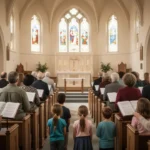
During worship, a congregation may recite a historic creed or a locally written statement. Speaking together reminds worshipers that faith is not only an individual possession. Christians receive and practice their faith within a body that includes people of different ages, cultures, abilities, and experiences.
For church membership, a confession helps establish shared expectations. It can clarify the church’s understanding of Scripture, the gospel, baptism, communion, leadership, discipleship, and moral responsibility. Membership should not be reduced to passing a theological exam, but a church needs some way to express what members are committing to affirm and practice.
Leaders should explain the statement rather than treating it as a form to sign. New members deserve opportunities to ask questions about terms, practices, and areas where churches within the wider Christian tradition differ.
How a confession shapes daily Christian life
A confession has little value if it remains detached from conduct. Believing that God is holy should affect the way you handle truth, power, money, sexuality, work, and private decisions. Believing that God is merciful should influence how you respond to people who have failed or who are vulnerable.
Belief in Jesus’ lordship calls for more than admiration. It involves learning his teaching, receiving his grace, following his example, and accepting correction. Belief in the Holy Spirit encourages dependence on God rather than confidence in personality, intelligence, status, or religious achievement.
Belief in the church challenges radical individualism. Christians are called to worship with others, bear burdens, receive instruction, forgive, serve, and participate in a community that can both encourage and correct them. Belief in resurrection hope gives courage to practice faithfulness even when immediate results are not visible.
You can use your confession as a tool for reflection by asking:
Does my worship reflect the God I say I believe in?
Where do my habits contradict my stated convictions?
How does my faith shape the way I treat people with less power than I have?
Am I receiving correction and instruction from the Christian community?
Which parts of my confession need deeper study or more honest prayer?
These questions do not turn faith into a system of self-improvement. They recognize that confession is meant to form the whole person. Christians speak their faith so that their minds, affections, decisions, and relationships can increasingly reflect it.
How to keep a confession both firm and humble
A faithful confession should be confident about central Christian claims while remaining humble about the limits of human understanding. Confidence means refusing to treat essential beliefs as mere preferences. Humility means recognizing that sincere Christians may interpret some doctrines differently and that every believer continues to learn.
One helpful approach is to distinguish essential beliefs, important convictions, and personal applications. The identity of God, the resurrection of Jesus, and salvation by God’s grace belong to the central Christian confession. Views about church government, spiritual gifts, worship practices, or the timing of future events may be strongly held but are not treated as equally central by every Christian tradition.
This distinction does not require indifference. It allows you to state your convictions accurately without making every disagreement a test of Christian identity. A mature confession tells the truth as the writer understands it and leaves room for continued growth in wisdom.
When spoken publicly, a confession should therefore sound neither evasive nor boastful. It is a declaration of trust in God, not a declaration of personal superiority. Its deepest emphasis is not “I have mastered every question,” but “This is the faith I receive, confess, and seek to live.”
Frequently asked questions
Is a confession of faith the same as accepting Jesus?
They are closely related but not identical. Accepting or trusting Jesus describes a person’s response of faith, while a confession of faith puts that response and its beliefs into words. Someone may sincerely trust Christ before knowing how to explain Christian doctrine. A confession helps that person express, clarify, and publicly acknowledge what that trust means.
How long should a personal confession of faith be?
Its length should match its purpose. A baptismal confession may be a few sentences, while a statement for church membership or leadership may require several pages. A useful confession is complete enough to explain its central beliefs but focused enough to remain understandable. Clarity, honesty, and faithfulness matter more than reaching a particular word count.
Can Christians from different denominations share a confession of faith?
Yes. Christians across denominations commonly affirm central beliefs about the one God, Jesus Christ, the resurrection, salvation, the Holy Spirit, the church, and future hope. They may differ over baptism, communion, church leadership, spiritual gifts, or biblical interpretation. A shared confession can express unity while leaving room for carefully identified denominational convictions.
Should a confession of faith include Bible verses?
It can include Scripture references, especially when the statement is used for teaching or church membership. References show where important beliefs come from, but a list of citations is not enough by itself. Explain the meaning of the passages in clear language and read them in context. Avoid quoting isolated lines in ways that distort their purpose.










Leave a Reply