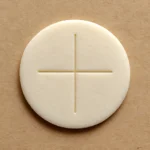
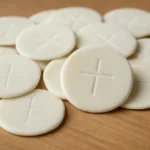
Communion wafers, often called hosts in liturgical language, are the sacred bread used during the Eucharist or Holy Communion. They are typically small, circular pieces of bread that are prepared, blessed, and distributed to the faithful as a sign of sharing in Christ’s body. While the terms wafers and hosts are common in everyday usage, the technical vocabulary varies across traditions. In many Western churches, these wafers are unleavened bread, thin and disk-shaped, designed to be easily distributed and consumed. In several Eastern Christian traditions, a related but distinct form of bread is used, often leavened and prepared according to different liturgical rules.
This comprehensive guide explores the types and uses of communion wafers, including their historical development, the ingredients and production processes, the denominational variations, and the reverent handling that accompanies this essential liturgical element. Whether you are a parish administrator, a student of liturgy, or a curious reader, this article aims to illuminate the many facets of the sacred bread used in the celebration of the Eucharist.
Historical Overview: From Early Shared Bread to Formalized Hosts
The symbolism of bread and wine has roots that stretch back to the earliest Christian communities. In the New Testament, Jesus’ Last Supper is described as sharing bread and wine, a motif that would become central to Christian worship. Over the centuries, Christians developed standardized practices around the bread used in the Eucharist, giving rise to the modern forms of hosts and wafers that we recognize today.
In many Western Christian traditions, the move toward unleavened bread for the Eucharist became customary for reasons of symbolism, hygiene, and liturgical clarity. The absence of leaven was associated with purity and the fast of Lent in some communities, and it also simplified the symbolism of the “breaking of the bread” during the Mass. By the medieval period, the practice of using round, uniform discs of unleavened bread had become normative in the Latin Church.
In contrast, many Eastern Christian churches have preserved a leavened, living bread tradition (often in the form of prosphora or similar loaves) that is stamped and prepared for the Divine Liturgy. The theological and liturgical contexts differ, but the underlying idea remains the same: bread as the visible sign of the body of Christ, shared by the assembly.
Today, discussions about communion wafers often revolve around issues of ingredient purity, handling, and liturgical propriety, as well as the practicalities of distributing the sacrament to diverse congregations, including those with dietary restrictions.
Key Terms and Variants: Host, Wafer, and Related Expressions
Across traditions, several terms are used to refer to the bread prepared for the Eucharist. Each term carries nuance that reflects theological emphasis and historical development:
Host — Common in Catholic and some Protestant usage; emphasizes the bread as the sacramental presence of Christ in the Eucharist.
Wafer — A practical, descriptive term for the thin, circular pieces commonly used in Western liturgies.
Altar Bread — A general descriptor for bread prepared specifically for use in the liturgy on the altar.
Prosphora — The traditional Eastern Orthodox term for the bread prepared for Divine Liturgy; typically leavened and stamped with a religious insignia.
Bread of the Eucharist — A broad phrase used in ecumenical discussions to emphasize the sacramental function of the bread.
In addition to these terms, you will encounter variations that refer to form (round discs vs. square shapes), texture (thin wafers vs. soft, bread-like loaves), and ingredients (strictly wheat-based vs. alternative grain formulations under extraordinary circumstances). The naming conventions often reflect the broader liturgical system of a given tradition, rather than a single universal standard.
Types and Variants: What Makes Each One Distinct?
The primary distinction among communion wafers lies in the denominational approach to unleavened vs. leavened bread, as well as in the shape, size, and packaging chosen for ritual use. The following subsections outline the major categories you’ll encounter in churches around the world.
In the Latin Rite of the Catholic Church, and in many Lutheran and Anglican communities, the standard form of the Eucharistic bread is unleavened wheat bread shaped into small discs or squares. The emphasis on unleavened bread is both symbolic and liturgical, pointing to the quick bake and the Passover imagery that links the Last Supper to Judaism’s exodus narrative. The resulting wafers are typically very thin, with a smooth surface, and they dissolve readily in the mouth or on the tongue.
Shape: circular discs (often about 1–2 centimeters in thickness for general use; diameter varies by rite
Texture: crisp and dry, designed to be durable in storage and easy to break or crush during distribution
Ingredients: usually wheat flour and water; some producers add a minimal amount of salt or other non-savoury additives to aid texture and shelf life
Liturgical use: consecrated by a priest during the Mass, then distributed by the minister to communicants
Leavened Bread: The Orthodox and Certain Western Traditions
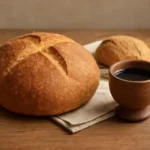
In several Eastern Christian churches, leavened bread is used for the Eucharist. The bread may be prepared as prosphora in the Orthodox tradition or in other forms that reflect regional practice. Leavened bread resonates with the living, rising quality of ordinary bread and carries its own symbolic associations in liturgy.
Shape and form: often square or rectangular loaves that are cut into pieces or stamps that imprint liturgical symbols
Texture: softer and more bread-like than typical Western hosts
Ingredients: usually wheat flour and water, with leavening agents such as yeast
Liturgical use: consecrated and distributed during the Divine Liturgy, with a distinctive sequence of prayers and hymns
Prosphora: The Eastern Orthodox Standard
The Eastern Orthodox Church often uses prosphora, a specific kind of bread prepared according to liturgical instructions. These loaves are typically stamped with stamps bearing inscriptions, and they are used as the sacramental bread for the Eucharist. The process reflects a long-standing tradition of artistic and liturgical care in bread-making.
Special Cases and Variations
Some communities maintain regional variations in the form and taste of the bread used for communion. A few parishes experiment with alternative grains or grain blends; others maintain strict adherence to a single official form. In modern ecumenical settings, you may encounter hybrid practices designed to accommodate linguistic or cultural diversity, or to permit participation by members with dietary restrictions. Regardless of variation, the essential purpose remains the same: a tangible sign that binds the community to the mystery of the Eucharist.
Ingredients and Production: What Are These Wafers Made Of?
The nutritional and theological content of communion wafers is shaped by centuries of practice and canonical discipline. The basic idea is to create a form of bread that is pure, durable, and easily distributed during the sacred rite.
Main ingredient: wheat flour and water form the core of most hosts or prosphora. The emphasis is on simple, grain-based matter that reflects the ancient meaning of bread as sustenance and sign of life.
Leavening: in unleavened forms, no leavening agent is used; in leavened forms, yeast or another rising agent is used to achieve a softer texture.
Additional ingredients: some batches include a small amount of salt, which can help with flavor and texture, but most ritual breads minimize extraneous additives to keep the symbolism of plain bread intact.
Preservation and handling: the wafers are baked, cooled, and packaged in a controlled environment to maintain dryness and prevent contamination that would affect taste, texture, or appearance.
The strictness of ingredients is important for many communities because it links directly to the theological symbol of the Eucharist. In some traditions, the bread must be entirely derived from wheat. In others, exceptions are made for pastoral reasons to accommodate people with gluten intolerance or dietary restrictions, as discussed in a later section.
By Denomination: How Different Traditions Approach Communion Bread
Roman Catholic Custom: Unleavened Bread on the Altar
The Roman Catholic Church traditionally uses unleavened wheat bread for the Eucharist in the Latin liturgical rites. This practice emphasizes the symbolism of the Passover and the immediacy of the Last Supper narrative. The host is reserved in the tabernacle after consecration and is then distributed to the communicants by ordained ministers.
Importance: simplicity, uniformity, and a long-standing scholastic and theological tradition linking bread to the body of Christ
Conservation: hosts are kept in a tabernacle or a monstrance after consecration for use in future liturgical celebrations, including the distribution of communion to the sick
Pastoral care: dioceses may provide gluten-free options for those with celiac disease or severe gluten intolerance, under local norms
Eastern Orthodox Practice: Leavened Bread in a Liturgical Family
In the Eastern Orthodox Church, the Eucharist is usually prepared with leavened bread and arrives to the faithful through a process that is distinct from the Western approach. Bread is often formed into portions that are officially consecrated and distributed during the Divine Liturgy, reflecting a different set of patristic and liturgical priorities.
Liturgical context: the bread is integrated into a longer sequence of prayers and hymns, culminating in the distribution of Communion to all communicants
Artistry: prosphora and related forms are sometimes stamped with religious inscriptions to identify the bread’s liturgical function
Allergies: similar pastoral provisions exist in some Orthodox communities for communicants with gluten intolerance, depending on jurisdiction
Lutheran and Anglican Traditions: A Broad Spectrum
Lutheran and Anglican communities often use unleavened bread in keeping with their historical roots, though there is diversity in practice. The theology surrounding the Eucharist in these traditions emphasizes the real presence of Christ in the sacrament, and the bread’s appearance and texture are often seen as secondary to the spiritual meaning.
Form: discs, squares, or other shapes; the exact format may vary by parish
Dietary accommodations: many parishes offer gluten-free options to welcome all communicants, reflecting a pastoral care orientation
Ritual use: the bread is consecrated by the celebrant and shared by the congregation according to the liturgical rites
Other Christian Traditions: Broad Variations and Ecumenical Context
Beyond the main streams, there are many other Christian communities with distinctive practices. Some denominations emphasize simplicity and uniformity, while others highlight continuity with local customs, including the shape, taste, or ceremonial handling of the bread. In ecumenical settings or regional councils, a variety of forms may coexist under agreed guidelines to honor the sacramental significance of the bread while accommodating practical realities.
Liturgical Uses and Handling: How the Bread Becomes the Body
The journey from grain to sacrament passes through several meaningful steps. The way the bread is prepared, blessed, and distributed is highly ritualized and reflects centuries of theology and practice.
Blessing and consecration: during the Mass or Divine Liturgy, the bread is consecrated by the priest or bishop through the words of the Confiteor or a corresponding liturgical formula. The resulting gift is regarded as the Body of Christ for communicants.
Distribution: the consecrated bread is distributed to the faithful in a carefully ordered procession or line, often using individual wafers or pieces that have been broken or cut as appropriate to the rite
Reception: communicants typically receive the Bread with reverence, placing it on the tongue or in the hand, depending on local practice
Reserved sacrament: in many traditions, a portion of consecrated bread is reserved in a tabernacle or similar repository for the sick or for use in future liturgies
Storage, Handling, and Reverence: Best Practices in the Church Environment
Treating communion wafers with reverence is central to the liturgical life of most traditions. The physical handling of the bread—keeping it free from contamination, protecting it from dust and moisture, and ensuring it remains sealed until the moment of use—reflects the sacred character of the sacrament.
Storage conditions: keep in a cool, dry place away from direct sunlight; moisture can degrade texture and taste
Protection: wafers are typically kept in dedicated ciboria, vessels, or containers that are treated with care and used only for the Eucharist
Handling etiquette: ministers handle the bread with clean hands and often use pierce-proof instruments or gloves, depending on local custom
Tabernacle and continuity: when not in use, the consecrated bread may be reserved in the tabernacle, with proper prayers and rites associated with the presence of the sacrament
Gluten and Dietary Considerations: Inclusion within Tradition
Recently, many communities have engaged with questions of dietary restriction, especially regarding gluten sensitivity and celiac disease. As a result, a spectrum of practical approaches has emerged in different jurisdictions.
Gluten-containing bread: the traditional form used in most Catholic, Orthodox, Lutheran, and Anglican contexts contains gluten, derived from wheat
Gluten-free options: some parishes offer gluten-free hosts produced from alternative starches such as rice or corn, primarily to accommodate communicants with severe gluten intolerance
Canonical considerations: the matter of the Eucharist is bread; any substitution must align with the church’s canon law and local norms. Some jurisdictions strictly require bread made from wheat, while others permit pastoral accommodations under careful oversight
Pastoral approach: many communities strive to balance reverence for the sacrament with inclusivity, offering gluten-free options where possible while maintaining liturgical integrity
Ecumenical Perspectives: Unity and Diversity in the Sacred Meal
The celebration of the Eucharist is a moment of shared faith—and also a moment of theological nuance. Different Christian traditions emphasize distinct doctrinal points about the real presence of Christ in the sacrament, the matter and form of the bread and wine, and the reception of Communion. Ecumenical dialogue seeks to understand these differences while highlighting common ground, such as the centrality of the meal, the act of blessing, and the communal dimension of the rite.
Common ground: all traditions affirm that bread plays a central role in the Eucharist, representing Christ’s body and the unity of the Church
Points of divergence: differences include whether the bread is unleavened or leavened, the manner of consecration, and the way the sacrament is distributed
Practical ecumenism: in some contexts, churches may share communion elements during joint services, while maintaining their own liturgical boundaries
Contemporary Issues: Accessibility, Sustainability, and Modern Production
The production and distribution of communion wafers today intersect with broader social and technological concerns. Parishes and monasteries may face supply challenges, shifts in agricultural practices, and the need to source ingredients responsibly. In response, many communities are adopting practices that emphasize sustainability, fair labor, and traceability in the supply chain, while still preserving the sacred character of the bread.
Supply chain: packaging, shelf-life, and regional availability can influence what forms of the bread are used in a given season
Allergen considerations: as noted, gluten-free options exist in some places; other dietary needs may also prompt adaptation
Quality control: diocesan and parish bakers often follow strict guidelines to ensure the bread remains pure, clean, and suitable for liturgical use
Education and awareness: many parishes offer explanations about the bread’s significance to foster reverence among congregants
Frequently Asked Questions (FAQs)
Is the bread used in the Eucharist always wheat-based? In most Western rites, yes—the bread is traditionally unleavened wheat bread. Some communities explore gluten-free options for pastoral reasons, under local authority and guidelines.
What is the difference between a wafer and a host? The terms are often used interchangeably in everyday language, but “host” emphasizes the sacramental function, while “wafer” typically refers to the thin, flat shape used in many Western rites.
Why do some churches use leavened bread? Leavened bread is favored in many Eastern traditions, where the bread’s texture and symbolism align with the liturgical theology of those rites.
Can a gluten-free wafer still be valid for the Eucharist? Canon law in various traditions requires bread made from specific ingredients. Some jurisdictions allow gluten-free alternatives for pastoral reasons, but the matter remains complex and jurisdiction-specific.
How is the bread stored after consecration? It is typically kept in a dedicated sacramental vessel or tabernacle, with reverence and proper prayers observed, and only accessed by authorized ministers for distribution.
Conclusion: The Sacred Bread as a Witness to Unity in Diversity
Communion wafers stand at the intersection of theology, ritual practice, and everyday life in Christian worship. They are more than simple food—they are a symbolic sign of the body of Christ, a sign of the church’s unity, and a reminder of the mystery of the Eucharist itself. Across the global Christian landscape, communities honor the bread in diverse ways: unleavened or leavened, round discs or square loaves, wheat-based or with pastoral accommodations for dietary needs. Yet the core meaning remains consistent: when believers receive the Bread, they join in a shared act of memory, proclamation, and hope.
If you are exploring this topic for personal study, parish work, or academic reasons, consider visiting a local church during a liturgy to observe how their tradition embodies these principles in practice. You will notice that the sacred bread is not merely a ceremonial form; it is a living sign that encodes centuries of faith, devotion, and community life. While details may differ—from texture to form, from ritual gesture to theological emphasis—the essential reality remains: the act of partaking in Communion binds believers together as one body in Christ.