Have you heard the word Ichabod used to describe a spiritual loss and wondered where it came from? The name appears only in the biblical account of Israel’s battle with the Philistines, but its meaning has continued to shape religious language: “the glory has departed.”
Ichabod was the name given to the son of Phinehas, a priest of Israel, after the ark of the covenant was captured and several members of his family died. The name did not mean that God had ceased to exist or had become powerless. It expressed the family’s grief over Israel’s defeat and the apparent departure of the visible sign of God’s presence from the nation.
The name Ichabod is usually understood to mean “no glory,” “where is the glory?” or, in the traditional wording, “the glory has departed.” English translations differ slightly because the underlying Hebrew expression can be interpreted in more than one way.
The meaning becomes clear from the surrounding story in 1 Samuel 4. Israel suffered a major defeat, the ark of God was captured by the Philistines, Eli the priest died after hearing the news, and Phinehas’s wife died while giving birth. Before she died, she named the child Ichabod because she believed that glory had departed from Israel.
In this setting, “glory” refers to the honor, nearness, and manifest presence associated with God’s covenant relationship with Israel. The name captures a moment when the nation’s religious and political confidence collapsed. It is not simply a personal name; it is a cry of mourning over national disaster.
Core meaning: Ichabod describes the loss of perceived glory and the removal of the ark from Israel. It should not be treated as proof that God’s character or power had disappeared.
Where the name Ichabod appears in Scripture
Ichabod appears in the story of 1 Samuel 4:19–22. The passage begins after Israel has gone to battle against the Philistines. The Israelites brought the ark of the covenant into the military camp, apparently hoping that its presence would guarantee victory.
That strategy failed. The Philistines defeated Israel, killed many soldiers, and captured the ark. Hophni and Phinehas, the two sons of Eli, also died. A messenger traveled from the battlefield to Shiloh to report what had happened.
Eli was an elderly judge and priest who sat beside the road waiting for news. He was especially anxious about the ark. When he heard that it had been captured, he fell backward from his seat, broke his neck, and died. The biblical narrative presents the ark’s capture as the most devastating part of the report.
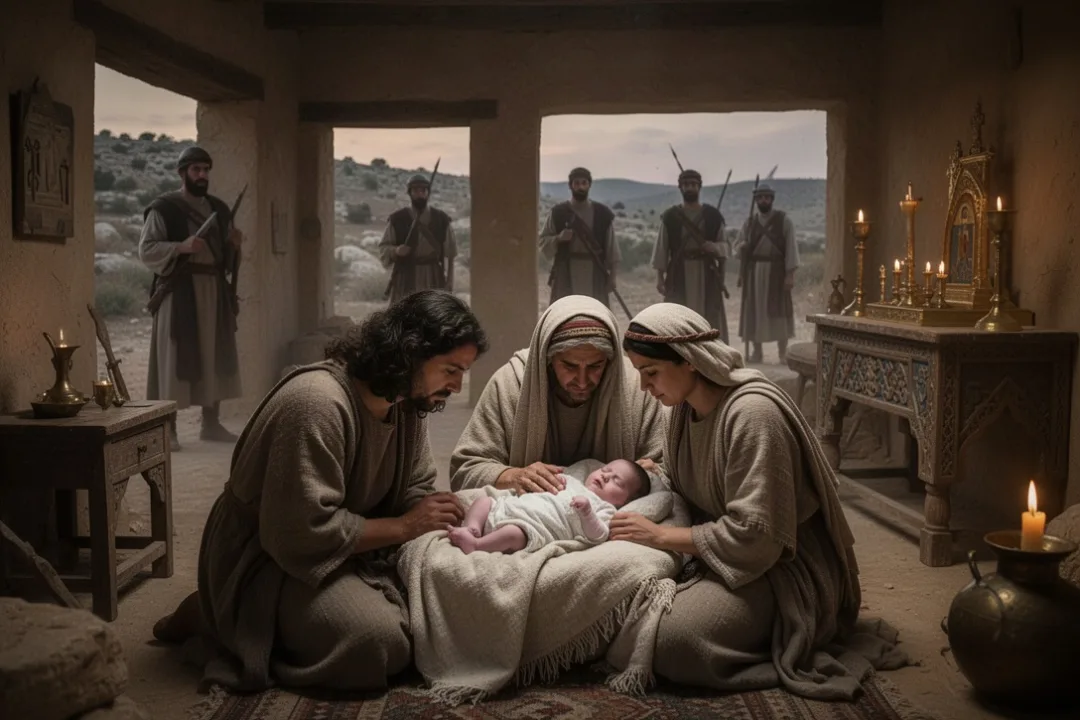
Phinehas’s wife was near childbirth when the messenger arrived. The shock of hearing that her husband and father-in-law had died caused her to go into labor. She gave birth to a son, but she did not respond to the birth with joy. Instead, she named him Ichabod and explained the name by referring to the departure of glory from Israel.
The account emphasizes two losses in particular:
The ark was captured: Israel’s central symbol of the covenant and God’s enthroned presence was now in enemy hands.
The priestly household collapsed: Eli, Hophni, and Phinehas died within the same crisis, signaling the end of a troubled era.
The text mentions the deaths and the ark together, but it gives special weight to the ark. Phinehas’s wife does not name the child merely to remember her husband or father-in-law. Her words show that she viewed the ark’s capture as the deepest tragedy.
How the story of Ichabod unfolds step by step
The passage is easier to understand when read as a sequence of connected events. Each step adds meaning to the child’s name and shows why the moment was so severe for Israel.
Israel is defeated by the Philistines. The first battle leaves Israel with thousands of casualties and raises the question of why God allowed the defeat.
The elders bring the ark to the battlefield. Rather than first addressing their unfaithfulness, the leaders bring the sacred object from Shiloh, apparently expecting it to change the outcome.
The Philistines capture the ark. Israel suffers another defeat, and the ark is taken as a prize by the enemy.
Hophni and Phinehas die. The deaths of Eli’s sons fulfill the judgment announced earlier in the narrative because of their corruption as priests.
Eli dies after hearing the report. His death marks the end of his leadership and the collapse of his household.
Phinehas’s wife gives birth and names the child Ichabod. Her words interpret the disaster as the departure of glory from Israel.
This sequence also shows that the name is connected to more than a single military loss. Israel’s defeat exposes a deeper spiritual problem involving corrupt leadership, false confidence, and an attempt to use a holy object without returning to faithful obedience.
Why Israel brought the ark into battle
The ark of the covenant was not a good-luck charm. It represented God’s covenant with Israel and was associated with the place where God had promised to meet his people. Yet in 1 Samuel 4, Israel’s leaders appear to treat the ark as a device that could secure victory.
After the first defeat, the elders ask why the Lord allowed Israel to lose. Their answer is not a renewed commitment to repentance or an examination of their conduct. Instead, they decide to bring the ark from Shiloh into the camp. The people respond with a loud shout, and the Philistines become frightened because they recognize that the ark has entered the camp.
The narrative exposes a serious misunderstanding: the symbol of God’s presence cannot be manipulated. Carrying the ark into battle does not force God to support Israel’s plans. The ark signifies a relationship governed by God’s covenant; it does not function as an object that guarantees success to people who ignore that covenant.
This distinction matters when interpreting Ichabod. The story does not teach that God’s presence is controlled by human rituals, buildings, objects, or slogans. It warns against separating sacred symbols from sincere faithfulness.
What the ark represented to Israel
The ark was a wooden chest covered with gold and associated with the covenant between God and Israel. It held the tablets of the covenant and was connected with Israel’s worship and priestly ministry. Its significance was not based on its craftsmanship alone but on what it represented: God’s rule, covenant, holiness, and presence among his people.
In earlier biblical stories, the ark appears in moments of national importance. It leads Israel in the wilderness, crosses the Jordan River, and is carried around Jericho before the city falls. These events could easily lead people to assume that the ark itself produced victory.
First Samuel corrects that assumption. The same sacred object can be present while Israel loses a battle. The difference is not that the ark has lost its power. Rather, the people cannot turn God’s covenant sign into a tool for controlling God.
The Philistines also misunderstand the ark at first. They place it in the temple of their god Dagon, treating it as a trophy. The events that follow show that the Lord is not defeated or domesticated by the ark’s capture. The ark’s removal from Israel is a judgment and a crisis, but it does not mean that the Philistines have conquered Israel’s God.
How 1 Samuel 4 connects Ichabod with Eli’s household
The birth of Ichabod occurs at the end of a long warning concerning Eli’s family. Earlier in 1 Samuel, a prophetic message announces that Eli’s household will experience judgment because Eli’s sons abuse their priestly position and he fails to restrain them adequately.
Hophni and Phinehas are described as treating the offerings of the Lord with contempt and exploiting their authority. Their behavior damages both worship and the people they serve. The defeat in battle and their deaths therefore do not appear as random tragedies within the narrative. They are part of the fulfillment of a judgment already declared.
Eli himself is not portrayed as identical to his sons, but he bears responsibility for allowing their conduct to continue. His concern for the ark when the battle report arrives shows that he understands its significance, even though the larger story has already shown the moral weakness of his household.
Ichabod’s name therefore carries two layers of grief:
Public grief: Israel has been defeated, and the ark has been taken.
Family grief: Phinehas’s wife has lost her husband, her father-in-law, and the future security of her household.
Her response is emotionally understandable. The birth of a son would normally bring celebration, but the surrounding catastrophe overwhelms that joy. The name preserves her interpretation of the moment: Israel’s glory seems to have vanished.
Does Ichabod mean that God had permanently left Israel?
No. The name records a tragic perception and a judgment-filled event, but it does not mean that God permanently abandoned Israel. The following chapters show that the Lord remains active even while the ark is in Philistine territory.
When the Philistines place the ark in the temple of Dagon, their idol falls before it. The Philistines then experience a series of afflictions in the cities where the ark is taken. These events demonstrate that God’s power does not depend on Israel’s ability to protect the ark.
The ark eventually returns to Israel. Later in 1 Samuel, the people are urged to remove foreign gods and turn their hearts to the Lord. This movement toward repentance is significant because it shows that the answer to spiritual crisis is not simply recovering a religious object. Israel needs renewed loyalty to God.
Ichabod can therefore be read as a statement of grief, not as the last word about God’s relationship with his people. The story acknowledges judgment while also showing divine sovereignty. God can discipline Israel, defend his own honor among the Philistines, and restore the ark without being controlled by either side.
A careful reading: “The glory has departed” describes what Israel lost in that crisis—the ark, national confidence, and visible signs of covenant blessing. It does not teach that God is limited, defeated, or permanently absent.
What “glory” means in the phrase associated with Ichabod
In the Bible, glory can refer to honor, splendor, weight, reputation, or the visible manifestation of divine majesty. In the Ichabod passage, the word is closely tied to the ark and to the nation’s sense that God’s covenant favor has been withdrawn.
Israel had suffered military defeat before, but this defeat was different because the ark had been captured. The ark represented God’s special relationship with Israel, so its loss seemed to say that the nation’s honor and protection had disappeared.
That interpretation reflects the emotional perspective of Phinehas’s wife. Her statement is not a detached theological definition. It is a cry spoken in the middle of bereavement. The narrative allows readers to feel the magnitude of the disaster while later chapters clarify that God has not been overpowered.
The word “glory” also points beyond human reputation. Israel could lose prestige before other nations, but the deeper concern was the dishonor associated with the ark’s capture. The story asks whether God’s reputation depends on Israel’s victory. The answer is no: God’s holiness and authority remain intact even when his people are defeated.
How Ichabod is used in Christian speech today
In modern Christian writing and preaching, Ichabod is sometimes used as a warning that a church, family, nation, or individual has lost spiritual vitality. A speaker may use the name to describe worship that has become empty, leadership that has become corrupt, or a community that relies on religious symbols without genuine faith.
This application can be meaningful when it stays close to the biblical story. The passage clearly challenges hypocrisy, religious presumption, and the misuse of sacred authority. It also reminds leaders that public religious identity does not guarantee moral integrity.
However, the term can be misused when it becomes a dramatic label for people or congregations the speaker dislikes. Calling a church “Ichabod” may imply that God has abandoned it completely, an assertion that human beings are not qualified to make with certainty.
A responsible application should ask questions such as:
Are sacred symbols being treated as substitutes for obedience?
Are leaders protecting their reputation while ignoring wrongdoing?
Has religious activity replaced repentance and love of God?
Are people using the name of God to support their own plans?
Does the community respond to failure with honesty, humility, and renewed faith?
These questions preserve the warning in 1 Samuel 4 without turning Ichabod into a casual insult. The biblical account speaks most directly to spiritual presumption and corrupt leadership, not to every season of weakness, grief, or institutional change.
What Ichabod teaches about religious symbols
One of the clearest lessons is that holy objects cannot replace a holy relationship. Israel possessed the ark, but the people’s possession of it did not guarantee that every decision they made would receive divine approval.
Religious symbols can help people remember truth. A cross, a church building, a Bible, a baptismal practice, or a worship service may point beyond itself to God. Yet none of these things gives a person permission to ignore justice, repentance, humility, or love.
The ark’s capture makes this point dramatically. Israel thought the ark’s presence would force victory, while the Philistines thought its capture proved their god had triumphed. Both assumptions were wrong. The Lord’s power could not be reduced to the location of a sacred object.
For readers today, the practical lesson is to examine the difference between trusting God and using religious language to guarantee an outcome. Faith is not a technique for controlling events. It includes obedience, discernment, and a willingness to face uncomfortable truths.
What Ichabod teaches about leadership and accountability
The story also presents a severe warning about leaders who tolerate wrongdoing. Hophni and Phinehas held respected religious positions, but their actions corrupted worship and harmed the people. Their titles did not protect them from accountability.
Eli’s failure is more complicated. He recognizes that his sons are doing wrong, yet he does not stop them effectively. The account suggests that passive leadership can become a form of participation when a person has responsibility and refuses to act.
That lesson applies wherever people are entrusted with spiritual, organizational, or family leadership. Authority is not proved by a title, public reputation, or access to sacred things. It is shown through faithfulness, integrity, protection of vulnerable people, and willingness to correct wrongdoing.
The Ichabod story also cautions against confusing institutional survival with spiritual health. A religious community may retain its programs, language, buildings, and ceremonies while losing honesty and compassion. External continuity is not the same as God’s approval.
How to read Ichabod without losing the hope in the story
The name is painful, but the surrounding chapters do not end with despair. The ark’s capture becomes an occasion for God to reveal his authority among the Philistines. The crisis also exposes Israel’s need for repentance and prepares the way for a new period of leadership.
That wider context prevents two opposite errors. The first is to minimize the seriousness of sin by treating the defeat as an unfortunate accident. The second is to assume that judgment means God’s purposes have failed. First Samuel holds both truths together: wrongdoing has consequences, and God remains sovereign during the consequences.
If you encounter the word Ichabod in a sermon, book, or conversation, consider the context before deciding what the speaker means. It may refer to:
The loss of spiritual credibility caused by hypocrisy.
The judgment that follows corrupt leadership.
A community’s grief after a major religious or moral failure.
A warning against trusting symbols instead of God.
A reminder that perceived absence is not the same as actual defeat.
The original story gives the word its full weight. Ichabod is a name born in grief, but it is also part of a narrative in which God’s glory cannot ultimately be captured, controlled, or destroyed by human failure.
How to pronounce Ichabod and recognize its biblical reference
In American English, Ichabod is commonly pronounced ICK-uh-bod, with the first syllable receiving the strongest emphasis. Some speakers may use a slightly different vowel sound, but the common pronunciation is easy to recognize.
The name’s biblical reference is 1 Samuel 4, especially verses 19 through 22. When looking it up, read the entire chapter rather than only the verse that explains the name. The battle, the capture of the ark, the deaths in Eli’s family, and the later response of the Philistines all help clarify what Ichabod means.
It is also useful to compare several Bible translations because the wording of the name’s explanation varies. Some express it as “the glory has departed,” while others reflect the underlying question more literally. The central idea remains the same: the family interpreted the ark’s capture and Israel’s disaster as the loss of glory.
Why the name still matters
Ichabod remains memorable because it joins a personal birth with a national crisis. A child is born, yet his name becomes a record of mourning. The story shows how public disaster can enter private life and how people interpret national events through the realities of family loss.
It also remains relevant because religious communities still face the temptation to rely on appearances. Buildings, traditions, public success, respected leaders, and familiar language can create the impression of spiritual health. The biblical warning is that outward signs cannot compensate for disobedience or corruption.
At the same time, the name should not be used to shame people who are grieving or passing through a difficult season. The woman who named Ichabod had experienced profound loss. Her words deserve to be heard as an expression of sorrow before they are turned into a slogan.
Read in its full context, Ichabod calls for honest grief, serious self-examination, accountable leadership, and confidence in God’s sovereignty. The glory Israel thought it had lost was not something human beings could manufacture or permanently destroy. The story’s warning is real, but so is the larger truth that God is not defeated when his people fail.
Frequently asked questions
Is Ichabod a person or a word?
Ichabod is both a personal name and a word with a symbolic meaning. In the Bible, it is the name given to the son of Phinehas in 1 Samuel 4. The name explains the family’s belief that Israel’s glory had departed after the ark was captured and members of Eli’s household died.
Is Ichabod a curse or a demonic name?
No. The Bible does not present Ichabod as a curse, demon, or magical formula. It is a name expressing grief over a national and family catastrophe. Later uses may treat it as a warning about spiritual decline, but the biblical passage itself does not describe the name as supernatural evil.
Where was the ark when Ichabod was born?
The Philistines had captured the ark during a battle with Israel and taken it away from Shiloh. The ark remained in Philistine territory for a period before being returned. Its capture was the event that led Phinehas’s wife to explain her newborn son’s name as a sign that glory had departed from Israel.
What is the main lesson of Ichabod?
The story warns that religious objects and public traditions cannot substitute for faithful obedience. Israel treated the ark as though it could guarantee victory, while its leaders tolerated serious wrongdoing. The account also shows that God is not defeated or permanently absent when his people experience judgment, failure, or loss.









Leave a Reply