Nebuchadnezzar in the Bible: King, Conqueror, and Warning
Nebuchadnezzar in the Bible: King, Conqueror, and Warning
Nebuchadnezzar in the Bible is presented as the powerful king of Babylon whom God used to judge Judah and later humbled for his pride.
He is best known from the book of Daniel, but his story begins earlier in 2 Kings, 2 Chronicles, Jeremiah, and Ezekiel. These books portray him as a skilled military ruler, an instrument of divine judgment, a builder of a magnificent empire, and a man forced to recognize that earthly power has limits.
Nebuchadnezzar was Nebuchadnezzar II, the most famous king of the Neo-Babylonian Empire. He ruled Babylon during the sixth century BC and made it the dominant power in the ancient Near East. The Bible sometimes uses the form Nebuchadrezzar, especially in Jeremiah, but both names refer to the same king.
He succeeded his father, Nabopolassar, who had helped overthrow the Assyrian Empire. Nebuchadnezzar then expanded Babylonian control across the region, including the land of Judah. His campaigns brought him into direct conflict with the kings of Jerusalem and changed the course of Israel’s history.
The Bible does not describe him as merely a villain. It shows his ambition, violence, arrogance, and religious practices, but it also records moments when he acknowledged the power of the God of Israel. His character develops through a series of confrontations with God’s sovereignty.
The central idea: Nebuchadnezzar could conquer cities and command an empire, but the biblical accounts insist that his authority remained subject to God’s rule.
How Nebuchadnezzar conquered Jerusalem
Nebuchadnezzar first appears in the biblical story during Babylon’s rise against Egypt and the smaller kingdoms of the region. According to 2 Kings 24 and 2 Chronicles 36, Jerusalem came under Babylonian pressure after Judah’s king rebelled against Babylon.
The Babylonian army captured Jerusalem, and Nebuchadnezzar removed treasures from the temple and palace. He also carried away members of the royal family and other influential people. Among those taken to Babylon were Daniel and his companions, who became central figures in the opening chapters of Daniel.
The fall of Jerusalem took place through more than one campaign. Babylon first imposed control over Judah and deported a group of leaders and skilled people. After another rebellion, Nebuchadnezzar returned, besieged Jerusalem, and destroyed the city and its temple. The biblical accounts emphasize the devastation caused by this second defeat.
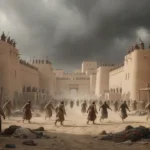
2 Kings 25 describes the final destruction of Jerusalem, including the burning of the temple, the royal palace, and important buildings. The city walls were broken down, and many inhabitants were taken into exile. This event marked the end of the independent kingdom of Judah.
The Bible interprets this catastrophe in theological as well as political terms. Judah’s defeat is connected with persistent idolatry, injustice, and refusal to listen to the prophets. Nebuchadnezzar was the human ruler who carried out the invasion, but the biblical writers also describe Babylon as an instrument used in God’s judgment.
What Jeremiah says about Nebuchadnezzar
The prophet Jeremiah spoke about Nebuchadnezzar before and during Babylon’s domination of Judah. Jeremiah identifies Babylon’s king as a servant whom God would use to discipline Judah and surrounding nations. The word “servant” in this context does not mean that Nebuchadnezzar worshiped God faithfully; it describes the role God assigned him in history.
In Jeremiah 25, Babylon is presented as the power that would bring judgment on Judah and many neighboring nations. Jeremiah warns that resistance to Babylon would not prevent the coming disaster. His message challenged the popular expectation that Jerusalem’s temple guaranteed immediate protection regardless of the nation’s conduct.
Jeremiah also instructed the exiles to live responsibly in Babylon and seek the welfare of the city where they had been taken. This teaching appears in Jeremiah 29, a letter sent to the exiles. The message gave them a long-term perspective: exile would last for a significant period, but God had not abandoned his people.
The prophet also spoke about Babylon’s eventual judgment. In Jeremiah 50 and 51, Babylon’s downfall is announced even though Babylon had been used to punish other nations. This creates an important biblical tension: God may use a powerful nation for a particular purpose, yet that nation remains accountable for its violence, pride, and cruelty.
Jeremiah records both forms of Nebuchadnezzar’s significance:
He was an instrument of judgment against Judah and other nations.
He was not beyond judgment himself, because Babylon’s oppression and arrogance would eventually be punished.
His victories did not make him sovereign; God remained the ruler over kings and empires.
Nebuchadnezzar’s role in the book of Daniel
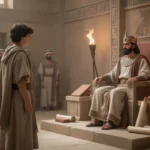
The book of Daniel gives the most detailed portrait of Nebuchadnezzar. It presents him as a king who demands absolute loyalty, relies on impressive advisers, and reacts strongly when his authority is challenged. At the same time, several encounters force him to recognize that God reveals mysteries and rules over kingdoms.
Daniel 1 introduces Nebuchadnezzar’s policy of taking young people from conquered nations and educating them in Babylonian language and literature. Daniel, Hananiah, Mishael, and Azariah are given Babylonian names and prepared for service in the royal court.
This episode shows Babylon’s attempt to reshape the identity of its captives. The young Judeans are expected to adopt the empire’s language, education, and customs. Yet Daniel and his companions maintain their loyalty to God while serving within the Babylonian administration.
The dream of the statue in Daniel 2
In Daniel 2, Nebuchadnezzar has a disturbing dream and demands that his advisers tell him both the dream and its interpretation. He does not want a vague explanation produced after hearing the details. When the advisers fail, the king threatens them with death.
Daniel asks God for mercy and receives the dream’s meaning. The statue represents a sequence of kingdoms, while a stone not produced by human effort symbolizes a kingdom established by God. The exact identification of every kingdom has been interpreted differently by readers, but the central message is clear: human empires rise and fall, while God’s kingdom endures.
Nebuchadnezzar responds by honoring Daniel and acknowledging that Daniel’s God reveals hidden things. His response is significant, but it does not yet represent a complete change of heart. The king remains a ruler accustomed to receiving submission from everyone around him.
The golden image and the fiery furnace
Daniel 3 describes Nebuchadnezzar’s construction of a large golden image and his command that officials worship it. The narrative uses the king’s command as a test of whether political loyalty can override religious faithfulness.
Shadrach, Meshach, and Abednego refuse to bow to the image. They express confidence that God can rescue them, while also declaring that they will not worship the king’s image even if rescue does not occur. Their response demonstrates faithfulness without presuming a particular outcome.
Nebuchadnezzar orders them thrown into a furnace heated to an extreme level. Yet the men survive, and the king sees what appears to be a fourth figure with them. The text does not require every reader to identify this figure in exactly the same way, but the scene’s main point is that God is able to preserve his servants in the presence of an oppressive ruler.
Afterward, Nebuchadnezzar praises the God of Shadrach, Meshach, and Abednego and protects them from punishment. Once again, he recognizes divine power, but his later dream shows that recognition alone has not removed his pride.
The tree dream and Nebuchadnezzar’s humiliation
Daniel 4 contains a royal proclamation in which Nebuchadnezzar recounts a dream about a great tree. The tree provides shelter and food for many creatures, but a heavenly messenger commands that it be cut down. Its stump remains, suggesting that the judgment will be severe but not necessarily permanent.
Daniel interprets the tree as representing Nebuchadnezzar himself. The king has become great and influential, but his pride will bring him low. Daniel urges him to turn from wrongdoing and practice justice, especially by showing mercy to the oppressed.
A year later, Nebuchadnezzar looks over Babylon and praises his own achievement. The narrative presents this moment as the turning point. He speaks as though the city’s greatness exists entirely because of his power and glory. Judgment follows, and he loses his human status for a period of time.
The account says that he lives like an animal, exposed to the elements and separated from ordinary human society. The precise medical or psychological explanation is not provided, and readers should avoid treating the passage as a modern clinical diagnosis. The theological point is that pride strips the king of the dignity and authority he has treated as self-created.
After the appointed period, Nebuchadnezzar looks toward heaven, and his understanding returns. He then praises the Most High and acknowledges that God’s kingdom lasts from generation to generation. The chapter ends with the king restored to his position and describing God’s actions as just.
What changes in Daniel 4: Nebuchadnezzar moves beyond simply admitting that God can reveal mysteries or rescue servants. He recognizes that God has authority over the king himself and over every earthly kingdom.
Why Nebuchadnezzar’s pride matters in the biblical story
Nebuchadnezzar’s pride is not presented as a minor personality flaw. It is the central spiritual danger attached to his power. He assumes that military success, wealth, architecture, and political control prove his greatness. Daniel 4 challenges that assumption by showing that ability and achievement do not make a ruler independent of God.
The issue is not that building a city or governing an empire is automatically wrong. The problem is claiming ultimate credit and authority while ignoring the source and limits of human power. Nebuchadnezzar’s humiliation dramatizes a principle repeated throughout Scripture: God opposes arrogant rulers and can bring down those who exalt themselves.
His story also speaks to how societies remember their achievements. A capital city may appear permanent, and an empire may seem unstoppable while it is expanding. Yet the biblical perspective looks beyond visible strength to the moral condition of rulers and nations.
How the Bible connects Nebuchadnezzar with other nations
Nebuchadnezzar’s campaigns were not limited to Judah. The prophets describe Babylon’s conflict with several surrounding peoples. Ezekiel refers to Nebuchadnezzar’s campaign against Tyre in Ezekiel 26–29 and portrays Babylon as a force moving against Egypt as well.
These passages do not provide a complete military history in modern chronological detail. Instead, they place Nebuchadnezzar within a larger prophetic framework. Babylon’s rise affects many nations, but Babylon itself will not escape accountability.
This pattern is especially important for reading Jeremiah. Babylon is powerful enough to punish Judah, yet it is still a temporary instrument. The same God who permits its rise announces its fall. No empire can claim that success proves moral approval or permanent security.
What happened to Nebuchadnezzar after the book of Daniel
The Bible gives no extended account of Nebuchadnezzar’s death. Daniel 4 ends with his restoration after the period of humiliation. Daniel 5 later introduces Belshazzar, who is described as the son of Nebuchadnezzar and rules Babylon when the city faces judgment.
The wording in Daniel reflects ancient royal and dynastic language, where “son” could describe a descendant or successor rather than only a direct biological child. Historical records identify Nabonidus as Babylon’s final king, while Belshazzar served as a prominent ruler during Nabonidus’s reign. These details help explain why biblical and historical descriptions may use different forms of royal succession.
Daniel 5 recalls Nebuchadnezzar’s humiliation as a warning to Belshazzar. Belshazzar knows what happened to the earlier king but refuses to humble himself. During a feast, he uses sacred vessels taken from the Jerusalem temple and praises idols. A mysterious message appears, and Daniel interprets it as a declaration that Babylon’s rule is ending.
The contrast is deliberate. Nebuchadnezzar eventually acknowledges God’s authority after being humbled; Belshazzar receives the warning but does not respond with humility. That same night, Babylon falls to the Medes and Persians according to the narrative.
Historical background behind the biblical accounts
Ancient Babylonian records outside the Bible confirm that Nebuchadnezzar II was a major historical ruler who led military campaigns in the region and undertook extensive building projects in Babylon. Inscriptions associated with him celebrate the city’s walls, temples, and public works.
Those records naturally present the king from his own imperial perspective. The Bible gives a different angle, concentrating on Jerusalem’s destruction, the exile of Judah, and Nebuchadnezzar’s accountability before God. Reading both perspectives together helps distinguish historical power from theological interpretation.
The Bible’s description of Babylon’s greatness is not simply imaginary or symbolic. Babylon was a real imperial center with substantial political and architectural influence. Still, the biblical writers are less interested in cataloging monuments than in asking what happens when a ruler treats human achievement as proof of personal sovereignty.
Common mistakes when studying Nebuchadnezzar in the Bible
Nebuchadnezzar’s story contains several details that can be misunderstood when passages are read in isolation. These practical guidelines can help you read the references more carefully:
Do not limit Nebuchadnezzar to Daniel. Read 2 Kings, 2 Chronicles, Jeremiah, Ezekiel, Daniel, and Ezra to see how the biblical portrait develops.
Do not confuse recognition with conversion. The king repeatedly acknowledges God’s power, but the narrative shows a gradual movement toward humility rather than a simple, immediate transformation.
Do not treat Babylon’s victories as proof of moral approval. God uses Babylon in judgment, yet the prophets also announce judgment against Babylon.
Do not assume every historical detail has the same level of certainty. The biblical text, ancient inscriptions, and later interpretations serve different purposes and should not be blended carelessly.
Do not overlook the exiles. Daniel and his companions are not merely supporting characters; their faithfulness shows how to live under foreign power without surrendering religious conviction.
Do not reduce the tree dream to a lesson about self-esteem. Daniel 4 addresses justice, oppression, pride, and the limits of political authority.
Practical ways to study Nebuchadnezzar’s story
A focused reading plan can make the many references easier to connect. Begin with the historical narrative, then read the prophetic interpretation and the personal accounts in Daniel.
Read 2 Kings 24–25 to understand the Babylonian conquest of Jerusalem and the destruction of the temple.
Read 2 Chronicles 36 for a parallel account that emphasizes Judah’s persistent unfaithfulness and the exile.
Read Jeremiah 25, 27, 29, 50, and 51 to study Babylon’s appointed role and later judgment.
Read Daniel 1–4 to follow Nebuchadnezzar’s encounters with Daniel and Daniel’s companions.
Read Daniel 5 to see how Nebuchadnezzar’s experience becomes a warning to Belshazzar.
Compare Ezra 1 with the earlier destruction to see the beginning of the return and the restoration of temple vessels.
As you read, ask three questions: What does the king believe about his own authority? How do the exiles respond to pressure? What does each episode reveal about God’s rule over nations?
What Nebuchadnezzar teaches about power and humility
Nebuchadnezzar’s biblical significance reaches beyond ancient Babylon. His story examines the temptation to treat success as self-generated and permanent. The king has real ability, real influence, and real achievements, but he cannot turn those gifts into absolute authority.
The accounts also show that humility is more than private modesty. Daniel urges Nebuchadnezzar to practice righteousness and mercy toward the oppressed. A ruler’s view of God affects how that ruler treats vulnerable people. Pride is therefore both a spiritual and a public problem.
For readers of the Bible, Nebuchadnezzar’s story offers a sober view of political power. God can use rulers who do not know him, judge nations that appear invincible, and restore a person after severe discipline. The final emphasis is not on the permanence of Babylon or the greatness of its king, but on the enduring authority of the Most High.
Frequently asked questions
Was Nebuchadnezzar a good or bad king in the Bible?
The Bible presents him as a powerful but morally flawed ruler. He destroys Jerusalem, carries people into exile, promotes idol worship, and acts arrogantly. At the same time, Daniel records moments when he recognizes God’s power and eventually acknowledges that God rules over earthly kingdoms. The portrait is therefore more complex than a simple good-or-bad label.
Did Nebuchadnezzar become a believer in the God of Israel?
Daniel shows Nebuchadnezzar praising and acknowledging the Most High after several supernatural encounters, especially after his humiliation in Daniel 4. The text does not describe his beliefs using later Christian terminology or provide a formal conversion account. It does show a significant movement from self-exalting authority toward recognition of God’s sovereignty.
Did Nebuchadnezzar destroy the temple in Jerusalem?
Yes. The Babylonian forces destroyed Jerusalem and the temple during the final conquest of Judah, described in 2 Kings 25, 2 Chronicles 36, and Jeremiah 52. Temple vessels were taken to Babylon, and some were later returned when the Persian ruler Cyrus permitted the exiles to go back and rebuild the temple.
Is Nebuchadnezzar’s madness a historical medical diagnosis?
Daniel 4 describes a period in which Nebuchadnezzar loses his human status, lives like an animal, and later regains his understanding. The passage gives a theological account of divine judgment and restoration, not a modern clinical diagnosis. It is best read on its own terms rather than forcing it into a specific psychiatric category.









Leave a Reply