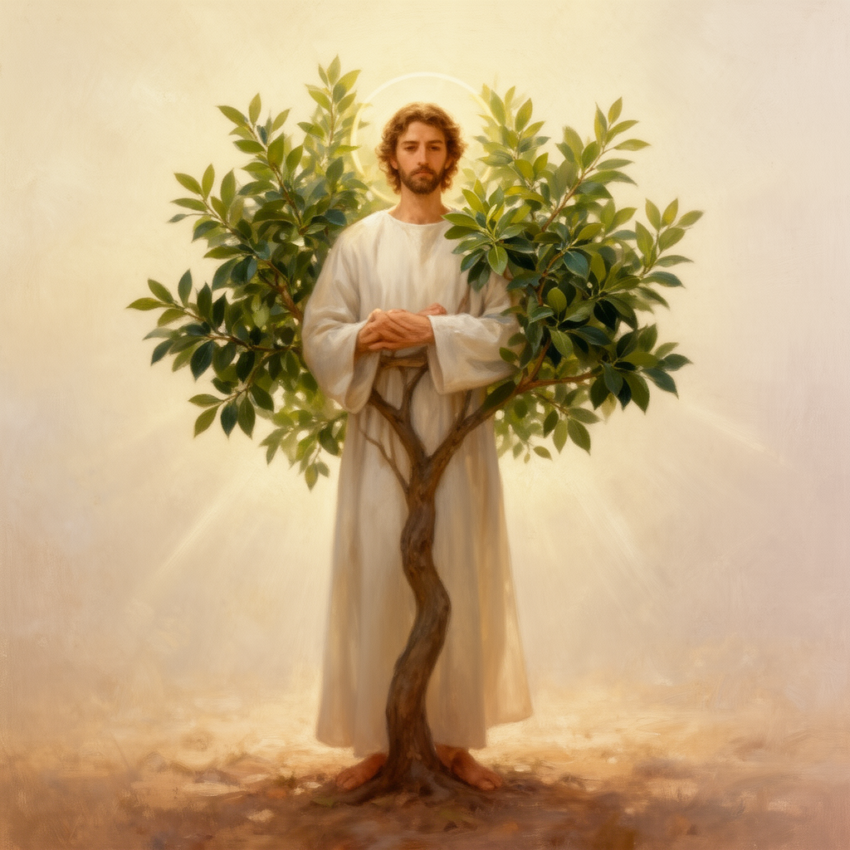
The bay tree (Laurus nobilis) is an evergreen shrub or small tree reaching 10-15 meters tall, with a dense, rounded crown. Its aromatic, leathery leaves are dark green, oval-shaped, and smooth-edged, releasing a fragrant scent when crushed. Small yellowish flowers cluster along the shoots in spring, maturing into dark purple berries that contain a single seed. The plant thrives in Mediterranean climates, preferring well-drained soil and full sun. It is cultivated for its aromatic leaves used in culinary and medicinal applications. Its hardy nature and evergreen foliage make it a symbol of victory and eternal life in ancient cultures.
Scientific Name
Laurus nobilis (debated; candidates include Laurus nobilis, Laurus cassia, or related Lauraceae species)
Hebrew/Greek Name
Greek: δάφνη (daphnē); Hebrew: דְּפַנָּה (daphne)
Common Names
Bay Tree, Sweet Bay, Daphne
Native Habitat
Native to the Mediterranean Basin, the bay tree grows abundantly in southern Europe, North Africa, and the Middle East. It favors warm, dry summers and mild, wet winters, thriving on rocky hillsides and well-drained soils in regions such as Israel, Lebanon, Greece, and Italy.
First Biblical Mention
First biblical mention in 1 Kings 4:33, describing Solomon's wisdom in describing trees, including cedars and possibly the bay for its aromatic qualities.
David laments the death of Saul and Jonathan, describing their noble qualities, including their use of the bay tree as a symbol of dignity.
Associates the bay tree with nobility, mourning, and remembrance in biblical poetry.
Isaiah 41:19
God promises to plant cedars, oaks, and the myrtle and the ‘bay tree’ as symbols of fertility and divine blessing.
Highlights the bay tree as a symbol of growth, blessing, and divine provision.
Psalm 92:12
The righteous flourish like a palm tree and like a cedar in Lebanon; indirectly associated with evergreen vitality akin to the bay tree.
Represents enduring vitality, strength, and righteousness.
✨ Symbolic Meaning in Scripture
Throughout Scripture, the bay tree symbolizes victory, eternal life, and divine favor. Its evergreen nature reflects resilience and everlasting vitality. In biblical poetry and prophetic writings, it signifies God's blessing, spiritual renewal, and the victorious soul that endures hardships. The cultural association with triumph—such as victory in athletic or military contexts—permeates its symbolic use. As a plant used in religious anointing and sacrifices, it also signifies sanctity and divine blessing. The bay's fragrant aroma echoes the idea of spiritual pleasing offerings to God, connecting the physical plant to divine presence, remembrance, and eternal life. Its upright, lofty growth also underscores strength and nobility, aligning with biblical themes of righteous rulership and divine favor.
🏺 Cultural Uses in the Ancient World
Ancient Israelites valued the bay tree for its aromatic leaves used in cooking, incense, and medicinal remedies. Its durable wood was employed in construction, furniture, and crafting religious artifacts. The bay was a symbol of victory in athletic and military contexts, where victors wore laurel-like crowns made from its branches. The fragrant leaves served medicinal purposes, believed to promote healing and purification. Trade of bay leaves and wood was significant across the Middle East, reflecting its cultural importance in rites, celebrations, and daily life. Its aromatic qualities also made it integral in sacred rituals and offerings, symbolizing divine blessing and spiritual victory.
✡️ In Jewish Tradition
In Jewish tradition, the bay plant (daphne) is associated with victory and sanctity, often used in rituals and celebrations such as Sukkot and Purim. Rabbinic literature mentions its aromatic qualities, and it symbolizes divine favor and purification. Although less prominent than myrtle or palm, its presence in Jewish festal rituals underscores its role as a sign of divine blessing and spiritual victory, emphasizing themes of resilience and divine grace during festivals.
Christian symbolism views the bay tree as a symbol of victory over sin and eternal life, reflecting Christ's triumph and divine authority. Its evergreen nature is seen as representing everlasting life through faith. Early Christian writers associated its fragrance with the Holy Spirit's presence and spiritual renewal. The bay’s crowned, victorious appearance aligns with Christ's kingship and victory over death, reinforcing its use as a symbol of spiritual victory and divine blessing. It also signifies the eternal promises found in Scripture, embodying hope, resilience, and divine grace in Christian theology.
🔬 Modern Botanical Identification
Scholars generally identify the biblical bay tree with Laurus nobilis, a well-known aromatic evergreen shrub. However, some debate exists around whether other Lauraceae species, such as Laurus cassia, might be the biblical reference. There is no complete consensus due to the ancient environment and limited archaeological evidence, but Laurus nobilis remains the most widely accepted candidate.
🗺️ Where Is It Found Today?
Today, bay trees are cultivated extensively across the Mediterranean, in Israel’s coastal regions, and in botanical gardens worldwide. In Israel, they grow naturally along the Mediterranean coast and in cultivated settings, often used in culinary and ornamental horticulture. The plant is also found in southern Europe and North Africa, thriving in similar climates.
❓ Frequently Asked Questions
Is the biblical bay tree the same as the modern bay laurel?
Yes, most scholars identify the biblical bay tree with Laurus nobilis, the common bay laurel, valued for its aromatic leaves and symbolic significance.
What does the bay tree symbolize in biblical stories?
It symbolizes victory, eternal life, divine blessing, and resilience, often indicating strength and spiritual triumph in Scripture.
Can the bay tree be used today in religious rituals?
While not as prominent, bay leaves are still used in some religious and cultural rituals as symbols of victory, blessing, and divine favor.
✨ Did You Know?
Ancient frescoes from Minoan Crete depict clear symbolic use of bay laurel, linking it to victory and divine favor in early Mediterranean cultures. Archaeological finds suggest the bay was prized for its aroma and sacred qualities for thousands of years, predating biblical times.