Joseph in the Bible: His story, meaning, and legacy
Joseph in the Bible: His story, meaning, and legacy
Joseph in the Bible refers mainly to two different men: Joseph, the son of Jacob in Genesis, and Joseph, the husband of Mary and legal father of Jesus in the Gospels.
Why the name Joseph can refer to two biblical figures
The name Joseph appears in several places in Scripture, but two Josephs receive the most attention. The first is a central figure in the Old Testament, where his life moves from family conflict and slavery to political authority in Egypt. The second appears in the New Testament as a quiet, faithful man who protects Mary and Jesus during the events surrounding Jesus’ birth.
These men lived in very different periods and faced different responsibilities. Joseph son of Jacob is known for dreams, suffering, administration, and reconciliation. Joseph husband of Mary is known for righteousness, obedience, and his willingness to accept a difficult calling without seeking public recognition.
Their stories should not be blended together. One belongs to the history of Israel’s ancestors in Genesis; the other belongs to the beginning of the Gospel accounts. Their shared name connects them only loosely, while their individual actions give each story its own meaning.
Essential distinction: When someone asks about Joseph in the Bible, check the context. References to Egypt, Pharaoh, famine, or Jacob concern Joseph in Genesis; references to Mary, Jesus, Bethlehem, or Nazareth concern Joseph in the Gospels.
Joseph son of Jacob: the main events in order
Joseph’s story is told primarily in Genesis 37–50. It is one of the Bible’s longest continuous narratives and includes family tension, forced migration, false accusations, imprisonment, political success, and forgiveness.
Joseph grows up in Jacob’s family. He is one of Jacob’s sons and the first son of Rachel, the woman Jacob loved deeply.
Jacob gives Joseph a special position. Jacob’s unusual affection contributes to resentment among Joseph’s brothers.
Joseph describes dreams involving his family. The dreams suggest that his relatives will one day bow before him, which increases their hostility.
His brothers sell him. They first consider killing him, but eventually sell him to traveling merchants who take him to Egypt.
Joseph serves in Potiphar’s household. He gains responsibility, but a false accusation leads to his imprisonment.
Joseph interprets dreams in prison. His ability eventually brings him before Pharaoh.
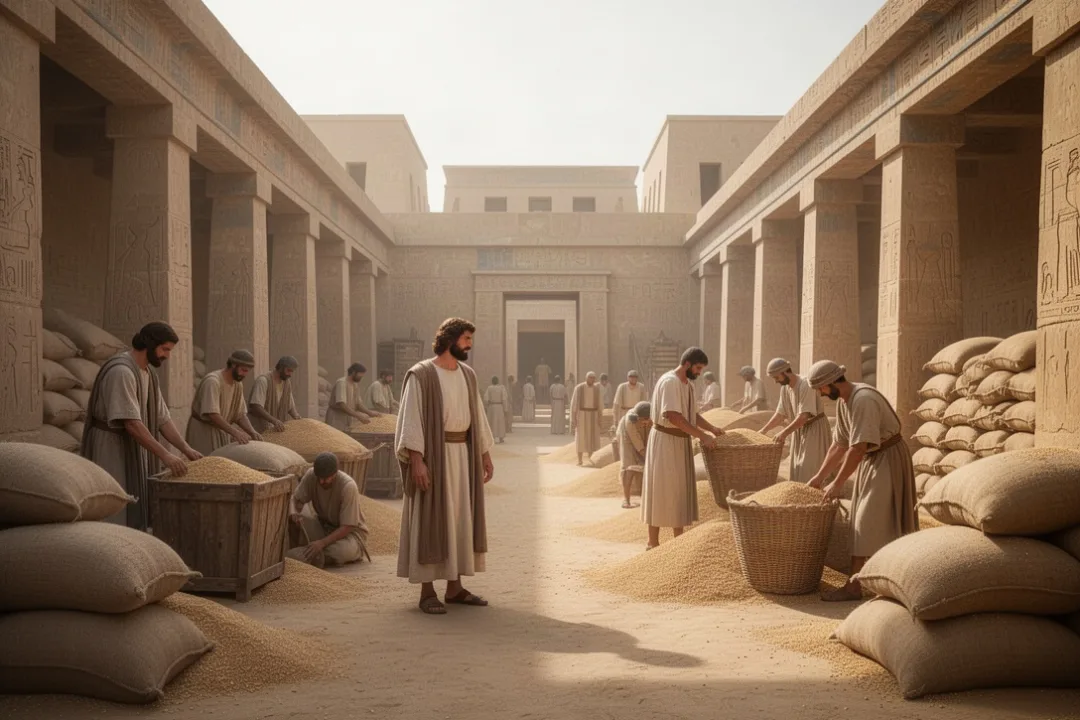
Pharaoh appoints Joseph to oversee Egypt’s food supply. Joseph prepares for years of abundance followed by severe famine.
Joseph’s brothers come to Egypt for grain. They do not recognize him at first, but Joseph recognizes them.
Joseph tests and then reveals himself to his brothers. He chooses reconciliation rather than revenge.
Jacob’s family settles in Egypt. This relocation sets the stage for later events in Israel’s history.
This sequence matters because Joseph’s rise is not presented as a smooth path to success. He experiences repeated reversals. His father’s favor does not protect him, his gifts do not prevent hardship, and his integrity initially appears to make his circumstances worse.
Joseph’s family background and the source of the conflict
Joseph was born into a complicated household. His father, Jacob, had children by Leah, Rachel, Bilhah, and Zilpah. This family structure created rivalries that shaped the relationships among the brothers. Joseph’s position as Rachel’s son and Jacob’s favored child made him especially vulnerable to their resentment.
Genesis says that Jacob gave Joseph a distinctive garment, often described in English translations as a richly ornamented robe. The precise meaning of the garment is debated, but its narrative function is clear: it publicly signaled Joseph’s special status in the family.
Joseph also told his brothers about dreams in which sheaves of grain, the sun, moon, and stars represented members of his family. The dreams implied future authority, but Joseph’s way of sharing them did not calm the existing conflict. His brothers came to hate him and became unwilling to speak to him peacefully.
The story does not portray Joseph as solely responsible for the family’s hostility. Jacob’s favoritism and the brothers’ violent jealousy both contribute to the crisis. The account shows how unresolved resentment can grow when a family treats status, affection, and inheritance as signs of personal worth.
What happened when Joseph was sold into Egypt
Jacob sent Joseph to check on his brothers while they were tending flocks. When they saw him approaching, they decided to remove him. Reuben attempted to prevent his death, and Judah later proposed selling him rather than leaving him to die.
The brothers took Joseph’s special garment, placed animal blood on it, and brought it to Jacob. They allowed their father to believe that a wild animal had killed Joseph. Meanwhile, Joseph was carried to Egypt and sold into the household of Potiphar, an official connected with Pharaoh.
Joseph’s descent into slavery is a major turning point. He loses his home, family, freedom, and expected future. Yet Genesis repeatedly presents him as capable and trustworthy in the places where he serves. His circumstances change, but his ability to work responsibly remains visible.
Joseph’s story also shows that good character does not guarantee immediate comfort. He does not escape difficulty simply because he is gifted. His life becomes a long period of faithfulness under conditions he did not choose.
Joseph in Potiphar’s household and prison
In Potiphar’s household, Joseph is given broad responsibility. According to Genesis, Potiphar recognizes that Joseph’s work prospers and places the household’s affairs under his management. Joseph’s competence brings him influence, but it also places him in a vulnerable position.
Potiphar’s wife attempts to persuade Joseph to have an affair with her. Joseph refuses, describing the act as a betrayal of his master and a sin against God. His refusal demonstrates that integrity matters even when no reward is guaranteed.
After Joseph rejects her, she accuses him of attacking her. Potiphar believes the accusation, or at least responds to it, and Joseph is sent to prison. The text does not record a public defense or fair hearing. A choice that reflected moral strength leads to another period of confinement.
Even in prison, Joseph receives responsibility. He interprets dreams for two servants of Pharaoh: the chief cupbearer and the chief baker. Joseph makes clear that the ability to interpret dreams comes from God rather than from his own power. The interpretations come true, but the restored cupbearer does not remember Joseph immediately.
This part of the narrative connects three themes:
Faithfulness under pressure: Joseph continues to act responsibly despite repeated losses.
Wisdom with humility: He uses his gift while directing attention to God.
Delayed recognition: His help is valuable, but its public consequences take time to appear.
How Joseph became a leader in Egypt
Pharaoh later has troubling dreams that none of his wise men can explain. The cupbearer remembers Joseph and tells Pharaoh about the Hebrew prisoner who interpreted dreams accurately. Joseph is brought from prison, cleaned up, and presented before Pharaoh.
Joseph explains that Pharaoh’s dreams point to seven years of abundant harvests followed by seven years of severe famine. He also recommends a practical response: appoint a wise administrator, collect a portion of the produce during the abundant years, and store it for the crisis ahead.
Pharaoh recognizes that Joseph has unusual wisdom and appoints him to carry out the plan. Joseph receives authority over the administration of Egypt, second only to Pharaoh in the narrative’s description. He is given an Egyptian name and a wife, and he begins organizing the food supply.
The story presents leadership as more than receiving a high position. Joseph must translate insight into policy. He develops storage systems, supervises collection, and manages distribution during the famine. His earlier experience in households and prison has prepared him to handle responsibility on a much larger scale.
Joseph’s rise does not erase his suffering, but it gives that suffering a new context. His competence was visible before anyone rewarded him. The narrative therefore encourages readers to distinguish between faithful work and immediate recognition.
Joseph’s brothers return and the family is tested
When famine reaches Canaan, Jacob sends his sons to Egypt to buy grain. The brothers appear before Joseph, but they do not recognize him. They bow before him, unknowingly echoing the dreams that had caused so much anger years earlier.
Joseph does not reveal himself at once. He questions them and requires them to bring Benjamin, his full brother and Rachel’s other son. These actions can seem harsh, but the narrative shows Joseph testing whether his brothers have changed, especially in how they treat Benjamin.
Benjamin’s role is crucial. Joseph’s brothers had once abandoned Rachel’s first son, and now Benjamin is placed in danger. Judah eventually offers himself in Benjamin’s place, showing a significant change from the earlier betrayal. He takes responsibility for the younger brother and appeals to the suffering their father would endure.
At that point, Joseph can no longer hold back his identity. He sends the Egyptians away and tells his brothers who he is. Their fear is understandable, because Joseph has the power to punish them. Instead, he moves toward reconciliation and asks them to bring Jacob to Egypt.
What Joseph meant by God’s purpose and human responsibility
Joseph does not deny what his brothers did. In Genesis 50, he acknowledges that they intended harm, while also saying that God used the situation toward a life-preserving purpose. This statement is often remembered because it holds together two truths that should not be confused.
First, the brothers remain responsible for their betrayal. Their motives were destructive, and Joseph does not call the sale into Egypt good. Second, Joseph believes that God can work through evil actions without approving the evil itself.
This distinction helps explain why Joseph forgives without pretending nothing happened. Biblical forgiveness is not the same as denying injury, ignoring injustice, or declaring that harmful behavior was acceptable. Joseph names the wrongdoing and then chooses not to make revenge the governing force of his future.
A careful reading: Joseph’s story does not promise that every painful event will quickly produce a visible benefit. It shows a belief in God’s providence while still taking betrayal, injustice, grief, and human responsibility seriously.
Joseph is often described as a model of perseverance, but his story offers more specific lessons than a general call to keep going. His decisions reveal how a person can respond to changing power, unfair treatment, and opportunities to retaliate.
He remains responsible in ordinary work. Before becoming a national leader, Joseph manages household and prison duties with care.
He refuses sexual wrongdoing. His decision in Potiphar’s household is costly, but he does not treat success as more important than principle.
He uses ability without claiming ultimate credit. Joseph interprets dreams but attributes the source of interpretation to God.
He prepares for future hardship. His response to Pharaoh’s dreams combines spiritual conviction with practical planning.
He recognizes changed behavior. Joseph pays attention to whether his brothers now protect one another.
He forgives without surrendering discernment. He tests the brothers before revealing himself, suggesting that reconciliation can include wise caution.
He provides for a vulnerable family. Joseph uses his authority to preserve life during famine rather than enrich himself through revenge.
Joseph’s success should not be reduced to wealth or rank. The most significant change is not simply that he becomes powerful; it is that he receives power after being powerless and chooses not to repeat the violence done to him.
Joseph’s relationship with Jacob, Benjamin, and his brothers
Joseph’s relationship with Jacob is shaped by love, favoritism, loss, and reunion. Jacob believes Joseph is dead for many years. When the brothers return from Egypt and reveal that Joseph is alive, Jacob’s grief turns into renewed hope. Their reunion becomes one of the emotional centers of Genesis.
Benjamin receives special attention because he is Joseph’s full brother and the remaining son of Rachel who stayed with Jacob. Joseph’s concern for Benjamin is genuine, but he also uses Benjamin’s situation to expose whether his older brothers are still willing to sacrifice a younger family member for their own safety.
Judah’s plea marks a major change. Earlier, Judah participated in the decision to sell Joseph. Later, he offers himself for Benjamin. The story does not describe this change with a formal confession before Joseph reveals his identity, but his actions demonstrate repentance expressed through responsibility.
Joseph’s forgiveness eventually allows the family to settle in Egypt. Yet the later biblical story reminds readers that moving to Egypt is not the end of Israel’s history. The family grows into a people, and a later Pharaoh enslaves the Israelites. Joseph’s personal rescue of his family therefore exists within a much larger story of deliverance.
Joseph’s final years and the meaning of his faith
Joseph lives long enough to see several generations of his family. Before his death, he tells his brothers that God will visit them and bring them out of Egypt to the land promised to their ancestors. He asks them to carry his bones with them when that future exodus takes place.
That request shows that Joseph’s faith is not centered only on his present position in Egypt. He believes that God’s promises to Abraham, Isaac, and Jacob reach beyond his own lifetime. His final concern is connected to the future of Israel, not merely to the security he has achieved in Egypt.
Joseph dies in Egypt, but Genesis ends with expectation rather than complete resolution. His body remains connected to the promised land through his request. Later biblical references remember this act as an expression of faith in what God would do for the descendants of Israel.
Joseph the husband of Mary in the Gospels
The second major Joseph appears in Matthew 1–2 and is also named in the opening chapters of Luke. He is a descendant of David and is engaged to Mary when he learns that she is pregnant. Matthew describes him as a righteous man who does not want to expose Mary to public disgrace.
Joseph initially plans to end the engagement quietly. In Matthew’s account, an angel appears to him in a dream and tells him not to fear taking Mary as his wife. Joseph accepts the explanation that the child has been conceived through the Holy Spirit and follows the instruction he receives.
His first major act is therefore one of obedient trust. He does not demand public vindication or place his reputation above Mary’s safety. He accepts a role that will bring social uncertainty and personal responsibility.
Joseph is also instructed to name the child Jesus. In biblical culture, giving the child a name carries legal and familial significance. By doing so, Joseph receives Jesus into his household and acts as his legal father, even though the Gospel accounts present Jesus’ conception as miraculous.
How Joseph protected Mary and Jesus
Matthew records several dreams that direct Joseph’s actions. After Jesus’ birth, Joseph is warned to take the child and Mary to Egypt because Herod seeks to destroy the child. Joseph gets up, takes them, and leaves during the night.
After Herod’s death, Joseph receives further direction in a dream. He returns with Mary and Jesus but avoids settling in Judea because of danger connected with Herod’s successor. The family instead lives in Galilee, in the town of Nazareth.
These scenes show Joseph responding quickly to danger. He protects a vulnerable family through movement, discretion, and obedience. The Gospel narrative does not focus on speeches from Joseph; it focuses on what he does when responsibility is placed before him.
Luke also presents Joseph and Mary taking Jesus to Jerusalem according to the requirements of Jewish religious practice. Later, when Jesus is twelve, Joseph and Mary search for him after he remains behind at the temple. Joseph’s presence in these scenes confirms his role in the family’s ordinary religious and domestic life.
What the Bible says about Joseph’s work and later life
Matthew describes Joseph as a carpenter or craftsman, depending on the translation. The Greek term can refer broadly to a skilled worker in wood, construction, or related materials. This description places Joseph within the working life of a small town rather than presenting him as a wealthy or politically influential man.
Joseph appears in the accounts surrounding Jesus’ early life and in the temple visit when Jesus is twelve. After that, the Gospels do not record him speaking or describe the circumstances of his death. He is not mentioned as present during Jesus’ public ministry, crucifixion, or resurrection appearances.
Because the biblical texts do not provide further details, claims about Joseph’s exact age, death, or later activities should be treated cautiously. Later Christian traditions discuss these subjects, but they are not stated clearly in the biblical accounts themselves.
How the two biblical Josephs are similar and different
The Joseph in Genesis and the Joseph in the Gospels share several broad qualities. Both receive important guidance through dreams, both face circumstances they did not create, and both protect a family connected with God’s purposes. Neither man is remembered primarily for public speeches.
Their differences are just as significant:
Joseph son of Jacob moves from Canaan to Egypt through forced displacement, while Joseph husband of Mary voluntarily travels to Egypt to protect Jesus.
The earlier Joseph interprets other people’s dreams, while the later Joseph receives direction through dreams and acts on it.
Joseph in Genesis gains authority over a nation, while Joseph in Matthew and Luke serves within a household.
The first Joseph is betrayed by brothers and later reconciles with them; the second Joseph faces a family crisis before Jesus’ birth and safeguards Mary and the child.
The Genesis account records Joseph’s death and his hope concerning Israel’s future; the Gospels leave Joseph’s later life largely unrecorded.
Reading the stories separately prevents a common misunderstanding. The similarities do not mean that the Bible treats them as one person or gives them identical roles. Each Joseph demonstrates faithfulness in a different kind of calling.
How to study Joseph in the Bible carefully
A useful study begins by identifying which Joseph the passage names or implies. Then read the surrounding chapters rather than relying on a single famous scene. Joseph’s character becomes clearest through the progression of his choices.
Start with the setting. Note the family, nation, political situation, and immediate danger.
Track the changes in Joseph’s position. Ask when he is favored, powerless, trusted, accused, or placed in authority.
Separate facts from later tradition. Give primary weight to what Genesis, Matthew, and Luke actually state.
Observe responses rather than labels. Look at how Joseph behaves when he is wronged, frightened, or given power.
Consider the people affected by his choices. Joseph’s decisions influence families, prisoners, rulers, and an entire population.
Read the ending in context. Joseph’s final hope points beyond his own life, while the Gospel Joseph’s story points toward Jesus’ identity and mission.
For a focused reading, begin with Genesis 37, continue through Genesis 50, and then read Matthew 1–2 and Luke 1–2. Comparing the passages can help you notice how dreams, family duty, danger, and divine guidance function differently in each account.
Why Joseph still matters to readers of the Bible
Joseph’s stories remain significant because they address situations that are morally and emotionally complicated. They do not offer a simple formula in which good choices prevent hardship. Instead, they show people acting faithfully when outcomes are uncertain and when other people’s decisions have caused real damage.
The son of Jacob demonstrates that authority can be used for preservation rather than retaliation. His story also warns against favoritism, unchecked jealousy, and the assumption that suffering has no purpose. The husband of Mary demonstrates that obedience may require accepting vulnerability, protecting someone else, and acting without receiving public credit.
Together, the two accounts present faithfulness as practical action. It may involve managing resources, refusing wrongdoing, protecting a child, caring for family, telling the truth about harm, or choosing reconciliation when revenge is possible. Their lives invite careful discernment rather than shallow optimism.
Frequently asked questions
Is Joseph in Genesis the same person as Joseph who raised Jesus?
No. Joseph son of Jacob lived generations before Jesus and became a leader in Egypt after being sold by his brothers. Joseph who raised Jesus was Mary’s husband and lived in the period described by Matthew and Luke. The shared name does not indicate that they were the same individual.
How many Josephs are mentioned in the Bible?
The Bible mentions more than two people named Joseph, although the two best-known are Jacob’s son and Mary’s husband. Other references include Joseph of Arimathea in the Gospel accounts and a Joseph listed among Jesus’ ancestors or other New Testament figures. The surrounding passage identifies which person is meant.
Did Joseph in the Bible forgive his brothers?
Joseph moves toward forgiveness after recognizing that his brothers have changed, especially in their willingness to protect Benjamin. He does not deny their betrayal or immediately ignore the risk they pose. His response combines honesty, testing, reconciliation, and provision rather than simple forgetfulness about the harm done.
What happened to Joseph, the husband of Mary?
The Bible records Joseph’s actions around Jesus’ birth, the family’s flight to Egypt, their return to Nazareth, and Jesus’ visit to the temple at age twelve. After that, the Gospels do not explain his later life or death. Specific claims about those events usually come from later tradition rather than clear biblical statements.










Leave a Reply