Jehoshaphat: His faith, reforms, and costly alliances
Jehoshaphat: His faith, reforms, and costly alliances
When a serious problem arrives, do you immediately search for the right strategy, or do you first ask for help and direction? The biblical account of Jehoshaphat, king of Judah, gives a careful answer: wise leadership involves prayer, preparation, justice, courage, and the humility to recognize poor partnerships.
Jehoshaphat ruled the southern kingdom of Judah after his father, Asa. Scripture presents him as a king who generally sought God, strengthened the nation, taught the people, and responded to military danger with remarkable faith. Yet his story is not a simple portrait of flawless devotion. He also formed damaging alliances with the northern kingdom of Israel and had to face repeated correction.
His life appears mainly in 2 Chronicles 17–20 and 1 Kings 15:24; 22. Those passages show a ruler who wanted to honor God but sometimes allowed family ties and political calculations to weaken his judgment.
Jehoshaphat was the son of Asa and became king of Judah after him. Judah was the southern kingdom, centered in Jerusalem, while Israel was the northern kingdom. The two kingdoms shared Israelite ancestry but were often divided by rival rulers, competing worship practices, and political hostility.
The name Jehoshaphat is commonly understood as meaning “The Lord judges” or “Yahweh has judged.” He ruled Jerusalem and the territory of Judah during a period when the northern kingdom was governed by the house of Ahab. His reign is described as lasting twenty-five years in 1 Kings 22:42.
Jehoshaphat inherited a kingdom that needed both spiritual direction and military security. His father Asa had experienced earlier success but later relied on a foreign king instead of seeking God, according to the Chronicler’s account. Jehoshaphat’s own reign would repeat some of those tensions: strong trust in God in one crisis, followed by questionable dependence on political allies in another.
The biblical narrative does not treat him as either a perfect hero or a complete failure. It emphasizes his sincere commitment to God while also recording the consequences of his compromises. That balance makes his story especially useful for understanding how good intentions and poor decisions can exist in the same leader.
How Jehoshaphat strengthened Judah
Early in his reign, Jehoshaphat made Judah secure by strengthening its defenses. He placed troops in fortified cities and maintained military installations throughout the land. The account in 2 Chronicles 17 also says that he stationed forces in Judah and in the towns that his father Asa had taken or fortified.
Military preparation was only one part of his policy. Jehoshaphat also sought to establish spiritual stability throughout the kingdom. Instead of treating religion as a private matter for Jerusalem’s priests alone, he organized instruction for the people in the towns of Judah.
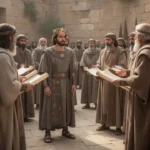
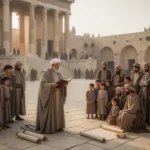
Officials, Levites, and priests traveled through the kingdom with the Book of the Law. Their task was to teach the people, not merely to conduct ceremonies. This effort connected national leadership with public knowledge of God’s law, justice, and daily conduct.
According to 2 Chronicles 17, the surrounding kingdoms became cautious about attacking Judah during this period. The text connects that security with Jehoshaphat’s devotion and with the respect created by Judah’s growing strength. It also describes neighboring peoples bringing tribute to the king, adding to his wealth and influence.
A leadership principle: Jehoshaphat did not rely on one solution. He combined defense, education, administration, and worship. Strong communities usually require both practical preparation and clear moral direction.
Jehoshaphat’s reforms show that spiritual leadership was not limited to personal prayer. He understood that people needed access to instruction and that rulers were responsible for justice. His reign therefore included both teaching the law and improving the way disputes were handled.
How Jehoshaphat organized justice in Judah
Jehoshaphat appointed judges in the fortified cities of Judah. He instructed them to judge fairly and warned them not to twist decisions for personal gain. The speech recorded in 2 Chronicles 19 emphasizes that judges were not working merely for a human king; they were accountable to God.
He also established a higher court in Jerusalem. There, priests and family heads handled questions involving the law, religious matters, and disputes among the people. This created a structure in which local decisions could be reviewed and difficult cases could receive more careful attention.
The king’s instructions addressed several dangers that still affect legal systems:
Partiality: Judges were not to favor influential people over ordinary citizens.
Bribery: Decisions were not to be shaped by gifts or personal advantage.
Carelessness: Officials were expected to understand the cases they handled.
Fear of God: Their ultimate accountability was moral and spiritual, not merely political.
Public responsibility: Leaders were to help people live securely and resolve conflicts before they became destructive.
Jehoshaphat’s reforms reveal a major theme in his reign: faith had public consequences. If the king believed God cared about justice, then judges had to act honestly. If the people were expected to worship God, they also needed instruction that could shape family life, business, property disputes, and community relationships.
The account also shows that reform required delegation. Jehoshaphat did not attempt to decide every case himself. He created a system, appointed capable people, and gave them clear standards. That approach is relevant to any leader who wants values to survive beyond personal supervision.
What happened when Moab and Ammon attacked Judah
The most famous episode in Jehoshaphat’s reign began when a large coalition came against Judah. The attackers included the people of Moab and Ammon, along with others described in 2 Chronicles 20. The report reached Jerusalem while the enemy was approaching, creating a crisis that military strength alone could not easily solve.
Jehoshaphat’s first response was to seek God. He proclaimed a fast throughout Judah, and people gathered from towns across the kingdom. Families stood before the Lord at the temple, asking for help in a national emergency.
His prayer is one of the clearest windows into his leadership. He began by affirming God’s authority over the nations and recalling God’s past promises to Abraham’s descendants. He then described the present danger, acknowledged Judah’s vulnerability, and asked God to judge the attackers.
The central idea of the prayer appears in 2 Chronicles 20:12: Judah did not know what to do, but its eyes were turned toward God. This was not a denial of the danger. Jehoshaphat named the threat plainly while refusing to pretend that human resources were sufficient.
Jehoshaphat’s prayer, in essence, admits: “We do not know what to do, but we are looking to you.” — 2 Chronicles 20:12
The response came through Jahaziel, a Levite, who announced that Judah would not need to win the battle by its own strength. The people were told to take their positions, stand firm, and observe the deliverance God would provide. The message did not encourage passivity in every situation; it addressed this particular crisis and called Judah to trust God’s direction.
Jehoshaphat bowed in worship. The Levites and other worshipers praised God. On the following morning, the army went out, but singers were placed at the front, praising God’s steadfast love. As the forces advanced, the opposing armies turned against one another, and Judah found the attackers defeated.
The battlefield became a place of unexpected abundance. Judah’s people spent several days gathering goods because there was more spoil than they could carry. The location where they praised God was called the Valley of Berakah, or the Valley of Blessing, because of the celebration that followed.
Why Jehoshaphat’s prayer matters
Jehoshaphat’s prayer offers more than a dramatic story about a military victory. It shows a pattern for facing pressure without minimizing reality. He gathered the people, remembered God’s character, identified the danger, admitted weakness, and asked for direction.
Several features make the prayer distinctive:
It begins with God’s identity: Jehoshaphat grounds his request in God’s authority and past faithfulness.
It remembers history: The king recalls how God had dealt with earlier generations.
It names the injustice: Judah’s enemies are not described as an abstract problem but as aggressors who threaten the inheritance given to Israel.
It admits uncertainty: The king does not pretend to possess a complete plan.
It looks for action: Prayer leads to an organized response, including gathering, positioning, and obedience.
This pattern guards against two opposite mistakes. One mistake is acting as if prayer is unnecessary because planning can solve everything. The other is using religious language to avoid responsibility. Jehoshaphat did neither in this crisis. He prayed, listened, worshiped, and then moved forward according to the direction he received.
For a personal crisis: Start by separating facts from fears. Name the actual threat, acknowledge what you cannot control, seek wise counsel, and choose the next faithful action rather than demanding a complete map of the future.
Jehoshaphat’s alliance with Ahab and its consequences
Jehoshaphat’s strongest warning comes from his relationship with Ahab, king of Israel. Ahab ruled the northern kingdom and is portrayed in Kings as a deeply unfaithful ruler, especially through his worship of Baal and his opposition to prophetic truth. Yet Jehoshaphat formed a political and family connection with Ahab’s house.
The alliance appears to have included a marriage between Jehoram, Jehoshaphat’s son, and Athaliah, a daughter of Ahab and Jezebel. It also led Jehoshaphat to visit Ahab and participate in a military campaign to recover Ramoth-gilead from Aram.
Before the campaign, Jehoshaphat asked whether they should seek the word of the Lord. Ahab gathered his prophets, who predicted success. Jehoshaphat was not satisfied with their number or message and asked for a prophet of the Lord. Ahab then summoned Micaiah, who gave an unfavorable prediction.
Micaiah’s warning was rejected. Ahab went into battle disguised, while Jehoshaphat wore his royal robes. The enemy forces mistook Jehoshaphat for the king of Israel and pursued him, but he cried out and escaped. A random arrow struck Ahab, who later died from his wound.
Jehoshaphat survived, but the prophet Jehu son of Hanani confronted him afterward. The rebuke was direct: the king should not have helped the wicked or loved those who hated the Lord. At the same time, Jehu acknowledged that some good had been found in Jehoshaphat because he had removed certain Asherah symbols and sought God.
This episode reveals the difference between personal devotion and relational judgment. Jehoshaphat sought God sincerely, but he still gave dangerous access and support to a ruler whose values opposed his own. Good motives did not erase the consequences of the alliance.
What Jehoshaphat’s partnerships teach about discernment
Jehoshaphat’s political cooperation with Ahab was not his only questionable partnership. Later, he joined with Ahaziah, Ahab’s son, in building a fleet of trading ships at Ezion-geber. The project failed when the ships were wrecked before they could sail.
Afterward, Ahaziah proposed another joint venture, but Jehoshaphat refused. The text does not describe every reason for that refusal, but the sequence suggests that the failed fleet and prophetic criticism had changed his judgment. He was willing to reject a second opportunity after recognizing the danger of the first.
Discernment does not mean avoiding every relationship with people who disagree with you. It means understanding the difference between peaceful contact and shared direction. A leader can speak respectfully with someone outside the faith without placing that person in a position to shape the community’s priorities.
Common mistakes in evaluating partnerships include:
Confusing access with approval: Working with someone can communicate more endorsement than intended.
Letting family pressure decide policy: Marriage or kinship can make a risky alliance feel unavoidable.
Ignoring character because of opportunity: Wealth, military power, or influence cannot compensate for destructive values.
Seeking confirmation instead of truth: A large group of agreeable advisers may not provide honest counsel.
Assuming past success guarantees future wisdom: A faithful decision in one crisis does not make every later decision sound.
Waiting for failure before setting boundaries: Jehoshaphat’s later refusal was wiser, but earlier caution would have been better.
Jehoshaphat’s story encourages a practical question: What will this relationship make easier? If an alliance makes justice, truth, or faithfulness harder to preserve, its benefits deserve serious scrutiny. The issue is not simply whether a partnership can produce immediate results, but what habits and loyalties it will create over time.
Did Jehoshaphat remove all the high places?
The biblical accounts describe Jehoshaphat’s religious reforms with some complexity. Second Chronicles says that he removed high places and Asherah poles from Judah. First Kings, however, says that the high places were not removed, even while describing the king’s heart as committed to the Lord.
These statements should not be forced into a simplistic portrait. They may reflect different aspects or stages of reform, such as an official effort that did not eliminate every local shrine. The text itself presents both Jehoshaphat’s genuine devotion and the incomplete nature of religious change in Judah.
The broader lesson is that good reform can be real without being complete. A ruler may sincerely seek God while still facing resistance, inconsistency, or limits in carrying out policy. Public change often moves unevenly, especially when habits have been established for generations.
Jehoshaphat’s example also cautions against judging devotion only by visible success. His heart was directed toward God, but his kingdom still contained unresolved problems. Faithfulness is not the same as having every issue perfectly settled.
How Jehoshaphat handled correction
Correction came to Jehoshaphat more than once. The prophet Jehu confronted him after the alliance with Ahab. Later, when the fleet project failed, the outcome itself exposed the weakness of the partnership. These moments could have caused the king to become defensive or to abandon reform altogether.
Instead, after Jehu’s warning, Jehoshaphat continued working among the people. He traveled through Judah and encouraged them to return to the Lord. He also reestablished judges and gave them further instruction, showing that correction led to renewed action rather than mere regret.
That response is significant. A leader’s character is revealed not only by the first decision but also by what happens after failure is exposed. Jehoshaphat did not erase the consequences of his alliance, yet he responded by reinforcing the institutions and convictions that had been weakened.
Receive the truth without protecting your image. A warning may be uncomfortable precisely because it identifies a real vulnerability.
Separate the failed decision from your whole identity. Failure should lead to repentance and change, not to hopelessness or denial.
Build safeguards for the future. Revised policies, wiser advisers, and clearer boundaries can prevent the same pattern from returning.
Jehoshaphat’s family and lasting influence
Jehoshaphat was succeeded by his son Jehoram. Because Jehoram married Athaliah, the connection between Judah’s royal family and Ahab’s house continued after Jehoshaphat’s death. That family alliance had consequences beyond one generation and contributed to later instability in Judah.
This part of the story shows why leadership decisions should be evaluated across time. A choice may seem useful during one reign but shape the next generation in harmful ways. Political agreements, marriages, financial commitments, and institutional appointments can remain influential long after the original decision maker is gone.
Jehoshaphat’s positive influence also lasted. His efforts to teach the law, organize judges, strengthen defenses, and lead public prayer gave Judah a model of integrated leadership. He demonstrated that a king could unite administration, worship, education, and national defense rather than treating them as unrelated responsibilities.
His legacy is therefore mixed but instructive. He was not remembered simply as the king who won a miraculous battle. He was also the ruler who made a dangerous alliance, received prophetic correction, and continued trying to guide Judah toward faithfulness.
Practical lessons from Jehoshaphat’s life
Jehoshaphat’s story can help you think about decisions at work, in a family, in a church, or in public leadership. Its central message is not that every difficult situation will end with a dramatic rescue. The deeper point is that faithful decision-making requires both dependence on God and responsible action.
When you face a difficult choice, you can apply several principles from his reign:
Seek God before panic sets the agenda. Jehoshaphat responded to the approaching army with prayer and a public fast rather than impulsive fear.
Gather accurate information. He identified the enemy, assembled the people, and asked for prophetic direction.
Remember what God has already done. His prayer used history to strengthen present faith.
Admit uncertainty. Saying that you do not know what to do can be an honest beginning, not a sign of weakness.
Keep practical responsibilities in view. Jehoshaphat fortified cities, appointed judges, and organized the kingdom.
Test advisers by truth, not popularity. Micaiah’s unpopular message was more trustworthy than the flattering predictions of many others.
Examine alliances carefully. Shared goals should not conceal serious differences in character or worship.
Accept correction early. A rebuke can prevent one bad decision from becoming a repeated pattern.
Measure success by faithfulness. A favorable outcome is not the only evidence that a decision was wise.
Jehoshaphat’s life brings together two truths that are easy to separate. Trust in God does not cancel preparation, and preparation does not replace trust. He built defenses and taught the law, but when the crisis exceeded his strength, he turned publicly to God.
His failures add another necessary truth: sincere faith does not guarantee perfect judgment. You can pray honestly and still need to examine your friendships, advisers, family pressures, and ambitions. Spiritual maturity includes the willingness to let God’s truth challenge decisions that once seemed reasonable.
Where to read about Jehoshaphat in the Bible
The most detailed account is found in 2 Chronicles 17–20. Chapter 17 describes his early reforms, military strength, and teaching program. Chapter 18 records his alliance with Ahab and the campaign at Ramoth-gilead. Chapter 19 covers the prophet’s correction and Jehoshaphat’s judicial reforms. Chapter 20 tells the story of the invasion, the national prayer, the victory, and the failed fleet partnership.
First Kings provides a parallel account in chapters 15 and 22. It gives the length of Jehoshaphat’s reign, records his general evaluation as a king who did what was right, and describes his cooperation with Ahab. Second Kings 3 also mentions him in connection with a campaign involving Israel’s king against Moab.
Reading these passages together helps create a fuller picture. Chronicles emphasizes prayer, reform, worship, and the importance of seeking God. Kings places Jehoshaphat within the wider political history of Judah and Israel. Neither perspective removes the tensions in his life; together they show why he remains one of the Bible’s most useful examples of faithful but imperfect leadership.
Frequently asked questions
Was Jehoshaphat a good king?
Jehoshaphat is generally presented as a good king because he sought God, strengthened Judah, taught the law, organized judges, and led the nation in prayer. However, he made serious mistakes by forming alliances with Ahab and Ahaziah. His record is best understood as faithful but imperfect, rather than flawless.
What was Jehoshaphat’s greatest victory?
His most memorable victory came when Moab, Ammon, and allied forces threatened Judah. Jehoshaphat gathered the people to seek God, and the opposing armies turned against one another. Judah then collected the abandoned goods and named the location the Valley of Berakah, meaning the Valley of Blessing.
What is the main lesson from Jehoshaphat’s prayer?
His prayer teaches you to acknowledge the danger honestly while admitting that your own resources are limited. He remembered God’s past faithfulness, asked for help, and directed the nation to look to God. The prayer also shows that dependence should lead to obedient action, not avoidance of responsibility.
Why was Jehoshaphat criticized for working with Ahab?
Ahab was portrayed as a ruler who rejected the Lord and promoted idolatry. By supporting Ahab militarily and connecting Judah’s royal family to his house, Jehoshaphat exposed Judah to harmful influence. The prophet Jehu rebuked him for helping the wicked, even while acknowledging that Jehoshaphat had genuinely sought God.







Leave a Reply